Beryllium Hydroxide Market Size, Share Demand Report By Application (Beryllium Oxide Ceramics, Beryllium Metal Production, Beryllium Alloys), By End-Use Industry (Aerospace and Defense, Electronics and Semiconductor, Industrial Equipment Manufacturing, Telecommunications), By Product Form (Industrial-Grade Beryllium Hydroxide, High-Purity Beryllium Hydroxide), By Region & Segment Forecasts, 2025–2034
USD 3950
Market Overview
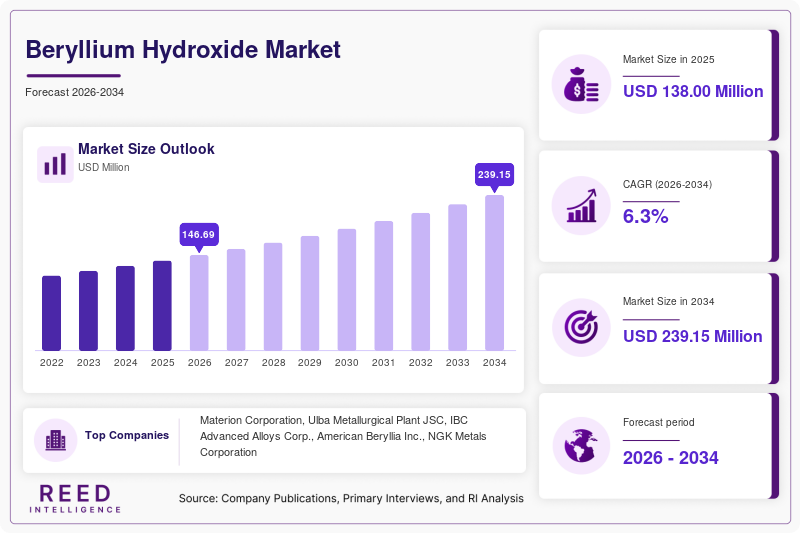
The Beryllium Hydroxide Market size was valued at approximately USD 138 million in 2024 and is projected to reach around USD 238 million by 2033, expanding at a compound annual growth rate (CAGR) of 6.3% from 2025 to 2034. Beryllium hydroxide is an important intermediate compound used primarily in the production of beryllium metal, beryllium oxide ceramics, and specialty alloys. The compound plays a significant role in advanced industrial sectors such as aerospace, telecommunications, defense electronics, and high-performance industrial equipment.
Beryllium hydroxide is typically produced through chemical processing of beryl ore or beryllium-containing mineral concentrates. It is further refined to manufacture beryllium-based materials that offer desirable characteristics such as high stiffness, low density, thermal stability, and strong electrical conductivity. These properties make beryllium-derived materials suitable for high-precision components used in advanced technology sectors.
Key Highlights
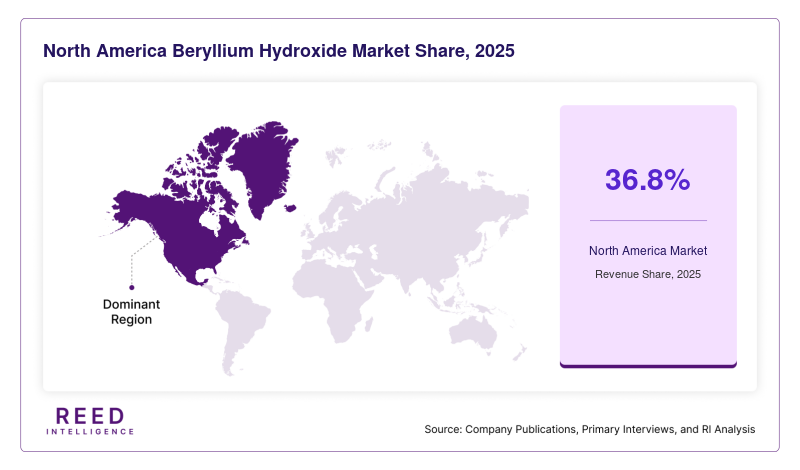
- North America dominated the market with a 36.8% share in 2025, while Asia Pacific is projected to register the fastest CAGR of 7.5% through 2034.
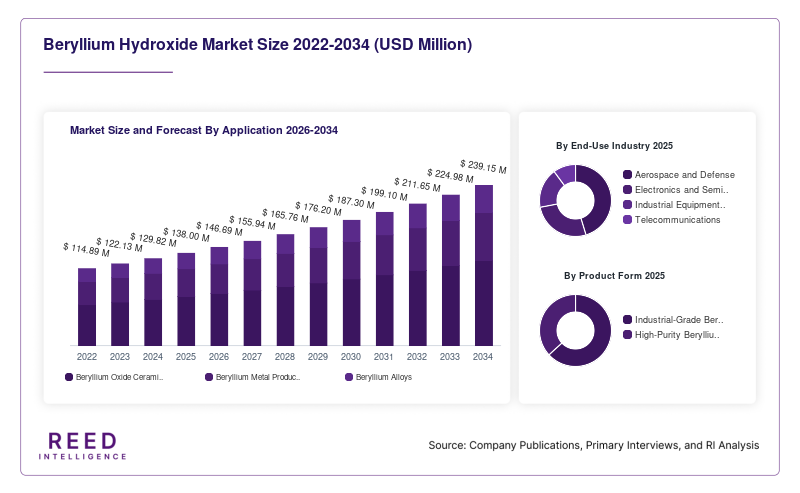
- By application, beryllium oxide ceramics accounted for the largest share of 41.3% in 2024, while beryllium metal production is expected to grow at a CAGR of 7.2% during the forecast period.
- By end-use industry, aerospace and defense held the largest share of 33.6% in 2024, whereas electronics and semiconductor manufacturing will expand at a CAGR of 7.8%.
- The United States represented the dominant national market, with a value of USD 44 million in 2024, rising to USD 47 million in 2025.
Market Trends
Increasing Use of Beryllium-Based Materials in Electronics Manufacturing
One notable trend shaping the Beryllium Hydroxide Market is the increasing use of beryllium-derived materials in electronics manufacturing. Beryllium hydroxide serves as a precursor in the production of beryllium oxide ceramics, which possess strong thermal conductivity and electrical insulation properties. These characteristics make them suitable for electronic substrates, semiconductor packaging, and power electronics.
As electronic devices become more compact and operate at higher power levels, efficient thermal management becomes increasingly important. Beryllium oxide ceramics are widely used in high-frequency electronic systems and microwave communication equipment. This growing demand for advanced electronic materials continues to support the demand for beryllium hydroxide as a key upstream chemical intermediate.
Expansion of Aerospace Component Manufacturing
Another trend influencing the Beryllium Hydroxide Market is the rising production of lightweight aerospace components. Aerospace manufacturers rely on materials that combine low density with high strength and thermal stability. Beryllium-based alloys and materials fulfill these requirements and are used in structural components, satellite systems, and avionics equipment.
Beryllium hydroxide is an essential precursor in the production chain of these materials. As aerospace companies continue to invest in advanced aircraft systems and satellite technology, demand for beryllium-derived materials is expected to increase. This trend supports the long-term outlook for the Beryllium Hydroxide Market.
Market Drivers
Growth of Advanced Semiconductor and Electronics Industries
One of the key drivers supporting the Beryllium Hydroxide Market is the ongoing growth of semiconductor manufacturing and advanced electronics production. Semiconductor fabrication requires materials with specific thermal and electrical properties that can maintain performance under demanding operating conditions.
Beryllium oxide ceramics derived from beryllium hydroxide provide efficient heat dissipation and electrical insulation in semiconductor components. These characteristics make them suitable for high-frequency circuits and electronic modules. As semiconductor manufacturing capacity continues to expand globally, demand for high-performance ceramic materials will increase, indirectly supporting the Beryllium Hydroxide Market.
Increasing Demand for High-Performance Metal Alloys
Another driver contributing to market expansion is the growing demand for high-performance metal alloys. Beryllium metal produced from beryllium hydroxide is commonly used in alloy systems with copper and aluminum to enhance strength, corrosion resistance, and electrical conductivity.
These alloys are widely used in precision engineering applications including aerospace instrumentation, telecommunications hardware, and industrial tooling. As industries continue to adopt advanced materials that improve performance and reliability, the need for beryllium-based alloy production will contribute to market growth.
Market Restraint
Health and Environmental Safety Regulations
A significant restraint affecting the Beryllium Hydroxide Market is the strict regulatory environment surrounding the handling and processing of beryllium compounds. Exposure to beryllium dust or fumes can pose health risks to workers, which has led regulatory agencies to implement stringent workplace safety standards.
Manufacturers must follow strict guidelines for occupational safety, emissions control, and waste management during beryllium processing. Compliance with these regulations requires specialized facilities, protective equipment, and monitoring systems, which can increase production costs.
In addition, environmental regulations governing hazardous materials handling may restrict the expansion of new processing facilities in certain regions. These regulatory requirements create operational challenges for companies operating within the Beryllium Hydroxide Market.
Market Opportunities
Development of Advanced Thermal Management Materials
One emerging opportunity in the Beryllium Hydroxide Market is the growing demand for advanced thermal management materials used in electronic systems. As modern electronic devices operate with higher power density, efficient heat dissipation is essential to maintain device reliability.
Beryllium oxide ceramics derived from beryllium hydroxide offer strong thermal conductivity while maintaining electrical insulation. These properties make them suitable for power electronics, telecommunications infrastructure, and specialized electronic equipment. The continued development of high-performance electronic systems is expected to create new demand for materials derived from beryllium hydroxide.
Increasing Use in Space and Satellite Technologies
Another opportunity lies in the expansion of space and satellite technologies. Satellite structures and space equipment require lightweight materials that can maintain structural stability under extreme environmental conditions.
Beryllium-based materials offer high stiffness and low weight, making them suitable for satellite mirrors, structural components, and optical systems. As space agencies and private aerospace companies increase satellite launches and space exploration programs, demand for beryllium-based materials could expand, supporting future growth of the Beryllium Hydroxide Market.
Segmental Analysis
By Application
Beryllium oxide ceramics represented the largest application segment in 2024, accounting for 41.3% of the Beryllium Hydroxide Market share. These ceramics are widely used in electronics manufacturing because of their ability to conduct heat while remaining electrically insulating. Manufacturers rely on beryllium oxide ceramics in electronic substrates, microwave communication components, and high-power semiconductor devices. The strong demand for thermal management materials in electronics supported the dominance of this segment.
Beryllium metal production will represent the fastest-growing application segment, expanding at a CAGR of 7.2% through 2034. Beryllium hydroxide is a key intermediate compound used in the refining process to produce pure beryllium metal. The expansion of aerospace and satellite manufacturing industries will increase the demand for lightweight structural materials. As aerospace engineering increasingly adopts advanced materials, the need for refined beryllium metal will continue to grow.
By End-Use Industry
The aerospace and defense industry accounted for the largest share of the Beryllium Hydroxide Market in 2024, representing 33.6% of total demand. Beryllium-derived materials are commonly used in aircraft structures, satellite components, and optical systems. Their high stiffness and low weight make them suitable for applications requiring structural precision and stability under varying environmental conditions.
The electronics and semiconductor industry will represent the fastest-growing end-use segment, with a projected CAGR of 7.8% during the forecast period. The rapid evolution of high-performance computing systems and telecommunications equipment requires advanced materials capable of dissipating heat efficiently. Beryllium oxide ceramics produced from beryllium hydroxide are widely used in these applications, supporting the expansion of this segment.
By Product Form
Industrial-grade beryllium hydroxide represented the largest share of the market in 2024, accounting for 57.2% of the total market share. Industrial-grade materials are widely used as feedstock in large-scale production of beryllium metal and alloys. These materials are supplied in bulk quantities to processing facilities that refine beryllium for use in engineering applications.
High-purity beryllium hydroxide will represent the fastest-growing product segment, with a projected CAGR of 7.1% during the forecast period. High-purity materials are required for advanced electronic ceramics and specialized optical components. As industries increasingly demand materials with precise chemical composition and performance characteristics, the need for high-purity beryllium hydroxide will continue to increase.
Regional Analysis
North America
North America accounted for 36.8% of the Beryllium Hydroxide Market share in 2025 and represented the largest regional market. The region will expand at a CAGR of 6.0% from 2025 to 2034. Market growth in North America has been supported by the presence of established aerospace manufacturing industries and advanced electronics production facilities. The region also hosts several companies involved in the extraction and processing of beryllium minerals, contributing to a stable supply chain for beryllium compounds.
The United States represented the dominant national market in North America. One factor contributing to its growth is the country’s established aerospace manufacturing sector. Aerospace manufacturers utilize beryllium-based materials in satellite components, avionics systems, and aircraft instrumentation. In addition, the United States maintains specialized processing capabilities for beryllium materials, supporting domestic supply for industrial applications.
Europe
Europe held 25.4% of the Beryllium Hydroxide Market share in 2025 and will grow at a CAGR of 6.1% through 2034. The region has maintained a steady demand for beryllium derivatives due to the presence of industrial equipment manufacturing and electronics component production industries. Several European countries also maintain research programs focused on advanced materials and specialized alloys.
Germany emerged as the leading country within the European Beryllium Hydroxide Market. The country’s strong manufacturing base and engineering industries support demand for high-performance alloys and specialized ceramics. German manufacturers frequently use advanced materials in precision engineering applications, which supports the consumption of beryllium-derived compounds.
Asia Pacific
Asia Pacific represented 23.6% of the Beryllium Hydroxide Market share in 2025 and is expected to record the fastest CAGR of 7.5% during the forecast period. Growth in this region has been supported by expanding industrial production and increasing manufacturing activity in electronics and telecommunications sectors.
China represented the dominant national market in the Asia Pacific region. The country maintains a significant presence in global electronics manufacturing and industrial material production. Chinese manufacturers use specialized ceramic materials in electronic components, telecommunications infrastructure, and industrial equipment. As the electronics manufacturing sector continues to expand, demand for upstream materials such as beryllium hydroxide is expected to increase.
Middle East & Africa
The Middle East & Africa accounted for 7.4% of the Beryllium Hydroxide Market share in 2025 and will grow at a CAGR of 5.7% over the forecast period. Market growth in the region has been influenced by the gradual expansion of industrial manufacturing sectors and the adoption of advanced materials in specialized applications.
The United Arab Emirates represented the leading national market in this region. Industrial diversification initiatives have encouraged the development of aerospace component manufacturing and advanced industrial materials processing. These initiatives have contributed to a gradual increase in demand for specialized metal alloys and ceramic materials derived from beryllium compounds.
Latin America
Latin America captured 6.8% of the Beryllium Hydroxide Market share in 2025 and is projected to grow at a CAGR of 5.9% during the forecast period. The region’s industrial growth has been supported by expanding mining and metallurgy industries as well as increasing investments in industrial manufacturing.
Brazil represented the dominant national market in Latin America. The country’s mining industry produces mineral resources that support the processing of specialty metals and materials. Brazil also maintains an industrial manufacturing sector that uses specialized alloys and engineering materials in mechanical and industrial equipment production.
Competitive Landscape
The Beryllium Hydroxide Market is characterized by a limited number of specialized companies involved in beryllium extraction, processing, and materials manufacturing. These companies operate integrated supply chains that include mineral extraction, chemical processing, and advanced material production.
Materion Corporation is widely recognized as a leading participant in the market due to its vertically integrated beryllium production capabilities. The company supplies beryllium-based materials to aerospace, electronics, and defense industries. Recent developments include investments in refining technologies aimed at improving production efficiency and expanding supply capacity.
Other companies operating in the market focus on producing beryllium metal alloys, specialty ceramics, and advanced engineering materials. Strategic collaborations and technology investments remain important competitive strategies among industry participants.
Key Players
- Materion Corporation
- Ulba Metallurgical Plant JSC
- IBC Advanced Alloys Corp.
- American Beryllia Inc.
- NGK Metals Corporation
- Belmont Metals Inc.
- ESPI Metals
- Hunan Nonferrous Beryllium Industry Co., Ltd.
- Xinjiang Nonferrous Metals Industry Group
- Stanford Advanced Materials
- China Minmetals Corporation
- Jiujiang Zhongao Beryllium Industry Co., Ltd.
- Emei Shan Zhongshan New Material Technology Co., Ltd.
- Shanghai Xinglu Chemical Technology Co., Ltd.
- Kazzinc JSC
Recent Developments
- Several manufacturers expanded beryllium processing facilities to improve supply capacity for aerospace and electronics industries.
- Research initiatives focused on improving high-purity beryllium hydroxide production techniques for advanced ceramics manufacturing.
- Aerospace component manufacturers increased collaboration with material suppliers to secure long-term supply agreements for beryllium-based materials.
- Investments in refining technologies aimed to reduce environmental impact during beryllium compound processing.
- Industrial material companies introduced new beryllium alloy formulations designed for high-performance engineering applications.
Beryllium Hydroxide Market Segments
By Application
- Beryllium Oxide Ceramics
- Beryllium Metal Production
- Beryllium Alloys
By End-Use Industry
- Aerospace and Defense
- Electronics and Semiconductor
- Industrial Equipment Manufacturing
- Telecommunications
By Product Form
- Industrial-Grade Beryllium Hydroxide
- High-Purity Beryllium Hydroxide
By Region
- North America
- Europe
- Asia Pacific
- Middle East & Africa
- Latin America
By Region
- North America
- Europe
- APAC
- Middle East and Africa
- LATAM