Bicycle Security System Market Size, Share & Demand Report By Type (Lock-Based Systems, Smart Security Systems), By Application (Personal Use, Commercial Use), By End-Use (Individual Consumers, Institutional Users), By Region & Segment Forecasts, 2025–2034
USD 3950
Market Overview
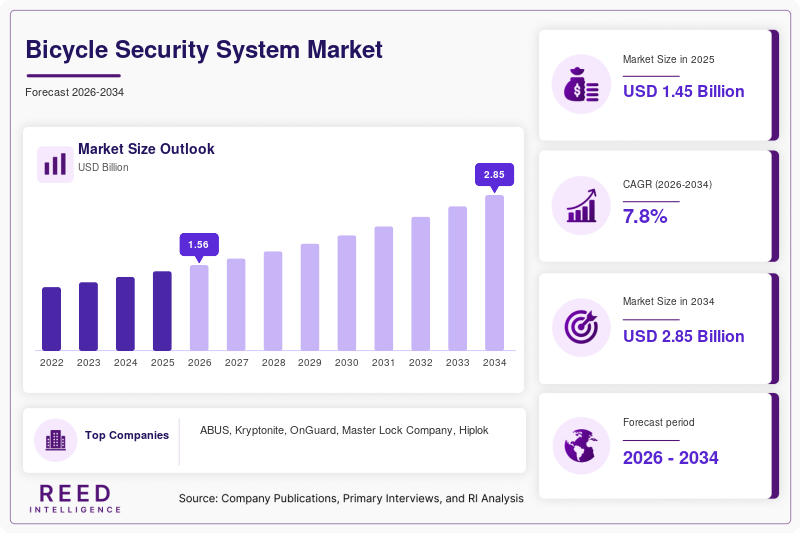
The Bicycle Security System Market size is estimated at USD 1.45 billion and is projected to reach USD 1.62 billion in 2026. Over the forecast period from 2025 to 2034, the market is expected to grow at a compound annual growth rate (CAGR) of 7.8%, reaching approximately USD 3.15 billion by 2034. This growth trajectory reflects the increasing need for reliable anti-theft solutions as bicycle ownership rises globally.
One of the primary growth factors is the surge in urban cycling due to environmental awareness and government initiatives promoting sustainable transportation. As cities invest in cycling infrastructure, the number of bicycles in circulation has increased significantly, creating a parallel demand for advanced security systems. Additionally, the rising incidence of bicycle theft in urban areas has prompted consumers to invest in more sophisticated locking and tracking solutions.
Key Highlights
- The Bicycle Security System Market reached a valuation of USD 1.45 billion in 2025 and continues to demonstrate stable expansion. Increasing bicycle ownership and rising awareness about theft prevention are supporting steady market growth across regions.
- The market is projected to reach USD 3.15 billion by 2034, growing at a CAGR of 7.8% during 2025–2034. This growth reflects sustained demand for advanced security solutions and increasing investments in cycling infrastructure.
- Smart security systems equipped with GPS tracking and mobile integration are gaining strong traction among users. These technologies enhance convenience and real-time monitoring, making them increasingly preferred over traditional locks.
- Rising bicycle theft rates, especially in urban areas, are significantly driving demand for reliable security systems. At the same time, growing urban cycling adoption is further accelerating the need for effective protection solutions.
Market Trends
Integration of Smart and Connected Security Systems
The Bicycle Security System Market is witnessing a strong shift toward smart and connected solutions. Manufacturers are increasingly incorporating technologies such as GPS tracking, Bluetooth connectivity, and mobile app integration into their products. These systems allow users to monitor their bicycles in real time, receive theft alerts, and even remotely lock or unlock devices. This trend is particularly prominent among urban commuters and electric bicycle users who prioritize convenience and enhanced security. The growing adoption of Internet of Things (IoT) technologies has further accelerated this trend, enabling seamless communication between devices. As consumers become more digitally inclined, the demand for connected security systems is expected to grow steadily, reshaping product innovation and competitive strategies in the market.
Rising Demand for Lightweight and Portable Security Solutions
Another notable trend in the Bicycle Security System Market is the increasing preference for lightweight and portable security devices. Consumers are seeking solutions that offer high security without compromising ease of use or mobility. Traditional heavy locks are gradually being replaced by compact folding locks, cable locks, and hybrid systems that combine strength with convenience. This trend is particularly relevant for commuters and recreational cyclists who require easy-to-carry security options during daily travel. Manufacturers are focusing on advanced materials such as hardened steel alloys and reinforced polymers to ensure durability while maintaining portability. The emphasis on ergonomic design and user-friendly features is expected to continue influencing product development and consumer purchasing decisions.
Market Drivers
Increasing Bicycle Theft Incidents Globally
The rising number of bicycle theft cases worldwide is a significant driver for the Bicycle Security System Market. Urban areas, in particular, have reported increasing theft rates due to higher bicycle density and limited secure parking infrastructure. This has led to heightened awareness among bicycle owners regarding the importance of reliable security systems. Consumers are now more inclined to invest in advanced locking mechanisms and tracking devices to prevent theft and ensure recovery in case of loss. Insurance providers are also encouraging the use of certified security systems, further boosting adoption. As theft incidents continue to rise, the demand for innovative and effective security solutions is expected to grow, supporting overall market expansion.
Growth in Electric Bicycle Adoption
The rapid adoption of electric bicycles (e-bikes) is another key driver fueling the Bicycle Security System Market. E-bikes are typically more expensive than traditional bicycles, making them attractive targets for theft. As a result, owners are more willing to invest in high-quality security systems to protect their assets. The increasing popularity of e-bikes in urban commuting and delivery services has further amplified this demand. Additionally, manufacturers are developing specialized security solutions tailored to e-bikes, including integrated locking systems and GPS tracking features. This trend is expected to continue as e-bike adoption rises globally, contributing significantly to market growth.
Market Restraint
High Cost of Advanced Security Systems
One of the primary restraints in the Bicycle Security System Market is the relatively high cost associated with advanced security solutions. While basic locks remain affordable, smart security systems equipped with GPS tracking, alarms, and mobile connectivity are often priced at a premium. This cost factor can limit adoption among price-sensitive consumers, particularly in developing regions where bicycle ownership is high but purchasing power is comparatively lower. The high initial investment required for these systems may discourage users from upgrading from traditional locks, thereby slowing market penetration.
The impact of this restraint is evident in markets where consumers prioritize cost over advanced features. For example, in regions with lower average incomes, basic cable or chain locks continue to dominate due to their affordability, despite offering limited security. Additionally, maintenance and battery requirements for smart systems can add to the overall cost, further deterring adoption. Manufacturers face the challenge of balancing advanced functionality with cost-effectiveness to expand their customer base. Addressing this issue through product innovation and economies of scale will be critical for sustained market growth.
Market Opportunities
Expansion in Emerging Markets
Emerging markets present significant growth opportunities for the Bicycle Security System Market. Countries in Asia Pacific, Latin America, and Africa are witnessing increasing bicycle adoption due to urbanization, rising fuel costs, and growing environmental awareness. However, the penetration of advanced security systems in these regions remains relatively low. This creates a substantial opportunity for manufacturers to introduce affordable and scalable solutions tailored to local needs. By focusing on cost-effective products and strategic distribution channels, companies can tap into a large and underserved customer base. Additionally, government initiatives promoting cycling infrastructure in these regions are expected to further boost demand for security systems.
Integration with Smart City Infrastructure
The integration of bicycle security systems with smart city infrastructure offers another promising opportunity for market growth. As cities adopt smart technologies to improve urban mobility and safety, there is increasing potential for connected bicycle security solutions to become part of integrated transportation networks. For instance, smart parking stations equipped with automated locking and surveillance systems can enhance security while providing convenience to users. Collaboration between security system manufacturers and urban planners can lead to innovative solutions that address both individual and public security concerns. This integration is expected to create new revenue streams and drive the adoption of advanced security systems in the coming years.
Segmental Analysis
By Type
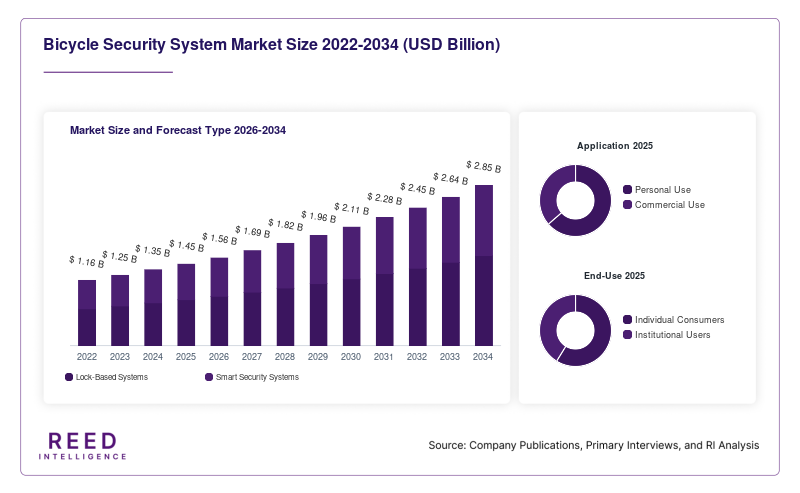
The lock-based security systems segment dominated the Bicycle Security System Market in 2024, accounting for approximately 58% of the total share. This dominance is attributed to the widespread use of traditional locks, including U-locks, chain locks, and cable locks. These products are preferred due to their affordability, simplicity, and ease of use. Consumers in both developed and developing regions rely on lock-based systems as a primary security measure. Manufacturers continue to enhance these products by incorporating stronger materials and improved locking mechanisms to increase resistance against theft attempts.
The smart security systems segment is expected to witness the fastest growth, with a projected CAGR of 10.2% during the forecast period. This growth is driven by the increasing demand for advanced features such as GPS tracking, mobile connectivity, and real-time alerts. These systems offer enhanced security and convenience, making them particularly attractive to urban commuters and e-bike owners. The integration of IoT technology and the rising adoption of smartphones are key factors supporting the growth of this segment.
By Application
The personal use segment held the largest share of the Bicycle Security System Market in 2024, accounting for approximately 65%. This dominance is driven by the high number of individual bicycle owners who require reliable security solutions for daily use. Personal users prioritize affordability and ease of use, leading to strong demand for traditional lock-based systems. The increasing popularity of cycling for fitness and commuting further supports the growth of this segment.
The commercial application segment is projected to grow at the fastest CAGR of 8.9% during the forecast period. This growth is driven by the expansion of bike-sharing programs, delivery services, and rental businesses. These applications require robust and scalable security solutions to prevent theft and ensure efficient operations. The adoption of smart security systems in commercial settings is expected to increase significantly, contributing to segment growth.
By End-Use
The individual consumers segment dominated the market in 2024, holding a share of approximately 70%. This segment includes recreational cyclists, commuters, and fitness enthusiasts who rely on security systems to protect their bicycles. The high volume of individual users and the increasing awareness of bicycle theft risks contribute to the dominance of this segment. Manufacturers are focusing on developing user-friendly and cost-effective solutions to cater to this large customer base.
The institutional segment is expected to grow at the fastest CAGR of 9.4% during the forecast period. This segment includes organizations such as universities, corporate campuses, and public transportation authorities. The growth is driven by the increasing adoption of bicycles within institutional environments and the need for centralized security solutions. The implementation of smart parking systems and integrated security infrastructure is a key factor supporting the growth of this segment.
Regional Analysis
North America
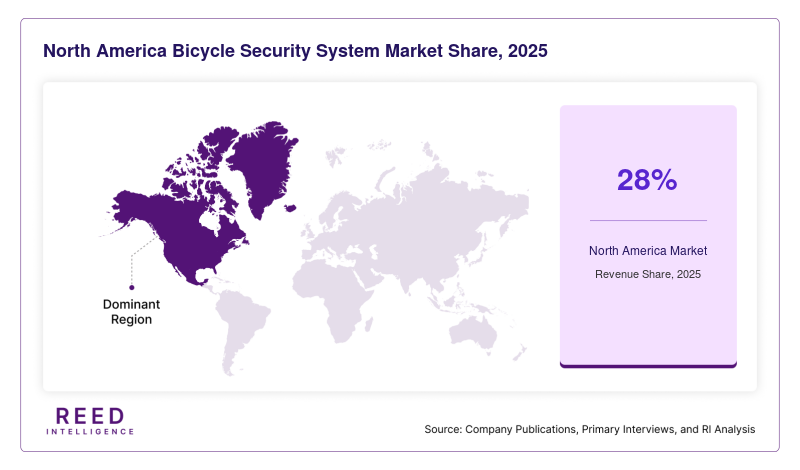
North America accounted for approximately 28% of the Bicycle Security System Market share in 2025, with a projected CAGR of 6.9% during the forecast period. The region’s growth is driven by increasing bicycle usage for commuting and recreation, supported by well-developed cycling infrastructure. The presence of established manufacturers and high consumer awareness regarding bicycle security further contribute to market expansion.
The United States dominates the regional market, primarily due to the high incidence of bicycle theft in urban areas. A unique growth factor in this region is the strong adoption of smart security systems, driven by a tech-savvy population and high disposable income levels. This trend is expected to sustain market growth over the forecast period.
Europe
Europe held a market share of around 26% in 2025 and is expected to grow at a CAGR of 7.2%. The region’s strong cycling culture and government initiatives promoting sustainable transportation have significantly increased bicycle ownership. Countries such as Germany, the Netherlands, and Denmark are leading contributors to market growth.
Germany stands out as the dominant country in the region, driven by its large population of cyclists and robust manufacturing base. A unique growth factor is the widespread adoption of insurance policies that require certified security systems, encouraging consumers to invest in high-quality products.
Asia Pacific
Asia Pacific accounted for approximately 24% of the market share in 2025 and is projected to grow at the fastest CAGR of 9.1%. Rapid urbanization, increasing environmental awareness, and rising adoption of bicycles for daily commuting are key factors driving market growth in the region.
China leads the market, supported by its large bicycle user base and growing e-bike adoption. A unique growth factor is the expansion of bike-sharing programs, which require integrated security systems to prevent theft and misuse, thereby boosting demand for advanced solutions.
Middle East & Africa
The Middle East & Africa region held a market share of around 12% in 2025, with a projected CAGR of 6.5%. The market is gradually expanding due to increasing urbanization and growing interest in cycling as a recreational activity.
The United Arab Emirates is a key contributor to regional growth. A unique growth factor is the development of cycling-friendly infrastructure in urban areas, which is encouraging bicycle usage and, in turn, increasing the demand for security systems.
Latin America
Latin America accounted for approximately 10% of the market share in 2025 and is expected to grow at a CAGR of 7.0%. The region’s growth is supported by rising bicycle adoption in urban areas and increasing awareness of environmental sustainability.
Brazil dominates the regional market, driven by its large population and growing urban cycling culture. A unique growth factor is the increasing use of bicycles for delivery services, which necessitates reliable security systems to protect assets during operations.
Competitive Landscape
The Bicycle Security System Market is moderately fragmented, with several global and regional players competing on product innovation, pricing, and distribution. Companies are focusing on developing advanced security solutions that incorporate smart technologies to differentiate themselves in the market. Strategic partnerships, mergers, and acquisitions are also common as players seek to expand their market presence.
Among the leading companies, ABUS stands out as a key market leader due to its extensive product portfolio and strong brand reputation. The company has recently introduced advanced smart locks with integrated alarm systems, reflecting its focus on innovation. Other prominent players are also investing in research and development to enhance product performance and meet evolving consumer demands. The competitive landscape is expected to intensify as new entrants introduce innovative solutions and established players expand their offerings.
Key Players
- ABUS
- Kryptonite
- OnGuard
- Master Lock Company
- Hiplok
- TiGr Lock
- Litelok
- Trelock
- AXA Bike Security
- Knog
- Bitlock
- Linka
- Skylock
- Seatylock
- FoldyLock
Recent Developments
- A leading manufacturer launched a new GPS-enabled smart lock with real-time tracking and mobile alerts to enhance theft prevention capabilities.
- A major company expanded its product line by introducing lightweight folding locks designed for urban commuters.
- A strategic partnership between a security system provider and a bike-sharing company resulted in the deployment of integrated smart locking solutions across multiple cities.
Bicycle Security System Market Segments
Type
- Lock-Based Systems
- Smart Security Systems
Application
- Personal Use
- Commercial Use
End-Use
- Individual Consumers
- Institutional Users
By Region
- North America
- Europe
- APAC
- Middle East and Africa
- LATAM