Bilateral Cystoid Macular Edema Market Size, Share & Demand Report By Treatment Type (Sustained-Release Implants, Non-Steroidal Anti-Inflammatory Drugs, Laser Therapy), By Diagnosis Method (Optical Coherence Tomography, Fluorescein Angiography), By End Use (Ambulatory Surgical Centers, Academic and Research Institutes), By Region & Segment Forecasts, 2026–2034
USD 3950
Market Overview
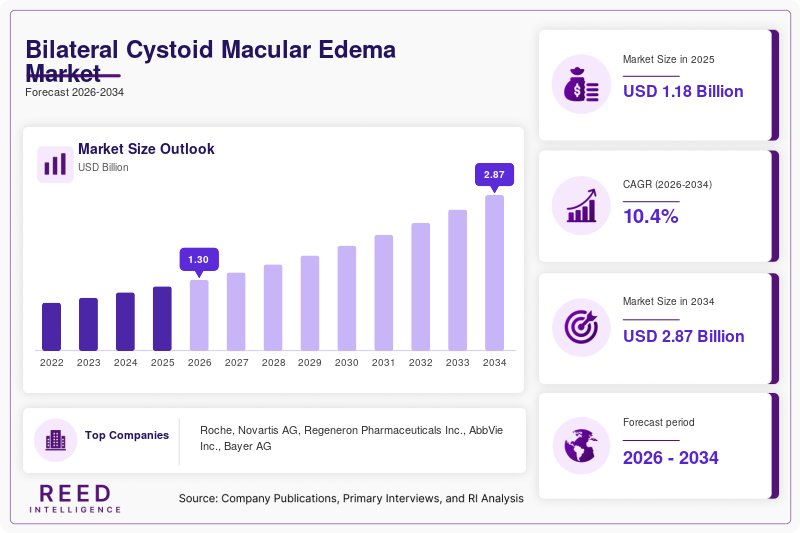
The global Bilateral Cystoid Macular Edema Market size was valued at USD 1.18 billion in 2026 and is projected to reach USD 2.61 billion by 2034, expanding at a CAGR of 10.4% during the forecast period from 2026 to 2034. The market is gaining momentum due to the increasing prevalence of diabetes, retinal vein occlusion, and post-surgical ocular complications across developed and emerging economies. Bilateral cystoid macular edema refers to fluid accumulation in the macula of both eyes, leading to blurred vision and retinal swelling. The rising burden of age-related eye disorders and increasing awareness regarding early retinal disease diagnosis are supporting market expansion globally.
Healthcare systems are investing more resources in ophthalmic imaging technologies, advanced biologics, and minimally invasive retinal therapies. Governments and private healthcare organizations are also increasing funding for vision care programs to reduce blindness associated with chronic retinal diseases. The growing elderly population has further strengthened demand for anti-inflammatory therapies, corticosteroid implants, and vascular endothelial growth factor inhibitors used in the management of bilateral cystoid macular edema.
Key Highlights
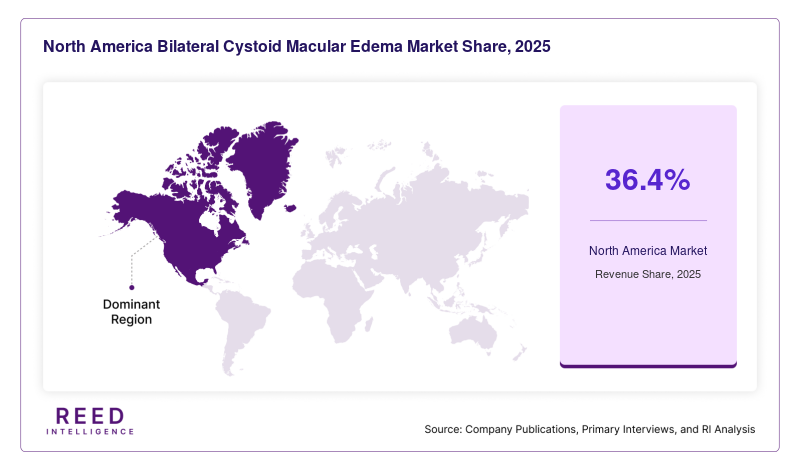
- North America dominated the market with a 36.4% share in 2025.
- Asia Pacific is expected to grow at the fastest CAGR of 11.8% during 2026–2034.
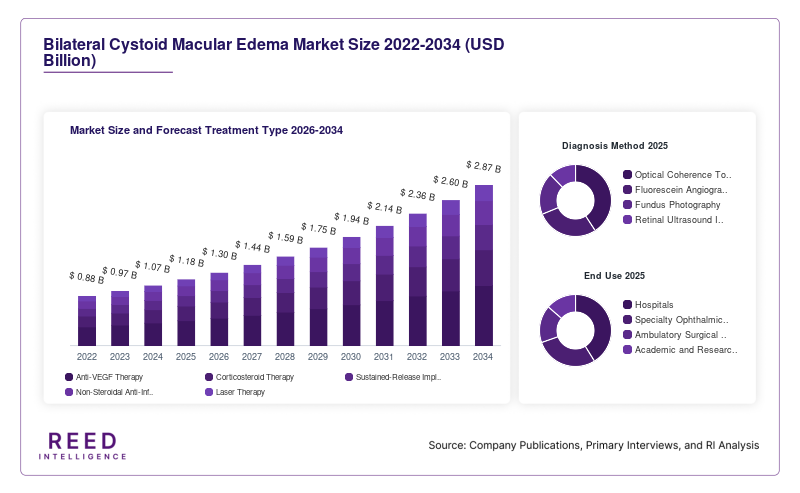
- By treatment type, anti-VEGF therapy accounted for the largest share of 42.7%.
- while sustained-release implants are projected to grow at a CAGR of 12.6%.
- By diagnosis method, optical coherence tomography led with a 48.3% share.
- whereas fluorescein angiography is expected to expand at a CAGR of 10.9%.
- By end use, hospitals held a 44.1% share.
- while specialty ophthalmic clinics are anticipated to grow at a CAGR of 11.5%.
- The United States remained the dominant country, with market values of USD 428 million in 2024 and USD 468 million in 2025.
Market Trends
Integration of Advanced Retinal Imaging Technologies
The Bilateral Cystoid Macular Edema Market is witnessing a strong trend toward the integration of advanced retinal imaging systems for rapid diagnosis and disease monitoring. Optical coherence tomography angiography, artificial intelligence-assisted retinal imaging, and high-resolution scanning systems are becoming increasingly common in ophthalmology centers. Healthcare providers are adopting these technologies to improve diagnostic accuracy and detect subtle retinal fluid accumulation at earlier stages. Advanced imaging platforms also enable clinicians to monitor treatment responses more effectively and adjust therapeutic strategies in real time. The use of cloud-based retinal image management systems is further improving patient data accessibility and collaboration among specialists. This trend is supporting faster clinical decision-making and increasing patient confidence in long-term retinal care.
Expansion of Sustained-Release Drug Delivery Solutions
Another major trend influencing the Bilateral Cystoid Macular Edema Market is the increasing development of sustained-release ocular drug delivery systems. Pharmaceutical manufacturers are focusing on biodegradable implants, intravitreal injections with extended therapeutic duration, and micro-dose delivery devices that reduce the frequency of treatment administration. These innovations are helping improve patient compliance, especially among elderly individuals who require repeated retinal therapy sessions. Long-acting corticosteroid implants and advanced biologic formulations are gaining traction in hospitals and specialty clinics due to their ability to provide prolonged inflammation control. The growing preference for personalized treatment plans and minimally invasive retinal procedures is further accelerating investment in long-term ocular drug delivery technologies.
Market Drivers
Increasing Prevalence of Diabetes and Retinal Disorders
The growing incidence of diabetes and retinal vascular diseases is a major factor driving the Bilateral Cystoid Macular Edema Market. Diabetes-related retinal complications such as diabetic retinopathy often result in fluid accumulation in the macula, increasing the need for continuous ophthalmic treatment. Rising obesity rates, sedentary lifestyles, and aging populations are contributing to a larger patient pool requiring retinal monitoring and intervention. Healthcare providers are emphasizing early screening programs for diabetic eye complications, which has improved diagnosis rates globally. In many countries, national healthcare agencies are promoting routine retinal examinations to prevent permanent vision loss. These developments are increasing demand for anti-VEGF therapies, retinal imaging systems, and specialized ophthalmic procedures designed for bilateral cystoid macular edema management.
Rising Adoption of Specialized Ophthalmic Care Services
The expansion of specialty ophthalmology clinics and retinal care centers is further supporting market growth. Many healthcare institutions are increasing investments in dedicated retinal treatment facilities equipped with advanced diagnostic devices and injection-based therapies. The availability of skilled retinal specialists has improved treatment accessibility in urban healthcare networks. In addition, private insurance coverage for retinal disease treatment has expanded in several countries, enabling more patients to access high-cost therapies. The adoption of telemedicine and digital eye screening programs has also improved referral rates from primary care physicians to ophthalmic specialists. These factors are collectively enhancing treatment penetration rates and strengthening long-term demand within the Bilateral Cystoid Macular Edema Market.
Market Restraint
High Treatment Costs and Limited Accessibility in Developing Regions
One of the primary challenges affecting the Bilateral Cystoid Macular Edema Market is the high cost associated with long-term retinal therapies and advanced diagnostic procedures. Anti-VEGF injections, corticosteroid implants, and repeated retinal imaging sessions can place a substantial financial burden on patients without comprehensive insurance coverage. In several low-income and middle-income countries, access to retinal specialists and advanced ophthalmic facilities remains limited, reducing early diagnosis and treatment rates. Hospitals in rural areas often lack high-resolution imaging systems and trained ophthalmologists required for accurate disease management.
The recurring nature of treatment further increases healthcare expenditures because many patients require repeated injections and follow-up visits over extended periods. Delayed treatment initiation may lead to irreversible vision impairment, affecting patient outcomes and workforce productivity. In addition, stringent regulatory approval requirements for ophthalmic drugs and implants can increase development costs for pharmaceutical manufacturers. These barriers may limit the availability of innovative therapies in price-sensitive markets and slow the adoption of advanced retinal treatment solutions across developing healthcare systems.
Market Opportunities
Growth Potential in Emerging Healthcare Economies
Emerging economies across Asia Pacific, Latin America, and parts of the Middle East are creating significant growth opportunities for the Bilateral Cystoid Macular Edema Market. Governments in these regions are increasing investments in public healthcare infrastructure and vision care programs to address rising rates of diabetes and age-related retinal diseases. Urbanization and expanding middle-class populations are contributing to higher healthcare spending and improved access to specialized ophthalmic treatment. International healthcare organizations are also supporting screening initiatives focused on diabetic retinopathy and macular disorders. These efforts are increasing awareness regarding early retinal disease management and encouraging the adoption of modern diagnostic technologies. As ophthalmology clinics expand across secondary cities and semi-urban areas, market participants are expected to gain access to broader patient populations.
Advancements in Personalized and Combination Therapies
The increasing focus on personalized medicine is expected to create new opportunities in the Bilateral Cystoid Macular Edema Market. Researchers and pharmaceutical companies are developing combination therapies that integrate anti-inflammatory drugs with biologic agents to improve retinal fluid reduction and visual recovery outcomes. Advances in genetic profiling and biomarker-based treatment selection are helping physicians identify patients who are more likely to respond to specific therapies. This approach can improve clinical effectiveness while reducing unnecessary treatment cycles. Pharmaceutical companies are also exploring gene-based retinal therapies and nano-formulated ocular medications that enable targeted drug delivery with fewer side effects. These innovations are likely to support premium product development and open new revenue channels for manufacturers during the forecast period.
Segmental Analysis
By Treatment Type
Anti-VEGF therapy held the dominant share of the Bilateral Cystoid Macular Edema Market in 2024, accounting for approximately 42.7% of global revenue. The strong market position of this subsegment is linked to its effectiveness in reducing retinal swelling and improving visual acuity among patients with diabetic macular edema and retinal vein occlusion. Ophthalmologists frequently prescribe anti-VEGF injections because they provide measurable improvement in retinal fluid control and long-term disease management. Healthcare institutions are increasingly incorporating these therapies into standardized retinal treatment protocols due to their clinical reliability and growing availability across developed healthcare systems. Pharmaceutical companies are also investing heavily in biologic drug development to enhance treatment duration and reduce injection frequency, further supporting segment expansion.
Sustained-release implants are projected to witness the fastest CAGR of 12.6% during the forecast period due to increasing demand for long-lasting retinal therapies. These implants help reduce the burden of repeated intravitreal injections by enabling controlled drug release over extended periods. Elderly patients and individuals with limited access to frequent ophthalmology visits are increasingly benefiting from these advanced delivery systems. Healthcare providers are adopting sustained-release implants to improve treatment adherence and reduce complications associated with inconsistent therapy schedules. Technological advances in biodegradable implant materials and targeted ocular drug delivery are further supporting adoption rates. The growing focus on patient convenience and reduced clinical workload is expected to strengthen demand for this treatment category in both hospital and specialty clinic environments.
By Diagnosis Method
Optical coherence tomography emerged as the leading diagnosis method in the Bilateral Cystoid Macular Edema Market, representing 48.3% of total market share in 2024. This technology has become a standard diagnostic tool for retinal specialists because it provides high-resolution cross-sectional imaging of retinal structures. The ability to identify fluid accumulation, retinal thickness changes, and treatment responses with precision has significantly improved disease management outcomes. Hospitals and ophthalmic centers are increasingly investing in portable and AI-assisted optical coherence tomography systems to improve diagnostic efficiency. The growing use of digital imaging platforms and integrated patient record systems has further increased adoption across healthcare facilities. Improved reimbursement policies for retinal imaging procedures in several countries are also contributing to sustained segment dominance.
Fluorescein angiography is expected to grow at a CAGR of 10.9% during the forecast period due to its expanding use in detailed retinal vascular assessment. This diagnostic method is gaining popularity for evaluating blood vessel leakage and identifying underlying retinal abnormalities associated with bilateral cystoid macular edema. Ophthalmologists are increasingly using fluorescein angiography in combination with optical coherence tomography to enhance clinical accuracy and treatment planning. Technological advancements in imaging software and reduced procedure times are improving patient comfort and diagnostic reliability. In addition, rising investments in specialized retinal imaging centers across emerging markets are increasing the availability of angiography-based diagnostic procedures. The integration of multimodal imaging techniques is expected to further strengthen segment growth over the coming years.
By End Use
Hospitals accounted for the largest share of the Bilateral Cystoid Macular Edema Market in 2024, contributing approximately 44.1% of total revenue. Large hospitals continue to dominate the market because they offer comprehensive ophthalmic services, advanced imaging systems, and access to multidisciplinary healthcare teams. Patients with complex retinal disorders often prefer hospital-based treatment due to the availability of experienced retinal surgeons and emergency care support. Public and private hospitals are increasing investments in ophthalmology departments to accommodate rising patient volumes associated with diabetes-related retinal complications. In addition, hospitals frequently participate in clinical research programs focused on innovative biologics and retinal implants, enabling early adoption of advanced therapies. Strong reimbursement structures and integrated healthcare services further support the leading position of this segment.
Specialty ophthalmic clinics are anticipated to register the fastest CAGR of 11.5% during the forecast period due to increasing demand for personalized retinal care. These clinics are gaining popularity because they provide focused ophthalmology services with shorter waiting times and specialized treatment expertise. Many specialty centers are adopting advanced retinal imaging systems, digital consultation platforms, and minimally invasive therapeutic procedures to improve patient experience and operational efficiency. Growing awareness regarding preventive eye care has encouraged patients to seek specialized retinal evaluations at dedicated ophthalmic clinics. The expansion of private healthcare networks in emerging economies is also increasing the number of specialty eye centers equipped with modern retinal treatment technologies. These factors are expected to support strong segment growth throughout the forecast period.
Regional Analysis
North America
North America accounted for 36.4% of the global Bilateral Cystoid Macular Edema Market in 2025 and is projected to maintain steady expansion at a CAGR of 9.8% during the forecast period. The region benefits from strong healthcare infrastructure, high healthcare spending, and broad availability of advanced retinal diagnostic technologies. Ophthalmology centers across the United States and Canada are rapidly adopting optical coherence tomography systems, sustained-release implants, and biologic therapies for retinal disease treatment. Favorable reimbursement structures and growing awareness regarding diabetic eye complications are further supporting consistent market demand.
The United States remains the dominant country within the North American market due to the large diabetic population and increasing incidence of retinal vascular disorders. The country has a well-established network of retinal specialists and research institutions focused on ophthalmic innovation. Strong clinical trial activity related to anti-VEGF drugs and intravitreal implants is accelerating therapeutic advancements. In addition, collaboration between pharmaceutical firms and healthcare providers has improved access to specialized retinal therapies, creating a favorable environment for continued market growth across urban and suburban healthcare systems.
Europe
Europe represented a significant share of the Bilateral Cystoid Macular Edema Market in 2025 and is anticipated to grow at a CAGR of 9.4% through 2034. The region benefits from strong public healthcare systems, increasing ophthalmic screening programs, and rising awareness regarding age-related retinal disorders. Countries across Western Europe are investing in hospital modernization and digital ophthalmology platforms that support early diagnosis of retinal diseases. Demand for minimally invasive retinal therapies and long-acting corticosteroid implants has increased steadily due to the aging population and growing incidence of chronic eye conditions.
Germany emerged as the leading country in the European market because of its advanced healthcare infrastructure and strong adoption of innovative ophthalmic technologies. The country has a high concentration of specialized eye hospitals and retinal research centers focused on improving treatment outcomes. Government-supported reimbursement systems for retinal disease therapies have improved patient access to biologics and advanced imaging procedures. In addition, partnerships between pharmaceutical companies and academic institutions are contributing to the development of next-generation ocular therapies and diagnostic solutions.
Asia Pacific
Asia Pacific is expected to record the fastest CAGR of 11.8% in the Bilateral Cystoid Macular Edema Market during the forecast period. Rapid urbanization, increasing healthcare investments, and the expanding prevalence of diabetes are supporting strong regional demand for retinal disease management solutions. Healthcare providers in countries such as China, India, Japan, and South Korea are increasing the adoption of retinal imaging technologies and specialized ophthalmic treatments. Growing healthcare awareness among middle-income populations has also improved patient willingness to seek early diagnosis and preventive retinal care.
China remains the dominant contributor to regional revenue generation due to its large patient population and expanding healthcare infrastructure. The country is witnessing rapid growth in ophthalmology clinics and private retinal care centers equipped with modern imaging technologies. Government initiatives promoting diabetes screening and vision health awareness are improving disease detection rates across urban and rural populations. In addition, domestic pharmaceutical manufacturers are increasing investments in cost-effective retinal therapies, helping improve treatment accessibility and market penetration across the country.
Middle East & Africa
The Middle East & Africa Bilateral Cystoid Macular Edema Market is projected to experience moderate growth at a CAGR of 8.7% during the forecast period. The market is gradually benefiting from increasing healthcare modernization programs and growing investments in specialty medical services. Countries across the Gulf Cooperation Council are expanding hospital infrastructure and importing advanced ophthalmic technologies to improve retinal disease treatment capabilities. Rising awareness regarding diabetic complications and visual impairment is encouraging more patients to seek retinal screening and therapeutic intervention.
Saudi Arabia is the dominant country within the regional market due to its expanding healthcare expenditure and increasing prevalence of diabetes-related retinal disorders. The government is actively supporting healthcare digitization and specialized ophthalmology services through national healthcare transformation initiatives. Large private hospital groups are investing in retinal imaging systems and biologic treatment programs to strengthen patient care quality. The growing presence of international healthcare providers and pharmaceutical companies is also contributing to improved access to advanced retinal therapies within the country.
Latin America
Latin America is expected to witness stable growth in the Bilateral Cystoid Macular Edema Market, supported by increasing healthcare awareness and gradual improvements in ophthalmic care infrastructure. The region is projected to expand at a CAGR of 8.9% from 2026 to 2034. Growing rates of diabetes and hypertension are increasing the burden of retinal disorders across several countries. Public healthcare agencies are expanding vision screening initiatives and collaborating with private providers to improve access to retinal diagnosis and treatment services.
Brazil leads the Latin American market because of its large healthcare network and increasing investments in specialized ophthalmic treatment centers. Urban hospitals and private eye clinics are adopting advanced retinal imaging technologies to improve diagnosis accuracy and treatment monitoring. The country is also experiencing rising demand for minimally invasive retinal therapies among aging populations. Expanding medical tourism activities and growing partnerships between domestic distributors and global pharmaceutical firms are supporting the availability of advanced retinal treatment products across major metropolitan regions.
Competitive Landscape
The Bilateral Cystoid Macular Edema Market is characterized by the presence of multinational pharmaceutical companies, ophthalmic device manufacturers, and specialized retinal therapy developers competing through product innovation and strategic partnerships. Market participants are focusing on biologic therapies, sustained-release implants, and advanced imaging systems to strengthen their competitive positions. Companies are also investing in clinical trials aimed at improving retinal fluid control and reducing treatment frequency for patients with chronic macular edema.
Roche remains one of the leading participants in the market due to its broad ophthalmology portfolio and strong global distribution network. The company continues to expand its retinal disease pipeline through research collaborations and biologic therapy advancements. Novartis, Regeneron Pharmaceuticals, AbbVie, and Bayer are also strengthening their market positions by expanding ophthalmic product offerings and increasing regional penetration strategies. Several companies are entering partnerships with retinal research institutes to accelerate innovation in ocular drug delivery systems.
A recent development shaping the competitive environment involved the launch of a next-generation intravitreal biologic therapy designed to extend treatment duration for retinal edema patients. In addition, multiple pharmaceutical manufacturers have expanded manufacturing capacities for retinal therapeutics to address rising global demand. Companies are also increasing investments in digital ophthalmology platforms and artificial intelligence-assisted retinal diagnostics to improve treatment planning and patient monitoring capabilities.
Key Players
- Novartis AG
- Regeneron Pharmaceuticals Inc.
- AbbVie Inc.
- Bayer AG
- Alimera Sciences
- Bausch + Lomb
- EyePoint Pharmaceuticals
- Santen Pharmaceutical Co. Ltd.
- Allergan Aesthetics
- Ocular Therapeutix Inc.
- Clearside Biomedical Inc.
- Kodiak Sciences Inc.
- Adverum Biotechnologies Inc.
- Pfizer Inc.
- Oxurion NV
Recent Developments
- Roche expanded its ophthalmology research collaboration program in 2025 to accelerate development of long-acting biologic therapies for retinal edema management.
- Novartis AG introduced an upgraded retinal imaging integration platform in 2024 designed to improve monitoring accuracy for patients undergoing anti-VEGF treatment.
- Regeneron Pharmaceuticals Inc. increased production capacity for intravitreal retinal therapies in 2025 to meet growing demand across North America and Asia Pacific.
- Bayer AG partnered with regional ophthalmology centers in 2024 to expand access to retinal disease screening and patient education initiatives.
- EyePoint Pharmaceuticals announced positive clinical progress for an extended-release ocular implant technology aimed at reducing treatment frequency in chronic retinal edema patients.
Bilateral Cystoid Macular Edema Market Segments
Treatment Type
- Anti-VEGF Therapy
- Corticosteroid Therapy
- Sustained-Release Implants
- Non-Steroidal Anti-Inflammatory Drugs
- Laser Therapy
Diagnosis Method
- Optical Coherence Tomography
- Fluorescein Angiography
- Fundus Photography
- Retinal Ultrasound Imaging
End Use
- Hospitals
- Specialty Ophthalmic Clinics
- Ambulatory Surgical Centers
- Academic and Research Institutes
By Region
- North America
- Europe
- APAC
- Middle East and Africa
- LATAM