Biliary Atresia Treatment Market Size, Share & Demand Report By Treatment Type (Surgical Treatment, Liver Transplantation, Drug Therapy), By Diagnosis Method (Imaging Techniques, Biopsy, Blood Tests), By End-Use (Hospitals, Specialty Clinics, Ambulatory Care Centers), By Region & Segment Forecasts, 2025–2034
USD 3950
Market Overview
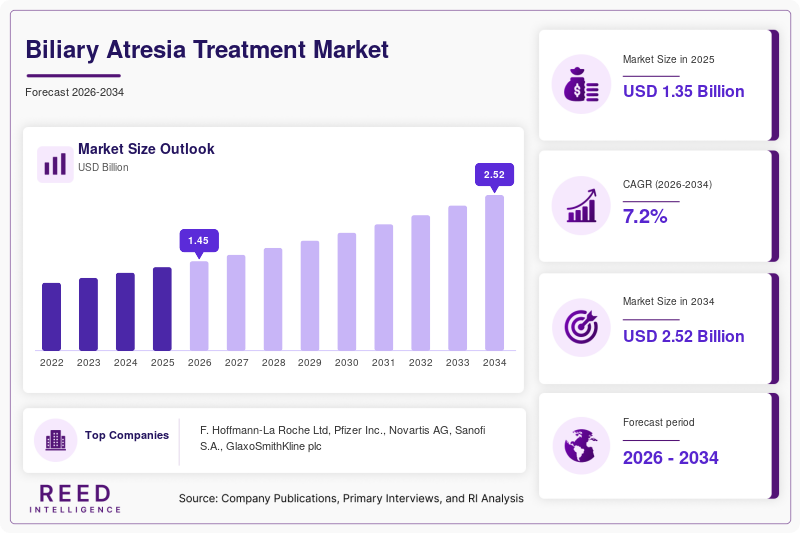
The Biliary Atresia Treatment Market market size is estimated at USD 1.35 billion and is projected to reach USD 1.48 billion in 2026. Over the forecast period from 2025 to 2034, the market is expected to grow at a CAGR of 7.2%, reaching approximately USD 2.85 billion by 2034. This growth reflects the increasing prevalence of biliary atresia cases globally and the expanding availability of specialized treatment options such as Kasai portoenterostomy and liver transplantation.
One of the key growth factors is the improvement in neonatal screening programs, which enables early detection and timely intervention. Early diagnosis significantly improves survival rates and reduces complications, thereby increasing demand for treatment services. Another major factor is the continuous advancement in pediatric surgical procedures, including minimally invasive techniques that enhance recovery outcomes. Additionally, increasing healthcare expenditure across emerging economies is contributing to improved access to specialized treatments and post-operative care facilities.
Key Highlights
- The market size reached USD 1.35 billion in 2025 and is projected to expand significantly over the forecast period. It is expected to reach approximately USD 2.85 billion by 2034, reflecting steady growth in treatment adoption and healthcare advancements.
- The market is anticipated to grow at a CAGR of 7.2% during 2025–2034. This growth rate highlights increasing demand for effective treatment solutions and continuous improvements in medical technologies.
- Early diagnosis and advancements in surgical procedures are major growth drivers. Improved screening programs and enhanced surgical outcomes are supporting higher survival rates and treatment success.
- The increasing adoption of liver transplantation is playing a crucial role in market expansion. Rising success rates and better post-operative care are encouraging more patients to opt for transplantation in advanced cases.
Market Trends
Rising Adoption of Early Screening and Diagnostic Technologies
One of the major trends in the Biliary Atresia Treatment Market is the growing adoption of early screening and diagnostic technologies. Healthcare systems across developed and developing regions are implementing newborn screening programs that focus on early detection of liver abnormalities. These programs often include stool color cards and advanced imaging techniques, which help identify biliary atresia at an early stage. Early diagnosis significantly improves surgical outcomes, especially for procedures such as Kasai portoenterostomy. As a result, healthcare providers are increasingly investing in diagnostic infrastructure and training programs, which is driving the demand for treatment services and improving patient survival rates.
Integration of Multidisciplinary Care Models
Another significant trend is the increasing integration of multidisciplinary care approaches in treatment protocols. Hospitals are adopting coordinated care models that involve pediatric surgeons, hepatologists, nutritionists, and transplant specialists. This integrated approach ensures comprehensive patient management, from diagnosis to post-operative care and long-term monitoring. Additionally, advancements in telemedicine are enabling remote consultations and follow-ups, particularly in regions with limited access to specialized healthcare services. This trend is enhancing treatment accessibility and improving overall patient outcomes, thereby supporting sustained market growth.
Market Drivers
Increasing Awareness and Early Diagnosis of Neonatal Liver Disorders
A primary driver of the Biliary Atresia Treatment Market is the rising incidence of neonatal liver disorders and increased awareness among healthcare professionals and parents. Improved knowledge about early symptoms, such as jaundice and pale stools, has led to earlier medical consultations and diagnosis. Governments and healthcare organizations are actively promoting awareness campaigns, which are helping in early identification and timely treatment. This has increased the demand for surgical interventions and specialized care facilities, thereby driving market growth.
Advancements in Surgical Techniques and Post-Operative Care
Another key driver is the advancement in surgical techniques and post-operative care. Innovations in minimally invasive procedures and improved surgical tools have enhanced the success rates of treatments like Kasai portoenterostomy. In addition, advancements in liver transplantation, including better immunosuppressive therapies and organ preservation methods, have significantly improved patient survival rates. These technological developments are encouraging healthcare providers to adopt advanced treatment methods, thereby expanding the overall market. The availability of skilled pediatric surgeons and specialized transplant centers is further supporting this growth trajectory.
Market Restraint
High Cost of Treatment and Limited Accessibility
One of the major restraints in the Biliary Atresia Treatment Market is the high cost associated with surgical procedures and long-term treatment. Liver transplantation, which is often required in advanced cases, involves significant expenses related to surgery, hospitalization, and post-operative care. Additionally, patients require lifelong immunosuppressive therapy, which adds to the financial burden. In many low- and middle-income countries, limited insurance coverage and inadequate healthcare infrastructure restrict access to these treatments.
This financial barrier significantly impacts market growth, as a large portion of the affected population may not receive timely or adequate care. For example, in regions with limited transplant facilities, patients often experience delays in treatment, leading to disease progression and reduced survival rates. The lack of skilled healthcare professionals and specialized centers further exacerbates this issue. As a result, despite advancements in treatment technologies, the high cost and limited accessibility continue to pose challenges for market expansion.
Market Opportunities
Expansion of Healthcare Infrastructure in Emerging Economies
One promising opportunity in the Biliary Atresia Treatment Market lies in the expansion of healthcare infrastructure in emerging economies. Countries in Asia Pacific, Latin America, and the Middle East are investing in advanced medical facilities and training programs for healthcare professionals. This expansion is increasing the availability of specialized treatment options, including pediatric surgeries and liver transplantation. As healthcare access improves, a larger patient population is expected to seek timely treatment, thereby driving market growth.
Advancements in Novel Therapeutic Approaches
Another significant opportunity is the ongoing research and development in novel therapeutic approaches. Scientists are exploring gene therapy, stem cell therapy, and regenerative medicine as potential alternatives or complements to existing treatments. These innovations aim to improve liver function and reduce the need for transplantation. Additionally, pharmaceutical companies are developing new drugs that target inflammation and fibrosis associated with biliary atresia. These advancements have the potential to transform the treatment landscape, offering more effective and less invasive options for patients in the future.
Segmental Analysis
By Treatment Type
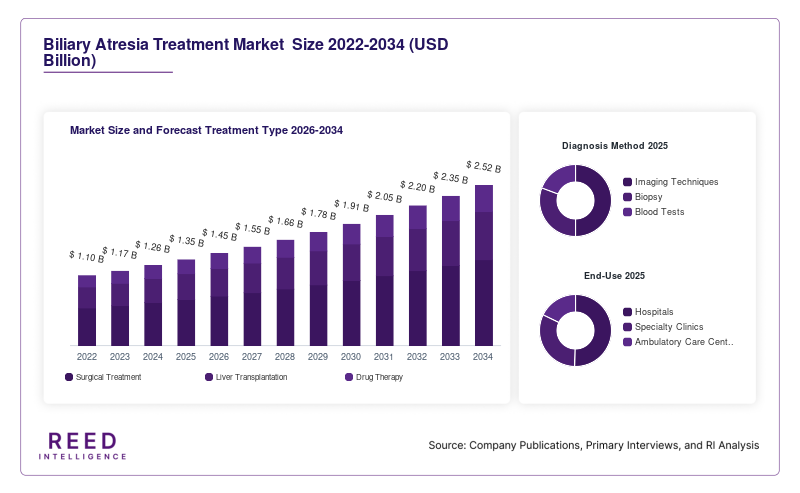
The surgical treatment segment dominated the Biliary Atresia Treatment Market in 2024, accounting for approximately 62% of the total market share. Among surgical options, Kasai portoenterostomy remains the most commonly performed procedure, especially in early-stage cases. This dominance is attributed to its effectiveness in restoring bile flow and delaying the need for liver transplantation. The widespread adoption of this procedure, combined with improvements in surgical techniques, has contributed to its leading position. Hospitals are increasingly investing in specialized pediatric surgical units, which further supports the growth of this segment.
Liver transplantation is the fastest-growing subsegment, with an expected CAGR of 8.1% during the forecast period. This growth is driven by the increasing number of advanced cases where the Kasai procedure is not effective. Improvements in transplant success rates, better donor matching systems, and advancements in immunosuppressive therapies are supporting this growth. Additionally, the expansion of transplant centers in emerging regions is increasing access to this life-saving procedure, further driving segment growth.
By Diagnosis Method
Imaging techniques dominated the diagnosis segment in 2024, accounting for around 55% of the market share. Ultrasound and magnetic resonance imaging are widely used for detecting abnormalities in the biliary system. These methods are non-invasive and provide accurate results, making them the preferred choice among healthcare providers. The increasing availability of advanced imaging equipment and trained professionals is further supporting the growth of this segment.
Biopsy and advanced diagnostic tests are the fastest-growing subsegment, with a CAGR of 7.8%. These methods provide definitive confirmation of biliary atresia and are increasingly used in complex cases. The growth is driven by advancements in diagnostic technologies and the need for accurate and early diagnosis. Additionally, research initiatives focused on improving diagnostic accuracy are contributing to the expansion of this segment.
By End-Use
Hospitals dominated the end-use segment in 2024, holding approximately 68% of the market share. This dominance is due to the availability of specialized equipment, skilled healthcare professionals, and comprehensive treatment facilities. Hospitals serve as primary centers for both diagnosis and surgical treatment, including liver transplantation. The presence of multidisciplinary teams further enhances patient care and supports the growth of this segment.
Specialty clinics and ambulatory care centers are the fastest-growing subsegment, with a CAGR of 7.5%. These facilities are gaining popularity due to their cost-effectiveness and accessibility. They provide follow-up care, diagnostic services, and post-operative management, which reduces the burden on hospitals. The increasing number of such centers, particularly in urban areas, is contributing to their rapid growth.
Regional Analysis
North America
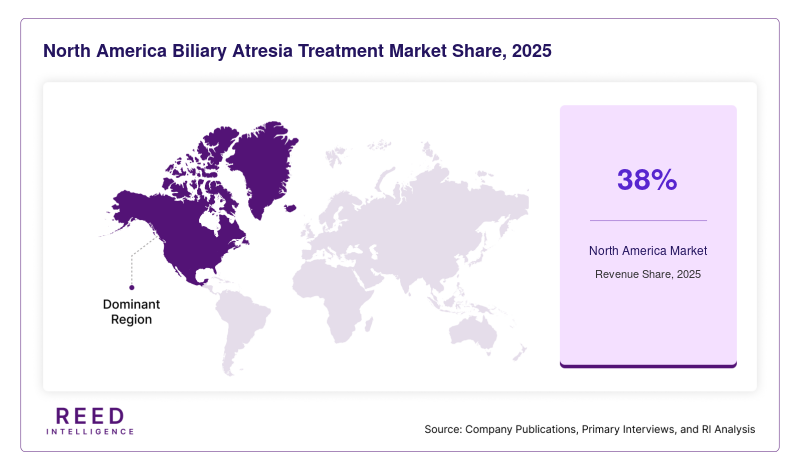
North America held the largest share of the Biliary Atresia Treatment Market in 2025, accounting for approximately 38% of the global market. The region is expected to grow at a CAGR of 6.8% during the forecast period. This dominance is attributed to advanced healthcare infrastructure, high awareness levels, and the presence of specialized pediatric treatment centers. The availability of early screening programs and well-established reimbursement systems further supports market growth in the region.
The United States dominates the regional market due to its extensive network of pediatric hospitals and liver transplant centers. A unique growth factor is the strong focus on research and clinical trials related to rare pediatric diseases. Government funding and private sector investments are driving innovation in treatment methods, which is enhancing patient outcomes and supporting market expansion.
Europe
Europe accounted for around 27% of the global market share in 2025 and is projected to grow at a CAGR of 6.5% over the forecast period. The region benefits from well-established healthcare systems and increasing adoption of early diagnostic practices. Government initiatives aimed at improving neonatal care and rare disease management are contributing to steady market growth.
Germany leads the European market due to its advanced medical infrastructure and strong emphasis on research and development. A unique growth factor is the integration of multidisciplinary care models in hospitals, which improves treatment efficiency and patient outcomes. This approach is gaining traction across the region, further supporting market expansion.
Asia Pacific
Asia Pacific is expected to witness the fastest growth, with a CAGR of 8.5% during the forecast period, and held a 20% market share in 2025. The region’s growth is driven by increasing healthcare investments, rising awareness, and a large patient population. Governments are focusing on improving healthcare access, which is boosting the demand for biliary atresia treatments.
China dominates the regional market due to its large population and expanding healthcare infrastructure. A unique growth factor is the increasing number of specialized pediatric hospitals and transplant centers. These developments are improving access to advanced treatments and driving market growth across the region.
Middle East & Africa
The Middle East & Africa accounted for approximately 8% of the market share in 2025 and is expected to grow at a CAGR of 6.2%. The region is gradually improving its healthcare infrastructure, with investments in specialized treatment facilities and training programs. Increasing awareness about rare diseases is also contributing to market growth.
Saudi Arabia leads the regional market due to its investments in healthcare modernization. A unique growth factor is the government’s focus on expanding transplant capabilities and improving access to advanced medical technologies. These initiatives are supporting the development of the biliary atresia treatment market in the region.
Latin America
Latin America held around 7% of the global market share in 2025 and is projected to grow at a CAGR of 6.7%. The region is experiencing gradual improvements in healthcare access and infrastructure. Increasing awareness and government initiatives are supporting early diagnosis and treatment adoption.
Brazil dominates the regional market due to its relatively advanced healthcare system. A unique growth factor is the expansion of public healthcare programs that provide access to pediatric surgeries and specialized treatments. This is enabling more patients to receive timely care, thereby driving market growth.
Competitive Landscape
The Biliary Atresia Treatment Market is moderately consolidated, with several key players focusing on innovation and strategic collaborations. Leading companies are investing in research and development to improve treatment outcomes and expand their product portfolios. Partnerships with healthcare institutions and research organizations are common strategies to enhance market presence.
A leading player in the market is F. Hoffmann-La Roche Ltd, known for its strong focus on pharmaceutical innovations. The company recently announced advancements in immunosuppressive therapies aimed at improving post-transplant outcomes. Other major players are also focusing on expanding their presence in emerging markets and developing new treatment approaches. Overall, competition is driven by technological advancements, product development, and strategic partnerships.
Key Players
- F. Hoffmann-La Roche Ltd
- Pfizer Inc.
- Novartis AG
- Sanofi S.A.
- GlaxoSmithKline plc
- AbbVie Inc.
- Bristol-Myers Squibb Company
- Astellas Pharma Inc.
- Takeda Pharmaceutical Company Limited
- Johnson & Johnson
- Merck & Co., Inc.
- Eli Lilly and Company
- AstraZeneca plc
- Bayer AG
- CSL Limited
Recent Developments
- A major pharmaceutical company introduced a new immunosuppressive drug aimed at improving liver transplant success rates
- Several hospitals in Asia Pacific expanded their pediatric transplant units to accommodate increasing patient demand
- A research collaboration between academic institutions led to the development of advanced diagnostic tools for early detection of biliary atresia
Biliary Atresia Treatment Market Segments
Treatment Type
- Surgical Treatment
- Liver Transplantation
- Drug Therapy
Diagnosis Method
- Imaging Techniques
- Biopsy
- Blood Tests
End-Use
- Hospitals
- Specialty Clinics
- Ambulatory Care Centers
By Region
- North America
- Europe
- APAC
- Middle East and Africa
- LATAM