Bioabsorbable Orthopedics Implant Market Size, Share & Demand Report By Material Type (Polylactic Acid (PLA), Polyglycolic Acid (PGA), Composite Materials, Others), By Application (Fracture Fixation, Ligament Reconstruction, Spinal Surgeries, Others), By End-Use (Hospitals, Ambulatory Surgical Centers, Specialty Clinics), By Region & Segment Forecasts, 2026–2034
USD 3950
Market Overview
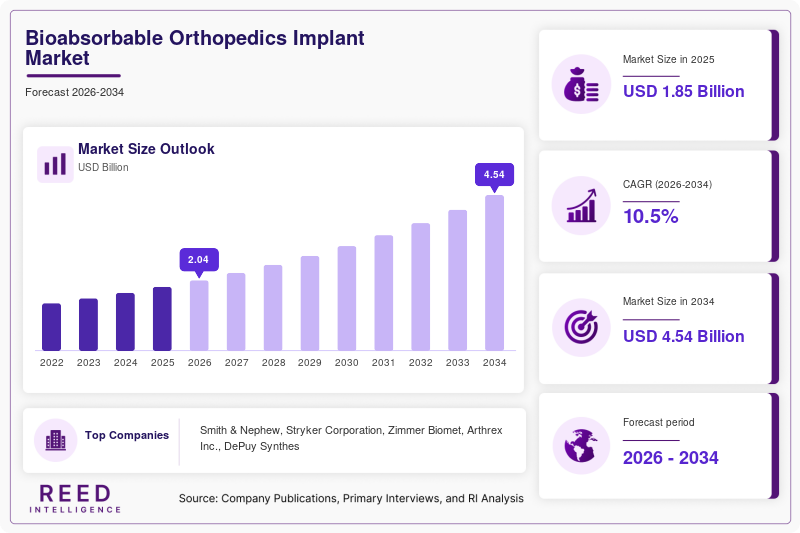
The global Bioabsorbable Orthopedics Implant Market was valued at approximately USD 1.85 billion in 2026 and is projected to reach USD 4.12 billion by 2034, expanding at a CAGR of 10.5% during the forecast period (2026–2034). The market growth is driven by the increasing demand for minimally invasive orthopedic procedures and the shift toward implants that eliminate the need for secondary removal surgeries. Bioabsorbable implants, made from polymers such as polylactic acid (PLA) and polyglycolic acid (PGA), gradually dissolve within the body, reducing long-term complications and improving patient outcomes.
A major global factor supporting the expansion of this market is the rising prevalence of orthopedic conditions, including fractures, ligament injuries, and degenerative bone diseases. Aging populations, increasing sports injuries, and road traffic accidents have contributed significantly to the demand for advanced orthopedic solutions. Furthermore, continuous advancements in biomaterials and manufacturing technologies have enabled the development of stronger and more reliable absorbable implants, enhancing their clinical acceptance.
Key Highlights
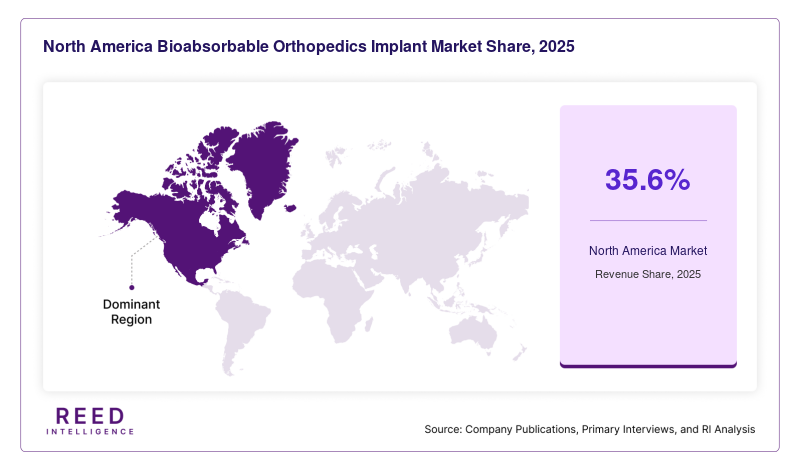
- North America dominated the market with a 35.6% share in 2025.
- Asia Pacific is expected to grow at the fastest CAGR of 11.8% during 2026–2034.
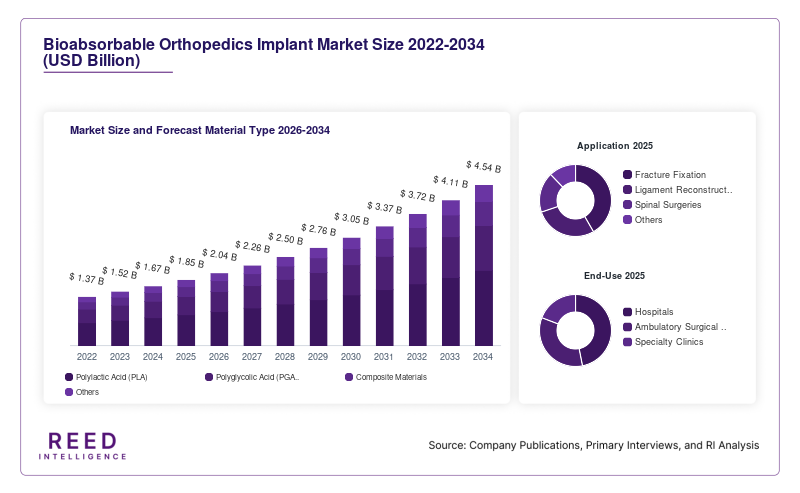
- By material type, polylactic acid implants accounted for the largest share of 42.3%.
- while composite bioabsorbable materials are projected to grow at a CAGR of 12.6%.
- By application, fracture fixation led with a 44.1% share, whereas ligament reconstruction is expected to expand at a CAGR of 11.9%.
- The United States remained the dominant country, with market values of USD 620 million in 2024 and USD 675 million in 2025.
Market Trends
Increasing Adoption of Advanced Bioabsorbable Materials
The market is witnessing a shift toward advanced bioabsorbable materials that offer improved mechanical strength and controlled degradation rates. Traditional materials such as PLA and PGA are being enhanced with composites and hybrid formulations to address limitations related to strength and stability. Manufacturers are integrating bioactive ceramics and polymers to improve osteoconductivity and support bone regeneration. These innovations are particularly beneficial in load-bearing applications, where implant performance is critical. As surgeons become more confident in the durability and reliability of these materials, their adoption is increasing across trauma and sports medicine procedures. This trend is expected to continue as research focuses on developing next-generation implants with predictable resorption profiles.
Rising Preference for Minimally Invasive Orthopedic Procedures
There is a growing preference for minimally invasive surgical techniques in orthopedic care, which is influencing the demand for bioabsorbable implants. These implants are designed to be compatible with minimally invasive procedures, reducing surgical time and post-operative complications. Patients benefit from faster recovery, reduced hospital stays, and lower risk of infection. Healthcare providers are also adopting these techniques to improve operational efficiency and patient satisfaction. The trend is further supported by advancements in surgical tools and imaging technologies that enable precise implant placement. As awareness about the benefits of minimally invasive procedures increases, the demand for bioabsorbable implants is expected to grow steadily.
Market Drivers
Growing Incidence of Orthopedic Injuries and Disorders
The increasing incidence of orthopedic injuries and musculoskeletal disorders is a primary driver of the Bioabsorbable Orthopedics Implant Market. Factors such as aging populations, sedentary lifestyles, and rising participation in sports activities have led to a higher prevalence of fractures, ligament tears, and joint-related issues. In addition, road accidents and workplace injuries continue to contribute significantly to the demand for orthopedic implants. Bioabsorbable implants are gaining preference due to their ability to eliminate the need for implant removal surgeries, reducing overall healthcare costs and patient discomfort. As the global burden of orthopedic conditions rises, the demand for effective and patient-friendly treatment solutions is expected to drive market growth.
Advancements in Biomaterials and Implant Technologies
Technological advancements in biomaterials and implant design are playing a crucial role in driving market expansion. Innovations in polymer science have enabled the development of implants with enhanced strength, biocompatibility, and controlled degradation rates. These improvements address earlier concerns related to implant failure and inconsistent absorption. Additionally, the integration of 3D printing and precision manufacturing techniques has allowed for customized implant designs tailored to patient-specific needs. Such advancements are increasing the adoption of bioabsorbable implants across various orthopedic applications. As research and development activities continue to evolve, the market is expected to benefit from the introduction of more advanced and reliable products.
Market Restraint
High Cost and Limited Availability in Emerging Markets
One of the major restraints affecting the Bioabsorbable Orthopedics Implant Market is the high cost associated with these implants compared to traditional metallic alternatives. The production of bioabsorbable implants involves advanced materials and manufacturing processes, which increase overall costs. This can limit their adoption, particularly in price-sensitive markets and developing regions where healthcare budgets are constrained. Additionally, limited awareness among healthcare professionals and patients about the benefits of bioabsorbable implants further restricts market growth. In some cases, surgeons may prefer conventional implants due to familiarity and perceived reliability. The lack of reimbursement policies in certain regions also poses a challenge, as patients may be required to bear higher out-of-pocket expenses. These factors collectively hinder widespread adoption, especially in emerging economies where healthcare infrastructure is still developing.
Market Opportunities
Expansion in Emerging Healthcare Markets
Emerging markets present significant growth opportunities for the Bioabsorbable Orthopedics Implant Market. Countries in Asia Pacific, Latin America, and parts of Africa are experiencing rapid improvements in healthcare infrastructure and increasing healthcare expenditure. Governments are investing in modern medical technologies and expanding access to advanced treatments. As awareness about the benefits of bioabsorbable implants grows, demand is expected to increase in these regions. Additionally, the rising middle-class population and increasing health insurance coverage are enabling more patients to opt for advanced surgical procedures. Market players can capitalize on these opportunities by establishing local manufacturing units and forming strategic partnerships with healthcare providers.
Development of Patient-Specific Implants
The development of patient-specific bioabsorbable implants offers a promising opportunity for market growth. Advances in imaging technologies and 3D printing are enabling the creation of customized implants tailored to individual patient anatomy. This approach improves surgical outcomes, reduces complications, and enhances patient satisfaction. Personalized implants are particularly beneficial in complex orthopedic cases where standard implants may not provide optimal results. As the healthcare industry moves toward precision medicine, the demand for customized solutions is expected to increase. Companies investing in research and development to create innovative, patient-specific products are likely to gain a competitive advantage in the market.
Segmental Analysis
By Material Type
Polylactic acid (PLA) implants dominated the market in 2024, accounting for a share of 42.3%. These implants are widely used due to their favorable mechanical properties, biocompatibility, and predictable degradation profile. PLA-based implants are commonly utilized in fracture fixation and soft tissue repair procedures. Their ability to gradually dissolve within the body eliminates the need for removal surgeries, making them a preferred choice among healthcare providers. The widespread availability and extensive clinical validation of PLA implants further contribute to their dominance. Additionally, ongoing research aimed at enhancing the performance of PLA materials is expected to sustain their leading position in the market.
Composite bioabsorbable materials are expected to be the fastest-growing subsegment, with a CAGR of 12.6% during the forecast period. These materials combine polymers with bioactive components such as ceramics to improve strength and osteoconductivity. The increasing demand for implants capable of supporting bone regeneration is driving the adoption of composite materials. Advances in material science are enabling the development of implants with improved performance characteristics, making them suitable for a wider range of orthopedic applications. As healthcare providers seek more effective and durable solutions, the demand for composite bioabsorbable implants is expected to grow significantly.
By Application
Fracture fixation emerged as the dominant application segment in 2024, holding a market share of 44.1%. Bioabsorbable implants are widely used in fracture fixation procedures due to their ability to provide temporary support and gradually degrade as the bone heals. This eliminates the need for secondary surgeries, reducing patient burden and healthcare costs. The increasing incidence of fractures, particularly among the elderly and active populations, is driving demand for these implants. Additionally, advancements in implant design are improving their performance in fracture fixation applications, further supporting market growth.
Ligament reconstruction is expected to be the fastest-growing application segment, with a CAGR of 11.9% during the forecast period. The rising prevalence of sports injuries and increasing participation in physical activities are contributing to the demand for ligament reconstruction procedures. Bioabsorbable implants offer advantages such as reduced long-term complications and improved patient outcomes, making them an attractive option for these procedures. The growing adoption of minimally invasive techniques is also supporting the use of bioabsorbable implants in ligament reconstruction.
By End-Use
Hospitals dominated the end-use segment in 2024, accounting for a significant share of the market. Hospitals are the primary settings for orthopedic surgeries, offering advanced infrastructure and skilled healthcare professionals. The availability of specialized equipment and comprehensive care services makes hospitals the preferred choice for complex procedures. Additionally, hospitals are more likely to adopt advanced technologies, including bioabsorbable implants, to improve patient outcomes. The increasing number of orthopedic surgeries performed in hospitals is driving the demand for these implants.
Ambulatory surgical centers (ASCs) are expected to be the fastest-growing end-use segment, with a notable CAGR during the forecast period. The growing preference for outpatient procedures and cost-effective treatment options is driving the expansion of ASCs. These centers offer shorter hospital stays, reduced costs, and faster recovery times, making them an attractive option for patients. The adoption of minimally invasive techniques and advanced implants is supporting the growth of ASCs. As healthcare systems continue to shift toward outpatient care, the demand for bioabsorbable implants in these settings is expected to increase.
Regional Analysis
North America
North America held a dominant share of 35.6% in 2025 and is expected to grow at a CAGR of 9.8% during the forecast period. The region benefits from a well-established healthcare system, high adoption of advanced medical technologies, and strong presence of key market players. Increasing demand for minimally invasive procedures and favorable reimbursement policies are supporting market growth. The rising incidence of orthopedic injuries and the aging population are further contributing to the demand for bioabsorbable implants.
The United States dominates the North American market, driven by advanced healthcare infrastructure and high healthcare spending. A unique growth factor in the country is the strong focus on research and innovation in biomaterials. Academic institutions and private companies are actively collaborating to develop next-generation implants, which is accelerating market expansion.
Europe
Europe accounted for a significant market share of 28.4% in 2025 and is projected to grow at a CAGR of 9.6% during the forecast period. The region has a strong healthcare system and a growing focus on sustainable and biocompatible medical solutions. Increasing awareness about the benefits of bioabsorbable implants is driving their adoption across orthopedic procedures.
Germany is the leading country in the European market, supported by advanced medical technology and a strong manufacturing base. A unique growth factor in Germany is the emphasis on eco-friendly healthcare solutions, which aligns with the use of biodegradable implants. This trend is encouraging hospitals to adopt bioabsorbable materials.
Asia Pacific
Asia Pacific is expected to be the fastest-growing region, with a CAGR of 11.8% during the forecast period. The region accounted for 22.7% of the market share in 2025. Rapid urbanization, increasing healthcare investments, and growing awareness about advanced medical treatments are driving market growth. The rising prevalence of orthopedic conditions and increasing number of surgeries are also contributing factors.
China is the dominant country in the Asia Pacific region, driven by a large patient population and expanding healthcare infrastructure. A unique growth factor in China is the government’s focus on improving access to advanced medical technologies, which is supporting the adoption of bioabsorbable implants.
Middle East & Africa
The Middle East & Africa region held a market share of 7.1% in 2025 and is expected to grow at a CAGR of 10.2% during the forecast period. The market is driven by increasing healthcare investments and rising awareness about advanced orthopedic treatments. Improvements in healthcare infrastructure are also supporting market growth.
Saudi Arabia is a key country in the region, with increasing adoption of modern medical technologies. A unique growth factor is the government’s investment in healthcare modernization, which is enabling the adoption of innovative implants and surgical techniques.
Latin America
Latin America accounted for 6.2% of the market share in 2025 and is projected to grow at a CAGR of 10.0% during the forecast period. The region is witnessing improvements in healthcare infrastructure and increasing demand for advanced medical treatments. Rising awareness and growing healthcare expenditure are supporting market growth.
Brazil is the dominant country in Latin America, driven by a large patient population and expanding healthcare services. A unique growth factor is the increasing number of private healthcare providers offering advanced orthopedic procedures, which is boosting the demand for bioabsorbable implants.
Competitive Landscape
The Bioabsorbable Orthopedics Implant Market is moderately competitive, with several global and regional players focusing on innovation and product development. Companies are investing in research and development to introduce advanced materials and improve implant performance. Strategic collaborations, mergers, and acquisitions are also common strategies adopted by market participants to expand their market presence.
One of the leading companies in the market is Smith & Nephew, known for its extensive portfolio of orthopedic solutions. The company has recently introduced new bioabsorbable implant products designed for sports medicine applications, enhancing its position in the market. Other key players are focusing on expanding their product offerings and strengthening their distribution networks to cater to a growing customer base. The competitive landscape is expected to intensify as new entrants bring innovative solutions and existing players continue to invest in technological advancements.
Key Players List
- Smith & Nephew
- Stryker Corporation
- Zimmer Biomet
- Arthrex Inc.
- DePuy Synthes
- CONMED Corporation
- Medtronic plc
- Bioretec Ltd.
- Tornier Inc.
- Wright Medical Group
- B. Braun Melsungen AG
- Integra LifeSciences
- Orthofix Medical Inc.
- Acumed LLC
- RTI Surgical Holdings
Recent Developments
- In 2025, a leading orthopedic company launched a new range of composite bioabsorbable implants designed for high-load applications.
- In 2024, a major player expanded its manufacturing facility to increase production capacity for bioabsorbable materials.
- In 2025, a strategic partnership was formed between two companies to develop next-generation biodegradable implants using advanced biomaterials.
Bioabsorbable Orthopedics Implant Market Segments
Material Type
- Polylactic Acid (PLA)
- Polyglycolic Acid (PGA)
- Composite Materials
- Others
Application
- Fracture Fixation
- Ligament Reconstruction
- Spinal Surgeries
- Others
End-Use
- Hospitals
- Ambulatory Surgical Centers
- Specialty Clinics
By Region
- North America
- Europe
- APAC
- Middle East and Africa
- LATAM