Bioabsorbable Surgical Mesh Market Size, Share & Demand Report By Product Type (Synthetic Bioabsorbable Mesh, Biological Mesh), By Application (Hernia Repair, Soft Tissue Reconstruction, Gynecological Surgery, Others), By End-Use (Hospitals, Ambulatory Surgical Centers, Specialty Clinics) By Region & Segment Forecasts, 2026–2034
USD 3950
Market Overview
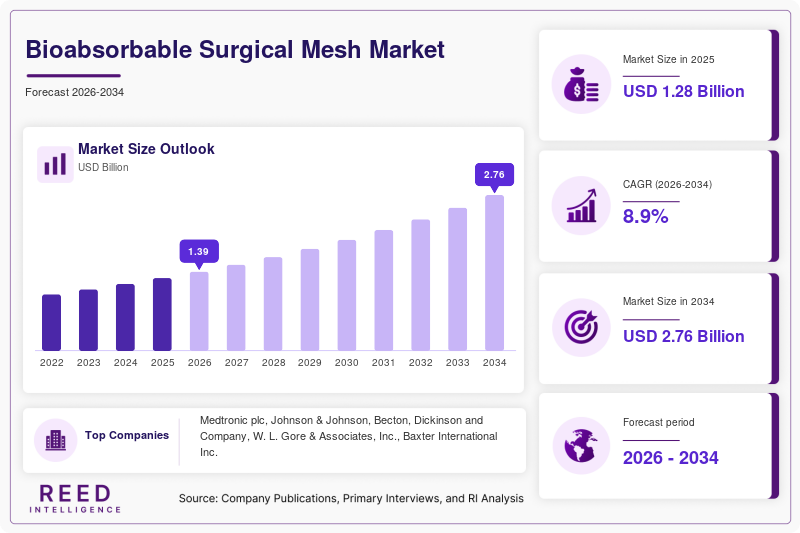
The global Bioabsorbable Surgical Mesh Market size was valued at USD 1.28 billion in 2026 and is projected to reach USD 2.54 billion by 2034, expanding at a CAGR of 8.9% during the forecast period (2026–2034). The market is experiencing steady growth due to the rising demand for advanced surgical solutions that minimize long-term complications. Bioabsorbable meshes, which degrade naturally within the body over time, are increasingly preferred in procedures such as hernia repair, soft tissue reconstruction, and gynecological surgeries.
One of the key global factors supporting market growth is the rising volume of minimally invasive surgeries. Surgeons are shifting toward materials that reduce post-operative risks, including chronic pain, infection, and foreign body reactions. Bioabsorbable meshes provide temporary support during tissue healing while eliminating the need for permanent implants, making them a suitable choice for evolving surgical practices. Additionally, healthcare systems worldwide are focusing on reducing hospital readmissions and improving patient outcomes, further driving adoption.
Key Highlights
- North America dominated the market with a 35.1% share in 2025.
- Asia Pacific is expected to grow at the fastest CAGR of 10.7% during 2026–2034.
- By product type, synthetic bioabsorbable mesh accounted for the largest share of 52.4%.
- while biological meshes are projected to grow at a CAGR of 9.8%.
- By application, hernia repair led with a 46.3% share, whereas soft tissue reconstruction is expected to expand at a CAGR of 9.5%.
- The United States remained the dominant country, with market values of USD 420 million in 2024 and USD 465 million in 2025.
Market Trends
The growing shift toward patient-centric surgical care is shaping product innovation in the Bioabsorbable Surgical Mesh Market. Healthcare providers are prioritizing materials that improve healing outcomes and reduce complications. Bioabsorbable meshes are gaining traction due to their ability to provide temporary reinforcement while being gradually absorbed by the body. Manufacturers are focusing on improving polymer composition and degradation timelines to match different surgical needs. This trend is particularly visible in advanced healthcare systems where surgeons are opting for tailored solutions rather than one-size-fits-all implants, contributing to increased product diversification and adoption.
Another important trend is the integration of advanced biomaterials and hybrid mesh technologies. Companies are developing meshes that combine synthetic and biological components to enhance strength, flexibility, and biocompatibility. These hybrid solutions aim to overcome limitations associated with traditional meshes, such as inflammation or inadequate support. Additionally, ongoing research in tissue engineering is enabling the development of meshes that promote natural tissue regeneration. This trend is expected to reshape product portfolios and create differentiation among manufacturers, thereby driving competitive dynamics within the market.
Market Drivers
The increasing prevalence of hernia cases globally is a major factor driving the Bioabsorbable Surgical Mesh Market. Hernia repair procedures account for a significant share of surgical interventions, especially among aging populations. Bioabsorbable meshes are being widely adopted in these procedures due to their ability to reduce complications associated with permanent implants. As the global population continues to age, the demand for safer and more efficient surgical materials is rising. Hospitals and surgeons are increasingly opting for solutions that enhance recovery while minimizing long-term risks, thereby fueling market growth.
Another key driver is the rising adoption of minimally invasive and laparoscopic surgeries. These procedures require lightweight, flexible, and biocompatible materials that can be easily deployed. Bioabsorbable meshes meet these requirements and are becoming a preferred choice among surgeons. Additionally, technological advancements in surgical techniques are enabling more precise placement of these meshes, improving outcomes. The combination of improved surgical methods and advanced materials is creating a favorable environment for market expansion, especially in developed healthcare systems.
Market Restraint
The high cost associated with bioabsorbable surgical meshes remains a significant restraint for market growth. Compared to traditional synthetic meshes, bioabsorbable variants are more expensive due to complex manufacturing processes and advanced material composition. This cost difference can limit adoption, particularly in price-sensitive markets and developing regions. Hospitals with constrained budgets may prefer conventional options despite their potential drawbacks, slowing overall market penetration.
Additionally, limited reimbursement policies in certain regions further restrict adoption. Healthcare providers may face challenges in recovering the costs associated with these advanced products, leading to cautious usage. The lack of long-term clinical data in some cases also contributes to hesitation among surgeons, especially for newer products. These factors collectively impact the widespread adoption of bioabsorbable meshes, highlighting the need for cost optimization and improved clinical validation.
Market Opportunities
The expanding healthcare infrastructure in emerging economies presents significant growth opportunities for the Bioabsorbable Surgical Mesh Market. Countries in Asia Pacific, Latin America, and the Middle East are investing heavily in modernizing healthcare facilities and improving access to surgical care. As these regions adopt advanced medical technologies, the demand for innovative surgical materials is expected to rise. Manufacturers are increasingly targeting these markets through strategic partnerships and localized production, creating new avenues for revenue generation.
Another promising opportunity lies in the development of personalized and patient-specific mesh solutions. Advances in 3D printing and biomaterials are enabling the creation of customized meshes tailored to individual patient anatomy. This approach enhances surgical precision and improves outcomes, making it highly attractive in complex procedures. As research and development efforts continue, personalized meshes are expected to gain traction, offering a competitive edge to companies that invest in this area.
Segmental Analysis
By Product Type
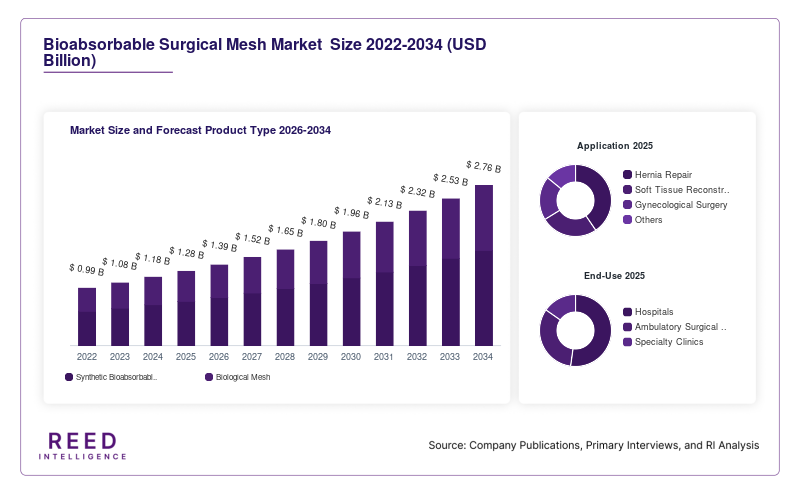
Synthetic bioabsorbable mesh accounted for the largest share of 52.4% in 2024, driven by its widespread use in various surgical procedures. These meshes are manufactured using polymers such as polylactic acid and polyglycolic acid, which offer controlled degradation and reliable mechanical strength. Surgeons prefer synthetic meshes due to their consistency, availability, and predictable performance. Additionally, advancements in polymer science have improved the durability and biocompatibility of these materials, making them suitable for a wide range of applications. The cost-effectiveness of synthetic meshes compared to biological alternatives further contributes to their dominance in the market.
Biological meshes are expected to witness the fastest growth, with a CAGR of 9.8% during the forecast period. These meshes are derived from natural tissues and are designed to integrate seamlessly with the patient’s body. The growing preference for natural and regenerative solutions is driving their adoption, particularly in complex and high-risk surgeries. Biological meshes promote tissue regeneration and reduce the risk of inflammation, making them an attractive option for surgeons. Ongoing research and development efforts are focused on improving their performance and reducing costs, which is expected to further boost their market share.
By Application
Hernia repair emerged as the dominant application segment, accounting for 46.3% of the market share in 2024. The high prevalence of hernia cases globally and the increasing number of surgical procedures are key factors driving this segment. Bioabsorbable meshes are widely used in hernia repair due to their ability to provide temporary support and reduce complications associated with permanent implants. Surgeons are increasingly adopting these meshes to improve patient outcomes and minimize post-operative issues. The growing awareness of advanced surgical solutions is further contributing to the segment’s dominance.
Soft tissue reconstruction is projected to be the fastest-growing application segment, with a CAGR of 9.5% during the forecast period. This growth is driven by the increasing demand for reconstructive surgeries following trauma, cancer treatments, and other medical conditions. Bioabsorbable meshes play a crucial role in supporting tissue regeneration and enhancing healing outcomes. The rising focus on aesthetic and functional recovery is also driving the adoption of these meshes in reconstructive procedures. Advances in surgical techniques and biomaterials are expected to further accelerate growth in this segment.
By End-Use
Hospitals held the largest share of the Bioabsorbable Surgical Mesh Market in 2024, accounting for 58.7% of total revenue. The high volume of surgical procedures performed in hospitals and the availability of advanced medical infrastructure are key factors driving this segment. Hospitals are often the first to adopt innovative medical technologies, including bioabsorbable meshes. Additionally, the presence of skilled healthcare professionals and access to specialized equipment further supports the widespread use of these products in hospital settings.
Ambulatory surgical centers are expected to grow at the fastest CAGR of 9.2% during the forecast period. These centers are gaining popularity due to their cost-effectiveness and convenience for patients. The increasing number of outpatient procedures and the shift toward minimally invasive surgeries are driving the demand for bioabsorbable meshes in these settings. Ambulatory surgical centers are adopting advanced technologies to improve efficiency and patient outcomes, creating significant growth opportunities for market players
Regional Analysis
North America
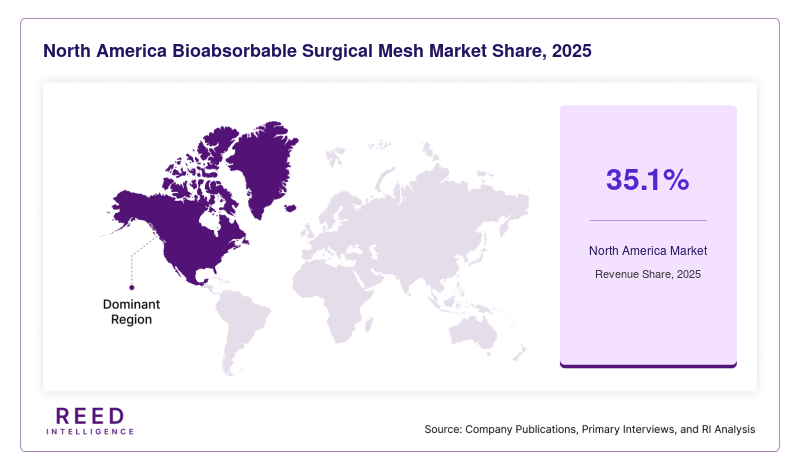
North America held the largest share of the Bioabsorbable Surgical Mesh Market in 2025, accounting for 35.1% of global revenue. The region is expected to maintain its dominance with a steady CAGR of 8.3% during the forecast period. The presence of advanced healthcare infrastructure, high surgical volumes, and strong adoption of innovative medical technologies are key factors driving market growth. Additionally, favorable reimbursement frameworks and increased awareness among healthcare professionals contribute to the widespread use of bioabsorbable meshes.
The United States dominates the regional market due to its well-established healthcare system and high incidence of hernia and related conditions. A key growth factor in the country is the increasing focus on reducing post-surgical complications and hospital readmissions. Healthcare providers are actively adopting bioabsorbable meshes to improve patient outcomes and optimize surgical efficiency, further strengthening the market position.
Europe
Europe accounted for a significant share of the global market in 2025 and is projected to grow at a CAGR of 8.1% through 2034. The region benefits from a strong regulatory framework and widespread adoption of advanced surgical techniques. Countries such as Germany, France, and the United Kingdom are leading contributors due to their robust healthcare systems and high surgical procedure volumes.
Germany stands out as the dominant country in the European market, driven by its advanced medical infrastructure and strong focus on innovation. A unique growth factor is the increasing emphasis on sustainable healthcare solutions. Bioabsorbable meshes align with this objective by reducing long-term complications and minimizing the need for revision surgeries, making them an attractive option for healthcare providers.
Asia Pacific
Asia Pacific is the fastest-growing region in the Bioabsorbable Surgical Mesh Market, with a projected CAGR of 10.7% during the forecast period. The region’s growth is driven by rising healthcare investments, increasing awareness of advanced surgical solutions, and a growing patient population. Countries such as China, India, and Japan are witnessing a surge in surgical procedures, creating strong demand for bioabsorbable meshes.
China leads the regional market due to its large population and expanding healthcare infrastructure. A key growth factor is the government’s focus on improving healthcare accessibility and quality. Initiatives aimed at modernizing hospitals and adopting advanced medical technologies are driving the demand for innovative surgical materials, including bioabsorbable meshes.
Middle East & Africa
The Middle East & Africa region is experiencing moderate growth in the Bioabsorbable Surgical Mesh Market, with a CAGR of 7.4% during the forecast period. The market is supported by increasing healthcare investments and the gradual adoption of advanced surgical technologies. Countries in the Gulf Cooperation Council are leading the adoption due to their well-funded healthcare systems.
Saudi Arabia emerges as the dominant country in this region, driven by its ongoing healthcare transformation initiatives. A unique growth factor is the rising focus on medical tourism, which is encouraging hospitals to adopt advanced surgical solutions. Bioabsorbable meshes are gaining traction as they align with the need for high-quality patient care and improved surgical outcomes.
Latin America
Latin America holds a smaller share of the global market but is expected to grow steadily at a CAGR of 7.8% during the forecast period. The region’s growth is supported by improving healthcare infrastructure and increasing awareness of advanced surgical options. Brazil and Mexico are the primary contributors to market expansion.
Brazil dominates the regional market due to its large healthcare sector and growing number of surgical procedures. A key growth factor is the increasing adoption of private healthcare services, which are more likely to invest in advanced medical technologies. This trend is driving the demand for bioabsorbable surgical meshes, particularly in urban healthcare centers.
Competitive Landscape
The Bioabsorbable Surgical Mesh Market is moderately competitive, with several global and regional players focusing on innovation and strategic collaborations. Leading companies are investing in research and development to enhance product performance and expand their portfolios. The market is characterized by continuous advancements in biomaterials and manufacturing technologies, which are driving competition.
One of the leading players in the market is Medtronic plc, known for its extensive product portfolio and strong global presence. The company has recently introduced advanced bioabsorbable mesh solutions designed to improve surgical outcomes and reduce complications. Other key players are focusing on partnerships, acquisitions, and product launches to strengthen their market position. The competitive landscape is expected to evolve further as new entrants introduce innovative solutions and existing players expand their capabilities.
Key Players List
- Medtronic plc
- Johnson & Johnson
- Becton, Dickinson and Company
- W. L. Gore & Associates, Inc.
- Baxter International Inc.
- Cook Medical
- Integra LifeSciences Corporation
- Boston Scientific Corporation
- Hernia Mesh S.R.L.
- TELA Bio, Inc.
- Atrium Medical Corporation
- LifeCell Corporation
- Ethicon Inc.
- Polyganics BV
- Surgical Innovation Associates
Recent Developments
- A leading medical device company launched a next-generation bioabsorbable mesh with improved degradation control and enhanced tensile strength.
- A major player entered into a strategic partnership with a research institute to develop advanced biomaterials for surgical applications.
- A global manufacturer expanded its production facilities in Asia Pacific to meet the growing demand for bioabsorbable meshes in emerging markets.
Bioabsorbable Surgical Mesh Market Segments
Product Type
- Synthetic Bioabsorbable Mesh
- Biological Mesh
Application
- Hernia Repair
- Soft Tissue Reconstruction
- Gynecological Surgery
- Others
End-Use
- Hospitals
- Ambulatory Surgical Centers
- Specialty Clinics
By Region
- North America
- Europe
- APAC
- Middle East and Africa
- LATAM