Biodegradable Hemostat Market Size, Share & Demand Report By Type (Oxidized Regenerated Cellulose, Collagen-Based Hemostats, Gelatin-Based Hemostats, Chitosan-Based Hemostats), By Application (General Surgery, Cardiovascular Surgery, Orthopedic Surgery, Neurological Surgery), By End-Use (Hospitals, Ambulatory Surgical Centers, Specialty Clinics), By Region & Segment Forecasts, 2026–2034
USD 3950
Market Overview
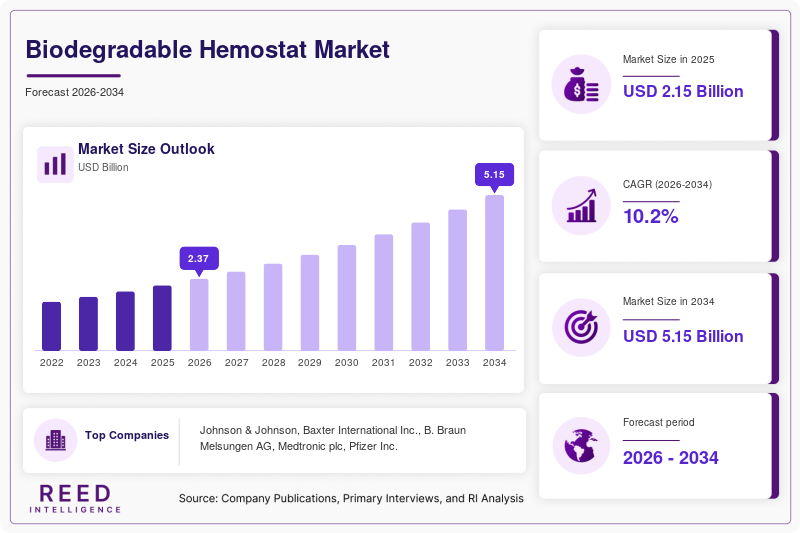
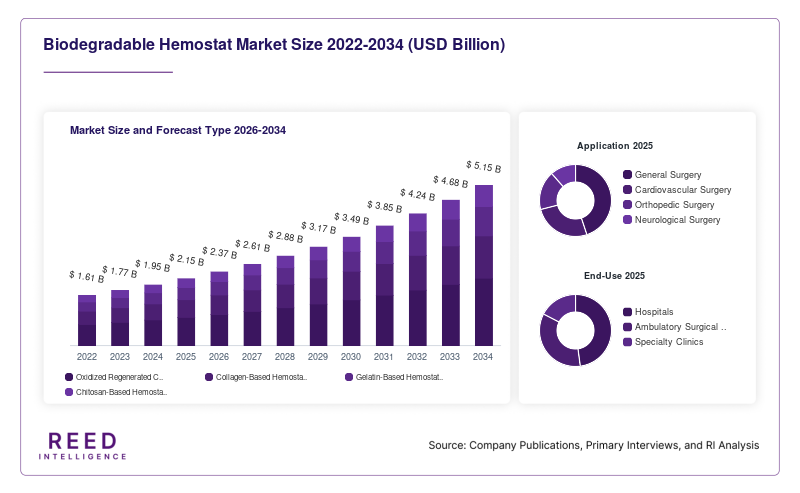
The Biodegradable Hemostat Market size was valued at approximately USD 2.15 billion in 2026 and is projected to reach USD 4.68 billion by 2034, expanding at a CAGR of 10.2% during the forecast period (2026–2034). The market is witnessing steady expansion due to the increasing demand for advanced surgical solutions that enhance patient outcomes and reduce postoperative complications. Biodegradable hemostats, designed to control bleeding during surgical procedures and gradually absorb into the body, are gaining traction across hospitals and ambulatory surgical centers.
One of the key global factors supporting market growth is the rising volume of surgical procedures, particularly minimally invasive surgeries. The increasing prevalence of chronic diseases such as cardiovascular disorders and cancer has led to a surge in surgical interventions, thereby boosting demand for effective hemostatic solutions. In addition, technological advancements in biomaterials, including gelatin, collagen, and oxidized cellulose-based hemostats, are enhancing product performance and expanding clinical applications.
Healthcare systems are increasingly prioritizing products that reduce surgical time and improve recovery rates. Biodegradable hemostats meet these criteria by offering rapid hemostasis without the need for removal. Furthermore, regulatory approvals and product innovations are encouraging adoption across emerging economies.
Key Highlights
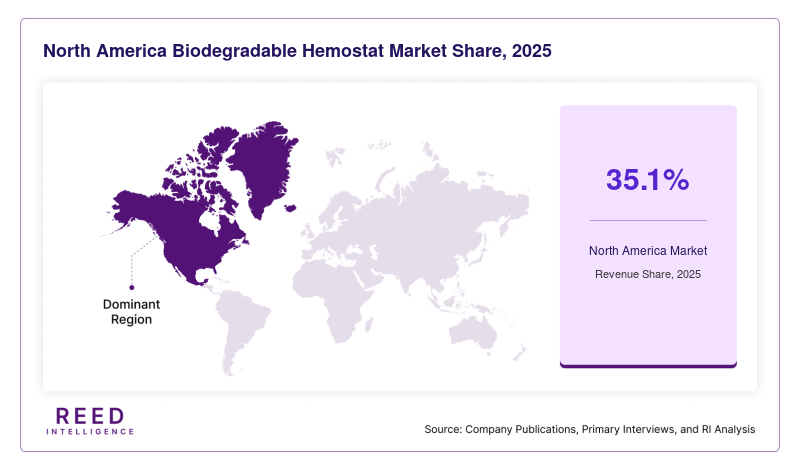
- North America dominated the market with a 35.1% share in 2025.
- Asia Pacific is expected to grow at the fastest CAGR of 11.6% during 2026–2034.
- By type, oxidized regenerated cellulose accounted for the largest share of 39.3%, while chitosan-based hemostats are projected to grow at a CAGR of 12.1%.
- By application, general surgery led with a 42.5% share, whereas cardiovascular surgery is expected to expand at a CAGR of 11.4%.
- The United States remained the dominant country, with market values of USD 620 million in 2024 and USD 680 million in 2025.
Market Trends
Growing preference for minimally invasive and robotic surgeries
The shift toward minimally invasive and robotic-assisted surgeries is shaping the demand for biodegradable hemostats. These procedures require precise bleeding control in confined surgical fields, increasing reliance on advanced hemostatic materials. Biodegradable products offer ease of application, reduced tissue trauma, and elimination of removal procedures, making them suitable for laparoscopic and robotic interventions. Surgeons increasingly prefer products that integrate seamlessly into modern surgical workflows without prolonging operation time. Additionally, the growing availability of robotic surgery platforms in developed and developing economies is supporting product demand. This trend is further amplified by patient preference for shorter hospital stays and faster recovery, both of which are facilitated by effective intraoperative bleeding management.
Advancements in biomaterials and product innovation
Continuous innovation in biomaterials is transforming the biodegradable hemostat landscape. Manufacturers are investing in research to develop products with improved absorption rates, enhanced adhesion, and antimicrobial properties. Materials such as chitosan, collagen, and synthetic polymers are being engineered to optimize performance across various surgical specialties. These advancements are enabling the development of next-generation hemostats that provide faster clot formation and reduced risk of infection. In addition, companies are introducing combination products that integrate hemostatic and sealing functions, expanding their clinical utility. The increasing focus on biocompatibility and patient safety is also driving innovation, as healthcare providers demand products that minimize adverse reactions while maintaining effectiveness.
Market Drivers
Increasing surgical procedures worldwide
The growing number of surgical procedures globally is a major driver for the biodegradable hemostat market. Rising incidences of chronic diseases such as cancer, cardiovascular conditions, and orthopedic disorders are leading to a higher volume of surgeries. Aging populations in developed regions further contribute to this trend, as elderly patients often require surgical interventions. Biodegradable hemostats play a critical role in these procedures by ensuring rapid bleeding control and reducing complications. Hospitals and surgical centers are increasingly adopting these products to improve efficiency and patient outcomes. Additionally, the expansion of healthcare infrastructure in emerging markets is enabling greater access to surgical care, further boosting demand for hemostatic solutions.
Rising demand for efficient and safe surgical outcomes
Healthcare providers are focusing on improving surgical outcomes while minimizing risks and complications. Biodegradable hemostats align with this objective by offering reliable bleeding control without requiring removal after surgery. This reduces the risk of infection and postoperative complications, making them an attractive option for surgeons. The emphasis on patient safety and quality of care is driving hospitals to adopt advanced hemostatic products. Moreover, the integration of these products into clinical guidelines and protocols is supporting their widespread use. As healthcare systems aim to reduce hospital stays and readmission rates, the demand for efficient hemostatic solutions continues to grow, contributing to market expansion.
Market Restraint
High product costs and limited accessibility in developing regions
The relatively high cost of biodegradable hemostats remains a significant restraint for market growth. Advanced biomaterials and manufacturing processes contribute to higher pricing compared to traditional hemostatic methods. This cost factor can limit adoption, particularly in developing regions with constrained healthcare budgets. Hospitals in these regions may prioritize cost-effective alternatives, reducing demand for premium products. Additionally, limited awareness and lack of trained professionals can hinder market penetration. The economic disparity between developed and emerging markets creates uneven adoption patterns. For example, smaller healthcare facilities may rely on conventional methods due to budget constraints, even when advanced solutions are available. Addressing cost challenges and improving affordability will be essential for expanding market reach.
Market Opportunities
Expansion in emerging healthcare markets
Emerging economies present significant growth opportunities for the biodegradable hemostat market. Rapid urbanization, increasing healthcare investments, and expanding medical infrastructure are driving demand for advanced surgical products. Governments in countries across Asia Pacific, Latin America, and the Middle East are focusing on improving healthcare access and quality. This creates a favorable environment for the adoption of biodegradable hemostats. Additionally, rising disposable incomes and growing awareness of modern medical technologies are supporting market growth. Manufacturers are increasingly targeting these regions through strategic partnerships and distribution networks. The untapped potential in these markets offers substantial opportunities for revenue expansion.
Development of multifunctional and combination products
The development of multifunctional hemostatic products is opening new avenues for market growth. Companies are focusing on creating solutions that combine hemostatic, sealing, and antimicrobial properties in a single product. These innovations enhance clinical efficiency and reduce the need for multiple products during surgery. The integration of advanced technologies such as nanomaterials and bioengineered polymers is further expanding product capabilities. Healthcare providers are increasingly seeking versatile solutions that can address multiple surgical needs. This trend is expected to drive demand for next-generation biodegradable hemostats, providing opportunities for manufacturers to differentiate their offerings and capture market share.
Segmental Analysis
By Type
Oxidized regenerated cellulose emerged as the dominant subsegment, accounting for approximately 39.3% share in 2024. This dominance is attributed to its widespread use in surgical procedures due to its effectiveness in controlling bleeding and ease of application. The material’s biocompatibility and rapid absorption make it a preferred choice among surgeons. Additionally, its ability to conform to irregular surfaces enhances its utility in complex surgical procedures. The increasing number of surgeries globally further supports the demand for oxidized regenerated cellulose-based hemostats. Hospitals and surgical centers rely on these products for efficient bleeding control, contributing to their significant market share.
Chitosan-based hemostats are projected to be the fastest-growing subsegment, with a CAGR of 12.1% during the forecast period. The growth is driven by their superior hemostatic properties and antimicrobial characteristics. Chitosan-based products are gaining popularity due to their ability to promote faster clot formation and reduce infection risk. The increasing focus on advanced biomaterials and product innovation further supports their adoption. Additionally, the growing demand for multifunctional hemostatic solutions is driving the development of chitosan-based products. These factors contribute to the rapid growth of this subsegment.
By Application
General surgery dominated the application segment, holding a share of approximately 42.5% in 2024. The high volume of general surgical procedures globally is a key factor driving this dominance. Biodegradable hemostats are widely used in these procedures to control bleeding and improve surgical outcomes. The increasing prevalence of conditions requiring surgical intervention further supports demand. Hospitals and surgical centers prioritize efficient hemostatic solutions to reduce operation time and enhance patient recovery. This widespread usage contributes to the significant share of general surgery in the market.
Cardiovascular surgery is expected to be the fastest-growing subsegment, with a CAGR of 11.4% during the forecast period. The growth is driven by the increasing incidence of cardiovascular diseases and the rising number of related surgical procedures. Biodegradable hemostats play a crucial role in these procedures by ensuring effective bleeding control. The growing adoption of advanced surgical techniques and technologies further supports market growth. Additionally, the focus on improving patient outcomes and reducing complications is driving demand for advanced hemostatic solutions in cardiovascular surgeries.
By End-Use
Hospitals accounted for the largest share of the biodegradable hemostat market in 2024, with approximately 55.6%. The dominance of this segment is attributed to the high volume of surgical procedures performed in hospital settings. Hospitals are equipped with advanced medical infrastructure and skilled professionals, enabling the adoption of innovative hemostatic products. The emphasis on patient safety and quality of care further drives the use of biodegradable hemostats. Additionally, favorable reimbursement policies in developed regions support product adoption in hospitals, contributing to their significant market share.
Ambulatory surgical centers are expected to be the fastest-growing subsegment, with a CAGR of 11.9% during the forecast period. The growth is driven by the increasing preference for outpatient surgical procedures, which offer cost and time advantages. These centers require efficient hemostatic solutions to ensure quick recovery and discharge. The rising adoption of minimally invasive procedures further supports demand for biodegradable hemostats in ambulatory settings. Additionally, the expansion of ambulatory surgical centers in emerging markets contributes to the growth of this subsegment.
Regional Analysis
North America
North America accounted for a significant share of the biodegradable hemostat market, holding approximately 35.1% in 2025. The region is expected to maintain steady growth with a CAGR of around 9.8% during the forecast period. The presence of advanced healthcare infrastructure, high surgical volumes, and strong adoption of innovative medical technologies contribute to market dominance. Additionally, favorable reimbursement policies and regulatory support enhance product accessibility. The increasing prevalence of chronic diseases and aging populations further drive demand for surgical procedures, supporting market growth.
The United States leads the regional market due to its well-established healthcare system and high healthcare expenditure. A key growth factor is the widespread adoption of minimally invasive surgical techniques, which require advanced hemostatic solutions. Hospitals and surgical centers in the country prioritize products that improve efficiency and patient outcomes. Continuous product innovation and strong presence of leading manufacturers also contribute to market expansion.
Europe
Europe held a considerable share of the biodegradable hemostat market in 2025, supported by a mature healthcare system and high surgical demand. The region is projected to grow at a CAGR of 9.5% during the forecast period. Increasing focus on patient safety and quality of care is driving the adoption of advanced hemostatic products. Government initiatives aimed at improving healthcare services and promoting innovation further support market growth. The rising number of surgical procedures, particularly in aging populations, also contributes to demand.
Germany emerges as the dominant country in the European market, driven by its strong healthcare infrastructure and technological advancements. A unique growth factor is the emphasis on research and development in medical devices. The country’s robust regulatory framework ensures the availability of high-quality products, encouraging adoption across hospitals and surgical centers.
Asia Pacific
Asia Pacific is expected to be the fastest-growing region, with a CAGR of 11.6% during 2026–2034. The region accounted for a growing share in 2025 due to increasing healthcare investments and expanding medical infrastructure. Rising population and increasing prevalence of chronic diseases are driving demand for surgical procedures. Additionally, improving access to healthcare services and growing awareness of advanced medical technologies support market growth.
China dominates the Asia Pacific market, supported by its large patient population and rapid healthcare development. A key growth factor is the government’s focus on expanding healthcare access and improving quality of care. The increasing adoption of modern surgical techniques and growing investments in healthcare infrastructure further boost market demand.
Middle East & Africa
The Middle East & Africa region is experiencing moderate growth in the biodegradable hemostat market, with a CAGR of around 8.7%. The market share in 2025 was relatively smaller compared to other regions but shows steady expansion. Increasing healthcare investments and improving infrastructure are driving market growth. The rising incidence of chronic diseases and growing demand for surgical procedures also contribute to market development.
Saudi Arabia leads the regional market due to its strong healthcare investments and modernization initiatives. A unique growth factor is the government’s focus on healthcare transformation and adoption of advanced medical technologies. The expansion of hospitals and specialized surgical centers supports the adoption of biodegradable hemostats.
Latin America
Latin America holds a moderate share of the biodegradable hemostat market and is expected to grow at a CAGR of 9.1% during the forecast period. The region’s growth is driven by improving healthcare infrastructure and increasing access to medical services. Rising awareness of advanced surgical products and growing demand for minimally invasive procedures also support market expansion.
Brazil is the dominant country in the region, driven by its large healthcare system and increasing surgical volumes. A key growth factor is the expansion of private healthcare facilities and investments in modern medical technologies. These developments are enhancing access to advanced hemostatic products and supporting market growth.
Competitive Landscape
The biodegradable hemostat market is characterized by the presence of several established players focusing on product innovation and strategic expansion. Leading companies are investing in research and development to introduce advanced products with improved performance and safety profiles. The competitive environment is marked by collaborations, mergers, and product launches aimed at strengthening market position.
Johnson & Johnson remains a leading player in the market, supported by its extensive product portfolio and global presence. The company recently introduced an advanced hemostatic product designed for minimally invasive procedures, enhancing its competitive edge. Other key players are also focusing on expanding their product offerings and entering emerging markets to capture growth opportunities. The increasing emphasis on innovation and technological advancements is shaping the competitive dynamics of the market.
Key Players
- Johnson & Johnson
- Baxter International Inc.
- B. Braun Melsungen AG
- Medtronic plc
- Pfizer Inc.
- HemCon Medical Technologies
- Integra LifeSciences
- Marine Polymer Technologies
- Z-Medica LLC
- CSL Limited
- CryoLife Inc.
- Anika Therapeutics
- Equimedical BV
- BioCer Entwicklungs-GmbH
- Gelita Medical
Recent Developments
- A major medical device company launched a next-generation biodegradable hemostat with enhanced absorption properties in 2025.
- A leading manufacturer expanded its production facility in Asia Pacific to meet growing regional demand.
- A strategic collaboration between two healthcare companies resulted in the development of a multifunctional hemostatic product with antimicrobial features.
Biodegradable Hemostat Market Segments
Type
- Oxidized Regenerated Cellulose
- Collagen-Based Hemostats
- Gelatin-Based Hemostats
- Chitosan-Based Hemostats
Application
- General Surgery
- Cardiovascular Surgery
- Orthopedic Surgery
- Neurological Surgery
End-Use
- Hospitals
- Ambulatory Surgical Centers
- Specialty Clinics
By Region
- North America
- Europe
- APAC
- Middle East and Africa
- LATAM