Biofeedback Instrument Market Size, Share & Demand Report By Type (Electromyography Biofeedback, Electroencephalography Biofeedback, Heart Rate Variability Biofeedback, Skin Conductance Biofeedback, Wearable Biofeedback Devices), By Application (Stress and Anxiety Management, Pain Management, Neurological Rehabilitation, Sports Performance Training, Others), By End Use (Hospitals, Rehabilitation Centers, Wellness Clinics, Home Care Settings), By Region & Segment Forecasts, 2025–2034
USD 3950
Market Overview
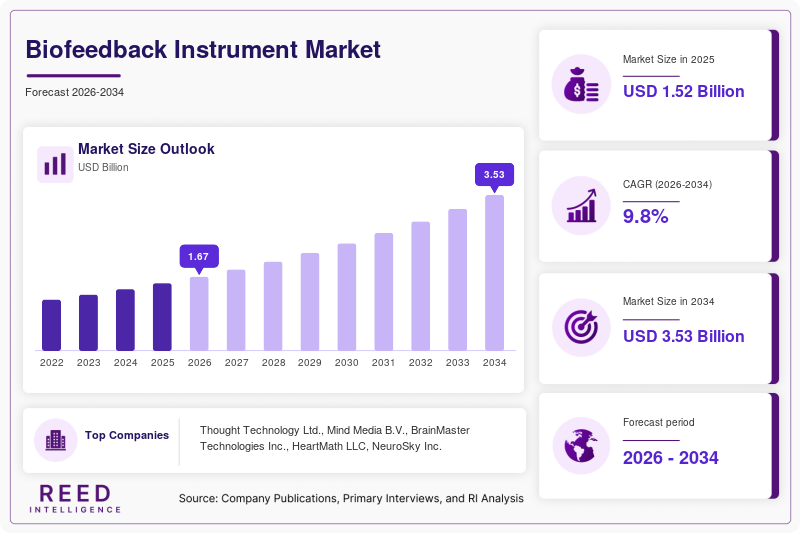
The Biofeedback Instrument Market size was valued at USD 1.52 billion in 2024 and is projected to reach USD 3.68 billion by 2033, expanding at a CAGR of 9.8% during 2025–2034. The market growth is supported by the increasing use of physiological monitoring technologies in behavioral therapy, rehabilitation programs, and stress management applications. Biofeedback instruments measure bodily responses such as brain activity, muscle tension, heart rate variability, and skin conductivity, enabling healthcare professionals and individuals to monitor and regulate physiological functions.
A significant global factor contributing to the expansion of the Biofeedback Instrument Market is the growing adoption of non-invasive therapeutic technologiesin healthcare systems. Healthcare providers and therapy clinics are increasingly integrating biofeedback instruments into treatment protocols for neurological disorders, chronic pain, and mental health conditions. The shift toward personalized and preventive healthcare has further accelerated demand for these instruments, as they allow real-time monitoring and behavioral modification without pharmaceutical intervention.
Key Highlights
- North America held the dominant regional share of 39% in 2025, while Asia Pacific is projected to record the fastest CAGR of 11.4% during the forecast period.
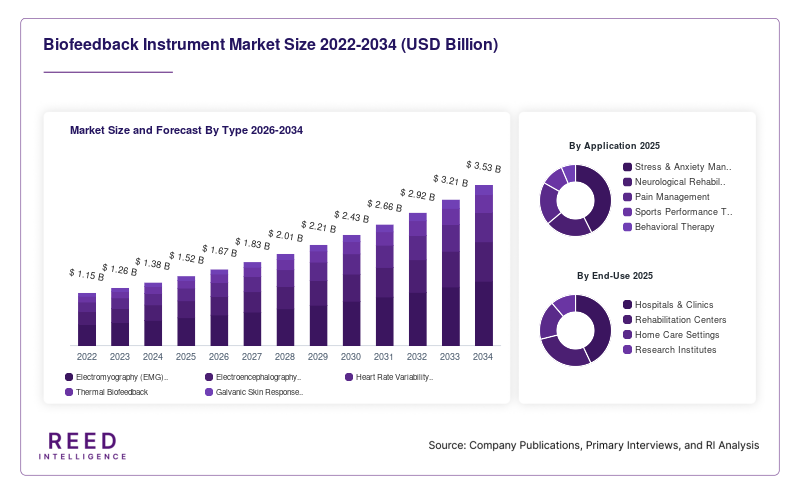
- By Type, Electromyography (EMG) biofeedback devices led the market with 31% share in 2024, while heart rate variability (HRV) biofeedback instruments are expected to grow at the fastest 10.7% CAGR.
- By Application, stress and anxiety management accounted for 34% share in 2024, while neurological rehabilitation is projected to expand at 10.5% CAGR.
- The United States remained the dominant country market, valued at USD 480 million in 2024 and USD 525 million in 2025.
Market Trends
Integration of Wearable Biofeedback Technologies
Wearable health technologies have increasingly influenced the Biofeedback Instrument Market. Manufacturers are integrating biosensors into wearable devices capable of tracking physiological responses in real time. These wearable biofeedback instruments allow users to monitor metrics such as heart rate variability, breathing patterns, and muscle tension during daily activities. The integration of mobile applications and cloud-based analytics has enabled continuous tracking and therapy adjustments. This trend has expanded the adoption of biofeedback instruments beyond clinical environments to personal wellness programs and remote monitoring solutions.
Expansion of Digital Therapeutics Platforms
Another significant trend shaping the Biofeedback Instrument Market is the growth of digital therapeutics platforms. Biofeedback devices are increasingly being incorporated into software ecosystems designed to deliver structured therapy programs. These platforms combine physiological monitoring with guided behavioral interventions such as breathing exercises, meditation, and cognitive training. The approach enhances treatment adherence and patient engagement while enabling clinicians to monitor therapy progress remotely. As healthcare systems adopt digital treatment pathways, biofeedback instrument providers are increasingly collaborating with software developers to integrate advanced data analytics and therapy management tools.
Market Drivers
Rising Awareness of Stress-Related Health Conditions
The growing prevalence of stress-related disorders has contributed to the expansion of the Biofeedback Instrument Market. Conditions such as chronic stress, anxiety, and tension-related headaches have increased globally due to changing work patterns and lifestyle pressures. Healthcare practitioners are incorporating biofeedback therapy into treatment programs because it enables patients to develop self-regulation techniques for physiological responses. As awareness of behavioral therapy methods continues to increase, healthcare facilities and wellness centers are adopting biofeedback instruments as complementary therapeutic tools.
Growing Adoption in Sports Performance Training
Biofeedback instruments are increasingly being utilized in professional sports and athletic performance training. Coaches and sports scientists employ biofeedback systems to analyze physiological responses such as muscle activation, breathing rhythm, and heart rate variability during training sessions. These insights help athletes optimize physical performance, reduce fatigue, and improve focus. The integration of biofeedback technology in sports science laboratories and training centers has created a new application area for instrument manufacturers, contributing to the expansion of the Biofeedback Instrument Market.
Market Restraint
High Cost of Advanced Biofeedback Systems
One of the primary restraints affecting the Biofeedback Instrument Market is the relatively high cost associated with advanced biofeedback equipment. Clinical-grade biofeedback systems often require specialized sensors, software platforms, and trained professionals to operate the devices effectively. These factors increase the overall cost of deployment in healthcare facilities and therapy clinics.
Additionally, small clinics and independent therapy practitioners may face budget limitations when investing in sophisticated biofeedback instruments. The need for regular calibration, maintenance, and software updates can further increase operational expenses. In developing economies, the adoption of biofeedback instruments may be limited due to constrained healthcare budgets and limited reimbursement frameworks for behavioral therapy technologies.
The lack of standardized training programs for biofeedback therapy also contributes to slower adoption in certain regions. Healthcare providers may hesitate to invest in biofeedback systems without trained staff capable of interpreting physiological data accurately. Although technological improvements are gradually reducing equipment costs, affordability challenges remain a key barrier to wider penetration of biofeedback instruments across emerging healthcare markets.
Market Opportunities
Expansion of Home-Based Biofeedback Solutions
The rising demand for home healthcare technologies is creating opportunities within the Biofeedback Instrument Market. Consumers are increasingly seeking self-management tools for stress reduction, mindfulness, and rehabilitation exercises. Portable biofeedback devices designed for home use allow individuals to monitor physiological signals and practice therapeutic techniques without visiting clinical facilities. This shift toward consumer health technologies has encouraged manufacturers to develop user-friendly and compact biofeedback systems suitable for non-clinical environments.
Increasing Applications in Mental Health Therapy
The integration of biofeedback technology into mental health therapy programs represents another growth opportunity. Psychologists and behavioral therapists are incorporating biofeedback instruments into treatment plans for conditions such as anxiety disorders, attention disorders, and sleep disturbances. Biofeedback-assisted therapy helps patients understand physiological triggers and improve emotional regulation through guided exercises. As mental health services expand globally, the demand for biofeedback-based therapy solutions is expected to increase, supporting the long-term outlook of the Biofeedback Instrument Market.
Segmental Analysis
By Type
Electromyography (EMG) biofeedback devices represented the largest segment of the Biofeedback Instrument Market, accounting for 31% share in 2024. These instruments measure muscle activity and are widely used in physiotherapy and rehabilitation programs. Healthcare professionals employ EMG biofeedback systems to help patients improve muscle control and coordination following injuries or neurological conditions. The ability to visualize muscle activation in real time has made these instruments a commonly used therapy tool in clinical rehabilitation settings.
Heart rate variability (HRV) biofeedback instruments are expected to emerge as the fastest-growing subsegment, expanding at a CAGR of 10.7% during the forecast period. Growth in this subsegment will be supported by the increasing use of HRV monitoring for stress management and emotional regulation programs. HRV biofeedback devices enable users to monitor heart rhythm patterns and practice breathing techniques that promote physiological balance. The expanding integration of HRV monitoring into wearable health technologies will further accelerate the adoption of these instruments.
By Application
Stress and anxiety management accounted for the largest share of the Biofeedback Instrument Market, representing 34% of total revenue in 2024. Biofeedback therapy is commonly used to help individuals recognize physiological responses to stress and learn techniques to regulate breathing, heart rate, and muscle tension. Mental health professionals frequently incorporate biofeedback instruments into behavioral therapy sessions to support stress reduction programs.
Neurological rehabilitation is projected to be the fastest-growing application segment, with a CAGR of 10.5% from 2025 to 2034. Biofeedback instruments will increasingly be used in rehabilitation programs for patients recovering from neurological conditions such as stroke or nerve injuries. These devices provide real-time feedback on muscle activity and motor control, allowing patients to improve movement coordination during therapy sessions. As rehabilitation centers expand their therapy capabilities, the demand for biofeedback instruments will increase.
By End-Use
Hospitals and clinics held the dominant share of the Biofeedback Instrument Market in 2024, accounting for 42% of the global market. These healthcare institutions utilize biofeedback instruments as part of therapy programs for pain management, rehabilitation, and behavioral health treatment. The availability of trained healthcare professionals and advanced medical infrastructure has contributed to the widespread use of biofeedback systems in hospital environments.
Home care settings are anticipated to represent the fastest-growing end-use segment, expanding at a CAGR of 10.9% during the forecast period. The development of compact and user-friendly biofeedback instruments will enable individuals to conduct therapy exercises independently at home. Manufacturers are increasingly designing portable devices that connect with smartphone applications, allowing users to track physiological metrics and practice guided therapy programs remotely.
Regional Analysis
North America
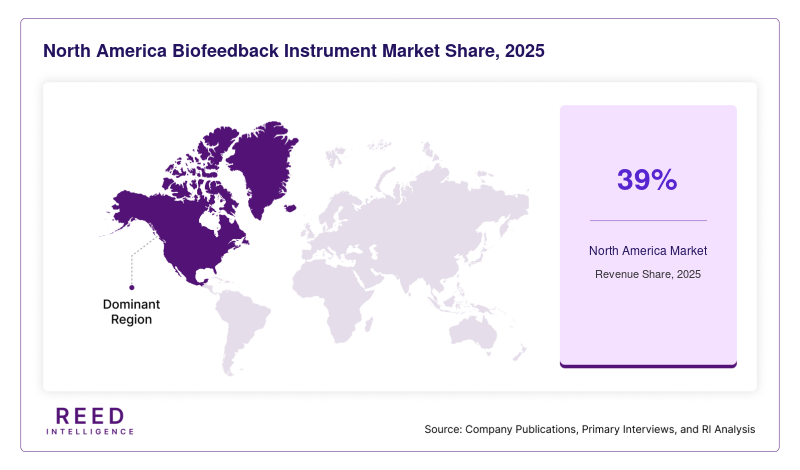
North America accounted for 39% of the Biofeedback Instrument Market share in 2025. The region has historically demonstrated strong adoption of digital health technologies across clinical and wellness sectors. During the forecast period, the regional market will expand at a CAGR of 9.2% from 2025 to 2034. Demand in this region is supported by the presence of advanced healthcare infrastructure and the integration of physiological monitoring technologies in therapy programs. Healthcare providers in the United States and Canada have incorporated biofeedback therapy in pain management clinics, mental health centers, and rehabilitation programs.
The United Statesrepresented the dominant country within the regional market. Growth in the country has been supported by the widespread presence of behavioral therapy clinics and specialized neurotherapy centers. Many healthcare professionals have adopted biofeedback instruments to complement existing treatment approaches for migraines, chronic pain conditions, and attention disorders. Furthermore, research institutions and universities in the United States have contributed to the advancement of biofeedback technologies through clinical trials and therapy research programs.
Europe
Europe held 27% share of the Biofeedback Instrument Market in 2025. The region has maintained steady adoption of therapeutic monitoring technologies across healthcare institutions and wellness centers. Over the forecast period, the European market will grow at a CAGR of 8.8% between 2025 and 2034. Healthcare systems across Western Europe have increasingly integrated non-pharmacological treatment approaches into rehabilitation and stress management programs.
Germanyemerged as the dominant country market in the region. The country’s healthcare system has placed strong emphasis on preventive medicine and therapeutic rehabilitation programs. Hospitals and physiotherapy clinics in Germany have adopted biofeedback instruments to support treatment programs for neurological recovery and musculoskeletal rehabilitation. Additionally, research institutions in Germany have contributed to technological improvements in sensor-based physiological monitoring, further supporting the adoption of biofeedback instruments.
Asia Pacific
Asia Pacific represented 21% of the Biofeedback Instrument Market share in 2025. The region has witnessed expanding adoption of medical technologies across hospitals, diagnostic centers, and wellness facilities. The regional market will register the fastest CAGR of 11.4% from 2025 to 2034due to increasing healthcare investments and rising awareness of behavioral therapy techniques.
Chinahas remained the dominant country within the Asia Pacific market. The country’s expanding healthcare infrastructure and growing demand for advanced medical devices have supported the adoption of biofeedback technologies. Hospitals and rehabilitation centers in China have gradually integrated physiological monitoring devices into treatment programs for neurological recovery and chronic pain therapy. In addition, local medical device manufacturers have increased investments in sensor technology and digital health platforms, which has supported market expansion.
Middle East & Africa
The Middle East & Africaaccounted for 7% of the Biofeedback Instrument Market share in 2025. The region has gradually adopted advanced healthcare technologies as governments invest in modernizing healthcare infrastructure. The market in this region will grow at a CAGR of 8.5% through 2034.
The United Arab Emiratesrepresented the leading country market in the region. Healthcare facilities in the country have increasingly incorporated innovative therapy technologies to support patient wellness and rehabilitation services. The development of specialized wellness centers and physiotherapy clinics has contributed to the adoption of biofeedback instruments. Furthermore, healthcare modernization initiatives and the establishment of medical technology hubs have supported the expansion of therapeutic monitoring solutions across the country.
Latin America
Latin America held 6% of the Biofeedback Instrument Market share in 2025. Adoption of therapeutic monitoring technologies has gradually increased across healthcare facilities and private therapy centers in the region. Over the forecast period, the regional market will expand at a CAGR of 8.7% between 2025 and 2034.
Brazilemerged as the dominant country market in Latin America. The country has a large network of physiotherapy clinics and rehabilitation centers that incorporate biofeedback therapy into treatment programs. Healthcare professionals in Brazil have increasingly adopted biofeedback instruments to support recovery programs for musculoskeletal conditions and neurological rehabilitation. Additionally, growing awareness of mental health therapy has encouraged clinics to incorporate biofeedback-based treatment techniques.
Competitive Landscape
The Biofeedback Instrument Market is moderately competitive, with several medical device manufacturers and digital health companies participating in product development and distribution. Companies are focusing on improving sensor accuracy, developing portable devices, and integrating software analytics platforms.
One of the prominent market leaders is Thought Technology Ltd., which has established a strong presence through its neurofeedback and physiological monitoring systems. The company continues to expand its product portfolio by integrating advanced sensor technologies and therapy software platforms. Recent developments have included the launch of upgraded biofeedback systems designed for clinical rehabilitation centers and research laboratories.
Other key participants are focusing on product innovation and strategic collaborations with healthcare providers and research institutions to expand market presence.
Key Players List
- Thought Technology Ltd.
- Mind Media B.V.
- Biofeedback Federation of Europe
- NeuroCare Group AG
- BrainMaster Technologies Inc.
- QxWorld Ltd.
- Neurobit Systems
- HeartMath LLC
- ELMIKO Medical Equipment
- Mitsar Co. Ltd.
- Wearable Sensing
- NeuroSky Inc.
- Brainquiry B.V.
- NCC Medical
- Laborie Medical Technologies
Recent Developments
- 2024: Thought Technology Ltd. introduced an upgraded biofeedback platform designed for neurological therapy applications.
- 2023: HeartMath LLC expanded its wearable HRV biofeedback device portfolio for stress management programs.
- 2023: BrainMaster Technologies launched an enhanced neurofeedback system for clinical therapy centers.
- 2022: Mind Media B.V. introduced a compact biofeedback system integrated with digital therapy software.
- 2022: NeuroSky Inc. expanded sensor-based brain monitoring technologies for consumer health applications.
Biofeedback Instrument Market Segments
By Type
- Electromyography (EMG) Biofeedback
- Electroencephalography (EEG) Biofeedback
- Heart Rate Variability (HRV) Biofeedback
- Thermal Biofeedback
- Galvanic Skin Response Biofeedback
By Application
- Stress & Anxiety Management
- Neurological Rehabilitation
- Pain Management
- Sports Performance Training
- Behavioral Therapy
By End-Use
- Hospitals & Clinics
- Rehabilitation Centers
- Home Care Settings
- Research Institutes
By Region
- North America
- Europe
- Asia Pacific
- Middle East & Africa
- Latin America
By Region
- North America
- Europe
- APAC
- Middle East and Africa
- LATAM