Bird Flu Treatment Market Size, Share & Demand Report By Treatment Type (Antiviral Drugs, Vaccines, Monoclonal Antibody Therapies, Supportive Care Treatments), By Distribution Channel (Hospital Pharmacies, Retail Pharmacies, Online Pharmacies), By End User (Hospitals, Specialty Infectious Disease Clinics, Ambulatory Care Centers, Research Institutes), By Region & Segment Forecasts, 2026–2034
USD 3950
Market Overview
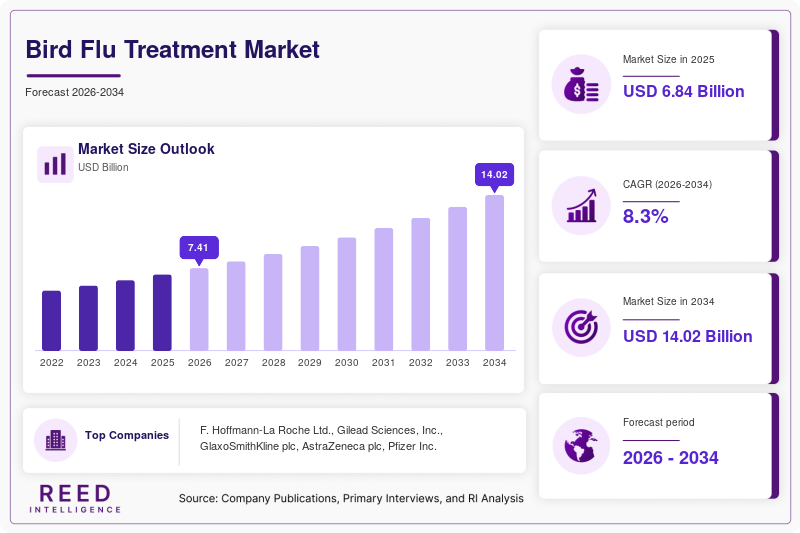
The global Bird Flu Treatment Market size was valued at USD 6.84 billion in 2026 and is projected to reach USD 12.96 billion by 2034, expanding at a CAGR of 8.3% during the forecast period from 2026 to 2034. Rising outbreaks of avian influenza across poultry-producing nations and increasing zoonotic disease surveillance programs have contributed to steady market expansion. Governments, pharmaceutical manufacturers, and public health agencies are investing in antiviral stockpiling, vaccine development, and rapid-response healthcare infrastructure to reduce the risk of large-scale transmission. The growing integration of pandemic preparedness frameworks within national healthcare systems has further strengthened demand for effective bird flu treatment solutions.
The market is also benefiting from increased research activities focused on broad-spectrum antiviral drugs and next-generation immunotherapies. Healthcare providers are emphasizing early diagnosis and timely intervention to reduce mortality rates associated with highly pathogenic avian influenza strains. Expanding healthcare access in emerging economies and stronger disease-monitoring capabilities have accelerated treatment adoption rates across hospitals and infectious disease centers. In addition, collaboration between biotechnology firms and government organizations has improved clinical trial activity and accelerated regulatory approvals for innovative therapeutic products.
Key Highlights
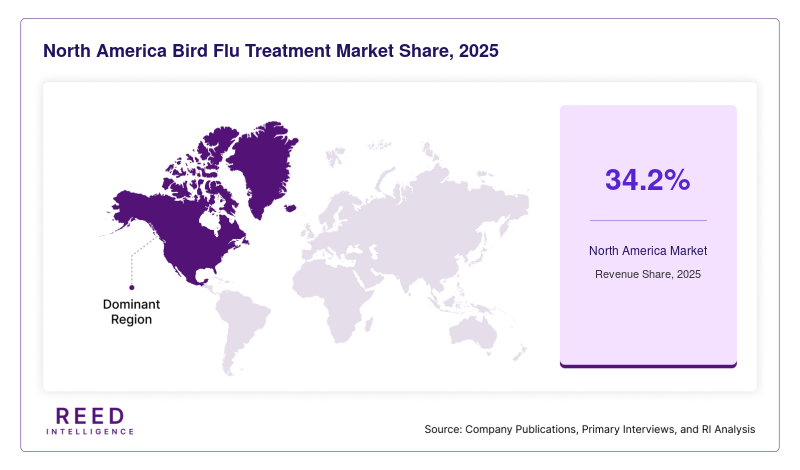
- North America dominated the market with a 34.2% share in 2025, while Asia Pacific is expected to grow at the fastest CAGR of 10.9% during 2026–2034.
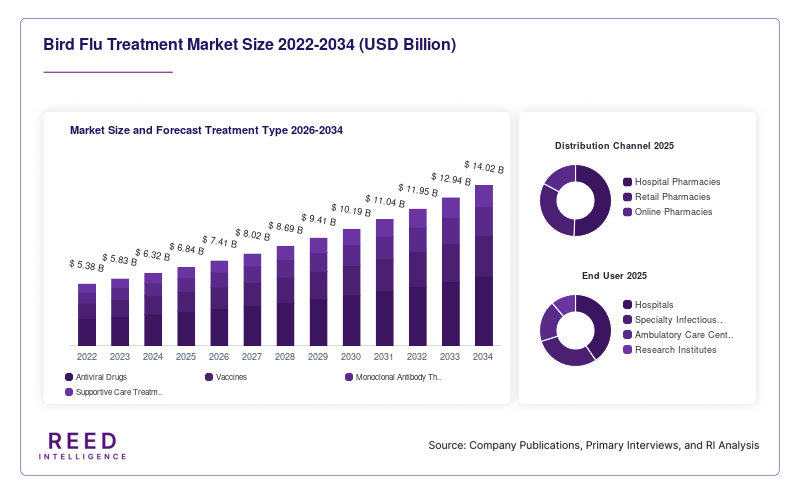
- By treatment type, antiviral drugs accounted for the largest share of 44.8%, while monoclonal antibody therapies are projected to grow at a CAGR of 11.7%.
- By distribution channel, hospital pharmacies led with a 48.6% share, whereas online pharmacies are expected to expand at a CAGR of 12.1%.
- By end user, hospitals held the dominant share of 52.4%, while specialty infectious disease clinics are forecast to grow at a CAGR of 10.8%.
- The United States remained the dominant country, with market values of USD 1.84 billion in 2024 and USD 1.98 billion in 2025.
Market Trends
Expansion of Pandemic Preparedness Programs
Governments across developed and developing economies are strengthening pandemic preparedness initiatives to reduce the economic and healthcare burden caused by infectious diseases. National health authorities are increasing investments in antiviral stockpiles, vaccine reserves, emergency response infrastructure, and laboratory testing capabilities. This trend has significantly influenced the Bird Flu Treatment Market as healthcare systems prioritize rapid containment strategies for avian influenza outbreaks. Countries with large poultry industries are establishing specialized response teams and increasing funding for influenza monitoring programs to reduce transmission risks.
Pharmaceutical companies are also benefiting from long-term procurement agreements for antiviral medications and emergency-use treatments. Several healthcare systems have increased annual spending on influenza preparedness after observing the impact of viral outbreaks on global trade and healthcare resources. This has encouraged manufacturers to expand production capacities and improve supply chain resilience. Digital disease-monitoring systems and artificial intelligence-based outbreak prediction platforms are further improving treatment planning and accelerating emergency medical responses in affected regions.
Increasing Development of Advanced Antiviral Therapies
The market is witnessing rising demand for advanced antiviral therapies capable of targeting multiple influenza strains with improved efficacy. Traditional antiviral drugs remain widely used, but research institutions and biotechnology companies are focusing on developing next-generation therapies with lower resistance risks and faster recovery outcomes. Broad-spectrum antivirals, monoclonal antibodies, and immune-modulating therapies are attracting substantial investment due to their potential to address evolving viral mutations.
Clinical trials involving combination therapies and targeted biologics have expanded considerably during recent years. Pharmaceutical companies are integrating genomic analysis and precision medicine approaches to improve treatment outcomes in severe bird flu infections. This trend is expected to reshape the competitive environment of the Bird Flu Treatment Market as manufacturers seek differentiated treatment solutions. In addition, increasing partnerships between biotechnology firms and public healthcare agencies are accelerating product commercialization and regulatory approvals for innovative therapeutic options.
Market Drivers
Rising Incidence of Avian Influenza Outbreaks
Frequent outbreaks of avian influenza across Asia, Europe, and North America are driving consistent demand for effective treatment solutions. Large poultry-producing economies are experiencing recurring infection waves that threaten food supply chains, export activities, and public health systems. Human exposure to infected birds has increased concern regarding potential pandemic scenarios, encouraging governments to strengthen treatment preparedness measures. Healthcare authorities are improving surveillance systems and increasing purchases of antiviral medications to manage potential outbreaks more efficiently.
The rising spread of highly pathogenic strains such as H5N1 and H7N9 has accelerated investments in clinical research and healthcare infrastructure. Poultry farm workers, veterinarians, and healthcare professionals are increasingly targeted for preventive treatment programs and early intervention strategies. Expanding laboratory testing capabilities and quicker diagnosis rates are also contributing to higher treatment adoption. These factors collectively continue to support sustained growth within the Bird Flu Treatment Market across both developed and emerging healthcare systems.
Growth in Government Funding for Infectious Disease Control
Public sector investments in infectious disease management have increased substantially over the past decade. Governments are allocating larger healthcare budgets toward antiviral procurement, emergency healthcare planning, vaccine research, and disease containment infrastructure. This funding growth has created a supportive environment for pharmaceutical manufacturers operating in the Bird Flu Treatment Market. National health agencies are signing long-term contracts with drug manufacturers to maintain strategic antiviral reserves and ensure rapid distribution during outbreak situations.
International organizations are also supporting regional disease-prevention programs through grants and collaborative healthcare initiatives. Developing countries are improving healthcare access and upgrading infectious disease treatment centers with modern diagnostic and therapeutic technologies. In addition, stronger regulatory support for accelerated drug approvals has encouraged innovation within the antiviral treatment industry. Increasing cooperation between public health institutions and private pharmaceutical companies continues to improve treatment accessibility and strengthen long-term market expansion opportunities.
Market Restraint
Limited Treatment Accessibility in Low-Income Regions
Despite advancements in antiviral therapies and healthcare preparedness programs, limited treatment accessibility remains a major challenge for the Bird Flu Treatment Market. Several low-income and rural regions continue to face inadequate healthcare infrastructure, limited diagnostic facilities, and insufficient antiviral stock availability. Delayed diagnosis and restricted access to healthcare professionals often reduce treatment effectiveness and increase infection-related complications. In many developing economies, healthcare systems prioritize broader infectious disease management needs, limiting investments dedicated specifically to avian influenza treatment preparedness.
High treatment costs associated with advanced biologics and newer antiviral therapies further restrict adoption rates among underfunded healthcare systems. Supply chain disruptions during outbreak periods can also create shortages of essential medications, particularly in geographically isolated areas. In addition, lack of public awareness regarding early symptom identification often delays medical intervention. These factors negatively affect treatment outcomes and slow overall market penetration in several emerging regions. Pharmaceutical companies must therefore address affordability, distribution efficiency, and healthcare accessibility challenges to support wider adoption of bird flu treatment solutions globally.
Market Opportunities
Growth Potential in Emerging Asian Economies
Emerging economies across Asia Pacific present substantial growth opportunities for the Bird Flu Treatment Market due to increasing poultry production, rising healthcare investments, and expanding infectious disease monitoring systems. Countries such as India, Vietnam, Indonesia, and Thailand continue to experience periodic avian influenza outbreaks that increase the need for effective antiviral therapies and preventive healthcare measures. Governments in these countries are improving laboratory infrastructure and strengthening public health surveillance programs to minimize outbreak-related economic losses.
Rapid urbanization and population growth are also contributing to greater healthcare spending and improved access to medical treatment services. International healthcare organizations are supporting regional influenza-prevention programs through funding initiatives and technical collaborations. Pharmaceutical companies are expanding distribution networks and entering strategic partnerships with local healthcare providers to improve market penetration. These developments are expected to create favorable conditions for long-term treatment demand across emerging Asian healthcare markets.
Advancements in Biologic and Immunotherapy Solutions
Technological progress in biologics and immunotherapy research is creating significant opportunities for manufacturers operating in the Bird Flu Treatment Market. Researchers are developing monoclonal antibodies and immune-based therapies designed to improve treatment effectiveness against highly pathogenic influenza strains. These therapies may reduce hospitalization duration and improve survival rates among high-risk patient populations. Growing investment in biotechnology research has accelerated innovation in targeted antiviral treatment approaches.
Several pharmaceutical companies are focusing on combination therapies that integrate antiviral medications with immune-response modulators to improve clinical outcomes. Personalized medicine strategies and genomic analysis tools are also supporting the development of more precise treatment solutions. Regulatory agencies in major healthcare markets are increasingly providing fast-track approval pathways for therapies addressing pandemic-related risks. These advancements are expected to strengthen commercial opportunities for biotechnology firms and create new revenue streams across the global market.
Segmental Analysis
By Treatment Type
Antiviral drugs dominated the Bird Flu Treatment Market in 2024 with a market share of 44.8% due to their widespread clinical adoption and strong availability across healthcare systems. Medications such as neuraminidase inhibitors continue to serve as primary treatment options for avian influenza infections because of their proven effectiveness in reducing symptom severity and hospitalization rates. Governments and healthcare agencies maintain substantial antiviral stockpiles as part of pandemic preparedness strategies, further supporting segment growth. Hospitals and emergency care centers frequently prioritize antiviral administration during early-stage infections to improve recovery outcomes and reduce transmission risks. Strong physician familiarity with these medications and established treatment guidelines also contribute to the segment’s leadership position across both developed and emerging healthcare markets.
Monoclonal antibody therapies are projected to register the fastest CAGR of 11.7% during the forecast period due to increasing investment in biologic research and targeted antiviral treatment development. These therapies are gaining attention for their potential to improve outcomes in severe influenza infections while reducing resistance-related concerns associated with conventional antiviral drugs. Biotechnology companies are expanding clinical trials focused on immune-based therapies designed to neutralize highly pathogenic influenza strains more effectively. Rising demand for precision medicine approaches and growing support from regulatory agencies for innovative biologics are accelerating commercialization opportunities. In addition, partnerships between pharmaceutical companies and public health institutions are improving research funding and speeding up product development activities within this rapidly expanding treatment category.
By Distribution Channel
Hospital pharmacies accounted for the largest share of the Bird Flu Treatment Market in 2024, representing 48.6% of global revenue. Hospitals remain the primary centers for avian influenza diagnosis, treatment administration, and emergency care management, making hospital pharmacies critical distribution points for antiviral medications and supportive therapies. During outbreak situations, healthcare authorities often prioritize hospital-based drug distribution to ensure timely access for high-risk patients. The presence of trained healthcare professionals and advanced storage infrastructure further strengthens the role of hospital pharmacies in treatment delivery. In addition, government procurement programs and strategic antiviral stockpiling initiatives frequently channel large volumes of medications through hospital networks, reinforcing the segment’s dominant market position.
Online pharmacies are expected to grow at the fastest CAGR of 12.1% from 2026 to 2034 due to increasing digital healthcare adoption and expanding access to telemedicine services. Consumers are increasingly using online pharmaceutical platforms to obtain prescription medications and healthcare products conveniently, especially in urban areas with strong internet penetration. The growing popularity of digital prescription management systems and home-delivery healthcare services is further supporting segment expansion. Pharmaceutical retailers are investing in secure digital platforms and faster logistics networks to improve treatment accessibility during infectious disease outbreaks. In addition, rising awareness regarding preventive healthcare and improved regulatory oversight for online pharmaceutical operations are expected to create favorable growth opportunities for this distribution segment.
By End User
Hospitals emerged as the dominant end-user segment in the Bird Flu Treatment Market during 2024, accounting for 52.4% of global revenue. Hospitals play a central role in managing severe avian influenza cases because they possess advanced diagnostic equipment, isolation facilities, and critical care infrastructure. Patients experiencing respiratory complications and high-risk infections often require hospitalization for intensive treatment and monitoring. Government emergency preparedness programs also allocate significant antiviral supplies and treatment resources directly to hospital systems during outbreak periods. Furthermore, hospitals frequently participate in clinical trials and infectious disease research programs, strengthening their importance within the broader treatment ecosystem. Continuous improvements in healthcare infrastructure and emergency response capabilities are expected to sustain segment dominance throughout the forecast period.
Specialty infectious disease clinics are projected to expand at the fastest CAGR of 10.8% during the forecast period due to rising demand for focused infectious disease management services. These clinics provide specialized diagnostic support, targeted treatment plans, and post-infection monitoring for patients exposed to avian influenza strains. Increasing awareness regarding zoonotic diseases and early treatment intervention has encouraged healthcare providers to establish dedicated infectious disease treatment centers. Specialty clinics are also benefiting from improved access to advanced diagnostic technologies and personalized treatment approaches. In addition, growing collaboration between infectious disease specialists and biotechnology firms is supporting the adoption of innovative antiviral and immune-based therapies within these healthcare facilities, contributing to strong future growth potential.
Regional Analysis
North America
North America accounted for 34.2% of the global Bird Flu Treatment Market in 2025 and continues to maintain a leading position due to advanced healthcare infrastructure and strong pandemic preparedness frameworks. The region is expected to expand at a CAGR of 7.8% during the forecast period. High government spending on antiviral stockpiles and disease-monitoring systems has strengthened treatment accessibility across hospitals and emergency healthcare centers. Continuous investments in pharmaceutical research and biotechnology innovation further support regional market growth.
The United States remains the dominant country within the regional market due to strong federal funding for infectious disease management and extensive pharmaceutical manufacturing capabilities. Rising investments in vaccine development and rapid-response treatment infrastructure have accelerated product commercialization. The country also benefits from advanced diagnostic technologies and strong public-private collaborations focused on influenza surveillance. Increasing clinical trials involving broad-spectrum antiviral therapies continue to improve the competitive environment within the regional market.
Europe
Europe represented a significant share of the Bird Flu Treatment Market in 2025 due to robust public healthcare systems and strict infectious disease control regulations. The region is projected to grow at a CAGR of 7.5% between 2026 and 2034. Several European countries have strengthened influenza preparedness programs after recurring avian influenza outbreaks affected poultry production and trade activities. Strong regulatory support for antiviral drug approvals has also encouraged market expansion across regional healthcare networks.
Germany remains the dominant country in Europe because of its advanced pharmaceutical industry and high healthcare expenditure. The country has increased investment in influenza surveillance programs and emergency healthcare preparedness initiatives. Research institutions and biotechnology firms in Germany are actively involved in antiviral drug development and immunotherapy innovation. In addition, strong collaboration between government agencies and healthcare providers supports efficient treatment distribution and outbreak response management across the country.
Asia Pacific
Asia Pacific held a notable share of the global Bird Flu Treatment Market in 2025 and is forecast to register the fastest CAGR of 10.9% through 2034. The region experiences frequent avian influenza outbreaks due to dense poultry farming activities and large population concentrations. Governments are increasing healthcare spending and strengthening disease surveillance programs to reduce outbreak-related risks. Growing pharmaceutical manufacturing capacity and rising healthcare awareness are also contributing to strong market growth across regional economies.
China remains the dominant country in Asia Pacific due to its extensive poultry industry and expanding healthcare infrastructure. The country has increased investments in antiviral research, disease-monitoring technologies, and vaccine development programs. Public health agencies are improving emergency response capabilities to minimize economic losses associated with avian influenza outbreaks. In addition, growing biotechnology research activities and increasing partnerships with international pharmaceutical companies are supporting treatment innovation within the Chinese healthcare market.
Middle East & Africa
The Middle East & Africa region is gradually expanding within the Bird Flu Treatment Market due to improving healthcare infrastructure and growing awareness regarding infectious disease preparedness. The market in this region is anticipated to grow at a CAGR of 6.9% during the forecast period. Governments are increasing healthcare investments to strengthen laboratory testing facilities and improve access to antiviral medications. Rising collaboration with international healthcare organizations is also supporting disease-monitoring and treatment initiatives across several regional economies.
Saudi Arabia dominates the regional market because of its relatively advanced healthcare system and rising public health expenditure. The country has implemented stronger infectious disease surveillance programs and expanded emergency healthcare response capabilities. Increasing government focus on healthcare modernization and pharmaceutical manufacturing development is contributing to market growth. Additionally, rising travel volumes and international trade activities have encouraged authorities to improve pandemic preparedness and antiviral treatment availability throughout the country.
Latin America
Latin America continues to witness moderate growth in the Bird Flu Treatment Market due to increasing healthcare modernization and expanding disease surveillance programs. The region is expected to grow at a CAGR of 7.1% between 2026 and 2034. Several countries are improving access to antiviral therapies and strengthening public health infrastructure to address zoonotic disease risks. Growing collaboration with international healthcare agencies has enhanced laboratory testing capabilities and accelerated treatment awareness campaigns throughout the region.
Brazil remains the dominant country within Latin America because of its large poultry industry and expanding pharmaceutical sector. The country has strengthened influenza monitoring systems and increased healthcare investments aimed at controlling infectious disease outbreaks. Rising research activities involving antiviral therapies and vaccine technologies are further supporting domestic market growth. In addition, increasing public awareness regarding disease prevention and healthcare preparedness is improving treatment adoption rates across urban and semi-urban healthcare facilities.
Competitive Landscape
The Bird Flu Treatment Market is characterized by the presence of global pharmaceutical companies, biotechnology firms, and vaccine manufacturers focusing on antiviral drug development and infectious disease management solutions. Competition is driven by product innovation, research investments, strategic collaborations, and government procurement agreements. Major players are expanding manufacturing capacities and strengthening clinical research pipelines to address rising demand for advanced treatment options. Companies are also emphasizing broad-spectrum antiviral development to improve effectiveness against evolving influenza strains.
F. Hoffmann-La Roche Ltd. remains a leading participant in the market due to its strong antiviral portfolio and extensive global distribution network. The company continues to invest in research programs aimed at improving influenza treatment outcomes and strengthening pandemic preparedness capabilities. Several competitors are increasing investments in monoclonal antibody therapies and next-generation antiviral solutions to gain competitive advantages. Strategic partnerships between pharmaceutical firms and public health agencies have also become increasingly common across the industry.
Key Players
- F. Hoffmann-La Roche Ltd.
- Gilead Sciences, Inc.
- GlaxoSmithKline plc
- AstraZeneca plc
- Pfizer Inc.
- Sanofi S.A.
- CSL Seqirus
- Moderna, Inc.
- BioCryst Pharmaceuticals, Inc.
- Abbott Laboratories
- Merck & Co., Inc.
- Novavax, Inc.
- Takeda Pharmaceutical Company Limited
- Cipla Limited
- Sun Pharmaceutical Industries Ltd.
Recent Developments
- F. Hoffmann-La Roche Ltd. expanded its antiviral manufacturing capacity in 2025 to support global influenza preparedness initiatives and improve emergency supply availability.
- Moderna, Inc. announced positive clinical trial progress for its next-generation influenza vaccine platform targeting multiple avian influenza strains in 2025.
- CSL Seqirus entered a strategic collaboration with regional healthcare agencies in Asia Pacific during 2024 to strengthen vaccine distribution and outbreak-response programs.
- Gilead Sciences, Inc. increased investment in broad-spectrum antiviral research programs aimed at improving treatment effectiveness against rapidly mutating influenza viruses.
- Sanofi S.A. expanded partnerships with biotechnology research centers to accelerate development of immune-based therapies for severe avian influenza infections.
Bird Flu Treatment Market Segments
Treatment Type
- Antiviral Drugs
- Vaccines
- Monoclonal Antibody Therapies
- Supportive Care Treatments
Distribution Channel
- Hospital Pharmacies
- Retail Pharmacies
- Online Pharmacies
End User
- Hospitals
- Specialty Infectious Disease Clinics
- Ambulatory Care Centers
- Research Institutes
By Region
- North America
- Europe
- APAC
- Middle East and Africa
- LATAM