Birth Control Wearable Market Size, Share & Demand Report By Product Type (Smart Fertility Trackers, Temperature-based Wearable Patches, Smart Rings, Wrist Wearables), By Distribution Channel (Online Retail, Pharmacies, Specialty Stores), By End-Use (Individual Consumers, Healthcare Providers, Research Institutions), By Region & Segment Forecasts, 2026–2034
USD 3950
Market Overview
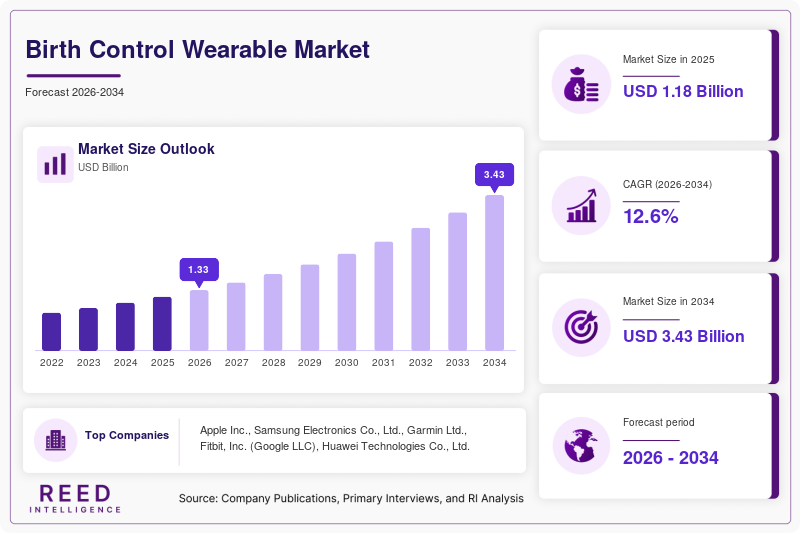
The global Birth Control Wearable Market size was valued at approximately USD 1.18 billion in 2026 and is projected to reach USD 3.05 billion by 2034, expanding at a CAGR of 12.6% during the forecast period (2026–2034). The market is gaining traction due to the rising preference for non-invasive and hormone-free contraceptive solutions. Increasing awareness around reproductive health and the shift toward digital health monitoring are encouraging consumers to adopt wearable-based fertility tracking devices. These solutions combine sensor technology, mobile connectivity, and predictive analytics to offer personalized insights, which enhances user trust and engagement.
One global factor supporting market growth is the expansion of digital healthcare ecosystems. Governments and private healthcare providers are investing in connected health platforms, allowing wearable devices to integrate seamlessly with telehealth services. This integration supports preventive healthcare approaches, where individuals actively monitor fertility cycles and reproductive health. As consumers increasingly prioritize convenience and autonomy, wearable birth control devices are emerging as a viable alternative to traditional contraceptive methods.
Key Highlights
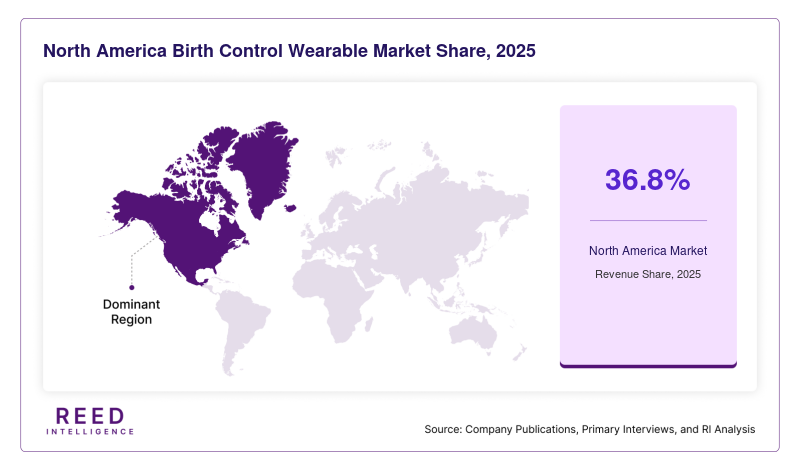
- North America dominated the market with a 36.8% share in 2025.
- Asia Pacific is expected to grow at the fastest CAGR of 13.9% during 2026–2034.
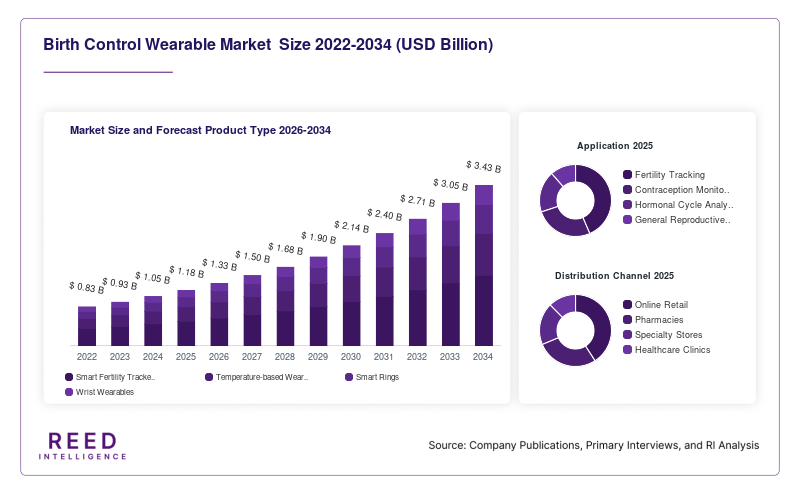
- By product type, smart fertility trackers accounted for the largest share of 42.6%, while temperature-based wearable patches are projected to grow at a CAGR of 14.2%.
- By distribution channel, online retail led with a 47.3% share, whereas pharmacy-based sales are expected to expand at a CAGR of 12.1%.
- The United States remained the dominant country, with market values of USD 520 million in 2024 and USD 585 million in 2025.
Market Trends
Integration of AI-driven predictive analytics in wearable devices
The Birth Control Wearable Market is witnessing a shift toward artificial intelligence-enabled predictive capabilities. Manufacturers are embedding machine learning algorithms into wearable devices to enhance fertility prediction accuracy. These algorithms analyze large datasets, including basal body temperature, hormonal changes, and behavioral patterns, to generate personalized fertility windows. The trend is particularly significant among younger demographics who prefer data-driven health decisions. AI integration also improves user engagement through mobile applications that provide actionable insights and reminders. As accuracy improves, these devices are increasingly positioned as reliable alternatives to traditional contraceptive methods, thereby expanding their adoption across both developed and emerging economies.
Growing preference for hormone-free contraceptive solutions
Consumers are increasingly moving away from hormone-based birth control due to concerns over side effects such as mood changes and long-term health risks. This shift is driving demand for wearable solutions that offer natural fertility tracking without altering hormonal balance. Wearable birth control devices provide a non-invasive approach, aligning with broader wellness trends that emphasize natural and preventive healthcare. This trend is supported by rising health awareness campaigns and increased access to digital health information. As a result, companies are focusing on developing user-friendly, discreet, and accurate devices that cater to this growing preference, contributing to sustained market growth.
Market Drivers
Rising awareness of reproductive health and family planning
The increasing focus on reproductive health education is a key driver of the Birth Control Wearable Market. Governments, NGOs, and healthcare providers are actively promoting awareness about family planning and fertility management. This has led to higher adoption of innovative contraceptive solutions, particularly among urban populations. Wearable devices provide a convenient way to track fertility cycles without the need for frequent clinical visits. The availability of mobile applications and digital platforms further enhances accessibility and usability. As awareness continues to grow, consumers are more likely to adopt technologically advanced solutions that offer both accuracy and convenience, supporting overall market expansion.
Advancements in wearable technology and sensor accuracy
Technological advancements in wearable devices are significantly contributing to market growth. Improvements in sensor precision, battery life, and device connectivity have enhanced the reliability of birth control wearables. Modern devices can track multiple physiological parameters simultaneously, providing comprehensive fertility insights. Integration with smartphones and cloud-based platforms allows real-time data analysis and storage, improving user experience. Additionally, continuous innovation in miniaturization and design is making devices more comfortable and discreet. These advancements are attracting a broader consumer base, including first-time users, thereby driving the overall growth of the Birth Control Wearable Market.
Market Restraint
Concerns regarding accuracy and regulatory approval
One of the primary challenges in the Birth Control Wearable Market is the concern over device accuracy and regulatory compliance. While wearable devices offer convenience, their effectiveness in preventing unintended pregnancies depends heavily on precise data interpretation. Inconsistent readings due to user error or device limitations can reduce reliability. Regulatory authorities in several regions require stringent validation before approving such devices for contraceptive use. This process can delay product launches and increase development costs for manufacturers. Additionally, skepticism among healthcare professionals regarding the accuracy of wearable-based contraception may hinder widespread adoption. These factors collectively pose a restraint to market growth, particularly in regions with strict regulatory frameworks.
Market Opportunities
Expansion in emerging markets with rising digital adoption
Emerging economies present significant growth opportunities for the Birth Control Wearable Market. Increasing smartphone penetration and internet connectivity are enabling access to digital health solutions in these regions. Governments are also investing in healthcare infrastructure and awareness programs, which support the adoption of innovative contraceptive methods. The relatively young population in these markets further contributes to demand for modern and convenient solutions. Companies can capitalize on this opportunity by offering affordable and localized products tailored to regional needs. As digital adoption continues to rise, these markets are expected to contribute substantially to overall industry growth.
Development of multi-functional health monitoring devices
Another key opportunity lies in the development of multifunctional wearable devices that go beyond fertility tracking. Manufacturers are exploring the integration of additional health monitoring features such as sleep tracking, stress analysis, and general wellness metrics. This approach increases the value proposition of wearable devices, making them more appealing to consumers. By combining multiple functionalities, companies can target a broader audience and enhance customer retention. The convergence of reproductive health and general wellness tracking is expected to drive innovation and create new revenue streams within the Birth Control Wearable Market.
Segmental Analysis
By Product Type
Smart fertility trackers dominated the Birth Control Wearable Market in 2024, accounting for a share of 42.6%. These devices offer comprehensive monitoring of physiological parameters such as basal body temperature, heart rate, and hormonal indicators. Their integration with mobile applications provides users with real-time insights and personalized fertility predictions. The convenience and accuracy offered by smart fertility trackers have made them a preferred choice among consumers. Additionally, continuous advancements in sensor technology and data analytics have enhanced their reliability, further supporting their dominance in the market. The increasing demand for digital health solutions also contributes to the growth of this segment.
Temperature-based wearable patches are expected to be the fastest-growing subsegment, with a CAGR of 14.2% during the forecast period. These devices provide continuous temperature monitoring, which is a critical parameter for fertility tracking. Their discreet design and ease of use make them appealing to a wide range of users. The growing preference for non-invasive and hormone-free contraceptive methods is driving demand for temperature-based patches. Furthermore, advancements in wearable technology are improving the accuracy and reliability of these devices, supporting their rapid growth within the Birth Control Wearable Market.
By Distribution Channel
Online retail emerged as the dominant distribution channel in 2024, capturing a market share of 47.3%. The increasing popularity of e-commerce platforms and the convenience of online shopping have contributed to this dominance. Consumers prefer online channels due to the availability of a wide range of products, competitive pricing, and detailed product information. Additionally, digital marketing strategies and targeted advertising have enhanced product visibility, driving sales through online platforms. The integration of secure payment systems and efficient delivery services further supports the growth of this segment.
Pharmacy-based sales are projected to grow at the fastest CAGR of 12.1% during the forecast period. Pharmacies offer a trusted platform for purchasing healthcare products, which enhances consumer confidence. The availability of professional guidance from pharmacists also encourages adoption, particularly among first-time users. As awareness of wearable birth control devices increases, pharmacies are expected to play a significant role in educating consumers and promoting product usage. The expansion of retail pharmacy chains and the integration of digital technologies in pharmacies further support the growth of this segment.
By End-Use
Individual consumers dominated the market in 2024, accounting for a share of 54.8%. The increasing focus on personal health and wellness has led to higher adoption of wearable devices among individuals. These devices provide users with greater control over their reproductive health, enabling them to make informed decisions. The availability of user-friendly interfaces and mobile applications further enhances the appeal of wearable birth control devices. Additionally, the growing trend of self-monitoring and preventive healthcare supports the dominance of this segment in the Birth Control Wearable Market.
Healthcare providers are expected to be the fastest-growing end-use segment, with a CAGR of 12.8% during the forecast period. The integration of wearable devices into clinical practices is gaining traction, as healthcare professionals recognize their potential in monitoring patient health. These devices provide valuable data that can support diagnosis and treatment planning. The increasing adoption of telehealth services further enhances the use of wearable devices in healthcare settings. As the healthcare industry continues to embrace digital technologies, the demand for wearable birth control devices among healthcare providers is expected to grow significantly.
Regional Analysis
North America
North America held a dominant share of 36.8% in 2025 and is expected to maintain steady growth with a CAGR of 11.8% during the forecast period. The region benefits from advanced healthcare infrastructure and high consumer awareness regarding reproductive health. The presence of established market players and strong adoption of digital health technologies further supports market growth. Additionally, favorable reimbursement policies and regulatory support for innovative medical devices contribute to sustained expansion in the region.
The United States leads the regional market due to its robust digital ecosystem and high disposable income levels. A key growth factor is the increasing integration of wearable devices with telehealth platforms, allowing users to consult healthcare professionals remotely. This integration enhances user confidence and encourages adoption. The country also benefits from continuous innovation and strong investment in research and development, positioning it as a leader in the Birth Control Wearable Market.
Europe
Europe accounted for a significant market share of 27.5% in 2025 and is projected to grow at a CAGR of 11.2% during the forecast period. The region’s growth is driven by increasing awareness of non-invasive contraceptive methods and supportive regulatory frameworks. Countries in Western Europe are particularly active in adopting digital health solutions, which contributes to market expansion. The presence of established healthcare systems also facilitates the integration of wearable technologies.
Germany is the dominant country in the European market, supported by strong healthcare infrastructure and high adoption of wearable devices. A unique growth factor is the increasing focus on data privacy and security, which enhances consumer trust in digital health solutions. This emphasis encourages users to adopt wearable birth control devices that ensure data protection while providing accurate insights, thereby driving market growth.
Asia Pacific
Asia Pacific is expected to register the fastest CAGR of 13.9% during the forecast period, with a market share of 21.6% in 2025. Rapid urbanization, increasing disposable income, and growing awareness of reproductive health are key factors driving growth. The region also benefits from a large population base and rising adoption of smartphones, which supports the use of wearable devices. Government initiatives aimed at improving healthcare access further contribute to market expansion.
China dominates the Asia Pacific market due to its large consumer base and strong manufacturing capabilities. A unique growth factor is the increasing adoption of digital health platforms in urban areas, which facilitates the use of wearable devices. The country’s focus on technological innovation and affordability makes it a key contributor to the growth of the Birth Control Wearable Market in the region.
Middle East & Africa
The Middle East & Africa region held a smaller market share of 7.4% in 2025 but is expected to grow at a CAGR of 10.5% during the forecast period. Growth in this region is supported by improving healthcare infrastructure and increasing awareness of family planning. Governments are investing in healthcare initiatives that promote reproductive health, which is expected to drive adoption of wearable birth control devices.
The United Arab Emirates leads the regional market due to its advanced healthcare system and high adoption of digital technologies. A key growth factor is the increasing use of mobile health applications, which support wearable device integration. The country’s focus on innovation and healthcare modernization further enhances market growth, making it a significant contributor within the region.
Latin America
Latin America accounted for a market share of 6.7% in 2025 and is projected to grow at a CAGR of 10.9% during the forecast period. The region’s growth is driven by increasing awareness of reproductive health and the rising adoption of digital technologies. Economic development and improving healthcare infrastructure also contribute to market expansion. The growing popularity of wearable devices among younger populations supports demand.
Brazil dominates the Latin American market due to its large population and expanding healthcare sector. A unique growth factor is the increasing influence of digital health campaigns that promote awareness of modern contraceptive methods. These campaigns encourage the adoption of wearable devices, contributing to the overall growth of the Birth Control Wearable Market in the region.
Competitive Landscape
The Birth Control Wearable Market is characterized by moderate competition, with several companies focusing on innovation and product differentiation. Leading players are investing in research and development to enhance device accuracy and user experience. Strategic partnerships and collaborations are also common, enabling companies to expand their market presence and improve product offerings.
Natural Cycles is considered a leading player in the market, known for its AI-based fertility tracking solutions. The company recently introduced an upgraded algorithm that improves prediction accuracy and user engagement. Other companies are also focusing on expanding their product portfolios and entering new markets. The competitive landscape is expected to intensify as new entrants bring innovative solutions and established players continue to enhance their technological capabilities.
Key Players
- Natural Cycles
- Ava Science Inc.
- Tempdrop Ltd.
- Femometer
- Lady Technologies Inc.
- Oura Health Ltd.
- Fitbit Inc.
- Apple Inc.
- Garmin Ltd.
- Huawei Technologies Co., Ltd.
- Withings SA
- Bellabeat Inc.
- Philips Healthcare
- Samsung Electronics Co., Ltd.
- Xiaomi Corporation
Recent Developments
- Natural Cycles launched an enhanced mobile application with improved predictive analytics and user interface features in 2025.
- Ava Science introduced a next-generation wearable bracelet with extended battery life and advanced sensor capabilities in 2024.
- Oura Health expanded its product functionality to include fertility tracking features, strengthening its position in the wearable health market.
Birth Control Wearable Market Segments
Product Type
- Smart Fertility Trackers
- Temperature-based Wearable Patches
- Smart Rings
- Wrist Wearables
Application
- Fertility Tracking
- Contraception Monitoring
- Hormonal Cycle Analysis
- General Reproductive Health Monitoring
Distribution Channel
- Online Retail
- Pharmacies
- Specialty Stores
- Healthcare Clinics
By Region
- North America
- Europe
- APAC
- Middle East and Africa
- LATAM