Blockchain Technology In Aerospace Defense Market Size, Share, Growth Report By Type (Public Blockchain, Private Blockchain, Consortium Blockchain), By Application (Supply Chain Management, Identity Management, Smart Contracts, Data Security), By End-Use (Military, Aerospace Manufacturers, Defense Contractors) By Region & Segment Forecasts, 2025–2034
USD 3950
Market Overview
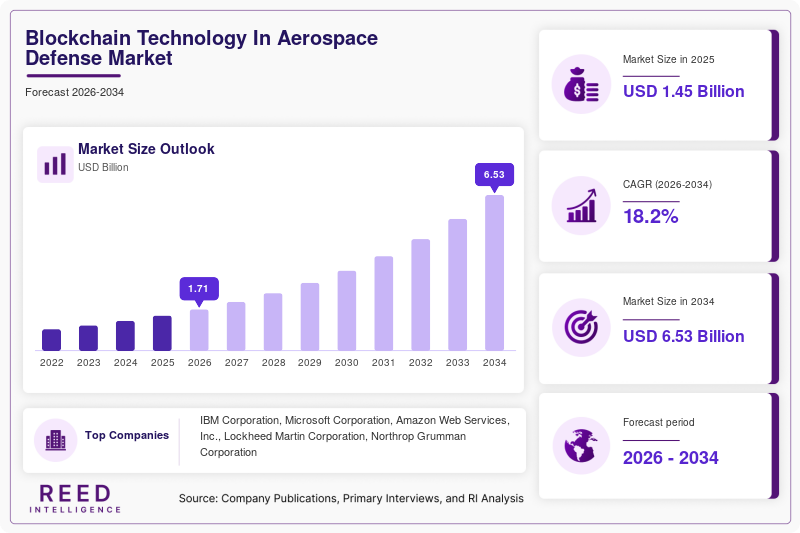
The Blockchain Technology In Aerospace Defense Market size was estimated at USD 1.45 billion in 2025 and is projected to reach approximately USD 1.78 billion in 2026. Over the forecast period, the market is expected to grow significantly, reaching USD 7.92 billion by 2034, expanding at a CAGR of 18.2% from 2025 to 2034. This growth trajectory reflects increasing demand for data integrity, transparency, and cybersecurity across aerospace and defense operations.
Blockchain technology is being integrated into mission-critical systems such as supply chain tracking, maintenance logs, and secure communications. Defense organizations are prioritizing tamper-proof systems to mitigate cyber threats and ensure operational efficiency. The growing need for real-time data verification across complex global supply chains is accelerating adoption. Additionally, blockchain-based smart contracts are being deployed to automate procurement processes and reduce delays associated with traditional systems.
Key Highlights
- North America dominated the market in 2025, accounting for approximately 38% of the global share, driven by strong defense spending and early adoption of blockchain technologies.
- Asia Pacific is projected to be the fastest-growing region, expanding at a CAGR of 19.6% from 2025 to 2034, supported by rising investments in defense modernization.
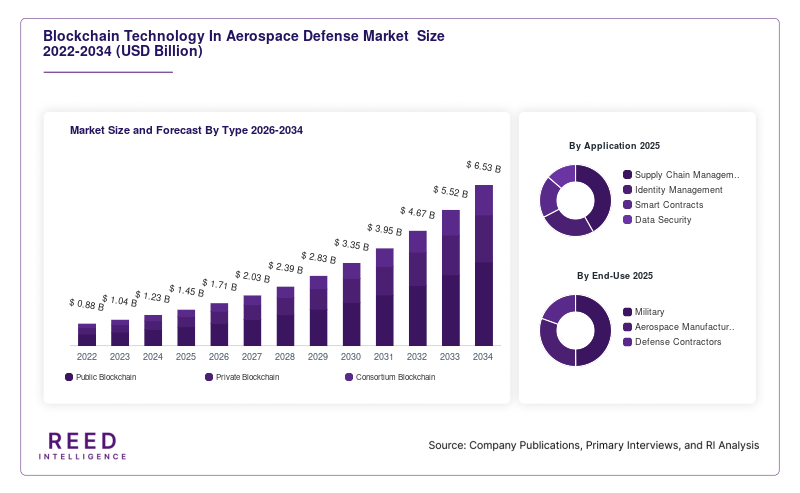
- By type, the public blockchain segment held the largest share of around 46% in 2024, due to its transparency and decentralized structure.
- By application, supply chain management dominated with nearly 42% market share, reflecting the growing need for traceability and authentication in aerospace components.
- By end-use, the military segment led with approximately 55% share in 2024, driven by high demand for secure communication and data systems.
- The private blockchain segment is expected to grow at the fastest CAGR of 19.4%, owing to its enhanced security and controlled access features.
Market Trends
Integration of Blockchain with Defense Supply Chain Systems
The integration of blockchain technology into aerospace and defense supply chain systems is becoming a notable trend. Defense supply chains involve multiple stakeholders across different geographies, making transparency and traceability essential. Blockchain enables real-time tracking of components from manufacturing to deployment, ensuring authenticity and reducing the risk of counterfeit parts. This is particularly important in aerospace, where component integrity directly affects safety and mission success. Companies are adopting distributed ledger systems to streamline procurement processes, reduce paperwork, and improve auditability. Additionally, blockchain-based systems help maintain immutable records of maintenance and repairs, enhancing lifecycle management of critical assets.
Adoption of Smart Contracts in Defense Procurement
Another emerging trend is the increasing use of smart contracts in defense procurement and contract management. Smart contracts automate agreement execution when predefined conditions are met, reducing administrative overhead and delays. In defense sectors, where contracts are complex and involve multiple approvals, smart contracts improve efficiency and minimize human error. Governments are exploring blockchain platforms to digitize procurement workflows and ensure compliance with regulatory standards. These automated systems enhance transparency and accountability while reducing costs. The growing adoption of digital transformation initiatives across defense agencies is further accelerating the deployment of smart contracts, making them a key trend shaping the market.
Market Drivers
Increasing Cybersecurity Threats in Defense Systems
The rise in cyber threats targeting defense infrastructure is a primary driver for blockchain adoption. Aerospace and defense systems store highly sensitive data, including mission plans, intelligence reports, and communication logs. Traditional centralized systems are vulnerable to hacking and data breaches. Blockchain technology offers decentralized security, making it significantly harder for malicious actors to manipulate data. Its cryptographic nature ensures that all transactions are secure and verifiable. Governments are increasingly investing in blockchain solutions to protect critical infrastructure and maintain national security. The demand for resilient cybersecurity frameworks is expected to continue driving market growth over the forecast period.
Growing Complexity of Aerospace Supply Chains
Aerospace supply chains are becoming increasingly complex due to globalization and the involvement of multiple suppliers. Managing these supply chains efficiently requires robust tracking and verification systems. Blockchain technology provides end-to-end visibility, enabling stakeholders to monitor every stage of the supply chain. This reduces inefficiencies, prevents fraud, and ensures compliance with regulatory standards. The ability to create a single source of truth across all participants is particularly valuable in defense applications. As the number of suppliers and components increases, the need for transparent and reliable systems is driving the adoption of blockchain technology in this sector.
Market Restraint
High Implementation Costs and Integration Challenges
Despite its advantages, the adoption of blockchain technology in aerospace and defense is hindered by high implementation costs and integration challenges. Deploying blockchain systems requires significant investment in infrastructure, software development, and skilled personnel. Many defense organizations operate on legacy systems that are not easily compatible with modern blockchain platforms. Integrating new technologies with existing infrastructure can be time-consuming and complex, leading to delays in deployment. Additionally, the lack of standardized protocols across different blockchain platforms creates interoperability issues. These challenges can limit adoption, especially among smaller defense contractors with limited budgets. For example, integrating blockchain into existing aircraft maintenance systems may require extensive modifications, increasing costs and implementation time. As a result, organizations must carefully evaluate the return on investment before adopting blockchain solutions.
Market Opportunities
Expansion of Blockchain in Identity and Access Management
Blockchain technology presents significant opportunities in identity and access management within the aerospace and defense sector. Secure identification of personnel and systems is critical in defense operations. Blockchain enables the creation of decentralized identity systems that are tamper-proof and easily verifiable. These systems can be used to manage access to sensitive facilities, data, and communication networks. By eliminating centralized databases, blockchain reduces the risk of identity theft and unauthorized access. Governments are exploring blockchain-based digital identity solutions to enhance security and streamline verification processes. The increasing focus on secure identity management is expected to create substantial growth opportunities for market players.
Rising Adoption of Blockchain in Unmanned Systems and IoT
The growing use of unmanned systems and Internet of Things (IoT) devices in defense applications is creating new opportunities for blockchain technology. These systems generate large volumes of data that need to be securely stored and transmitted. Blockchain provides a decentralized framework for managing data generated by drones, sensors, and other connected devices. It ensures data integrity and prevents unauthorized modifications. Additionally, blockchain can facilitate secure communication between autonomous systems, enabling real-time decision-making. As defense organizations continue to invest in unmanned technologies, the demand for secure data management solutions is expected to increase, driving the adoption of blockchain technology.
Segmental Analysis
By Type
The public blockchain segment dominated the market in 2024, accounting for approximately 46% of the total share. Public blockchains are widely used due to their transparency and decentralized nature, which are critical for defense applications requiring high levels of trust and verification. These systems allow multiple stakeholders to access and verify data without relying on a central authority. In aerospace defense, public blockchains are used for supply chain tracking and data validation, ensuring that all transactions are recorded and cannot be altered. The increasing need for secure and transparent systems is driving the dominance of this segment.
The private blockchain segment is expected to be the fastest-growing, with a projected CAGR of 19.4% during the forecast period. Private blockchains offer enhanced control and security, making them suitable for sensitive defense applications. Organizations can restrict access to authorized users, ensuring data confidentiality. The growth of this segment is driven by the need for secure communication and data management systems. Additionally, private blockchains are easier to integrate with existing infrastructure, making them a preferred choice for defense organizations.
By Application
Supply chain management was the leading application segment in 2024, accounting for around 42% of the market share. Blockchain technology is widely used to track and verify components across the aerospace supply chain. This ensures authenticity and reduces the risk of counterfeit parts. The ability to maintain a transparent and immutable record of transactions enhances efficiency and accountability. Defense organizations are increasingly adopting blockchain solutions to streamline procurement processes and improve supply chain visibility.
Identity management is projected to be the fastest-growing application segment, with a CAGR of 20.1%. The need for secure and reliable identity verification systems is driving growth in this segment. Blockchain-based identity systems provide a decentralized and tamper-proof solution for managing access to sensitive information and facilities. This is particularly important in defense operations, where security is a top priority. The increasing focus on cybersecurity is expected to drive the adoption of blockchain in identity management applications.
By End-Use
The military segment dominated the market in 2024, accounting for approximately 55% of the total share. Military organizations are the primary users of blockchain technology in the aerospace defense sector. They use blockchain for secure communication, supply chain management, and data verification. The increasing focus on cybersecurity and operational efficiency is driving the adoption of blockchain in military applications. Governments are investing heavily in advanced technologies to enhance defense capabilities.
The aerospace manufacturers segment is expected to be the fastest-growing, with a CAGR of 18.9%. These companies are adopting blockchain technology to improve manufacturing processes and ensure quality control. Blockchain enables real-time tracking of components and maintains a record of production activities. This enhances transparency and reduces the risk of errors. The growing demand for advanced aerospace systems is driving the adoption of blockchain technology in this segment.
Regional Analysis
North America
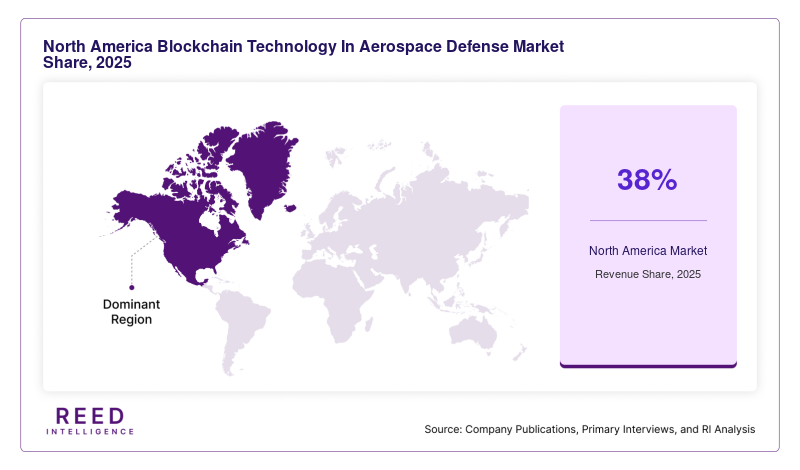
North America dominated the Blockchain Technology In Aerospace Defense Market in 2025, accounting for approximately 38% of the global market share. The region is expected to maintain its leadership position, growing at a CAGR of around 17.5% during the forecast period. Strong defense budgets and early adoption of advanced technologies contribute to this growth. The presence of major defense contractors and technology providers further supports market expansion.
The United States is the dominant country in this region, driven by its focus on cybersecurity and digital transformation in defense operations. A key growth factor is the increasing investment in blockchain-based supply chain systems for military applications. Government initiatives aimed at enhancing data security and operational efficiency are also accelerating adoption across various defense agencies.
Europe
Europe held a significant share of the market in 2025, accounting for approximately 24% of global revenue. The region is projected to grow at a CAGR of 16.8% over the forecast period. Increasing collaboration among European defense agencies and technology firms is driving market growth. The focus on strengthening cybersecurity infrastructure is also contributing to adoption.
Germany emerges as the dominant country in Europe due to its advanced manufacturing sector and strong emphasis on defense modernization. A unique growth factor is the integration of blockchain technology in aerospace manufacturing processes, which enhances traceability and quality assurance. This trend is expected to support market growth in the region.
Asia Pacific
Asia Pacific is one of the fastest-growing regions, with a market share of around 20% in 2025 and a projected CAGR of 19.6%. Rapid industrialization and increasing defense expenditures are key factors driving growth. Countries in this region are investing heavily in advanced technologies to strengthen their defense capabilities.
China leads the region, supported by significant investments in blockchain research and development. A major growth factor is the adoption of blockchain in military logistics and communication systems. The government's focus on technological innovation and digital infrastructure development is further accelerating market expansion.
Middle East & Africa
The Middle East & Africa region accounted for approximately 10% of the market share in 2025 and is expected to grow at a CAGR of 15.9%. Increasing defense spending and the need for secure systems are driving adoption. The region is gradually embracing digital transformation in defense operations.
Saudi Arabia is the dominant country in this region, driven by its focus on modernizing defense infrastructure. A unique growth factor is the implementation of blockchain in defense procurement systems, which improves transparency and reduces corruption. This is expected to support market growth over the forecast period.
Latin America
Latin America held a smaller share of around 8% in 2025 but is expected to grow steadily at a CAGR of 15.2%. The region is witnessing increasing adoption of digital technologies in defense sectors. Governments are focusing on improving operational efficiency and security.
Brazil is the leading country in this region, supported by its growing defense industry. A key growth factor is the use of blockchain in logistics and inventory management systems. This helps streamline operations and reduce inefficiencies, contributing to market growth.
Competitive Landscape
The Blockchain Technology In Aerospace Defense Market is moderately fragmented, with several global technology providers and defense contractors competing for market share. Key players are focusing on strategic partnerships, product innovation, and pilot projects to strengthen their market position. Companies are collaborating with government agencies to develop customized blockchain solutions for defense applications.
One of the leading players in the market is IBM Corporation, which has been actively involved in developing blockchain-based solutions for supply chain management and cybersecurity. The company recently expanded its blockchain platform to support defense applications, enhancing its capabilities in secure data sharing. Other major players are also investing in research and development to improve scalability and interoperability of blockchain systems. The competitive landscape is expected to evolve as new entrants introduce innovative solutions tailored to the aerospace defense sector.
Key Players
- IBM Corporation
- Microsoft Corporation
- Amazon Web Services, Inc.
- Lockheed Martin Corporation
- Northrop Grumman Corporation
- Raytheon Technologies Corporation
- BAE Systems plc
- Thales Group
- Honeywell International Inc.
- Airbus SE
- Boeing Company
- Accenture plc
- Oracle Corporation
- SAP SE
- Leidos Holdings, Inc.
Recent Developments
- In 2025, a major defense contractor launched a blockchain-based supply chain platform to enhance component traceability and reduce counterfeit risks.
- In 2024, a global technology company partnered with a defense agency to develop a secure blockchain communication system for military operations.
- In 2026, an aerospace manufacturer implemented blockchain technology in its production processes to improve quality control and transparency.
Blockchain Technology In Aerospace Defense Market Segments
By Type
- Public Blockchain
- Private Blockchain
- Consortium Blockchain
By Application
- Supply Chain Management
- Identity Management
- Smart Contracts
- Data Security
By End-Use
- Military
- Aerospace Manufacturers
- Defense Contractors
By Region
- North America
- Europe
- APAC
- Middle East and Africa
- LATAM