Blood Fluid Warming Medical Device Market Size, Share, Demand Report By Product Type (Portable Blood and Fluid Warmers, Intravenous Warming Systems, Surface Warming Systems, Accessories and Disposable Components), By Application (Perioperative Care, Emergency and Trauma Care), By End User (Military & Emergency Medical Services, Specialty Clinics, Home Care Settings) By Region & Segment Forecasts, 2026–2034
USD 3950
Market Overview
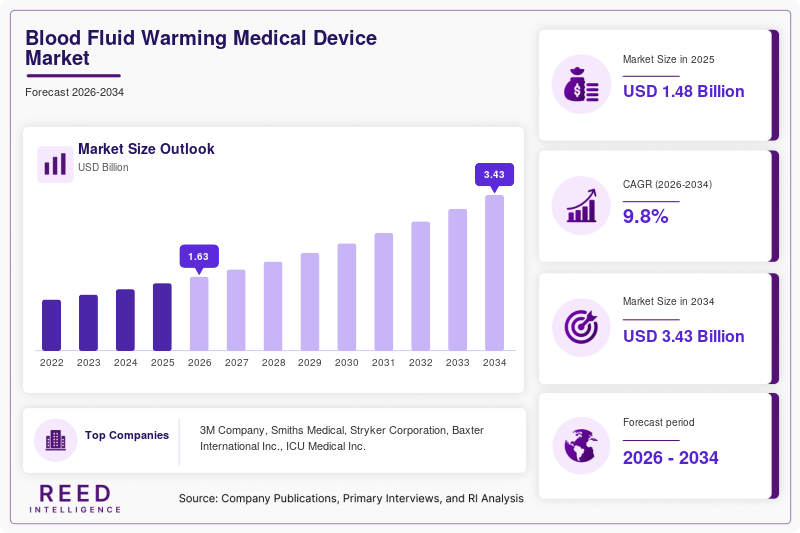
The global Blood Fluid Warming Medical Device Market size was valued at USD 1.48 billion in 2026 and is projected to reach USD 3.12 billion by 2034, expanding at a CAGR of 9.8% during the forecast period from 2026 to 2034. The market is gaining momentum due to the growing demand for temperature management systems across emergency care, surgical procedures, trauma treatment, and intensive care settings. Blood and fluid warming devices are increasingly used to prevent hypothermia during surgeries and transfusions, particularly in patients undergoing prolonged procedures or critical care interventions. The increasing volume of hospital admissions, rising trauma incidents, and expansion of healthcare infrastructure in emerging economies continue to support industry growth.
The adoption of advanced perioperative care practices has significantly improved the utilization of blood fluid warming systems in hospitals and ambulatory surgical centers. Healthcare providers are focusing on reducing complications associated with hypothermia, including surgical site infections, prolonged hospital stays, and cardiovascular stress. In addition, rising awareness regarding patient safety protocols and temperature monitoring standards has accelerated the deployment of portable and automated warming technologies. Technological advancements such as compact battery-operated warmers, touchscreen-controlled systems, and disposable warming accessories are also strengthening market penetration across developed and developing healthcare markets.
Key Highlights
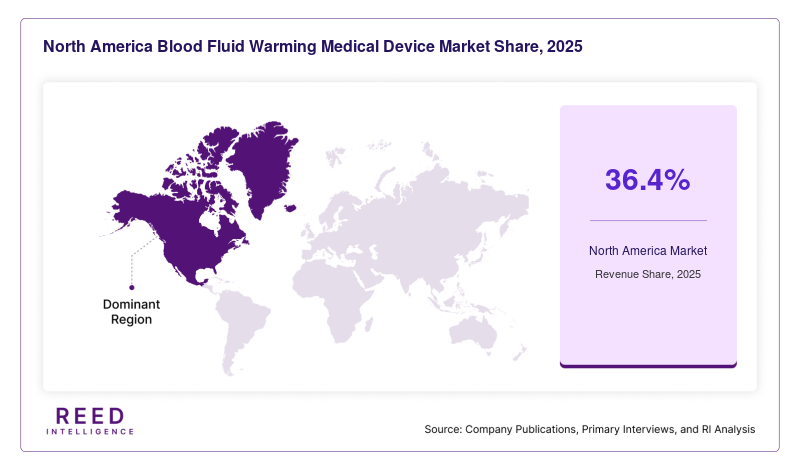
- North America dominated the market with a 36.4% share in 2025.
- Asia Pacific is expected to grow at the fastest CAGR of 11.4% during 2026–2034.
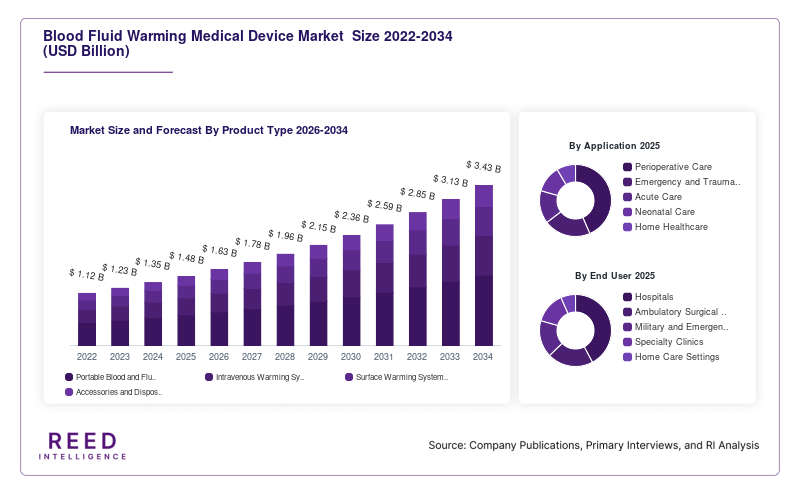
- By product type, portable blood and fluid warmers accounted for the largest share of 42.1%.
- while intravenous warming systems are projected to grow at a CAGR of 10.9%.
- By application, perioperative care led with a 45.3% share.
- whereas emergency and trauma care is expected to expand at a CAGR of 11.7%.
- The United States remained the dominant country, with market values of USD 482 million in 2024 and USD 529 million in 2025.
Market Trends
Expansion of Portable and Battery-Operated Warming Devices
The Blood Fluid Warming Medical Device Market is witnessing a notable shift toward portable and battery-operated systems designed for emergency and transport settings. Healthcare providers increasingly prefer lightweight and compact warming systems that can function efficiently during ambulance transport, military operations, and disaster response scenarios. Portable devices improve patient temperature management during critical transfusions and emergency fluid administration, especially when immediate hospital access is unavailable. Manufacturers are introducing advanced products with faster warming times, rechargeable battery systems, and user-friendly digital interfaces to improve operational efficiency.
The increasing focus on prehospital care has accelerated demand for mobile warming technologies across developed and emerging healthcare systems. Hospitals and emergency response units are integrating portable warming devices into trauma kits and rapid response units to minimize hypothermia-related complications. The trend is also supported by rising investments in emergency medical infrastructure and growing awareness regarding temperature-controlled transfusion practices. As healthcare providers seek flexible and cost-efficient solutions, portable systems are expected to gain wider adoption across military medicine, air ambulance services, and remote healthcare facilities.
Integration of Smart Monitoring and Automated Temperature Control
Healthcare institutions are increasingly adopting blood fluid warming devices integrated with smart monitoring systems and automated temperature control features. Modern warming technologies now include digital displays, temperature alarms, real-time monitoring, and programmable safety settings that reduce the risk of overheating or underheating during transfusions and fluid administration. These advancements improve clinical accuracy while supporting compliance with patient safety standards in operating rooms and intensive care units.
The growing adoption of connected healthcare technologies is encouraging manufacturers to integrate data management and remote monitoring capabilities into warming systems. Hospitals are using automated devices to streamline workflow efficiency and reduce manual intervention during critical procedures. Smart systems also support better documentation and monitoring of patient temperature data, which improves treatment outcomes and operational transparency. The trend toward automation is particularly strong in high-volume surgical centers where maintaining consistent fluid temperatures is essential for reducing postoperative complications and improving recovery rates.
Market Drivers
Rising Surgical Procedures and Trauma Cases Worldwide
The increasing number of surgical procedures worldwide is a major factor driving growth in the Blood Fluid Warming Medical Device Market. Hospitals and healthcare centers are witnessing rising patient volumes related to cardiovascular surgeries, orthopedic procedures, organ transplants, and minimally invasive operations. During lengthy surgical interventions, maintaining patient body temperature is critical to reducing complications such as hypothermia, excessive blood loss, and delayed recovery. Blood and fluid warming systems help maintain stable body temperature during transfusions and fluid administration, improving patient outcomes and surgical efficiency.
In addition, the growing incidence of trauma injuries caused by road accidents, natural disasters, and emergency medical conditions has strengthened demand for rapid warming devices in emergency departments. Trauma patients often require immediate blood transfusions and fluid replacement, increasing the need for reliable temperature management systems. Expanding emergency healthcare infrastructure and investments in advanced trauma care units across developing regions are further supporting market expansion. The combination of increasing surgeries and emergency interventions is expected to sustain long-term demand for blood fluid warming technologies.
Increasing Focus on Patient Safety and Perioperative Care
Healthcare providers are increasingly prioritizing patient safety and perioperative temperature management, which is accelerating the adoption of blood fluid warming systems. Maintaining normothermia during surgeries and transfusions has become an essential component of modern clinical protocols because hypothermia can increase infection risk, extend hospital stays, and raise healthcare costs. Hospitals are implementing strict perioperative care guidelines that encourage the use of warming technologies across operating rooms and critical care environments.
The rising emphasis on value-based healthcare and improved treatment outcomes is also encouraging investments in advanced patient warming systems. Healthcare accreditation organizations and regulatory authorities are promoting the adoption of temperature management solutions to improve patient care quality. In addition, growing awareness among surgeons, anesthesiologists, and critical care specialists regarding the benefits of warmed blood and intravenous fluids has expanded clinical adoption. Continuous training programs and increasing incorporation of warming technologies into standard surgical procedures are expected to create sustained market demand during the forecast period.
Market Restraint
High Equipment Costs and Maintenance Challenges
The high cost associated with advanced blood fluid warming systems remains a significant restraint for the Blood Fluid Warming Medical Device Market. Many technologically advanced warming devices require substantial initial investment, making adoption difficult for small hospitals, rural healthcare facilities, and budget-constrained healthcare systems. In addition to equipment costs, healthcare providers must allocate resources for regular maintenance, calibration, disposable accessories, and staff training. These expenses can limit purchasing decisions, particularly in developing economies where healthcare budgets are restricted.
Complex regulatory compliance and maintenance requirements also create operational challenges for healthcare institutions. Devices used in critical care and transfusion procedures must meet strict safety and performance standards, increasing overall lifecycle costs for hospitals and clinics. Some healthcare providers continue to rely on conventional warming techniques due to budget limitations and lack of technical expertise. Furthermore, inconsistent reimbursement policies in certain regions reduce financial incentives for adopting premium warming systems. These challenges may slow market penetration in low-resource settings despite the increasing clinical importance of patient temperature management technologies.
Market Opportunities
Growing Demand Across Emerging Healthcare Economies
Emerging healthcare markets present significant growth opportunities for companies operating in the Blood Fluid Warming Medical Device Market. Countries across Asia Pacific, Latin America, and parts of the Middle East are increasing investments in hospital infrastructure, surgical care facilities, and emergency medical services. Expanding healthcare access and rising government spending on medical technologies are encouraging hospitals to adopt modern patient temperature management systems. The growing middle-class population and increasing health insurance coverage in developing economies are also improving patient access to advanced medical procedures.
Healthcare providers in emerging regions are focusing on improving critical care standards and reducing surgical complications, creating favorable conditions for blood fluid warming device adoption. International medical device manufacturers are expanding distribution networks and entering strategic partnerships with regional healthcare providers to strengthen their market presence. The increasing establishment of private hospitals and multispecialty surgical centers is expected to further drive demand for advanced warming systems. These factors create substantial long-term revenue opportunities for companies targeting developing healthcare markets.
Expansion of Home Healthcare and Ambulatory Care Services
The rapid expansion of home healthcare and ambulatory care services is creating new opportunities for blood fluid warming device manufacturers. Healthcare systems are increasingly shifting toward outpatient procedures and decentralized care models to reduce hospitalization costs and improve patient convenience. Portable and user-friendly warming devices are becoming more suitable for ambulatory surgical centers, home infusion therapies, and mobile healthcare units. This trend is encouraging manufacturers to design compact systems that are easy to operate and require minimal technical supervision.
Growing demand for home-based chronic disease management and infusion therapies is also supporting the development of flexible warming technologies. Elderly patients and individuals requiring long-term intravenous treatments increasingly benefit from portable warming systems that improve comfort and reduce complications during fluid administration. In addition, the rise of telemedicine and remote patient monitoring services is encouraging healthcare providers to adopt connected warming solutions for decentralized care settings. These developments are expected to broaden the application scope of blood fluid warming technologies beyond traditional hospital environments.
Segmental Analysis
By Product Type
Portable blood and fluid warmers accounted for the largest share of the Blood Fluid Warming Medical Device Market in 2024, contributing approximately 42.1% of global revenue. These systems are widely used in emergency medicine, military healthcare, ambulatory transport, and hospital trauma units because of their mobility and operational flexibility. Healthcare professionals prefer portable devices for rapid warming during transfusions and intravenous fluid administration in critical care scenarios. The increasing use of ambulance-based emergency services and rising trauma cases globally have strengthened demand for compact warming systems. Manufacturers are also focusing on lightweight designs, extended battery life, and quick temperature stabilization features to improve clinical performance. The growing integration of portable systems into prehospital care settings continues to support the dominant position of this segment.
Intravenous warming systems are projected to witness the fastest CAGR of 10.9% during the forecast period due to rising adoption in operating rooms, intensive care units, and outpatient infusion centers. These systems are increasingly used to maintain accurate temperature control during prolonged surgical procedures and high-volume transfusions. Healthcare facilities are investing in technologically advanced intravenous warming devices with automated monitoring capabilities and enhanced safety features to improve patient outcomes. The increasing prevalence of chronic diseases requiring long-term infusion therapy is also supporting demand for these systems. Furthermore, expanding ambulatory care services and the growing emphasis on perioperative temperature management protocols are expected to accelerate the adoption of intravenous warming technologies across developed and emerging healthcare markets.
By Application
Perioperative care held the dominant share of the Blood Fluid Warming Medical Device Market in 2024, accounting for approximately 45.3% of total market revenue. The widespread use of warming systems during surgical procedures is driven by the increasing need to maintain normothermia and reduce postoperative complications. Surgical patients are vulnerable to temperature loss due to anesthesia exposure, prolonged operations, and infusion of cold intravenous fluids. Hospitals and surgical centers are integrating blood fluid warming technologies into standard perioperative protocols to improve patient recovery and reduce hospital stays. Increasing surgical volumes across cardiovascular, orthopedic, and transplant procedures continue to strengthen demand for advanced warming systems. In addition, healthcare providers are focusing on improving surgical efficiency and patient safety standards, further supporting segment growth.
Emergency and trauma care is anticipated to expand at the fastest CAGR of 11.7% during the forecast period due to the growing incidence of road accidents, trauma injuries, and emergency transfusion requirements. Blood and fluid warming devices play a critical role in stabilizing trauma patients by preventing hypothermia during rapid transfusion and resuscitation procedures. Emergency medical services are increasingly equipping ambulances and transport units with portable warming systems to improve patient outcomes before hospital admission. Rising investments in trauma care infrastructure and increasing awareness regarding rapid temperature management in emergency settings are accelerating market demand. Moreover, military healthcare organizations and disaster response teams are adopting advanced portable warming technologies to improve treatment efficiency in critical and remote environments.
By End User
Hospitals represented the largest end-user segment in the Blood Fluid Warming Medical Device Market in 2024, accounting for nearly 58.6% of overall market share. Hospitals conduct a high volume of surgeries, trauma procedures, blood transfusions, and intensive care treatments, making them the primary users of warming technologies. Large multispecialty hospitals are increasingly investing in advanced temperature management systems to improve perioperative outcomes and comply with patient safety guidelines. The availability of specialized surgical departments, intensive care facilities, and emergency response units further contributes to strong product demand within hospital environments. In addition, hospitals typically maintain higher purchasing capacity and broader adoption of technologically advanced systems compared to smaller healthcare facilities. Continuous modernization of hospital infrastructure and growing healthcare expenditure continue to reinforce segment dominance.
Ambulatory surgical centers are projected to register the fastest CAGR of 10.8% during 2026–2034 due to the increasing shift toward outpatient surgical procedures and cost-effective treatment models. These facilities are adopting compact and efficient warming systems to improve patient comfort and reduce procedure-related complications. Growing demand for minimally invasive surgeries and same-day discharge procedures is encouraging ambulatory centers to integrate advanced perioperative warming technologies into their clinical workflows. Manufacturers are introducing portable and user-friendly devices specifically designed for outpatient settings with limited space and staffing requirements. Furthermore, rising healthcare cost pressures and patient preference for shorter recovery times are expected to increase the number of procedures performed in ambulatory surgical centers, supporting long-term market growth.
Regional Analysis
North America
North America accounted for 36.4% of the global Blood Fluid Warming Medical Device Market share in 2025 and is expected to maintain a stable growth trajectory with a CAGR of 8.9% through 2034. The region benefits from advanced healthcare infrastructure, high surgical volumes, and strong adoption of patient temperature management technologies. Hospitals and trauma centers across the United States and Canada are increasingly integrating automated warming systems into perioperative care protocols to reduce surgical complications and improve recovery outcomes.
The United States remained the dominant country in the regional market due to the strong presence of leading medical device manufacturers and widespread awareness regarding hypothermia prevention during surgeries. Rising emergency care admissions and increasing demand for portable warming systems in ambulance services have further strengthened market growth. In addition, favorable reimbursement structures and continuous investments in healthcare technology modernization continue to support the adoption of advanced blood fluid warming devices across healthcare facilities.
Europe
Europe represented a substantial share of the Blood Fluid Warming Medical Device Market in 2025 and is projected to expand at a CAGR of 8.5% during the forecast period. The region is characterized by strong regulatory standards, increasing geriatric population, and rising prevalence of chronic diseases requiring surgical intervention. European hospitals are emphasizing patient safety measures and temperature-controlled transfusion protocols, contributing to higher demand for warming systems across intensive care units and operating rooms.
Germany emerged as the leading country within the European market due to its advanced healthcare infrastructure and strong focus on medical technology innovation. The country continues to invest heavily in surgical modernization and hospital automation, supporting the adoption of smart warming devices. Increasing healthcare expenditure and growing emphasis on reducing postoperative complications have also encouraged healthcare providers to integrate advanced temperature management systems into routine clinical practice across public and private hospitals.
Asia Pacific
Asia Pacific is expected to record the fastest CAGR of 11.4% in the Blood Fluid Warming Medical Device Market during 2026–2034. The region is witnessing rapid healthcare infrastructure development, rising surgical volumes, and increasing awareness regarding advanced patient care technologies. Countries such as China, India, Japan, and South Korea are expanding investments in emergency medical services and critical care facilities, which is accelerating the adoption of blood fluid warming systems.
China dominated the regional market owing to its large patient population and expanding hospital network. The country has experienced significant growth in trauma care services, emergency transport systems, and surgical procedures over the past few years. Government initiatives aimed at strengthening healthcare accessibility and increasing investments in medical device manufacturing are further supporting market expansion. Local manufacturers are also introducing cost-effective warming systems to address growing demand from mid-sized hospitals and regional healthcare facilities.
Middle East & Africa
The Middle East & Africa region is experiencing gradual growth in the Blood Fluid Warming Medical Device Market and is forecast to expand at a CAGR of 7.6% during the assessment period. Rising investments in healthcare modernization and increasing focus on emergency care infrastructure are supporting regional demand for advanced warming systems. Several countries are upgrading trauma care units and surgical departments to improve treatment outcomes and reduce complications associated with hypothermia.
Saudi Arabia emerged as the dominant country in the regional market due to significant government spending on healthcare infrastructure and hospital expansion projects. The country continues to invest in advanced medical technologies as part of broader healthcare transformation programs. Growing medical tourism activities and increasing establishment of specialized surgical centers are also contributing to higher adoption of blood fluid warming systems. In addition, improving training programs for healthcare professionals is enhancing awareness regarding temperature management practices.
Latin America
Latin America accounted for a moderate share of the Blood Fluid Warming Medical Device Market in 2025 and is expected to grow at a CAGR of 8.1% through 2034. Increasing healthcare investments and rising surgical procedure volumes are supporting regional market development. Healthcare institutions across the region are gradually adopting modern warming technologies to improve patient safety during surgeries, transfusions, and emergency interventions. Demand for portable and affordable warming systems is particularly strong in public hospitals and trauma centers.
Brazil remained the leading country in the Latin American market due to its large healthcare network and expanding private hospital sector. The country has experienced increasing adoption of minimally invasive surgeries and critical care technologies, which supports demand for temperature management systems. Growing awareness regarding perioperative complications and improvements in healthcare reimbursement frameworks are encouraging hospitals to invest in advanced blood fluid warming devices. Local distribution partnerships are also helping international manufacturers strengthen their regional presence.
Competitive Landscape
The Blood Fluid Warming Medical Device Market is moderately consolidated, with several international and regional manufacturers competing through product innovation, strategic partnerships, and geographic expansion. Leading companies are focusing on the development of portable, automated, and digitally integrated warming systems to improve clinical performance and operational efficiency. The competitive environment is influenced by increasing investments in research and development, rising demand for patient safety technologies, and the expansion of emergency medical infrastructure across developing economies.
3M Company remains one of the leading participants in the market due to its extensive product portfolio and strong global distribution network. The company continues to strengthen its presence through product enhancements focused on perioperative temperature management and portable warming solutions. Other major companies are emphasizing acquisitions, collaborations with healthcare providers, and expansion into emerging markets to improve revenue opportunities.
Recent industry developments include the launch of compact warming systems for ambulance services, integration of touchscreen monitoring capabilities into infusion warming devices, and expansion of manufacturing facilities in Asia Pacific. Companies are also investing in disposable accessories and smart monitoring technologies to improve safety standards and differentiate their offerings in the competitive landscape.
Key Players
- 3M Company
- Smiths Medical
- Stryker Corporation
- Baxter International Inc.
- ICU Medical Inc.
- Belmont Medical Technologies
- Geratherm Medical AG
- Barkey GmbH & Co. KG
- QinFlow Ltd.
- The 37Company
- Stihler Electronic GmbH
- Emit Corporation
- Foshan Keewell Technology Co., Ltd.
- Vyaire Medical Inc.
- Biegler GmbH
Recent Developments
- 3M Company introduced an upgraded portable warming platform in 2025 with enhanced battery performance and digital temperature monitoring capabilities for emergency transport applications.
- Smiths Medical expanded its manufacturing operations in Asia Pacific in 2024 to strengthen regional supply chain efficiency and address growing demand from emerging healthcare markets.
- Baxter International Inc. launched a new automated intravenous warming system in 2025 designed for high-volume surgical centers and intensive care environments.
- Belmont Medical Technologies partnered with multiple trauma care hospitals in 2024 to improve adoption of rapid infusion warming technologies across emergency departments.
- ICU Medical Inc. enhanced its blood warming device portfolio in 2025 by integrating smart alarm systems and touchscreen interfaces for improved patient safety monitoring.
Blood Fluid Warming Medical Device Market Segments
By Product Type
- Portable Blood and Fluid Warmers
- Intravenous Warming Systems
- Surface Warming Systems
- Accessories and Disposable Components
By Application
- Perioperative Care
- Emergency and Trauma Care
- Acute Care
- Neonatal Care
- Home Healthcare
By End User
- Hospitals
- Ambulatory Surgical Centers
- Military and Emergency Medical Services
- Specialty Clinics
- Home Care Settings
By Region
- North America
- Europe
- APAC
- Middle East and Africa
- LATAM