Blood Warmer Market Size, Share & Demand Report By Product Type (Portable Blood Warmers, Stationary Blood Warmers), By Application (Blood Transfusion, Intravenous Fluid Warming), By End-Use (Hospitals, Ambulatory Surgical Centers, Others) & Segment Forecasts, 2025–2034
USD 3950
Market Overview
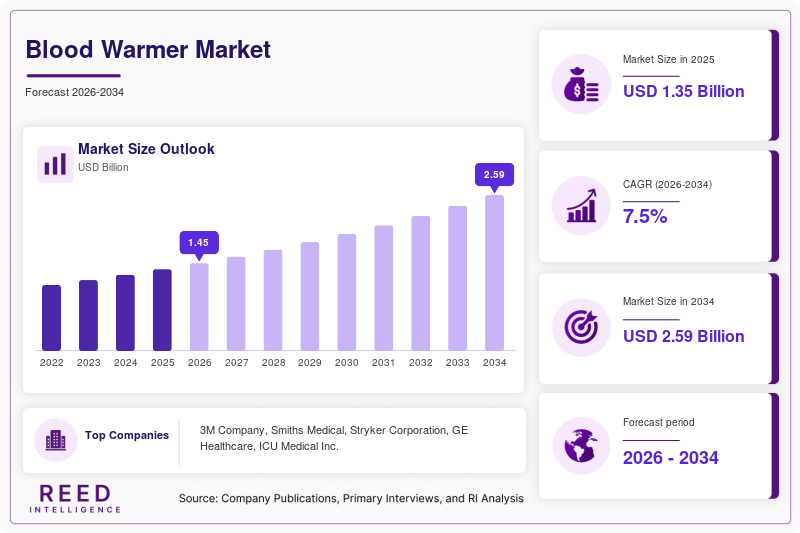
The Blood Warmer Market size is experiencing steady expansion driven by increasing surgical procedures, trauma cases, and advancements in critical care infrastructure. In 2025, the global market size is estimated at USD 1.35 billion, and it is projected to reach USD 1.45 billion in 2026. Over the forecast period, the market is expected to grow to approximately USD 2.75 billion by 2034, registering a compound annual growth rate (CAGR) of 7.5% from 2025 to 2034. This growth reflects a consistent demand for safe transfusion practices and improved patient outcomes in both emergency and elective procedures.
One of the primary growth factors influencing the Blood Warmer Market is the rising number of surgical procedures worldwide. With aging populations and increasing prevalence of chronic diseases, hospitals are performing a higher volume of surgeries, many of which require blood transfusions. Blood warmers play a key role in preventing hypothermia during transfusion, which enhances patient safety and recovery rates.
Key Highlights
- Market size projected to reach USD 2.75 billion by 2034
- CAGR of 7.5% from 2025 to 2034
- Rising surgical volume and trauma cases driving demand
- Technological advancements improving device efficiency
- Increasing focus on patient safety and transfusion protocols
Market Trends
Increasing Adoption of Portable Blood Warmers
The Blood Warmer Market is witnessing a growing shift toward portable and battery-operated devices. Healthcare providers are increasingly adopting compact solutions that can be used in ambulances, military settings, and remote healthcare facilities. These devices offer flexibility and ease of use, allowing healthcare professionals to administer warmed blood in emergency situations without relying on stationary equipment. The demand for portable solutions is especially strong in developing regions, where access to fully equipped hospitals may be limited. This trend is also supported by advancements in lightweight materials and battery technologies, enabling longer operational times and improved reliability.
Integration of Smart Monitoring Technologies
Another notable trend in the Blood Warmer Market is the integration of smart technologies and digital monitoring systems. Modern devices are being equipped with sensors, alarms, and real-time data tracking capabilities to ensure accurate temperature control. These features help reduce the risk of overheating or underheating blood products, which can lead to complications. Hospitals are increasingly adopting these advanced systems to enhance patient safety and comply with strict regulatory standards. Additionally, connectivity features that allow integration with hospital information systems are gaining traction, supporting better documentation and workflow management.
Market Drivers
Rising Surgical Procedures Worldwide
The increasing number of surgical procedures is a major driver of the Blood Warmer Market. As healthcare systems expand and access to medical services improves, more patients are undergoing elective and emergency surgeries. Procedures such as cardiac surgeries, organ transplants, and orthopedic operations often require significant blood transfusion. Blood warmers are essential in these scenarios to maintain the temperature of transfused blood and prevent hypothermia-related complications. This growing surgical volume is directly contributing to the rising demand for blood warming devices across hospitals and surgical centers.
Growing Focus on Patient Safety and Clinical Outcomes
Healthcare providers are placing greater emphasis on patient safety and improving clinical outcomes, which is driving the adoption of blood warmers. Maintaining the appropriate temperature of blood during transfusion is critical to avoid adverse reactions such as cardiac arrhythmias and coagulopathy. Regulatory guidelines and hospital protocols increasingly mandate the use of blood warming devices in specific procedures. This heightened focus on safety is encouraging healthcare facilities to invest in advanced blood warming technologies, thereby supporting market growth.
Market Restraint
High Cost of Advanced Blood Warming Devices
One of the key restraints in the Blood Warmer Market is the high cost associated with advanced blood warming systems. Modern devices equipped with digital monitoring, automation, and safety features tend to be expensive, which can limit their adoption, particularly in small healthcare facilities and developing regions. Budget constraints often lead hospitals to prioritize essential equipment over specialized devices, affecting market penetration. Additionally, the cost of maintenance and training for operating these systems adds to the overall expenditure. This financial barrier can slow down the adoption rate, especially in regions with limited healthcare funding. For instance, smaller clinics may rely on traditional methods or shared equipment, which may not provide the same level of efficiency or safety as advanced blood warmers, thereby impacting overall market growth.
Market Opportunities
Expansion in Emerging Healthcare Markets
Emerging economies present significant growth opportunities for the Blood Warmer Market. Countries in Asia Pacific, Latin America, and Africa are investing in healthcare infrastructure and expanding access to medical services. As hospitals and clinics are established or upgraded, there is a growing demand for essential medical devices, including blood warmers. Increasing government initiatives to improve healthcare quality and rising healthcare expenditure are further supporting this trend. Manufacturers can capitalize on this opportunity by offering cost-effective and scalable solutions tailored to the needs of these regions.
Development of Multi-Functional Devices
The development of multi-functional blood warming devices offers another promising opportunity in the market. Manufacturers are focusing on designing systems that can handle various fluid warming applications, including intravenous fluids and medications. These versatile devices can reduce the need for multiple pieces of equipment, making them more attractive to healthcare providers. The ability to integrate multiple functions into a single unit not only improves operational efficiency but also reduces overall costs for hospitals. This innovation is expected to drive demand and create new growth avenues for market players.
Segmental Analysis
By Product Type
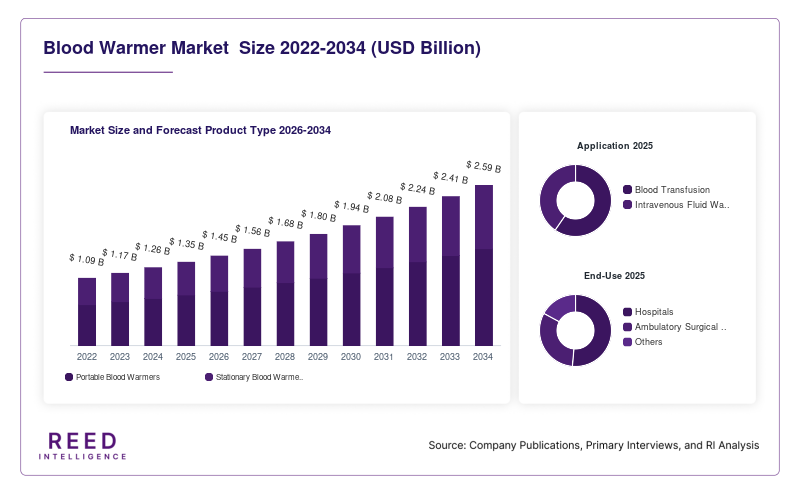
The portable blood warmers segment dominated the Blood Warmer Market in 2024, accounting for approximately 55% of the total market share. These devices are widely used in emergency settings, ambulances, and military applications due to their compact design and ease of use. Healthcare providers prefer portable systems for their flexibility and ability to deliver rapid warming in critical situations. The increasing incidence of trauma cases and the need for immediate medical intervention have further boosted the demand for portable blood warmers.
The stationary blood warmers segment is expected to be the fastest-growing, with a CAGR of 7.9% during the forecast period. These devices are commonly used in hospitals and surgical centers where continuous and high-volume blood warming is required. A key growth factor is the increasing number of complex surgical procedures that require precise temperature control. Advancements in stationary systems, including enhanced safety features and digital monitoring, are also driving their adoption.
By Application
Blood transfusion applications held the largest share of the Blood Warmer Market in 2024, accounting for nearly 60% of the total market. These devices are essential in maintaining the temperature of blood during transfusion, reducing the risk of hypothermia and related complications. The growing number of surgical procedures and trauma cases has significantly increased the demand for blood transfusion, thereby driving the adoption of blood warmers in this segment.
Intravenous fluid warming is the fastest-growing application segment, with a projected CAGR of 8.3%. The increasing use of intravenous fluids in various medical procedures is driving demand for fluid warming devices. A key growth factor is the rising awareness about the importance of maintaining fluid temperature to improve patient outcomes. Healthcare providers are increasingly adopting devices that can handle both blood and fluid warming, further supporting market growth.
By End-Use
Hospitals dominated the Blood Warmer Market in 2024, accounting for around 65% of the total market share. Hospitals are the primary users of blood warming devices due to the high volume of surgical procedures and emergency cases. The availability of advanced healthcare infrastructure and skilled medical professionals further supports the adoption of these devices in hospital settings.
Ambulatory surgical centers are the fastest-growing end-use segment, with a CAGR of 8.1%. These facilities are gaining popularity due to their cost-effectiveness and shorter patient stays. A key growth factor is the increasing number of outpatient procedures, which require efficient and reliable blood warming solutions. The growing focus on improving patient experience and reducing healthcare costs is driving the adoption of blood warmers in ambulatory surgical centers.
Regional Analysis
North America
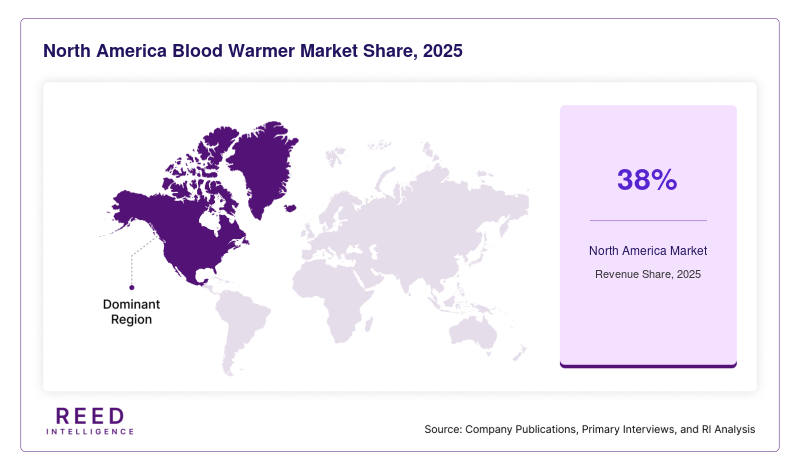
North America held the largest share of the Blood Warmer Market in 2025, accounting for approximately 38% of the global market. The region is expected to maintain its dominance, growing at a CAGR of around 6.8% during the forecast period. The presence of advanced healthcare infrastructure, high healthcare spending, and widespread adoption of innovative medical technologies contribute to this strong market position.
The United States dominates the regional market due to its well-established healthcare system and high volume of surgical procedures. A key growth factor is the increasing adoption of advanced medical devices in hospitals and emergency care settings. Additionally, strong regulatory frameworks and a focus on patient safety continue to drive demand for blood warming systems in the country.
Europe
Europe accounted for a significant share of the Blood Warmer Market in 2025, contributing around 27% of the global revenue. The market in this region is projected to grow at a CAGR of 6.5% over the forecast period. Factors such as an aging population and increasing prevalence of chronic diseases are driving demand for surgical procedures and associated medical devices.
Germany leads the European market, supported by its robust healthcare infrastructure and strong emphasis on medical technology innovation. A unique growth factor in this region is the increasing focus on compliance with strict healthcare regulations, which encourages the adoption of advanced blood warming devices across hospitals and clinics.
Asia Pacific
Asia Pacific is the fastest-growing region in the Blood Warmer Market, with a CAGR of approximately 9.2%. In 2025, the region accounted for around 20% of the global market share. Rapid urbanization, increasing healthcare investments, and expanding access to medical services are driving market growth in this region.
China is the dominant country in the Asia Pacific market due to its large population and growing healthcare infrastructure. A key growth factor is the rising number of surgical procedures and trauma cases, which increases the demand for efficient blood warming solutions. Government initiatives to improve healthcare quality also support market expansion.
Middle East & Africa
The Middle East & Africa region held a smaller share of the Blood Warmer Market in 2025, accounting for approximately 8%. However, the market is expected to grow at a CAGR of 7.8% during the forecast period. Increasing healthcare investments and improving medical facilities are key drivers of growth in this region.
Saudi Arabia leads the market in this region, supported by significant investments in healthcare infrastructure. A unique growth factor is the increasing focus on emergency and trauma care services, which drives the demand for portable and efficient blood warming devices.
Latin America
Latin America accounted for about 7% of the global Blood Warmer Market in 2025 and is expected to grow at a CAGR of 7.2%. The region is witnessing steady growth due to improving healthcare access and rising awareness about advanced medical technologies.
Brazil dominates the Latin American market, driven by its large healthcare system and increasing number of hospitals. A key growth factor is the rising demand for safe blood transfusion practices, which encourages the adoption of blood warming devices across healthcare facilities.
Competitive Landscape
The Blood Warmer Market is moderately competitive, with several global and regional players focusing on product innovation and strategic partnerships. Leading companies are investing in research and development to introduce advanced devices with improved safety features and user-friendly designs. The market is characterized by the presence of established medical device manufacturers as well as emerging players.
One of the leading companies in the market is 3M Company, known for its strong product portfolio and global presence. The company has recently focused on expanding its range of portable blood warming devices to cater to emergency care settings. Other key players are also adopting strategies such as mergers, acquisitions, and collaborations to strengthen their market position and expand their geographic reach.
Key Players
- 3M Company
- Smiths Medical
- Stryker Corporation
- GE Healthcare
- ICU Medical Inc.
- Barkey GmbH & Co. KG
- Belmont Medical Technologies
- Foshan Keewell Medical Technology Co., Ltd.
- Emit Corporation
- Stihler Electronic GmbH
- QinFlow Ltd.
- Biegler GmbH
- The 37Company
- Enthermics Medical Systems
- ZOLL Medical Corporation
Recent Developments
- In 2024, a leading manufacturer launched a new portable blood warmer with extended battery life, targeting emergency and military applications.
- In 2023, a major company introduced a smart blood warming system with integrated digital monitoring and safety alerts.
- In 2025, a strategic partnership was formed between two medical device companies to expand distribution networks in emerging markets.
Blood Warmer Market Segments
Product Type
- Portable Blood Warmers
- Stationary Blood Warmers
Application
- Blood Transfusion
- Intravenous Fluid Warming
End-Use
- Hospitals
- Ambulatory Surgical Centers
- Others
By Region
- North America
- Europe
- APAC
- Middle East and Africa
- LATAM