Botulinum Toxin In Urology Market Size, Share Demand Report By Type (Botulinum Toxin Type A, Botulinum Toxin Type B), By Application (Overactive Bladder, Neurogenic Detrusor Overactivity, Urinary Incontinence, Other Urological Disorders), By End-Use (Hospitals, Ambulatory Surgical Centers, Specialty Clinics), By Region & Segment Forecasts, 2025–2034
USD 3950
Market Overview
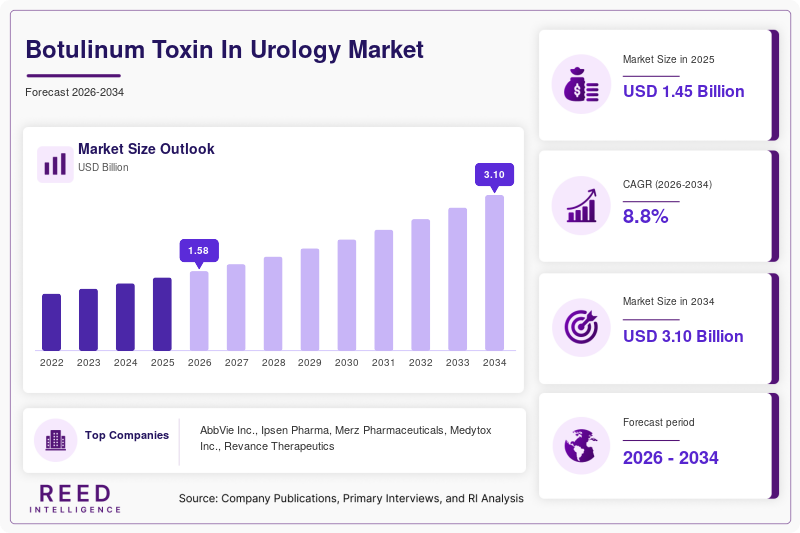
The Botulinum Toxin In Urology Market size has emerged as a significant niche within the broader therapeutic biologics industry, driven by increasing prevalence of urological disorders such as overactive bladder (OAB), neurogenic detrusor overactivity, and urinary incontinence. In 2025, the global market size is estimated to reach USD 1.45 billion, growing to approximately USD 1.58 billion in 2026. With consistent clinical adoption and expanding indications, the market is projected to attain USD 3.12 billion by 2034, registering a compound annual growth rate (CAGR) of 8.8% during the forecast period (2025–2034).
One of the primary growth factors is the rising global burden of urinary disorders, particularly among the aging population. As life expectancy increases, conditions such as bladder dysfunction and pelvic floor disorders are becoming more prevalent, creating sustained demand for minimally invasive treatment options. Botulinum toxin therapies offer targeted muscle relaxation, making them effective for patients who are unresponsive to conventional pharmacological therapies.
Key Highlights
- Market size reached USD 1.45 billion in 2025 and is projected to reach USD 3.12 billion by 2034
- CAGR of 8.8% from 2025 to 2034
- Increasing prevalence of overactive bladder and urinary incontinence
- Rising demand for minimally invasive urological treatments
- Ongoing clinical advancements expanding therapeutic applications
Market Trends
Increasing Adoption of Combination Therapies
The integration of botulinum toxin treatments with other therapeutic approaches is emerging as a notable trend in the urology market. Physicians are increasingly combining botulinum toxin injections with behavioral therapies, pelvic floor rehabilitation, and pharmacological treatments to enhance patient outcomes. This multimodal approach addresses complex urological conditions more effectively, especially in patients with refractory symptoms. The trend reflects a shift toward personalized treatment plans that consider individual patient needs, severity of symptoms, and response to prior therapies. As clinical evidence supporting combination strategies grows, healthcare providers are expected to adopt these approaches more widely, thereby contributing to market growth.
Expansion of Outpatient and Ambulatory Care Settings
The shift toward outpatient and ambulatory care settings is significantly influencing the botulinum toxin in urology market. Advances in procedural techniques and anesthesia have made it feasible to administer botulinum toxin injections in outpatient environments with minimal complications. This transition reduces healthcare costs, improves patient convenience, and increases treatment accessibility. Ambulatory surgical centers are becoming key hubs for such procedures, especially in urban areas. Additionally, healthcare systems are emphasizing cost efficiency, further accelerating the adoption of outpatient treatments. This trend is expected to drive procedural volumes and expand the overall market footprint.
Market Drivers
Rising Prevalence of Urological Disorders
The increasing incidence of urological conditions such as overactive bladder, urinary incontinence, and neurogenic bladder disorders is a major driver of market growth. These conditions are particularly common among the elderly population and patients with neurological diseases such as multiple sclerosis and spinal cord injuries. As awareness improves and diagnosis rates increase, more patients are seeking effective treatment options. Botulinum toxin has demonstrated strong clinical efficacy in managing these conditions, especially in cases where traditional medications fail. The growing patient pool, combined with the chronic nature of these disorders, is creating sustained demand for botulinum toxin therapies.
Advancements in Clinical Research and Approvals
Continuous advancements in clinical research and regulatory approvals are significantly boosting market expansion. Pharmaceutical companies and research institutions are investing in clinical trials to explore new indications and optimize treatment protocols. These efforts have led to broader approval of botulinum toxin for various urological conditions across multiple regions. Improved understanding of dosing, injection techniques, and patient selection has enhanced treatment outcomes. Regulatory support and streamlined approval processes are also encouraging market entry of new products, increasing competition and innovation within the industry.
Market Restraint
High Treatment Costs and Limited Accessibility
Despite its clinical benefits, the high cost associated with botulinum toxin treatments remains a significant restraint for market growth. The therapy often requires repeated injections over time, leading to cumulative expenses for patients. In many regions, especially in developing economies, limited insurance coverage further restricts access to these treatments. This financial burden can discourage patients from opting for botulinum toxin therapy, even when it is clinically recommended.
The impact of this restraint is particularly evident in healthcare systems with constrained budgets. Hospitals and clinics may prioritize more cost-effective treatment options, limiting the adoption of botulinum toxin therapies. For example, in certain emerging markets, oral medications are still the first line of treatment due to their affordability, despite lower efficacy in some cases. This cost-related challenge may slow market penetration and create disparities in treatment access across different regions.
Market Opportunities
Expansion in Emerging Markets
Emerging economies present significant growth opportunities for the botulinum toxin in urology market. Countries in Asia Pacific, Latin America, and parts of the Middle East are experiencing rapid improvements in healthcare infrastructure and increasing healthcare expenditure. As awareness of advanced treatment options grows, more patients are seeking specialized care for urological conditions. Governments and private healthcare providers are investing in modern medical technologies, including biologic therapies. This expansion creates a favorable environment for market players to introduce botulinum toxin products and establish a strong presence in these regions.
Development of Long-Acting Formulations
The development of long-acting botulinum toxin formulations offers a promising opportunity for market growth. Current treatments often require repeat injections every few months, which can be inconvenient for patients. Long-acting formulations aim to extend the duration of therapeutic effects, reducing the frequency of administration. This innovation could improve patient compliance, reduce overall treatment costs, and enhance quality of life. Pharmaceutical companies focusing on research and development in this area are likely to gain a competitive advantage, as demand for more convenient and efficient treatment options continues to rise.
Segmental Analysis
By Type
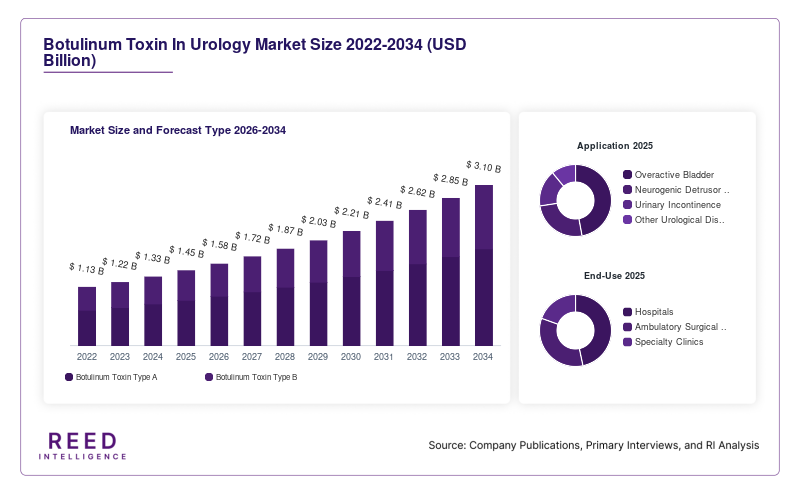
The botulinum toxin type A segment dominated the market in 2024, accounting for approximately 72% of the total share. This dominance is attributed to its widespread clinical use, proven efficacy, and established safety profile in treating various urological conditions. Type A formulations are commonly used for managing overactive bladder and neurogenic detrusor overactivity. Their long-lasting effects and strong clinical evidence make them the preferred choice among healthcare providers. Additionally, extensive research and regulatory approvals have reinforced the market position of type A products.
The botulinum toxin type B segment is expected to be the fastest-growing, with a CAGR of 9.6% during the forecast period. This growth is driven by its potential use in patients who develop resistance to type A treatments. Type B formulations offer an alternative therapeutic option, expanding the treatment landscape. Ongoing research into optimizing dosing and improving efficacy is further supporting the growth of this segment. Increasing awareness among healthcare professionals about alternative toxin types is also contributing to its rising adoption.
By Application
Overactive bladder (OAB) emerged as the dominant application segment in 2024, holding a market share of around 48%. The high prevalence of OAB and the effectiveness of botulinum toxin in managing its symptoms are key factors driving this segment. Patients who do not respond to oral medications often turn to botulinum toxin injections as a second-line treatment. The growing aging population and increasing diagnosis rates are further boosting demand in this segment.
Neurogenic detrusor overactivity is projected to be the fastest-growing application, with a CAGR of 9.1%. This growth is driven by the rising incidence of neurological disorders such as spinal cord injuries and multiple sclerosis. Botulinum toxin injections provide significant symptom relief for these patients, improving quality of life. Advances in diagnostic techniques and increasing awareness among healthcare providers are also contributing to the growth of this segment.
By End-Use
Hospitals accounted for the largest share in 2024, contributing approximately 55% of the market. The availability of advanced medical infrastructure, skilled professionals, and comprehensive patient care services makes hospitals the primary setting for botulinum toxin treatments. Complex cases requiring specialized care are often managed in hospital settings, further reinforcing their dominance.
Ambulatory surgical centers are expected to be the fastest-growing end-use segment, with a CAGR of 10.4%. The shift toward outpatient procedures and cost-effective treatment options is driving growth in this segment. These centers offer convenient and efficient treatment solutions, reducing hospital stays and associated costs. Increasing patient preference for minimally invasive procedures performed in outpatient settings is further supporting the expansion of this segment.
Regional Analysis
North America
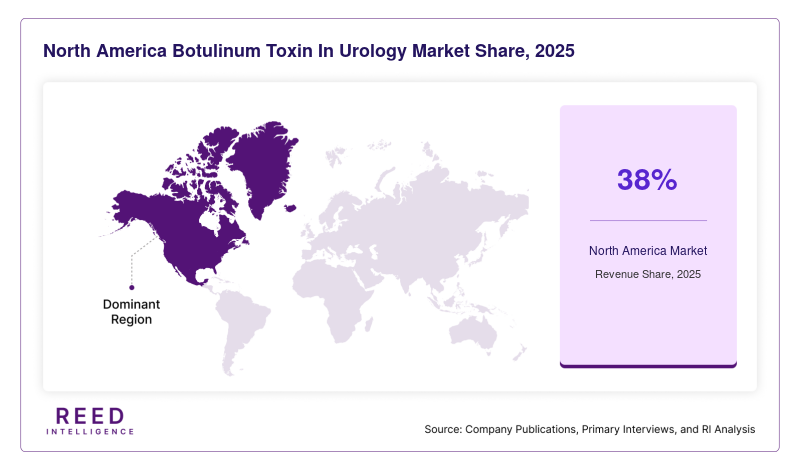
North America accounted for the largest market share in 2025, contributing approximately 38% of the global botulinum toxin in urology market. The region is expected to maintain its dominance with a CAGR of 7.9% during the forecast period. Strong healthcare infrastructure, high adoption of advanced therapies, and favorable reimbursement policies support market growth. The presence of leading pharmaceutical companies and continuous innovation further enhance the region’s leadership position.
The United States dominates the North American market due to its high prevalence of urological disorders and strong clinical adoption of botulinum toxin therapies. A unique growth factor in this region is the widespread availability of specialized urology clinics offering advanced treatment options. Additionally, increasing patient awareness and early diagnosis contribute to higher treatment rates, driving sustained market expansion.
Europe
Europe held a significant share of around 27% in 2025 and is projected to grow at a CAGR of 8.1% through 2034. The region benefits from well-established healthcare systems and increasing focus on minimally invasive treatments. Government initiatives promoting advanced therapies and rising geriatric population are key factors supporting market growth across European countries.
Germany leads the European market, driven by its advanced medical infrastructure and strong research capabilities. A unique growth factor in this region is the emphasis on clinical research and innovation, which facilitates the development and adoption of new treatment protocols. Additionally, increasing healthcare expenditure and supportive regulatory frameworks further contribute to market expansion.
Asia Pacific
Asia Pacific is expected to witness the fastest growth, with a CAGR of 10.2% during the forecast period, and accounted for approximately 20% of the market in 2025. Rapid urbanization, improving healthcare infrastructure, and rising awareness of urological treatments are driving market growth in this region.
China dominates the Asia Pacific market due to its large patient population and expanding healthcare system. A unique growth factor is the increasing investment in healthcare modernization and medical technology adoption. Government initiatives to improve access to advanced treatments and the growing presence of international pharmaceutical companies are further boosting market development.
Middle East & Africa
The Middle East & Africa region accounted for about 8% of the market in 2025 and is projected to grow at a CAGR of 7.5%. Improving healthcare infrastructure and increasing awareness of urological disorders are key factors driving market growth in this region.
Saudi Arabia leads the market due to its strong healthcare investments and growing demand for advanced medical treatments. A unique growth factor is the expansion of private healthcare facilities offering specialized services. Government initiatives to enhance healthcare quality and accessibility are also contributing to market growth.
Latin America
Latin America held approximately 7% of the market share in 2025 and is expected to grow at a CAGR of 8.4%. The region is experiencing gradual improvements in healthcare infrastructure and increasing adoption of advanced therapies.
Brazil dominates the Latin American market, supported by its large population and growing healthcare sector. A unique growth factor is the increasing focus on medical tourism, which attracts patients seeking cost-effective treatments. This trend is enhancing the availability and adoption of botulinum toxin therapies in the region.
Competitive Landscape
The botulinum toxin in urology market is moderately consolidated, with several key players competing based on product innovation, clinical efficacy, and geographic expansion. Leading companies are focusing on research and development to introduce improved formulations and expand their product portfolios. Strategic collaborations, mergers, and acquisitions are also common strategies to strengthen market presence.
AbbVie Inc. is a leading player in this market, driven by its strong portfolio and extensive clinical research capabilities. The company has recently focused on expanding indications for its botulinum toxin products, enhancing its competitive position. Other major players are also investing in clinical trials and regulatory approvals to gain a competitive edge. The market is expected to witness increased competition as new entrants introduce innovative products.
Key Players List
- AbbVie Inc.
- Ipsen Pharma
- Merz Pharmaceuticals
- Medytox Inc.
- Revance Therapeutics
- Evolus Inc.
- Daewoong Pharmaceutical
- Hugel Inc.
- Lanzhou Institute of Biological Products
- Galderma S.A.
- Eisai Co., Ltd.
- Sun Pharmaceutical Industries Ltd.
- Teva Pharmaceutical Industries Ltd.
- Zydus Lifesciences
- Bharat Biotech
Recent Developments
- A leading pharmaceutical company expanded its clinical trials to evaluate long-acting botulinum toxin formulations for urological applications.
- A major player received regulatory approval for a new indication related to neurogenic bladder treatment.
- Strategic partnerships between biotech firms and healthcare providers have increased the availability of botulinum toxin therapies in emerging markets.
Botulinum Toxin In Urology Market Segments
Type
- Botulinum Toxin Type A
- Botulinum Toxin Type B
Application
- Overactive Bladder
- Neurogenic Detrusor Overactivity
- Urinary Incontinence
- Other Urological Disorders
End-Use
- Hospitals
- Ambulatory Surgical Centers
- Specialty Clinics
By Region
- North America
- Europe
- APAC
- Middle East and Africa
- LATAM