Bowens Disease Treatment Market Size, Share Demand Report By Treatment Type (Topical Therapy, Cryotherapy, Photodynamic Therapy, Surgical Procedures, Laser Therapy), By End-User (Hospitals, Dermatology Clinics, Ambulatory Surgical Centers), By Diagnosis Method (Biopsy, Dermoscopy, Imaging Techniques), By Distribution Channel (Hospital Pharmacies, Retail Pharmacies, Online Pharmacies), By Region & Segment Forecasts, 2025–2034
USD 3950
Market Overview
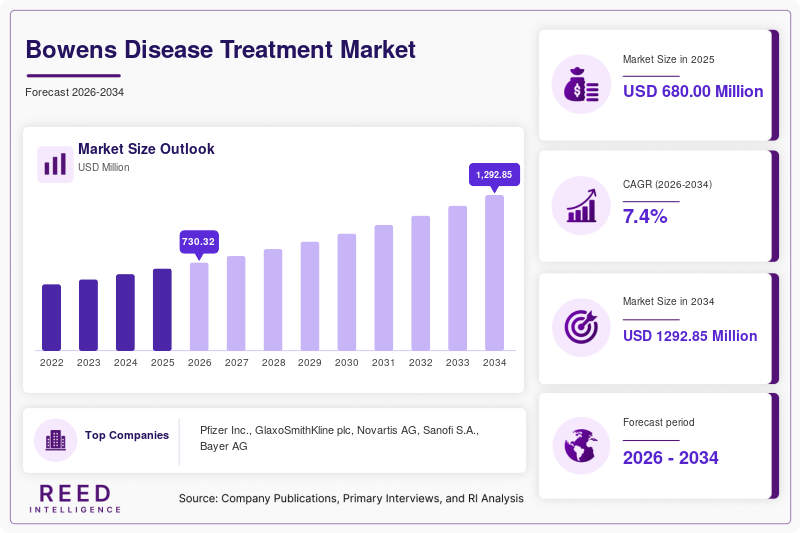
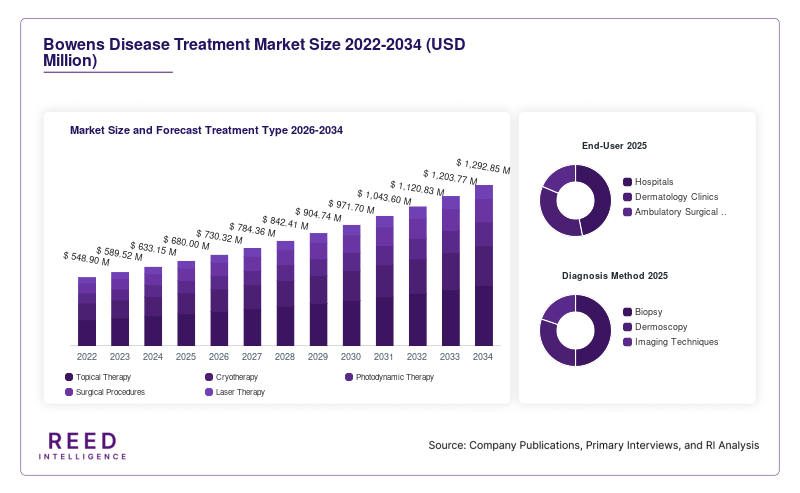
The Bowens Disease Treatment Market size was valued at approximately USD 680 million in 2025 and is projected to reach USD 1.28 billion by 2034, expanding at a CAGR of 7.4% during the forecast period (2025–2034). The market growth is primarily supported by the increasing global burden of non-melanoma skin cancers and the rising awareness regarding early-stage skin lesion diagnosis and treatment.
A key global factor driving the expansion of the Bowens Disease Treatment Market is the growing adoption of minimally invasive dermatological procedures. Advancements in topical therapies, photodynamic therapy, and laser-based treatments have improved patient outcomes and reduced recovery time, encouraging both patients and healthcare providers to opt for early intervention. Additionally, expanding dermatology infrastructure in emerging economies has further supported market penetration.
Key Highlights
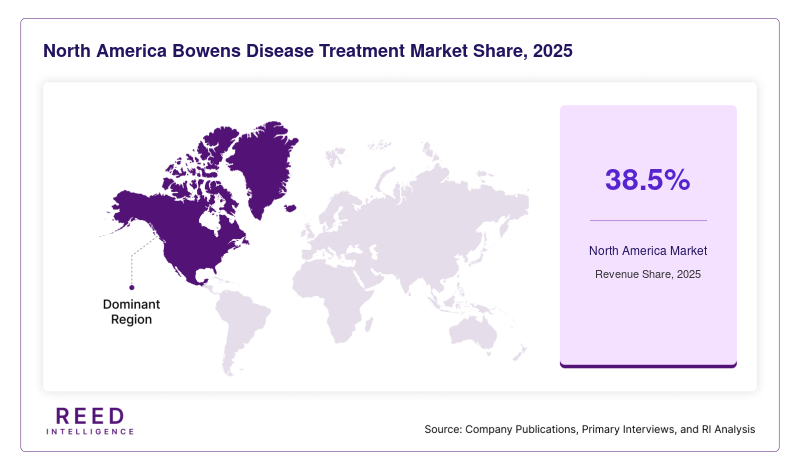
- North America dominated the market with 38.5% share in 2025, while Asia Pacific is projected to grow at the fastest CAGR of 8.6%.
- Topical therapies led the treatment segment with 41% share, while photodynamic therapy is expected to grow at a CAGR of 9.1%.
- The United States remained the dominant country with USD 240 million in 2025, expected to reach USD 258 million in 2026.
Market Trends
Rising Adoption of Non-Invasive Treatment Modalities
The Bowens Disease Treatment Market is witnessing a shift toward non-invasive and patient-friendly therapies. Treatments such as topical chemotherapeutic agents and photodynamic therapy are gaining traction due to their ability to treat lesions without surgical intervention. These options reduce scarring and are preferred for elderly patients or those with multiple lesions. Dermatology clinics are increasingly incorporating these modalities into standard care protocols.
Integration of Digital Dermatology and AI-Based Diagnosis
Digital health technologies are transforming the Bowens Disease Treatment Market by improving early detection rates. Artificial intelligence-enabled diagnostic tools assist dermatologists in identifying precancerous lesions with higher accuracy. Teledermatology platforms are also expanding access to care, particularly in underserved regions. This trend is expected to enhance treatment uptake and support long-term market growth by reducing diagnostic delays.
Market Drivers
Increasing Incidence of Skin Precancer Conditions
The growing prevalence of Bowen’s disease, particularly among aging populations, is a major driver of the Bowens Disease Treatment Market. Factors such as prolonged sun exposure, immunosuppression, and lifestyle changes have contributed to higher incidence rates globally. Early diagnosis initiatives and awareness campaigns are further accelerating treatment demand.
Advancements in Dermatological Treatment Technologies
Technological advancements in dermatology have significantly improved treatment efficacy. Innovations such as targeted topical formulations, advanced cryotherapy devices, and improved photodynamic therapy systems are enhancing clinical outcomes. These advancements are encouraging healthcare providers to adopt newer treatment protocols, thereby supporting the expansion of the Bowens Disease Treatment Market.
Market Restraint
Limited Awareness in Low-Income Regions
A key restraint in the Bowens Disease Treatment Market is the lack of awareness and limited access to dermatological care in low-income and rural regions. Many patients remain undiagnosed or seek treatment at advanced stages due to insufficient healthcare infrastructure. Additionally, the cost associated with advanced therapies such as photodynamic therapy and laser treatments can limit adoption in price-sensitive markets. This disparity in healthcare access creates regional imbalances and slows overall market growth.
Market Opportunities
Expansion of Teledermatology Services
The increasing adoption of telemedicine presents a significant opportunity for the Bowens Disease Treatment Market. Teledermatology platforms enable remote diagnosis and consultation, allowing patients to access treatment recommendations without visiting specialized centers. This is particularly beneficial in regions with limited dermatology professionals.
Development of Combination Therapies
The emergence of combination therapies integrating topical agents with light-based treatments offers promising growth potential. These approaches enhance treatment efficacy and reduce recurrence rates. Pharmaceutical companies investing in research and development of such therapies are likely to gain a competitive advantage in the Bowens Disease Treatment Market.
Segmental Analysis
By Treatment Type
Topical therapies dominated the Bowens Disease Treatment Market with a 41% share in 2025. These treatments were widely preferred due to their non-invasive nature and ease of application. Medications such as 5-fluorouracil and imiquimod were commonly used for early-stage lesions, making them a first-line treatment option.
Photodynamic therapy is expected to be the fastest-growing subsegment, with a projected CAGR of 9.1%. This growth will be driven by its ability to selectively target abnormal cells while preserving healthy tissue. The increasing availability of advanced light-based devices and improved clinical outcomes will further support its adoption.
By End-User
Hospitals held the largest share of 46% in 2025 in the Bowens Disease Treatment Market. Their dominance was attributed to access to advanced diagnostic tools and the availability of specialized dermatologists. Hospitals also handled complex cases requiring surgical intervention.
Dermatology clinics are expected to grow at the fastest CAGR of 8.3%. The growth will be driven by increasing patient preference for outpatient care and shorter treatment durations. Clinics offering specialized skin treatments are expanding rapidly, contributing to market growth.
By Diagnosis Method
Biopsy-based diagnosis dominated the market with a 52% share in 2025, as it remained the gold standard for confirming Bowen’s disease. Accurate diagnosis is critical for selecting appropriate treatment strategies.
Non-invasive diagnostic techniques are projected to grow at a CAGR of 8.8%. Technologies such as dermoscopy and imaging tools will gain traction due to their ability to provide quick and painless diagnosis.
By Distribution Channel
Hospital pharmacies accounted for 48% of the Bowens Disease Treatment Market share in 2025. Their dominance was due to direct access to prescribed medications and integration with hospital treatment services.
Online pharmacies are expected to grow at the fastest CAGR of 9.5%. The increasing adoption of e-commerce platforms and convenience of home delivery will drive this segment’s growth.
Regional Analysis
North America
North America accounted for 38.5% of the Bowens Disease Treatment Market share in 2025 and is expected to grow at a CAGR of 6.8% during the forecast period. The region’s dominance was driven by advanced healthcare infrastructure, high awareness levels, and strong adoption of innovative dermatological treatments.
The United States dominated the regional market due to its well-established dermatology sector and high prevalence of skin-related conditions. The presence of specialized clinics and access to advanced therapies such as photodynamic treatment contributed to market growth. Additionally, favorable reimbursement policies and early diagnosis initiatives supported treatment adoption.
Europe
Europe held approximately 27.2% market share in 2025 and is projected to grow at a CAGR of 6.5%. The region’s growth was supported by increasing awareness regarding skin cancer prevention and strong public healthcare systems.
Germany emerged as the leading country in Europe due to its robust healthcare infrastructure and emphasis on early diagnosis. The country’s focus on preventive care and availability of advanced dermatological treatments contributed to steady growth in the Bowens Disease Treatment Market.
Asia Pacific
Asia Pacific accounted for 19.6% of the Bowens Disease Treatment Market in 2025 and is expected to grow at the fastest CAGR of 8.6%. Rapid urbanization, increasing healthcare expenditure, and growing awareness of skin diseases supported market expansion.
China dominated the regional market due to its large population base and improving healthcare infrastructure. Government initiatives to enhance dermatology services and increased adoption of modern treatment techniques are expected to drive growth in the coming years.
Middle East & Africa
The Middle East & Africa region held 8.1% market share in 2025 and is projected to grow at a CAGR of 7.1%. The market growth was driven by improving healthcare infrastructure and rising awareness of skin conditions.
Saudi Arabia emerged as the dominant country due to increased healthcare investments and expansion of dermatology clinics. The growing focus on specialized medical services supported the development of the Bowens Disease Treatment Market in the region.
Latin America
Latin America accounted for 6.6% of the Bowens Disease Treatment Market share in 2025 and is expected to grow at a CAGR of 6.9%. The region’s growth was supported by increasing access to healthcare services and rising awareness of dermatological conditions.
Brazil led the regional market due to its expanding healthcare sector and growing adoption of advanced treatment methods. Government initiatives aimed at improving public healthcare access contributed to steady market growth.
Competitive Landscape
The Bowens Disease Treatment Market is moderately fragmented, with several pharmaceutical and dermatology-focused companies competing on product innovation and treatment effectiveness. Key players are investing in research and development to introduce advanced therapies and expand their market presence.
A leading player in the market is Pfizer Inc., which focuses on developing dermatological treatments and expanding its product portfolio. The company recently introduced an improved topical formulation aimed at enhancing treatment efficacy and patient compliance.
Other major players are emphasizing strategic collaborations, mergers, and acquisitions to strengthen their global footprint. Companies are also focusing on expanding their presence in emerging markets to capitalize on growing healthcare demand.
Key Players
- Pfizer Inc.
- GlaxoSmithKline plc
- Novartis AG
- Sanofi S.A.
- Bayer AG
- Sun Pharmaceutical Industries Ltd.
- Cipla Ltd.
- Dr. Reddy’s Laboratories Ltd.
- Leo Pharma A/S
- Bausch Health Companies Inc.
- AbbVie Inc.
- Merck & Co., Inc.
- Almirall S.A.
- Galderma S.A.
- Amgen Inc.
Recent Developments
- In 2024, several pharmaceutical companies introduced advanced topical formulations aimed at improving treatment outcomes.
- In 2025, dermatology clinics expanded the use of photodynamic therapy for early-stage lesion management.
- Strategic collaborations between healthcare providers and technology firms enhanced digital dermatology services.
- Increased investment in research and development led to the introduction of innovative combination therapies.
- Expansion of teledermatology platforms improved access to diagnosis and treatment in remote regions.
Bowens Disease Treatment Market Segments
Treatment Type
- Topical Therapy
- Cryotherapy
- Photodynamic Therapy
- Surgical Procedures
- Laser Therapy
End-User
- Hospitals
- Dermatology Clinics
- Ambulatory Surgical Centers
Diagnosis Method
- Biopsy
- Dermoscopy
- Imaging Techniques
Distribution Channel
- Hospital Pharmacies
- Retail Pharmacies
- Online Pharmacies
By Region
- North America
- Europe
- APAC
- Middle East and Africa
- LATAM