Brain Tumor Treatment Market Size, Share Demand Report By Product Type (Surgery, Radiation Therapy, Chemotherapy, Targeted Therapy, Immunotherapy), By Application (Glioblastoma, Meningioma, Astrocytoma, Metastatic Brain Tumors), By End Use (Hospitals, Specialty Cancer Centers, Academic Research Institutes), By Region & Segment Forecasts, 2026–2034
USD 3950
Market Overview
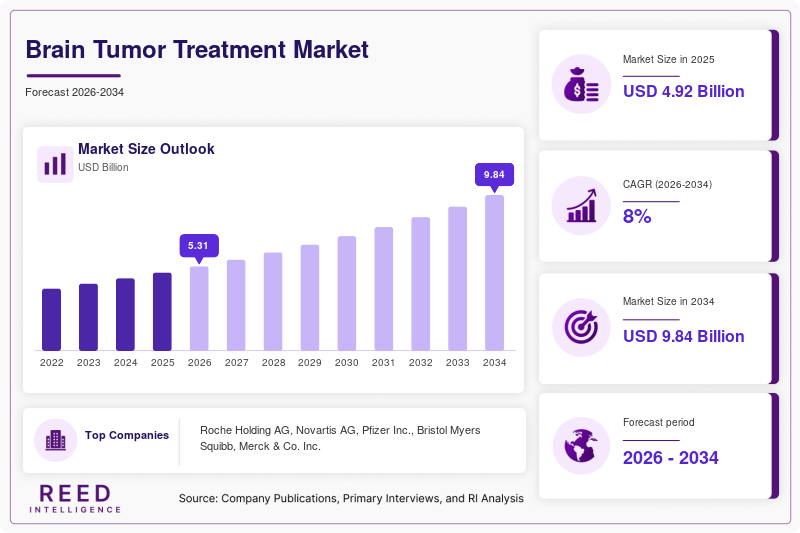
The global Brain Tumor Treatment Market size was valued at USD 4.92 billion in 2026 and is projected to reach USD 9.14 billion by 2034, expanding at a CAGR of 8.0% during the forecast period (2026–2034). Market growth has been supported by increasing adoption of advanced oncology therapies, rising diagnosis rates supported by improved neuroimaging, and growing investment in precision medicine. A major global factor supporting expansion has been the broader advancement of targeted cancer treatment technologies, which has improved treatment pathways for complex neurological tumors.
Brain tumor treatment includes a broad range of therapeutic approaches including surgery, radiation therapy, chemotherapy, targeted therapy, immunotherapy, and tumor treatment-support technologies. Demand has grown as healthcare systems expand access to advanced neuro-oncology care and as treatment innovation improves survival outcomes in selected tumor categories. The market continues to evolve with stronger emphasis on personalized therapy selection, minimally invasive intervention, and integrated treatment protocols.
Key Highlights
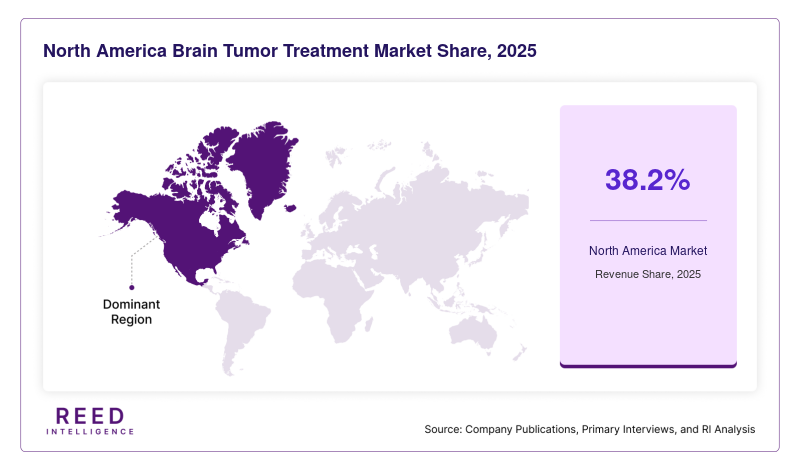
- North America held the dominant regional share of 38.2% in 2025, while Asia Pacific is projected to record the fastest CAGR of 9.1% through 2034.
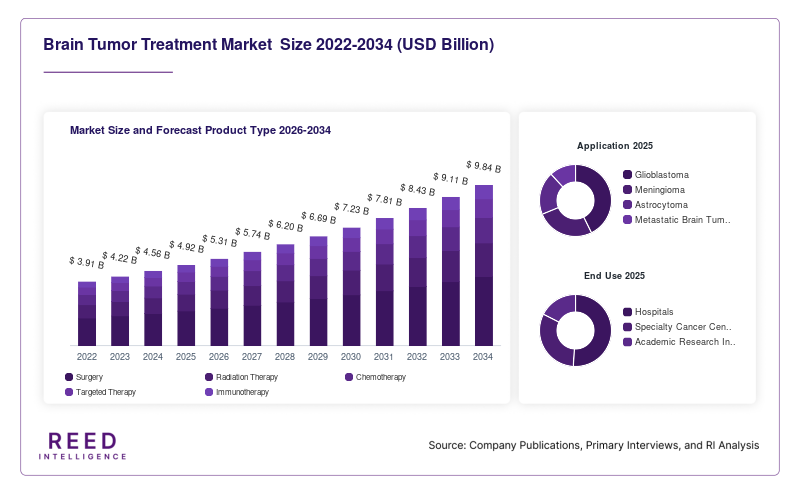
- By treatment type, radiation therapy held the leading share of 33.6% in 2025, while targeted therapy is projected to grow at 10.2% CAGR.
- By tumor type, glioblastoma accounted for the dominant share of 29.4% in 2025, while metastatic brain tumors are projected to expand at 8.8% CAGR.
- By end use, hospitals held the leading share of 56.7% in 2025, while specialty cancer centers are projected to grow at 8.7% CAGR.
- The United States, the dominant country, was valued at USD 1.46 billion in 2024 and USD 1.57 billion in 2025.
Market Trends
Expansion of Precision Oncology Approaches
A major trend in the Brain Tumor Treatment Market is increasing adoption of precision oncology strategies. Molecular profiling and biomarker-driven treatment selection are influencing therapeutic decision-making and expanding use of targeted treatment pathways. This trend has supported innovation in personalized treatment protocols.
Growth in Advanced Radiation Technologies
Another notable trend is rising use of advanced radiation treatment systems. Technologies such as stereotactic approaches and image-guided platforms are improving treatment precision while supporting broader adoption in complex tumor management.
Market Drivers
Increasing Incidence and Diagnosis of Brain Tumors
Rising diagnosis rates have been a major driver for the Brain Tumor Treatment Market. Greater use of advanced imaging and improved neurological assessment have contributed to increasing treatment demand across multiple tumor categories.
Expansion of Oncology Drug Innovation
Growing innovation in oncology therapeutics has also supported market growth. Expanding development of targeted agents and immunotherapy approaches has contributed to broader treatment options.
Market Restraint
High Cost of Advanced Treatment Modalities
A major restraint in the Brain Tumor Treatment Market is the high cost associated with advanced therapies and specialized treatment systems. Treatment affordability and reimbursement variability can affect access in some markets.
Market Opportunities
Growth in Immunotherapy Development
Immunotherapy innovation represents an emerging opportunity. Expanding research in immune-based treatment approaches is expected to support future growth potential.
Expansion in Combination Treatment Protocols
Combination treatment protocols create another opportunity as integrated approaches increasingly support more individualized treatment strategies.
Segmental Analysis
By Treatment Type
Radiation Therapy Dominated the Market
Radiation therapy accounted for 33.6% share in 2025. Its leadership was supported by widespread use across primary and adjunctive treatment pathways in brain tumor management.
Targeted Therapy Will Grow Faster
Targeted therapy is projected to grow at 10.2% CAGR through 2034. Growth will be supported by increasing use of biomarker-linked therapeutic strategies.
By Tumor Type
Glioblastoma Led Demand
Glioblastoma represented 29.4% share in 2025. This segment maintained leadership due to significant treatment demand associated with complex disease management.
Metastatic Brain Tumors Will Expand Faster
Metastatic brain tumors are projected to grow at 8.8% CAGR. Growth will be supported by increasing treatment demand linked to broader oncology patient populations.
By Treatment Modality
Combination Therapy Held the Largest Share
Combination therapy accounted for 41.2% share in 2025. Its leadership reflected increasing use of integrated treatment approaches across clinical pathways.
Immunotherapy-Based Modalities Will Record Higher Growth
Immunotherapy-based modalities are projected to grow at 9.4% CAGR through 2034. Growth will be supported by expanding clinical development activity.
By End Use
Hospitals Dominated
Hospitals held 56.7% share in 2025. Leadership was supported by concentration of complex treatment procedures within hospital-based oncology systems.
Specialty Cancer Centers Will Grow Faster
Specialty cancer centers are projected to expand at 8.7% CAGR. Growth will be supported by rising demand for dedicated neuro-oncology services.
By Distribution Channel
Hospital Pharmacies Led the Market
Hospital pharmacies represented 48.5% share in 2025. Large institutional treatment settings continued to support segment leadership.
Specialty Oncology Pharmacies Will Grow Faster
Specialty oncology pharmacies are projected to grow at 8.5% CAGR. Growth will be supported by increasing use of specialized treatment distribution pathways.
Regional Analysis
North America
North America accounted for 38.2% of the Brain Tumor Treatment Market in 2025. The region benefited from advanced oncology infrastructure and strong adoption of specialized neuro-oncology therapies. The market is projected to grow at a CAGR of 7.5% through 2034. The United States remained the dominant country due to increasing use of advanced radiation systems supporting treatment expansion.
Europe
Europe represented 29.1% share of the Brain Tumor Treatment Market in 2025. Demand was supported by established cancer treatment systems and broad access to specialized care. The region is expected to expand at 7.3% CAGR. Germany remained the dominant country due to strong neuro-oncology treatment infrastructure and rising use of advanced therapeutic approaches.
Asia Pacific
Asia Pacific held 20.8% share in 2025 and is projected to register the fastest CAGR of 9.1% during the forecast period. Growth will be supported by expanding oncology treatment capacity and increasing diagnosis rates. China remained the dominant country due to healthcare infrastructure expansion supporting treatment demand.
Middle East & Africa
Middle East & Africa accounted for 6.3% share in 2025. The market was supported by growing access to oncology treatment services. The region is projected to grow at 7.8% CAGR through 2034. Saudi Arabia remained the dominant country due to healthcare investment supporting specialized cancer treatment services.
Latin America
Latin America captured 5.6% share in 2025. Demand was driven by improving oncology care access and increasing treatment adoption. The region is forecast to grow at 7.6% CAGR. Brazil remained the dominant country due to growing oncology service expansion supporting treatment demand.
Competitive Landscape
The Brain Tumor Treatment Market remains moderately concentrated, with pharmaceutical innovators and oncology technology providers competing through therapy development, treatment system innovation, and clinical expansion strategies. Competition is shaped by targeted therapy development, advanced radiation technologies, and broader investment in precision oncology.
Roche remained a leading participant due to its oncology portfolio and continued investment in targeted treatment development. A recent development included advancement of precision oncology programs aligned with expanding biomarker-based treatment strategies in neuro-oncology applications.
Other major participants including Novartis, Pfizer, Bristol Myers Squibb, and Merck continue investing in clinical pipeline development, strategic collaborations, and oncology portfolio expansion. Competition is also increasing from specialized oncology innovators focused on immunotherapy and advanced treatment modalities. Market participants are strengthening focus on personalized treatment solutions, combination therapy development, and expansion of treatment access across global oncology markets.
Key Players List
- Roche Holding AG
- Novartis AG
- Pfizer Inc.
- Bristol Myers Squibb
- Merck & Co. Inc.
- Amgen Inc.
- AstraZeneca plc
- Eli Lilly and Company
- Bayer AG
- Teva Pharmaceutical Industries Ltd.
- Elekta AB
- Varian Medical Systems
- Accuray Incorporated
- Medtronic plc
- GE HealthCare
Recent Developments
- Companies expanded targeted therapy development programs for biomarker-linked brain tumor treatment approaches.
- Several participants increased investment in immunotherapy research related to neuro-oncology applications.
- Advanced radiation technology platforms were introduced with improved treatment planning capabilities.
- Companies expanded clinical collaborations focused on combination treatment protocols.
- Market participants broadened precision oncology initiatives aligned with personalized treatment strategies.
- Several companies advanced development programs targeting treatment-resistant tumor indications.
- Oncology technology providers introduced upgrades in stereotactic treatment systems.
- Manufacturers expanded support programs for specialty treatment center adoption.
- Companies increased research activity involving integrated treatment modalities for complex tumor management.
- Several participants strengthened regional expansion strategies to improve access to advanced treatment solutions.
- Product and pipeline development activity increased around supportive technologies linked to neuro-oncology care.
Brain Tumor Treatment Market Segments
Product Type
- Surgery
- Radiation Therapy
- Chemotherapy
- Targeted Therapy
- Immunotherapy
Application
- Glioblastoma
- Meningioma
- Astrocytoma
- Metastatic Brain Tumors
End Use
- Hospitals
- Specialty Cancer Centers
- Academic Research Institutes
Distribution Channel
- Hospital Pharmacies
- Retail Pharmacies
- Specialty Oncology Pharmacies
By Region
- North America
- Europe
- APAC
- Middle East and Africa
- LATAM