Breast Retractor Market Size, Share & Demand Report By Product Type (Self-Retaining Retractors, Hand-Held Retractors, Illuminated Retractors, Disposable Retractors), By Application (Breast Cancer Surgery, Reconstructive Breast Surgery, Cosmetic Breast Surgery, Breast Biopsy Procedures), By End Use (Hospitals, Ambulatory Surgical Centers, Specialty Clinics, Academic and Research Institutes), By Region & Segment Forecasts, 2026–2034
USD 3950
Market Overview
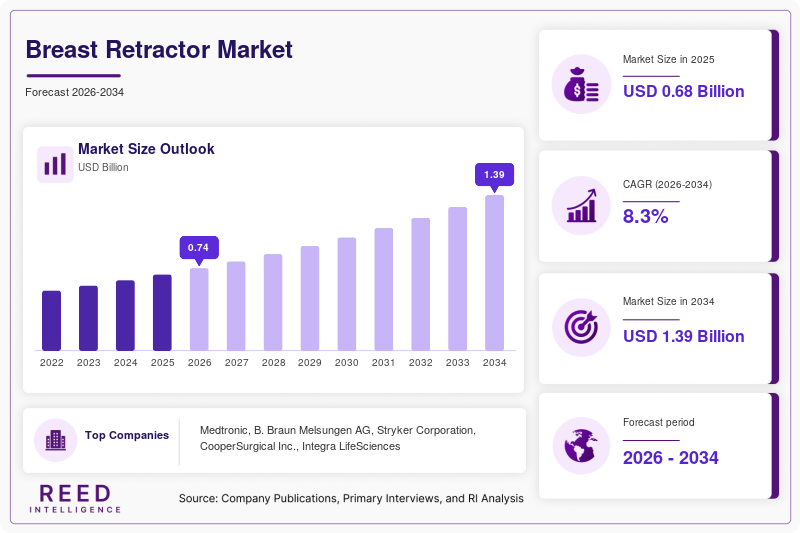
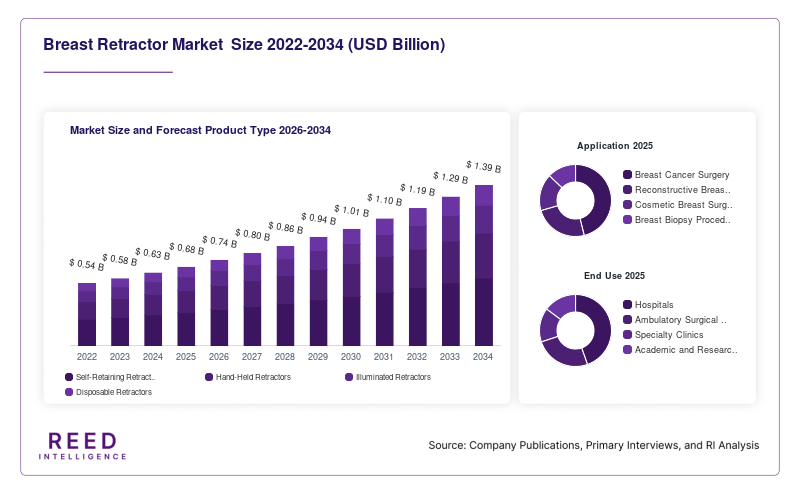
The global Breast Retractor Market size was valued at approximately USD 0.684 billion in 2026 and is projected to reach USD 1.29 billion by 2034, expanding at a CAGR of 8.3% during the forecast period from 2026 to 2034. The market continues to witness stable expansion due to the rising number of breast cancer surgeries, increasing preference for minimally invasive procedures, and continuous advancements in surgical instrumentation. Breast retractors are widely used during mastectomy, lumpectomy, breast reconstruction, and cosmetic breast procedures to improve surgical visibility and reduce tissue trauma. Hospitals and ambulatory surgical centers are increasingly adopting ergonomic and illuminated retractors that support precision-based surgical workflows.
One of the major global factors supporting market growth is the increasing prevalence of breast cancer worldwide. Healthcare systems across developed and emerging economies are expanding breast cancer screening programs and investing in oncology infrastructure. This trend has increased the volume of surgical interventions, directly driving demand for advanced breast retraction systems. In addition, growing awareness regarding post-surgical outcomes and patient safety has encouraged surgeons to adopt high-quality disposable and self-retaining retractors that improve operational efficiency and reduce contamination risks.
Key Highlights
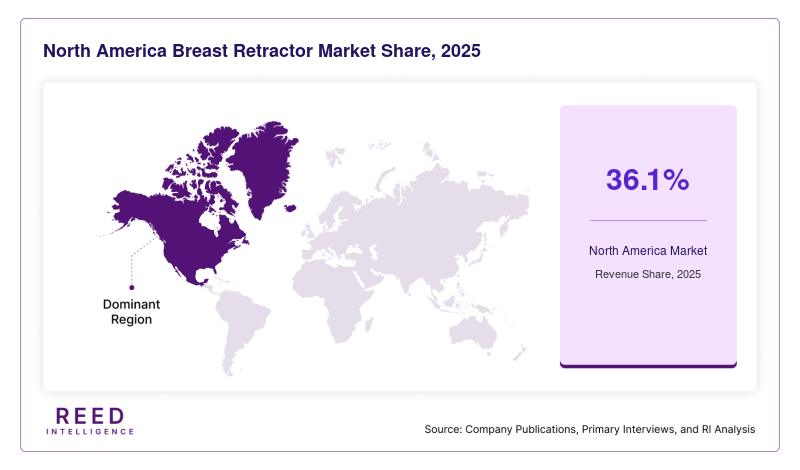
- North America dominated the market with a 36.1% share in 2025.
- Asia Pacific is expected to grow at the fastest CAGR of 10.8% during 2026–2034.
- By product type, self-retaining retractors accounted for the largest share of 39.4%, while illuminated retractors are projected to grow at a CAGR of 11.6%.
- By application, breast cancer surgery led with a 48.7% share, whereas reconstructive breast surgery is expected to expand at a CAGR of 10.9%.
- The United States remained the dominant country, with market values of USD 214 million in 2024 and USD 232 million in 2025.
Market Trends
Rising Adoption of Illuminated and Ergonomic Surgical Retractors
The Breast Retractor Market is experiencing a noticeable transition toward illuminated and ergonomically designed surgical instruments. Surgeons increasingly prefer retractors equipped with integrated lighting systems because they enhance visibility during complex breast surgeries and reduce dependency on external light sources. These systems improve precision in tissue handling and support minimally invasive surgical techniques. Ergonomic handles and lightweight designs are also gaining popularity as they reduce surgeon fatigue during long procedures. Hospitals are investing in these advanced tools to improve operating room efficiency and surgical accuracy. Manufacturers are responding by introducing disposable illuminated retractors and modular systems that can be customized according to procedural needs. The trend is particularly strong in developed healthcare markets where surgical centers prioritize efficiency, patient safety, and improved clinical outcomes. Growing awareness regarding infection prevention has additionally encouraged the adoption of single-use illuminated devices across oncology-focused healthcare facilities.
Expansion of Outpatient and Ambulatory Breast Surgery Procedures
The increasing shift toward outpatient surgical procedures is creating new growth opportunities for the Breast Retractor Market. Ambulatory surgical centers are performing a larger number of breast biopsy, reconstruction, and cosmetic procedures because of reduced hospitalization costs and shorter recovery periods. This trend has increased the demand for compact, easy-to-use, and disposable retractor systems that fit fast-paced outpatient environments. Patients are increasingly choosing minimally invasive breast surgeries due to reduced scarring and faster post-operative recovery. As a result, healthcare providers are adopting advanced breast retractors that support smaller incisions and precise tissue exposure. Emerging economies are also witnessing increased investments in ambulatory care infrastructure, further contributing to market expansion. In addition, private cosmetic surgery clinics are incorporating specialized retractors for breast augmentation and reduction procedures, supporting consistent product demand across both therapeutic and aesthetic surgical applications.
Market Drivers
Increasing Global Burden of Breast Cancer and Surgical Procedures
The growing incidence of breast cancer remains one of the primary factors driving the Breast Retractor Market. Healthcare organizations worldwide are strengthening cancer screening initiatives, resulting in earlier diagnosis and a higher number of surgical interventions. Breast-conserving surgeries, mastectomies, and reconstructive procedures all require specialized retractors to improve tissue visualization and surgical precision. The increasing aging female population further contributes to procedural growth, especially in developed nations where breast cancer rates are comparatively high. Governments and healthcare providers are investing in oncology infrastructure and surgical technologies to improve treatment outcomes. This has increased procurement of advanced breast retraction systems across hospitals and specialty cancer centers. Additionally, rising awareness regarding preventive healthcare and routine breast examinations has accelerated diagnosis rates in emerging markets, creating a steady demand for breast surgery instruments and associated surgical accessories throughout the forecast period.
Growth in Cosmetic and Reconstructive Breast Procedures
The expanding demand for cosmetic breast surgeries and post-mastectomy reconstruction procedures is another significant growth driver for the Breast Retractor Market. Patients increasingly seek breast augmentation, reduction, and reconstruction procedures due to rising aesthetic awareness and improved access to cosmetic healthcare services. Reconstructive surgeries following breast cancer treatment are also becoming more common because of advancements in plastic surgery techniques and reimbursement support in several countries. Surgeons require precision-oriented retractor systems to ensure improved tissue management and minimal procedural complications during these operations. The increasing presence of specialized cosmetic surgery clinics and private healthcare providers has further strengthened market demand. In addition, social acceptance of cosmetic enhancement procedures and the influence of digital media have contributed to growing procedural volumes among younger demographics. Manufacturers are developing procedure-specific retractors designed for cosmetic and reconstructive applications, further expanding product adoption across healthcare facilities.
Market Restraint
High Cost of Advanced Surgical Retractor Systems and Limited Access in Developing Regions
The high cost associated with technologically advanced breast retractors continues to restrict broader market penetration, particularly in low-income and developing healthcare markets. Illuminated retractors, disposable systems, and specialized self-retaining devices often involve higher procurement and maintenance costs compared to conventional surgical instruments. Smaller hospitals and public healthcare facilities frequently face budget constraints that limit investments in advanced surgical tools. In many emerging economies, healthcare systems prioritize essential diagnostic and treatment equipment over premium surgical accessories, reducing the adoption rate of modern retraction technologies. Limited availability of trained surgeons capable of using sophisticated retractor systems also affects utilization in rural and underserved regions. Additionally, hospitals attempting to reduce operational expenditures may continue using reusable conventional retractors for extended periods, slowing replacement cycles. Regulatory approval procedures and sterilization compliance requirements can further increase manufacturing and distribution costs, creating pricing pressure across the industry and limiting market accessibility in cost-sensitive healthcare environments.
Market Opportunities
Increasing Demand for Disposable Surgical Instruments in Infection Control
The growing emphasis on infection prevention and surgical safety is creating substantial opportunities for disposable breast retractor manufacturers. Hospitals and surgical centers are increasingly adopting single-use surgical instruments to minimize the risk of hospital-acquired infections and cross-contamination. Disposable retractors eliminate sterilization requirements and reduce operating room preparation time, improving procedural efficiency. This trend gained stronger momentum following increased awareness regarding infection control practices in surgical environments. Manufacturers are investing in medical-grade polymers and cost-effective disposable systems that offer adequate durability and surgical performance. Emerging markets are also showing interest in disposable instruments as healthcare regulations become stricter regarding sterilization compliance. In addition, outpatient surgical centers prefer disposable retractors because they simplify workflow management and reduce operational complexity. The increasing acceptance of single-use devices is expected to create long-term revenue opportunities for manufacturers focusing on affordable and lightweight breast retractor solutions.
Technological Innovation in Minimally Invasive Breast Surgery Instruments
Technological advancements in minimally invasive breast surgery instruments present another major opportunity for the Breast Retractor Market. Surgeons increasingly seek devices that improve procedural visibility while minimizing tissue trauma and recovery time. This has encouraged manufacturers to develop retractors integrated with fiber-optic lighting, adjustable blades, and modular designs suitable for precision-based procedures. Robotic-assisted breast surgery and image-guided interventions are also gaining traction in specialized healthcare centers, creating demand for advanced compatible retraction systems. Healthcare providers are prioritizing technologies that support smaller incisions and enhanced cosmetic outcomes for patients. The integration of lightweight materials and customizable designs is improving surgeon comfort and procedural adaptability. Furthermore, collaborations between medical device companies and surgical research institutes are accelerating innovation in specialized breast surgery tools. These developments are expected to support product differentiation and create competitive opportunities across global healthcare markets during the forecast period.
Segmental Analysis
By Product Type
Self-retaining retractors accounted for the largest share of the Breast Retractor Market in 2024, contributing approximately 39.4% of total revenue. These retractors are widely preferred because they allow surgeons to maintain consistent tissue exposure without requiring continuous manual assistance. Hospitals and surgical centers increasingly use self-retaining systems during mastectomy and reconstructive procedures to improve operational efficiency and reduce surgical fatigue. Their adjustable mechanisms and enhanced stability make them suitable for prolonged surgeries requiring precision and controlled tissue management. In addition, self-retaining retractors help reduce staffing dependency in operating rooms, which is particularly beneficial in high-volume healthcare facilities. Manufacturers continue to improve product ergonomics and introduce lightweight stainless-steel designs that support better maneuverability. The increasing demand for efficient surgical workflows and minimally invasive procedures has further strengthened adoption across oncology and cosmetic surgery applications worldwide.
By Application
Breast cancer surgery represented the dominant application segment in the Breast Retractor Market in 2024, accounting for nearly 48.7% of total market share. The increasing global burden of breast cancer continues to drive high procedural volumes for mastectomy, lumpectomy, and breast-conserving surgeries. Retractors play an essential role in these procedures by improving tissue exposure, surgical visibility, and precision. Hospitals and oncology centers are increasingly adopting advanced retractor systems designed to minimize tissue trauma and improve post-operative outcomes. The growing implementation of breast cancer screening programs has resulted in earlier diagnosis rates, increasing the number of surgical interventions worldwide. In addition, healthcare providers are investing in specialized oncology operating rooms equipped with advanced surgical tools to enhance patient care standards. The demand for precision-based surgical instruments remains particularly strong in developed regions with established cancer treatment infrastructure and rising awareness regarding minimally invasive surgical approaches.
By End Use
Hospitals dominated the Breast Retractor Market in 2024 and accounted for approximately 56.8% of total revenue. Large hospitals perform a high volume of breast cancer surgeries, reconstructive procedures, and cosmetic interventions, creating substantial demand for advanced surgical instruments. These facilities possess the financial resources required to invest in technologically advanced illuminated and self-retaining retractor systems. Hospitals also prioritize infection control and operational efficiency, increasing procurement of disposable surgical devices and ergonomic instrument designs. In addition, multidisciplinary oncology departments within hospitals are expanding due to rising cancer treatment demand, supporting continued utilization of specialized breast surgery tools. Government healthcare funding and reimbursement support in developed nations further strengthen hospital purchasing capacity. The presence of skilled surgical teams and advanced operating room infrastructure additionally contributes to the dominant position of hospitals within the global market.
Regional Analysis
North America
North America accounted for the largest share of the Breast Retractor Market in 2025, representing approximately 36.1% of global revenue. The region is projected to expand at a CAGR of 7.9% during the forecast period. High breast cancer screening rates, advanced surgical infrastructure, and strong healthcare expenditure continue to support regional market growth. Hospitals across the United States and Canada increasingly adopt technologically advanced illuminated retractors and disposable surgical instruments to improve procedural efficiency and infection control standards. In addition, favorable reimbursement systems and rising outpatient surgical procedures contribute to sustained product demand.
The United States remains the dominant country within the North American market due to its large oncology patient population and extensive network of specialty surgical centers. One unique growth factor in the country is the increasing adoption of reconstructive surgeries following mastectomy procedures. Plastic surgeons and oncology specialists are incorporating precision-oriented retractor systems to support minimally invasive reconstruction techniques and improve cosmetic outcomes. Continuous investments in robotic-assisted surgeries and surgical innovation further strengthen product demand across healthcare facilities.
Europe
Europe held a significant share of the Breast Retractor Market in 2025 and is expected to witness stable growth at a CAGR of 7.5% through 2034. The region benefits from well-established healthcare infrastructure, increasing awareness regarding breast cancer screening, and rising adoption of advanced surgical instruments. Countries such as Germany, France, and the United Kingdom are witnessing growing procedural volumes for breast-conserving surgeries and cosmetic breast interventions. Hospitals in the region are emphasizing patient safety and infection control, increasing demand for disposable and ergonomically designed breast retractors across public and private healthcare institutions.
Germany emerged as the leading country in the European market due to its strong medical device manufacturing sector and high surgical procedure volumes. A distinctive growth factor in Germany is the presence of advanced surgical training programs that encourage adoption of precision-based surgical instruments. Surgeons increasingly use illuminated and self-retaining retractors during complex breast procedures to enhance visibility and reduce tissue trauma. Additionally, supportive government healthcare spending and growing investments in cancer care facilities continue to strengthen regional market expansion.
Asia Pacific
Asia Pacific is projected to register the fastest CAGR of 10.8% in the Breast Retractor Market during the forecast period. Rising healthcare expenditure, improving surgical infrastructure, and increasing awareness regarding breast cancer diagnosis are driving regional growth. Countries across the region are expanding oncology treatment facilities and introducing nationwide screening initiatives to improve early disease detection. The growing middle-class population and increasing accessibility to private healthcare services are also contributing to higher procedural volumes. In addition, cosmetic breast surgeries are becoming more common in urban healthcare centers, supporting demand for advanced retraction systems.
China dominates the Asia Pacific market due to its large patient population and expanding healthcare modernization initiatives. One unique factor supporting growth in China is the rapid development of domestic medical device manufacturing capabilities. Local manufacturers are producing cost-effective breast retractors that cater to the needs of both public hospitals and private surgical clinics. Increasing medical tourism and rising investments in oncology-focused healthcare infrastructure are also improving product accessibility across metropolitan and tier-two cities, creating strong long-term growth opportunities.
Middle East & Africa
The Middle East & Africa region is gradually expanding within the Breast Retractor Market and is expected to record a CAGR of 6.8% during the forecast period. The market is primarily driven by improving healthcare investments, rising cancer awareness campaigns, and the development of specialty surgical centers in urban areas. Countries in the Gulf region are investing heavily in healthcare modernization and oncology treatment capabilities, increasing demand for specialized surgical instruments. The adoption of advanced breast retractors remains concentrated in premium hospitals and private healthcare facilities that prioritize minimally invasive surgical procedures.
Saudi Arabia represents the leading market within the region due to increasing government investment in healthcare diversification initiatives. A major growth factor in the country is the expansion of women’s healthcare programs aimed at improving early breast cancer diagnosis and treatment accessibility. Hospitals are integrating advanced surgical technologies to enhance treatment quality and attract medical tourism. Furthermore, partnerships between healthcare providers and international medical device companies are improving the availability of advanced breast retractor systems across major healthcare institutions.
Latin America
Latin America continues to demonstrate moderate growth in the Breast Retractor Market and is projected to grow at a CAGR of 7.1% through 2034. Rising healthcare awareness, improving surgical accessibility, and increasing cosmetic surgery procedures are contributing to regional expansion. Brazil, Mexico, and Argentina are among the key contributors to market growth due to expanding private healthcare infrastructure and growing demand for breast reconstruction surgeries. Public healthcare systems are also gradually increasing investments in oncology services and breast cancer screening programs, supporting demand for surgical instruments used in breast procedures.
Brazil remains the dominant country in the Latin American market due to its large cosmetic surgery industry and increasing breast cancer treatment procedures. One unique factor supporting market growth in Brazil is the high volume of aesthetic breast surgeries performed annually across private clinics and specialty hospitals. Surgeons require advanced retraction systems that support precision, visibility, and improved cosmetic outcomes during augmentation and reduction procedures. The country’s growing medical tourism sector additionally contributes to demand for modern surgical technologies and specialized breast surgery instruments.
Competitive Landscape
The Breast Retractor Market is moderately fragmented, with established medical device manufacturers competing through product innovation, distribution expansion, and strategic collaborations. Companies are increasingly focusing on ergonomic designs, disposable surgical instruments, and illuminated retractor technologies to strengthen their market position. Product differentiation remains an important competitive strategy as healthcare providers seek instruments that improve surgical precision and operational efficiency. Manufacturers are also investing in emerging markets where healthcare infrastructure and breast cancer treatment facilities are expanding rapidly.
Medtronic remained one of the leading participants in the market due to its broad surgical instrument portfolio and strong global distribution capabilities. The company has focused on expanding minimally invasive surgical solutions and improving product usability for oncology procedures. Other major companies including B. Braun, Stryker, and CooperSurgical are strengthening their presence through acquisitions and new product launches targeting specialty surgical applications.
Key Players
- Medtronic
- B. Braun Melsungen AG
- Stryker Corporation
- CooperSurgical Inc.
- Integra LifeSciences
- Thompson Surgical Instruments
- Black & Black Surgical
- Novo Surgical Inc.
- Teleflex Incorporated
- Aspen Surgical
- Sklar Surgical Instruments
- Surtex Instruments Ltd.
- Hayden Medical Inc.
- Delacroix-Chevalier
- KLS Martin Group
Recent Developments
- Medtronic introduced an upgraded illuminated breast retractor system in 2025 designed to improve surgical visibility during minimally invasive breast oncology procedures.
- Stryker Corporation expanded its surgical instrument manufacturing capabilities in Asia Pacific to strengthen regional supply chain efficiency and improve access to specialty surgical products.
- CooperSurgical partnered with multiple outpatient surgical centers in 2024 to promote disposable breast retractor systems focused on infection prevention and faster procedural turnaround times.
Breast Retractor Market Segments
Product Type
- Self-Retaining Retractors
- Hand-Held Retractors
- Illuminated Retractors
- Disposable Retractors
Application
- Breast Cancer Surgery
- Reconstructive Breast Surgery
- Cosmetic Breast Surgery
- Breast Biopsy Procedures
End Use
- Hospitals
- Ambulatory Surgical Centers
- Specialty Clinics
- Academic and Research Institutes
By Region
- North America
- Europe
- APAC
- Middle East and Africa
- LATAM