Brown Sugar Syrup Market Size, Share & Demand Report By Type (Organic Brown Sugar Syrup, Conventional Brown Sugar Syrup, Flavored Brown Sugar Syrup), By Application (Beverages, Bakery and Confectionery, Dairy Products, Others), By End-Use (Foodservice, Household, Industrial), By Region & Segment Forecasts, 2026–2034
USD 3950
Market Overview
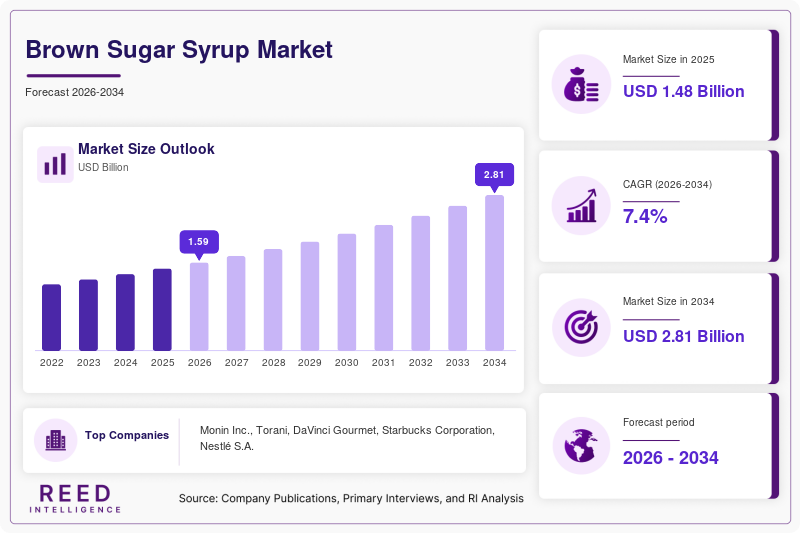
The Brown Sugar Syrup Market size was valued at approximately USD 1.48 billion in 2026 and is projected to reach USD 2.62 billion by 2034, expanding at a CAGR of 7.4% during the forecast period (2026–2034). The market has experienced steady growth due to increasing demand for flavored sweeteners in beverages and desserts across both developed and emerging economies. Brown sugar syrup, known for its caramel-like flavor and natural appeal, is widely used in specialty coffee, bakery products, and bubble tea applications, which continue to gain traction among younger consumers and urban populations.
A significant global factor supporting market expansion is the rapid growth of café culture and ready-to-drink beverage consumption. The rising popularity of premium beverages, including milk teas, iced coffees, and flavored sodas, has increased the adoption of brown sugar syrup as a key ingredient. Manufacturers are also focusing on clean-label formulations and natural sweeteners, which further supports the product’s positioning as a preferable alternative to artificial syrups. Additionally, product innovation in packaging formats and shelf-stable variants has improved distribution channels and accessibility across retail and foodservice sectors.
Key Highlights
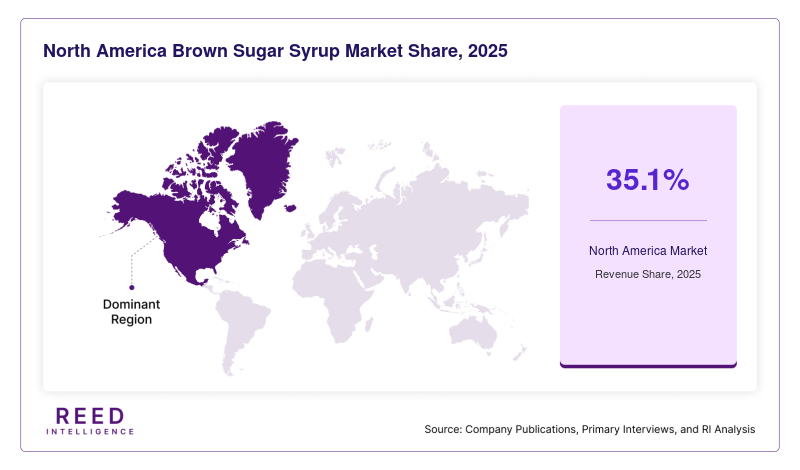
- North America dominated the market with a 35.1% share in 2025.
- Asia Pacific is expected to grow at the fastest CAGR of 9.2% during 2026–2034.
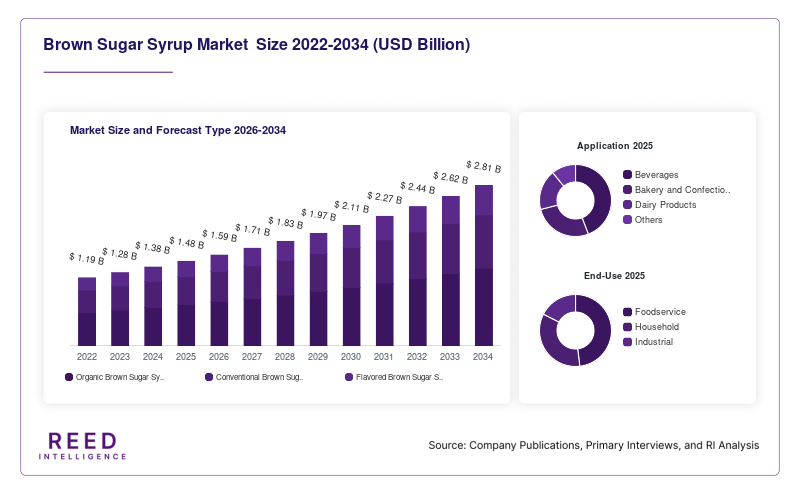
- By type, organic brown sugar syrup accounted for the largest share of 39.4%, while flavored variants are projected to grow at a CAGR of 8.6%.
- By application, beverages led with a 46.8% share, whereas bakery and confectionery is expected to expand at a CAGR of 8.1%.
- The United States remained the dominant country, with market values of USD 420 million in 2024 and USD 455 million in 2025.
Market Trends
Rising popularity of specialty beverages and café culture
The global beverage landscape is undergoing a transformation, with consumers shifting toward premium and customizable drink experiences. Brown sugar syrup has become a staple ingredient in specialty beverages such as bubble tea, iced lattes, cold brews, and flavored milk drinks. This trend is particularly strong in urban centers, where café chains and independent coffee shops experiment with new flavor profiles to attract customers. The demand is further supported by social media influence, where visually appealing drinks featuring layered brown sugar syrup have gained widespread popularity. As a result, manufacturers are collaborating with foodservice providers to develop syrups tailored for high-end beverage applications, contributing to sustained market growth.
Increasing demand for natural and clean-label sweeteners
Consumers are becoming more conscious of ingredient transparency and are actively seeking products with minimal processing and recognizable components. Brown sugar syrup, often perceived as a more natural alternative to refined sugar syrups, aligns well with this preference. Producers are emphasizing organic sourcing, reduced additives, and non-GMO formulations to meet evolving consumer expectations. Retail brands are also highlighting clean-label certifications and sustainable production methods, which enhances product appeal. This trend is influencing purchasing decisions across both retail and foodservice channels, encouraging companies to invest in product innovation and transparent labeling practices that cater to health-conscious buyers.
Market Drivers
Expansion of foodservice and quick-service restaurant sectors
The rapid expansion of quick-service restaurants (QSRs), cafés, and dessert chains has significantly contributed to the demand for brown sugar syrup. These establishments rely on versatile flavoring agents to diversify their menus and attract repeat customers. Brown sugar syrup offers a distinctive taste profile that complements a wide range of beverages and desserts, making it a preferred choice for menu innovation. Additionally, the increasing penetration of international food chains in emerging markets has amplified demand, as these brands often introduce globally popular beverage trends. The consistent need for high-quality, ready-to-use syrups in foodservice operations continues to drive market growth.
Growth in home consumption and retail availability
The rise of home-based consumption, particularly following changes in consumer lifestyles, has boosted the retail demand for brown sugar syrup. Consumers are increasingly experimenting with café-style beverages and desserts at home, leading to higher purchases of flavored syrups. Supermarkets, hypermarkets, and online platforms have expanded their product offerings to include a variety of brown sugar syrup options, ranging from organic to flavored variants. Convenient packaging and longer shelf life further enhance product accessibility. This shift toward home consumption has created new revenue streams for manufacturers and contributed to the overall expansion of the market.
Market Restraint
Fluctuating raw material prices and supply chain challenges
One of the key challenges affecting the brown sugar syrup market is the volatility in raw material prices, particularly sugarcane and related agricultural inputs. Variations in climate conditions, crop yields, and global trade policies can impact the availability and cost of raw materials, leading to price fluctuations for manufacturers. These changes can reduce profit margins and create pricing pressures across the supply chain. Additionally, disruptions in logistics and transportation can affect product distribution, especially in regions dependent on imports. For instance, unexpected shortages of sugarcane in certain producing countries can lead to increased production costs, which are often passed on to consumers, potentially limiting demand growth.
Market Opportunities
Product innovation in flavored and functional syrups
The development of flavored and functional brown sugar syrups presents significant growth opportunities for market players. Manufacturers are introducing variants infused with vanilla, caramel, cinnamon, and other flavors to cater to diverse consumer preferences. Additionally, there is growing interest in functional syrups that incorporate health-oriented ingredients such as vitamins, antioxidants, or plant-based extracts. These innovations not only enhance product differentiation but also attract a broader consumer base. The ability to combine flavor with perceived health benefits positions brown sugar syrup as a versatile ingredient in both beverages and food applications, creating new avenues for market expansion.
Expansion into emerging markets and e-commerce channels
Emerging economies in Asia Pacific, Latin America, and the Middle East offer substantial growth potential due to rising disposable incomes and changing consumption patterns. Increasing urbanization and exposure to global food trends are driving demand for specialty beverages and desserts, thereby boosting the need for brown sugar syrup. At the same time, the rapid growth of e-commerce platforms has transformed distribution channels, enabling manufacturers to reach a wider audience with minimal infrastructure investment. Online retail allows for direct consumer engagement, personalized marketing, and efficient product delivery, making it a key opportunity for market players aiming to expand their presence globally.
Segmental Analysis
By Type
Organic brown sugar syrup emerged as the dominant subsegment, accounting for a 39.4% share in 2024. The increasing preference for natural and minimally processed ingredients has driven demand for organic variants. Consumers are actively seeking products that align with health-conscious lifestyles, leading to higher adoption of organic syrups in both retail and foodservice sectors. Additionally, certifications and labeling play a crucial role in influencing purchasing decisions, as they provide assurance of product quality and authenticity. The growing availability of organic options across supermarkets and online platforms further strengthens this segment’s position.
Flavored brown sugar syrup is projected to be the fastest-growing subsegment, with a CAGR of 8.6% during the forecast period. The demand for unique and customizable flavors in beverages and desserts is a key growth factor. Manufacturers are introducing innovative flavor combinations to cater to evolving consumer preferences. The ability to enhance taste profiles and create differentiated products makes flavored syrups highly attractive for both commercial and household use.
By Application
Beverages dominated the application segment, holding a 46.8% share in 2024. The widespread use of brown sugar syrup in coffee, tea, and specialty drinks has contributed to its leading position. The growing popularity of café culture and ready-to-drink beverages continues to drive demand. Additionally, the versatility of brown sugar syrup allows it to be used in a variety of beverage formats, making it an essential ingredient for foodservice providers.
The bakery and confectionery segment is expected to grow at the fastest CAGR of 8.1%. The increasing demand for premium baked goods and desserts is a key growth factor. Brown sugar syrup enhances flavor, texture, and visual appeal, making it a preferred ingredient in cakes, pastries, and confectionery products. The trend toward artisanal baking and innovative dessert offerings further supports this segment’s growth.
By End-Use
The foodservice segment held the largest share of 52.3% in 2024, driven by the extensive use of brown sugar syrup in cafés, restaurants, and beverage chains. The demand for high-quality ingredients and consistent flavor profiles has led to increased adoption in commercial settings. Additionally, the expansion of international food chains has amplified the need for standardized syrup formulations.
The household segment is projected to grow at a CAGR of 7.9%, supported by rising consumer interest in home-based beverage preparation. The availability of user-friendly packaging and online purchasing options has made brown sugar syrup more accessible to consumers. This trend is expected to continue as individuals seek convenient ways to recreate café-style experiences at home.
Regional Analysis
North America
North America accounted for a significant share of 35.1% in 2025 and is expected to maintain steady growth at a CAGR of 6.8% during the forecast period. The region’s well-established foodservice industry and strong consumer preference for flavored beverages contribute to its dominant position. The widespread presence of café chains and specialty beverage outlets further supports market demand. Additionally, the increasing focus on premiumization and product innovation continues to drive growth across both retail and foodservice segments.
The United States remains the dominant country in the region, supported by a high consumption of specialty coffee and ready-to-drink beverages. A unique growth factor is the strong influence of consumer trends driven by social media and lifestyle branding. Beverage customization and seasonal menu offerings encourage the use of brown sugar syrup, particularly in coffee chains and dessert outlets, reinforcing its market presence.
Europe
Europe held a market share of approximately 24.3% in 2025 and is projected to grow at a CAGR of 6.5% through 2034. The region’s demand is driven by a growing interest in artisanal and gourmet food products. Consumers in Europe increasingly prefer natural sweeteners and premium ingredients, which supports the adoption of brown sugar syrup in both household and commercial applications. The expansion of specialty cafés and dessert chains also contributes to steady market growth.
Germany leads the European market due to its strong food processing industry and high demand for bakery products. A unique growth factor is the region’s emphasis on sustainable and organic food production. Manufacturers are focusing on eco-friendly sourcing and packaging, which resonates with environmentally conscious consumers and strengthens market demand.
Asia Pacific
Asia Pacific is the fastest-growing region, with a CAGR of 9.2% during the forecast period, and accounted for a 21.7% share in 2025. The rapid expansion of urban populations and rising disposable incomes are key factors driving market growth. The popularity of bubble tea and milk-based beverages in countries such as China, Japan, and South Korea has significantly increased the demand for brown sugar syrup.
China dominates the regional market, supported by a thriving beverage industry and strong consumer demand for innovative drinks. A unique growth factor is the integration of traditional flavors with modern beverage formats. Brown sugar syrup is widely used in bubble tea chains, where it enhances both flavor and visual appeal, making it a preferred ingredient in the region.
Middle East & Africa
The Middle East & Africa region accounted for 9.4% of the market in 2025 and is expected to grow at a CAGR of 7.1%. Increasing urbanization and the expansion of international foodservice brands are driving demand for flavored syrups. The region’s young population and evolving consumption patterns also contribute to market growth.
The United Arab Emirates leads the region, driven by a strong hospitality sector and high tourism activity. A unique growth factor is the increasing adoption of premium beverage offerings in hotels and cafés. Brown sugar syrup is used to create distinctive drinks that cater to both local and international consumers, supporting its market expansion.
Latin America
Latin America held a market share of 9.5% in 2025 and is projected to grow at a CAGR of 7.3% during the forecast period. The region’s growth is supported by rising consumer awareness of flavored syrups and increasing demand for specialty beverages. The expansion of retail channels and foodservice outlets further contributes to market development.
Brazil is the dominant country in the region, benefiting from a strong sugarcane industry and local production capabilities. A unique growth factor is the availability of raw materials, which supports cost-effective production. This advantage enables local manufacturers to offer competitive pricing and expand their market presence.
Competitive Landscape
The brown sugar syrup market is characterized by the presence of both global and regional players competing on product quality, innovation, and distribution networks. Leading companies are focusing on expanding their product portfolios and strengthening their presence in emerging markets. The market also witnesses strategic collaborations with foodservice providers to enhance brand visibility and product adoption.
Monin Inc. is recognized as a leading player in the market, known for its extensive range of flavored syrups and strong global distribution network. A recent development includes the launch of new organic brown sugar syrup variants aimed at meeting the growing demand for clean-label products. Other companies are investing in research and development to introduce innovative flavors and improve product formulations. The competitive environment remains dynamic, with players continuously adapting to changing consumer preferences and market trends.
Key Players
- Monin Inc.
- Torani
- DaVinci Gourmet
- Starbucks Corporation
- Nestlé S.A.
- Tate & Lyle PLC
- Sensient Technologies
- Kerry Group
- Ghirardelli Chocolate Company
- Hershey Company
- Sonoma Syrup Co.
- Amoretti
- R. Torre & Company
- 1883 Maison Routin
- Dolce Syrups
Recent Developments
- Monin Inc. introduced a new line of organic brown sugar syrups with improved shelf stability and sustainable packaging in 2025.
- Torani expanded its flavored syrup portfolio by launching brown sugar cinnamon and vanilla variants targeted at specialty cafés.
- Nestlé S.A. partnered with regional beverage chains in Asia Pacific to develop customized brown sugar syrup formulations for bubble tea applications.
Brown Sugar Syrup Market Segments
Type
- Organic Brown Sugar Syrup
- Conventional Brown Sugar Syrup
- Flavored Brown Sugar Syrup
Application
- Beverages
- Bakery and Confectionery
- Dairy Products
- Others
End-Use
- Foodservice
- Household
- Industrial
Distribution Channel
- Online Retail
- Supermarkets & Hypermarkets
- Specialty Stores
- Foodservice Suppliers
By Region
- North America
- Europe
- APAC
- Middle East and Africa
- LATAM