Bundle Branch Block Market Size, Share & Demand Report By Type (Left Bundle Branch Block, Right Bundle Branch Block, Bifascicular Bundle Branch Block, Trifascicular Bundle Branch Block), By Diagnosis Method (Electrocardiogram Systems, Holter Monitoring Systems, Cardiac Imaging Systems, Wearable Cardiac Monitoring Devices), By End Use (Hospitals, Cardiology Clinics, Ambulatory Surgical Centers, Diagnostic Laboratories, Home Healthcare Settings), By Region & Segment Forecasts, 2026–2034
USD 3950
Market Overview
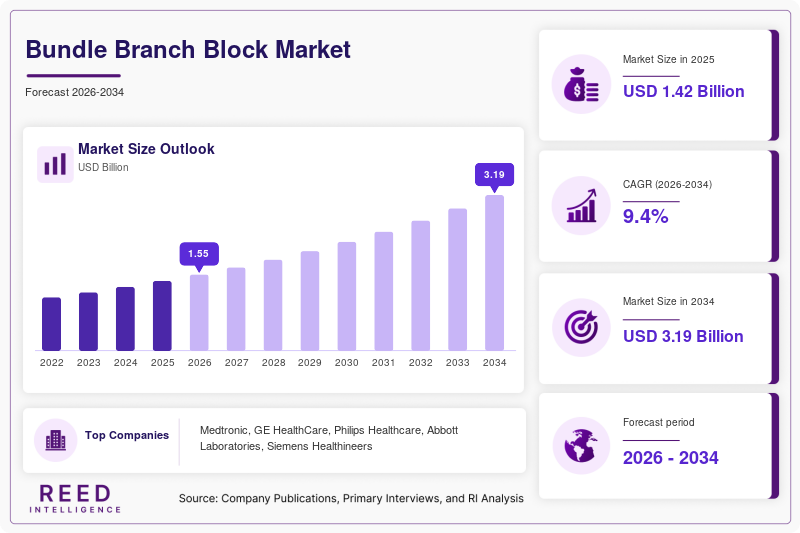
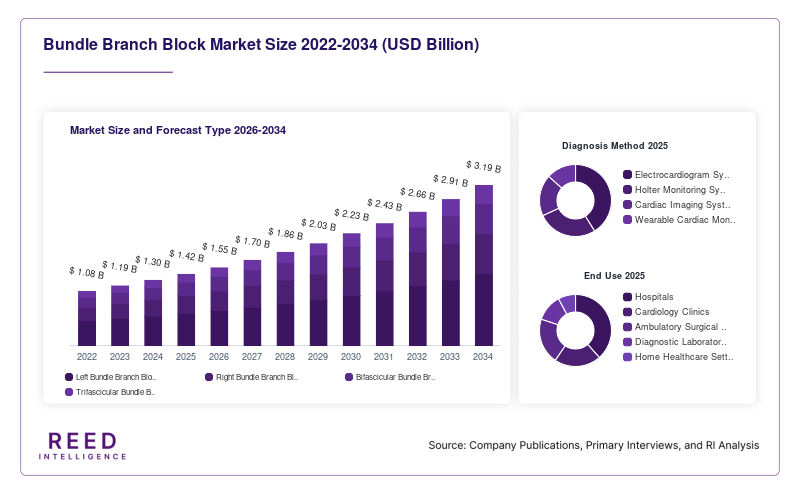
The global Bundle Branch Block Market size was valued at approximately USD 1.42 billion in 2026 and is projected to reach nearly USD 2.91 billion by 2034, expanding at a CAGR of 9.4% during the forecast period from 2026 to 2034. The market is experiencing consistent growth due to the increasing prevalence of cardiovascular disorders, rising adoption of advanced cardiac monitoring technologies, and growing awareness regarding early diagnosis of conduction abnormalities. Bundle branch block conditions, particularly left bundle branch block and right bundle branch block, are becoming more frequently diagnosed because of expanding preventive healthcare programs and improvements in electrocardiogram screening across hospitals and ambulatory care centers.
A major global factor supporting market expansion is the rapid rise in the aging population. Older adults are more susceptible to cardiac conduction abnormalities caused by hypertension, coronary artery disease, and heart failure. Healthcare systems across developed and emerging economies are therefore investing in cardiac diagnostics, remote patient monitoring systems, and advanced imaging solutions to reduce the long-term burden associated with cardiovascular complications. In addition, digital healthcare integration and wearable ECG technologies are improving early detection rates, enabling physicians to initiate timely interventions and disease management strategies.
Key Highlights
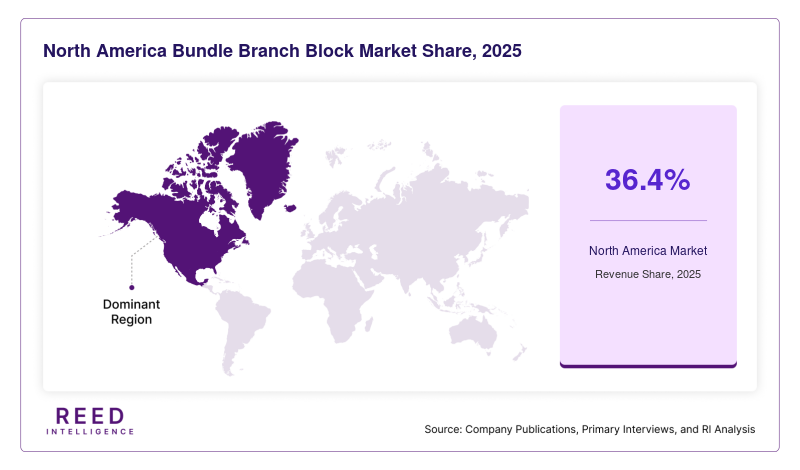
- North America dominated the Bundle Branch Block Market with a 36.4% share in 2025.
- Asia Pacific is expected to grow at the fastest CAGR of 11.6% during 2026–2034.
- By type, left bundle branch block accounted for the largest market share of 57.8% in 2024.
- while bifascicular bundle branch block is projected to grow at a CAGR of 10.9% during the forecast period.
- By diagnosis method, electrocardiogram systems held the leading share of 48.2% in 2024.
- whereas wearable cardiac monitoring devices are anticipated to expand at a CAGR of 12.1% through 2034.
- By end use, hospitals represented the dominant share of 51.6% in 2024.
- while ambulatory surgical centers are expected to grow at a CAGR of 10.7% between 2026 and 2034.
- The United States remained the dominant country in the market, with values reaching USD 492 million in 2024 and USD 541 million in 2025.
Market Trends
Expansion of Wearable Cardiac Monitoring Technologies
The increasing integration of wearable cardiac monitoring technologies is reshaping the Bundle Branch Block Market. Patients and healthcare providers are increasingly adopting wearable ECG patches, smartwatches with cardiac rhythm analysis, and portable monitoring systems to identify irregular conduction patterns at earlier stages. These devices support continuous monitoring and reduce dependency on hospital-based diagnostic procedures. Technology companies and medical device manufacturers are also incorporating artificial intelligence algorithms into wearable systems to improve arrhythmia detection accuracy and provide real-time alerts for abnormal cardiac conduction events.
The growing consumer preference for preventive healthcare is accelerating the adoption of remote monitoring solutions across both developed and developing economies. Physicians are using digital monitoring data to assess progression risks in patients with underlying cardiovascular disease. Insurance providers and healthcare organizations are additionally supporting telecardiology programs that improve patient compliance and reduce unnecessary hospital admissions. As healthcare systems focus on decentralized care delivery, wearable monitoring devices are expected to become an increasingly important component of long-term bundle branch block management.
Rising Integration of Artificial Intelligence in Cardiac Diagnostics
Artificial intelligence integration in cardiac diagnostics has emerged as another important trend influencing the Bundle Branch Block Market. AI-powered electrocardiogram interpretation systems are enabling faster and more accurate identification of conduction abnormalities, reducing diagnostic errors and improving clinical workflow efficiency. Healthcare providers are increasingly implementing automated ECG analysis platforms capable of detecting subtle waveform variations associated with left and right bundle branch block conditions.
Machine learning technologies are also improving predictive analysis for cardiovascular complications linked to bundle branch block disorders. Hospitals are using AI-enabled software to identify patients at higher risk of heart failure, arrhythmias, or sudden cardiac events. These solutions assist cardiologists in treatment planning and improve patient management efficiency. In addition, digital health companies are collaborating with diagnostic equipment manufacturers to integrate cloud-based analytics and real-time reporting features into ECG systems. The continued expansion of AI-supported healthcare infrastructure is likely to strengthen market growth during the forecast period.
Market Drivers
Increasing Prevalence of Cardiovascular Disorders Worldwide
The rising incidence of cardiovascular diseases remains one of the strongest growth drivers for the Bundle Branch Block Market. Conditions such as coronary artery disease, hypertension, cardiomyopathy, and heart failure significantly increase the likelihood of developing conduction abnormalities. As cardiovascular disorders continue to expand globally due to sedentary lifestyles, obesity, diabetes, and smoking habits, demand for early cardiac diagnosis and monitoring solutions is increasing steadily.
Healthcare providers are emphasizing routine cardiovascular screening to reduce mortality associated with undiagnosed cardiac conduction disorders. Governments and healthcare organizations are investing in awareness campaigns and preventive healthcare initiatives focused on heart disease management. The increasing number of elderly individuals with chronic cardiac conditions is also creating higher demand for ECG monitoring systems, cardiac imaging devices, and electrophysiology procedures. Consequently, diagnostic equipment manufacturers and healthcare facilities are expanding their cardiovascular care capabilities to address the growing patient population.
Growth in Healthcare Infrastructure and Diagnostic Accessibility
Improving healthcare infrastructure across emerging economies is significantly contributing to Bundle Branch Block Market growth. Countries in Asia Pacific, Latin America, and the Middle East are investing heavily in hospital modernization, digital healthcare systems, and specialized cardiac care centers. These investments are increasing patient access to advanced diagnostic technologies, including electrocardiograms, Holter monitoring systems, and remote cardiac monitoring solutions.
The expansion of private healthcare providers and diagnostic laboratories is also enhancing the availability of cardiac testing services in secondary and tertiary care facilities. Rising healthcare expenditure and broader insurance coverage are encouraging patients to seek early cardiovascular assessments. Additionally, telemedicine platforms are enabling remote interpretation of ECG data, especially in rural and underserved regions where access to cardiologists remains limited. The combination of technological advancement and improved healthcare accessibility is expected to maintain strong market momentum throughout the forecast period.
Market Restraint
High Cost of Advanced Cardiac Diagnostic and Monitoring Systems
The high cost associated with advanced cardiac diagnostic and monitoring systems remains a major restraint for the Bundle Branch Block Market. Modern ECG systems integrated with artificial intelligence, remote patient monitoring devices, and implantable cardiac monitoring technologies often require substantial investment from healthcare providers. Small hospitals and clinics in low-income and middle-income regions frequently face budget limitations that restrict the adoption of sophisticated cardiac diagnostic infrastructure.
Patients in countries with limited reimbursement coverage may also avoid routine cardiovascular screening because of out-of-pocket expenses associated with advanced diagnostic procedures. This challenge is particularly evident in rural healthcare settings where awareness regarding conduction disorders remains relatively low. Furthermore, maintenance costs, software upgrades, and specialized staff training requirements increase operational expenses for healthcare facilities. Delays in technology adoption can therefore slow diagnostic efficiency and reduce early detection rates for bundle branch block conditions. Although technological innovation is improving clinical outcomes, affordability concerns continue to create disparities in diagnostic accessibility across global healthcare systems.
Market Opportunities
Expansion of Telecardiology and Remote Patient Monitoring Programs
The rapid expansion of telecardiology and remote patient monitoring programs presents substantial opportunities for the Bundle Branch Block Market. Healthcare systems are increasingly implementing digital care platforms to reduce hospital overcrowding and improve management of chronic cardiovascular conditions. Remote ECG monitoring enables physicians to evaluate cardiac conduction patterns without requiring frequent in-person consultations, which is particularly beneficial for elderly patients and individuals living in remote areas.
Technology providers are developing cloud-connected monitoring systems capable of transmitting real-time cardiac data directly to healthcare professionals. This capability improves patient monitoring continuity and supports faster clinical decision-making. In addition, telehealth adoption accelerated significantly after healthcare systems recognized the benefits of remote consultations and decentralized care delivery. As internet connectivity and smartphone penetration continue to rise globally, telecardiology services are expected to expand further, creating strong growth opportunities for diagnostic device manufacturers and digital healthcare providers.
Increasing Investment in Preventive Cardiology and Early Screening Programs
The growing emphasis on preventive cardiology and early screening programs is creating favorable opportunities for companies operating in the Bundle Branch Block Market. Governments, hospitals, and private healthcare organizations are increasingly promoting regular cardiovascular checkups to reduce long-term treatment costs associated with severe heart disease complications. Early diagnosis of conduction abnormalities enables physicians to initiate appropriate interventions before patients develop advanced cardiac dysfunction.
Corporate wellness programs and community health initiatives are also supporting broader cardiovascular screening participation. Healthcare providers are introducing mobile diagnostic units and portable ECG devices to improve accessibility in underserved populations. Moreover, pharmaceutical companies and medical device manufacturers are collaborating on integrated cardiac care programs that combine diagnostics, monitoring, and disease management solutions. These developments are expected to increase awareness regarding bundle branch block disorders and strengthen demand for cardiac monitoring technologies across multiple healthcare settings.
Segmental Analysis
By Type
Left bundle branch block represented the dominant subsegment within the Bundle Branch Block Market, accounting for approximately 57.8% of total revenue in 2024. This segment maintains a leading position because left bundle branch block is more commonly associated with severe underlying cardiovascular conditions such as heart failure, hypertension, and coronary artery disease. Physicians generally consider left bundle branch block a clinically significant abnormality that often requires extensive diagnostic evaluation and long-term cardiac monitoring.
The growing prevalence of chronic cardiac disorders among elderly populations is increasing the number of diagnosed cases worldwide. Hospitals and cardiology centers are therefore investing in advanced ECG systems and electrophysiology services to improve detection accuracy. Additionally, greater awareness regarding the relationship between left bundle branch block and adverse cardiovascular outcomes is encouraging earlier screening and follow-up monitoring. These factors continue to strengthen demand for diagnostic technologies and treatment management solutions associated with this segment.
By Diagnosis Method
Electrocardiogram systems accounted for the largest share of the Bundle Branch Block Market in 2024, contributing approximately 48.2% of total revenue. ECG systems remain the primary diagnostic tool for identifying bundle branch block abnormalities because they provide rapid, accurate, and cost-effective cardiac rhythm assessment. Hospitals, emergency departments, and diagnostic laboratories rely heavily on standard and advanced ECG technologies to evaluate patients presenting with chest pain, arrhythmias, or cardiovascular symptoms.
The segment is benefiting from continuous technological improvements, including digital ECG platforms, wireless connectivity, and artificial intelligence-assisted waveform interpretation. Healthcare facilities are increasingly upgrading traditional diagnostic equipment to improve workflow efficiency and reduce interpretation errors. In addition, portable ECG systems are expanding access to cardiac diagnostics in ambulatory care and home healthcare environments. The widespread clinical acceptance of electrocardiography as a first-line diagnostic method continues to support strong segment dominance across global healthcare systems.
By End Use
Hospitals held the dominant position within the Bundle Branch Block Market in 2024, accounting for nearly 51.6% of total market revenue. Hospitals remain the primary centers for cardiovascular diagnosis and treatment because they possess advanced diagnostic infrastructure, specialized cardiology departments, and skilled healthcare professionals. Patients experiencing symptoms related to cardiac conduction abnormalities are frequently admitted to hospitals for immediate ECG testing, imaging procedures, and cardiac monitoring.
The segment is further supported by increasing hospital investments in digital healthcare technologies and integrated cardiac care systems. Large healthcare institutions are adopting AI-enabled ECG analysis tools and remote monitoring platforms to improve diagnostic efficiency and patient management outcomes. Moreover, rising rates of emergency cardiovascular admissions and expanding geriatric populations continue to increase the demand for hospital-based cardiac diagnostic services. These factors collectively reinforce the leading market position of hospitals within the industry.
Regional Analysis
North America
North America accounted for the largest share of the Bundle Branch Block Market in 2025, representing approximately 36.4% of global revenue. The region is projected to maintain stable growth at a CAGR of 8.8% during the forecast period due to advanced healthcare infrastructure, strong reimbursement systems, and widespread adoption of cardiac monitoring technologies. The increasing prevalence of obesity, hypertension, and coronary artery disease continues to drive demand for early cardiovascular diagnostics across the United States and Canada.
The United States remained the dominant country within North America because of its extensive network of specialized cardiac care facilities and strong technological innovation ecosystem. A key growth factor supporting the national market is the increasing adoption of wearable cardiac monitoring devices among aging populations and high-risk cardiovascular patients. Healthcare providers are also integrating artificial intelligence into ECG interpretation systems to improve diagnostic speed and clinical workflow efficiency.
Europe
Europe represented a substantial portion of the Bundle Branch Block Market in 2025 and is expected to grow at a CAGR of 8.6% through 2034. The region benefits from rising investments in cardiovascular disease prevention programs and strong public healthcare systems. Countries including Germany, France, and the United Kingdom are increasingly prioritizing early diagnosis initiatives for heart-related disorders. Growing awareness regarding preventive cardiology and expanding access to diagnostic testing are supporting long-term market development.
Germany emerged as the dominant country within the European market due to its advanced hospital infrastructure and high adoption of digital healthcare technologies. One unique growth factor influencing the German market is the expansion of home-based cardiac monitoring services supported by insurance reimbursement policies. Healthcare providers are increasingly encouraging remote patient monitoring for elderly individuals with chronic cardiac conditions, which is contributing to higher utilization of portable ECG systems.
Asia Pacific
Asia Pacific is expected to register the fastest growth rate in the Bundle Branch Block Market, expanding at a CAGR of 11.6% between 2026 and 2034. Rapid urbanization, increasing healthcare expenditure, and rising incidence of cardiovascular disease are fueling demand for cardiac diagnostic services across the region. Countries such as China, India, Japan, and South Korea are investing significantly in healthcare modernization and digital health infrastructure to improve cardiovascular disease management.
China remained the leading country in the Asia Pacific market because of its large patient population and expanding healthcare infrastructure. A major growth factor driving the Chinese market is the rapid expansion of domestic medical device manufacturing and affordable ECG technologies. Government-supported healthcare reforms are improving diagnostic accessibility in rural and urban healthcare facilities alike. In addition, increasing adoption of telemedicine platforms is strengthening early cardiac screening capabilities throughout the country.
Middle East & Africa
The Middle East & Africa region accounted for a moderate share of the Bundle Branch Block Market in 2025 and is forecast to expand at a CAGR of 8.9% during the assessment period. Market growth is supported by increasing healthcare investments, expanding private hospital networks, and growing awareness regarding cardiovascular disease management. Gulf Cooperation Council countries are implementing healthcare diversification strategies that prioritize advanced medical technologies and digital diagnostics.
Saudi Arabia dominated the regional market due to its large-scale healthcare infrastructure projects and rising burden of lifestyle-related cardiovascular disorders. A distinctive growth factor supporting the country’s market is the government’s focus on healthcare digitization under national transformation initiatives. Hospitals and diagnostic centers are adopting advanced cardiac monitoring equipment to improve early diagnosis capabilities. Increasing partnerships between international medical device companies and local healthcare providers are also contributing to market development.
Latin America
Latin America demonstrated steady growth in the Bundle Branch Block Market in 2025 and is anticipated to register a CAGR of 8.3% through 2034. The market is benefiting from improving healthcare access, rising urban populations, and increasing prevalence of chronic cardiovascular diseases. Public and private healthcare institutions are expanding diagnostic service availability, particularly in Brazil, Mexico, and Argentina. Growing awareness regarding preventive healthcare is further supporting the adoption of ECG monitoring technologies.
Brazil remained the dominant country within Latin America due to its expanding healthcare infrastructure and increasing cardiovascular disease burden. One important growth factor in the Brazilian market is the expansion of private diagnostic laboratory chains that provide affordable cardiac screening services. Mobile healthcare initiatives and community-based cardiovascular awareness programs are additionally encouraging earlier diagnosis of conduction disorders. These initiatives are improving patient access to routine ECG assessments across both urban and semi-urban populations.
Competitive Landscape
The Bundle Branch Block Market is moderately competitive, with major medical device manufacturers focusing on diagnostic innovation, digital health integration, and strategic partnerships to strengthen their market presence. Companies are investing heavily in artificial intelligence-assisted ECG technologies, wearable monitoring systems, and cloud-based cardiac data platforms to improve diagnostic efficiency and long-term patient management. Competitive strategies also include mergers, regional expansion, and collaborations with healthcare providers to improve accessibility to advanced cardiac monitoring solutions.
Medtronic remains one of the leading companies in the market due to its broad cardiovascular device portfolio and strong global distribution network. The company recently expanded its remote cardiac monitoring capabilities through the introduction of enhanced digital patient management platforms designed for continuous arrhythmia assessment. Other prominent players are similarly focusing on portable diagnostic technologies and integrated healthcare ecosystems.
Philips Healthcare, GE HealthCare, Abbott Laboratories, and Siemens Healthineers continue to strengthen their positions through product launches and healthcare technology partnerships. Several emerging companies are also entering the market with wearable ECG devices and artificial intelligence-enabled diagnostic applications targeting preventive cardiac care. Increasing demand for decentralized healthcare delivery is expected to intensify competition over the coming years.
Key Players
- Medtronic
- GE HealthCare
- Philips Healthcare
- Abbott Laboratories
- Siemens Healthineers
- Boston Scientific Corporation
- Nihon Kohden Corporation
- Fukuda Denshi Co., Ltd.
- Hillrom
- BioTelemetry Inc.
- AliveCor Inc.
- Schiller AG
- BPL Medical Technologies
- OSI Systems Inc.
- iRhythm Technologies Inc.
Recent Developments
- In February 2026, Medtronic introduced an upgraded remote cardiac monitoring platform with enhanced AI-enabled ECG interpretation features for long-term arrhythmia management.
- In September 2025, GE HealthCare expanded its portable ECG product portfolio with wireless connectivity solutions designed for outpatient cardiac monitoring programs.
- In July 2025, Philips Healthcare partnered with multiple hospital networks across Europe to implement cloud-based cardiac diagnostic systems focused on early detection of conduction abnormalities.
- In March 2026, Abbott Laboratories announced the expansion of its wearable cardiac monitoring research initiatives targeting preventive cardiovascular care applications.
Bundle Branch Block Market Segments
Type
- Left Bundle Branch Block
- Right Bundle Branch Block
- Bifascicular Bundle Branch Block
- Trifascicular Bundle Branch Block
Diagnosis Method
- Electrocardiogram Systems
- Holter Monitoring Systems
- Cardiac Imaging Systems
- Wearable Cardiac Monitoring Devices
End Use
- Hospitals
- Cardiology Clinics
- Ambulatory Surgical Centers
- Diagnostic Laboratories
- Home Healthcare Settings
By Region
- North America
- Europe
- APAC
- Middle East and Africa
- LATAM