Burkitt Lymphoma Therapeutics Market Size, Share Demand Report By Therapy Type (Chemotherapy, Targeted Therapy, Immunotherapy), By Drug Class (Antimetabolites, Alkylating Agents, Monoclonal Antibodies, Others), By Route of Administration (Intravenous, Oral), By End-Use (Hospitals, Specialty Clinics, Others), By Region & Segment Forecasts, 2026–2034
USD 3950
Market Overview
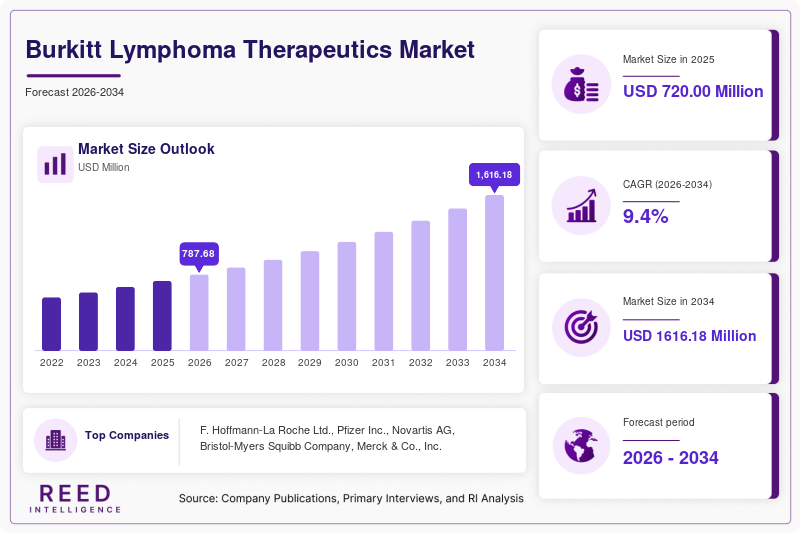
The Burkitt Lymphoma Therapeutics Market size was valued at approximately USD 720 million in 2026 and is projected to reach USD 1.48 billion by 2034, expanding at a CAGR of 9.4% during the forecast period (2026–2034). This steady growth reflects increasing awareness of rare hematologic malignancies, improved diagnostic capabilities, and the gradual integration of targeted therapies into treatment protocols.
A key global factor supporting market growth has been the expansion of oncology healthcare infrastructure and access to specialized cancer treatment centers, particularly in emerging economies. Improved access to combination chemotherapy regimens, immunotherapy, and supportive care has enhanced treatment outcomes, contributing to higher demand for therapeutics.
Key Highlights:
- North America dominated the market with a 41.2% share in 2025, while Asia Pacific is expected to grow at the fastest CAGR of 11.2%.
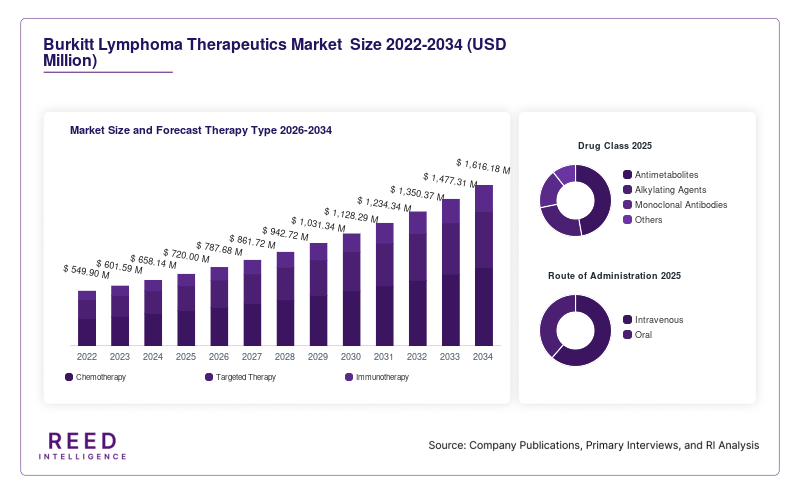
- Chemotherapy remained the leading therapy type segment with 58.6% share in 2025, whereas targeted therapy is anticipated to register the fastest growth at a CAGR of 12.5%.
- Hospitals accounted for the largest end-use share at 64.3%, while specialty clinics are projected to expand at a CAGR of 10.8%.
- The United States led the market with values of USD 268 million in 2024 and USD 285 million in 2025.
Market Trends
Rising Adoption of Targeted and Immunotherapies
The Burkitt Lymphoma Therapeutics Market is witnessing a shift from conventional chemotherapy toward targeted therapies and immunotherapy-based treatments. Monoclonal antibodies and emerging CAR-T cell therapies are being increasingly incorporated into treatment regimens. These therapies offer improved specificity, reduced toxicity, and enhanced survival outcomes compared to traditional chemotherapy. Pharmaceutical companies are investing in pipeline development, which is accelerating innovation and expanding therapeutic options.
Integration of Personalized Medicine and Genomic Profiling
Another prominent trend shaping the market is the growing use of genomic profiling and personalized treatment approaches. Healthcare providers are leveraging molecular diagnostics to identify genetic mutations and tailor therapies accordingly. This trend is particularly relevant in aggressive cancers like Burkitt lymphoma, where rapid disease progression necessitates precise and effective treatment strategies. Personalized medicine enhances treatment efficacy and reduces adverse effects, contributing to improved patient outcomes and supporting market growth.
Market Drivers
Increasing Incidence of Non-Hodgkin Lymphomas
The rising global incidence of non-Hodgkin lymphomas, including Burkitt lymphoma, is a major driver for the Burkitt Lymphoma Therapeutics Market. Factors such as immunodeficiency conditions, viral infections, and aging populations contribute to the growing patient pool. This increase has created sustained demand for effective therapeutic solutions, encouraging healthcare providers to adopt advanced treatment protocols and boosting market expansion.
Advancements in Drug Development and Clinical Research
Continuous advancements in oncology drug development have significantly influenced market growth. Pharmaceutical companies are focusing on developing novel therapies with improved efficacy and safety profiles. Increased clinical trial activity and regulatory support for orphan drugs have accelerated the introduction of innovative therapeutics. These advancements not only enhance treatment outcomes but also expand the available treatment landscape, contributing to the growth of the Burkitt Lymphoma Therapeutics Market.
Market Restraint
High Cost of Advanced Therapies and Treatment Complexity
A major restraint in the Burkitt Lymphoma Therapeutics Market is the high cost associated with advanced therapies such as targeted treatments and immunotherapies. These therapies often require specialized administration, monitoring, and infrastructure, making them less accessible in low- and middle-income regions. Additionally, the complexity of treatment regimens, which often involve intensive chemotherapy combined with supportive care, can limit adoption in resource-constrained healthcare systems. The financial burden on patients and healthcare providers poses a challenge to widespread adoption, thereby restraining overall market growth.
Market Opportunities
Expansion in Emerging Markets
Emerging economies present significant growth opportunities for the Burkitt Lymphoma Therapeutics Market. Improving healthcare infrastructure, rising healthcare expenditure, and increasing awareness about cancer treatment are driving demand in regions such as Asia Pacific and Latin America. Governments and private organizations are investing in oncology care facilities, creating favorable conditions for market expansion.
Development of Combination Therapy Regimens
The development of combination therapy regimens represents another key opportunity. Combining chemotherapy with targeted therapies or immunotherapies has shown promising results in improving treatment outcomes. Ongoing research and clinical trials are expected to introduce more effective combination approaches, enhancing therapeutic efficacy and expanding the market potential.
Segmental Analysis
By Therapy Type
Chemotherapy dominated the Burkitt Lymphoma Therapeutics Market with a 58.6% share in 2025, as it remained the standard treatment for aggressive lymphomas. Its widespread use in combination regimens contributed to its leading position.
Targeted therapy is expected to grow at the fastest CAGR of 12.5% during the forecast period. The growth is driven by advancements in precision medicine and increasing adoption of monoclonal antibodies, which offer improved efficacy and reduced toxicity.
By Drug Class
Antimetabolites accounted for the largest share of 34.2% in 2025, as they are widely used in chemotherapy regimens for Burkitt lymphoma. Their effectiveness in rapidly dividing cells supported their dominance.
Monoclonal antibodies are projected to register the fastest growth at a CAGR of 11.8%, driven by their targeted action and increasing integration into treatment protocols.
By Route of Administration
Intravenous administration dominated the market with a 71.5% share in 2025, owing to its use in hospital-based chemotherapy treatments.
Oral administration is anticipated to grow at a CAGR of 10.6%, supported by patient preference for convenience and ongoing development of oral formulations.
By End-Use
Hospitals held the largest share of 64.3% in 2025, as they serve as primary centers for intensive cancer treatment.
Specialty clinics are expected to grow at a CAGR of 10.8%, driven by increasing demand for specialized oncology care and outpatient treatment options.
Regional Analysis
North America
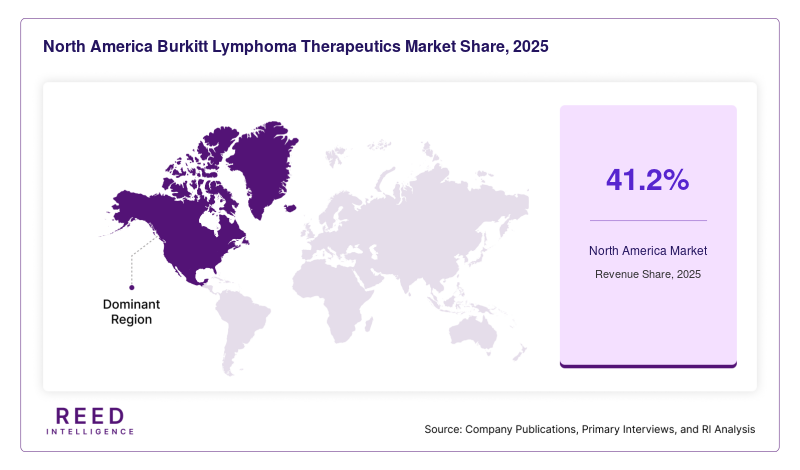
North America accounted for 41.2% of the Burkitt Lymphoma Therapeutics Market in 2025 and is expected to maintain steady growth, registering a CAGR of 8.7% during 2026–2034. The region benefited from well-established healthcare infrastructure and high awareness of cancer treatment options.
The United States dominated the regional market due to strong research capabilities and access to advanced therapies. A key growth factor was the presence of leading oncology centers and early adoption of innovative treatment modalities, which supported improved patient outcomes.
Europe
Europe held a 27.5% market share in 2025 and is projected to grow at a CAGR of 8.9% over the forecast period. The region demonstrated consistent growth supported by favorable healthcare policies and increasing investment in oncology research.
Germany emerged as the dominant country, driven by robust healthcare infrastructure and strong reimbursement frameworks. The availability of advanced diagnostic technologies contributed to early detection and timely treatment, supporting market expansion.
Asia Pacific
Asia Pacific represented 18.3% of the market in 2025 and is anticipated to grow at the fastest CAGR of 11.2%. The region’s growth trajectory is influenced by expanding healthcare access and increasing awareness of cancer treatment.
China led the regional market due to its large patient population and improving healthcare systems. Government initiatives aimed at enhancing cancer care infrastructure played a crucial role in driving market growth.
Middle East & Africa
The Middle East & Africa accounted for 6.4% of the market in 2025 and is expected to grow at a CAGR of 9.6%. The region showed gradual growth supported by improving healthcare services and rising awareness.
South Africa dominated the region due to increasing investments in healthcare infrastructure and expanding access to oncology treatments. Efforts to strengthen diagnostic capabilities contributed to market development.
Latin America
Latin America held a 6.6% share in 2025 and is projected to grow at a CAGR of 9.1%. The region experienced growth driven by improving healthcare systems and increasing focus on cancer treatment.
Brazil led the regional market due to its expanding healthcare infrastructure and government initiatives to improve cancer care. Increased availability of treatment options supported market expansion.
Competitive Landscape
The Burkitt Lymphoma Therapeutics Market is moderately consolidated, with several global pharmaceutical companies focusing on oncology drug development. Key players are investing in research and strategic collaborations to expand their product portfolios.
One leading player, Roche, has strengthened its position through continuous innovation in monoclonal antibody therapies. The company recently expanded its oncology pipeline with new targeted therapy candidates aimed at improving treatment outcomes for aggressive lymphomas.
Other companies are also focusing on clinical trials and partnerships to introduce novel therapies and enhance market presence. The competitive landscape is characterized by ongoing innovation, strategic alliances, and a strong emphasis on improving therapeutic efficacy.
Key Players List
- F. Hoffmann-La Roche Ltd.
- Pfizer Inc.
- Novartis AG
- Bristol-Myers Squibb Company
- Merck & Co., Inc.
- Johnson & Johnson
- Amgen Inc.
- Gilead Sciences, Inc.
- AbbVie Inc.
- Sanofi S.A.
- AstraZeneca plc
- Bayer AG
- Takeda Pharmaceutical Company Limited
- Eli Lilly and Company
- GlaxoSmithKline plc
Recent Developments
- Roche expanded its oncology pipeline with new targeted therapy candidates for aggressive lymphomas.
- Novartis initiated clinical trials for next-generation CAR-T therapies targeting B-cell malignancies.
- Bristol-Myers Squibb enhanced its immunotherapy portfolio through strategic collaborations.
- Pfizer focused on developing combination therapies to improve treatment outcomes.
- Gilead Sciences advanced research in cell therapy applications for lymphoma treatment.
Burkitt Lymphoma Therapeutics Market Segments
Therapy Type
- Chemotherapy
- Targeted Therapy
- Immunotherapy
Drug Class
- Antimetabolites
- Alkylating Agents
- Monoclonal Antibodies
- Others
Route of Administration
- Intravenous
- Oral
End-Use
- Hospitals
- Specialty Clinics
- Others
By Region
- North America
- Europe
- APAC
- Middle East and Africa
- LATAM