Butternut Squash Market Size, Share Demand Report By Product Type (Fresh Butternut Squash, Frozen Butternut Squash, Organic Butternut Squash, Processed Butternut Squash), By Distribution Channel (Supermarkets & Hypermarkets, Specialty Grocery Stores, Online Retail, Farmers Markets), By End Use (Household Consumption, Food Processing Industry, Foodservice Sector, Infant Nutrition), By Region & Segment Forecasts, 2026–2034
USD 3950
Market Overview
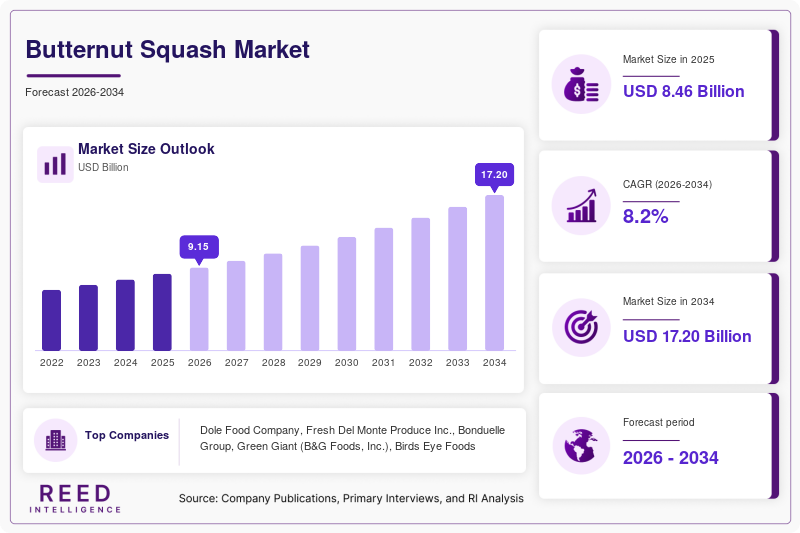
The global Butternut Squash Market size was valued at USD 8.46 billion in 2026 and is projected to reach USD 15.92 billion by 2034, expanding at a CAGR of 8.2% during the forecast period from 2026 to 2034. Market growth is being supported by the worldwide shift toward nutrient-dense, plant-based, and seasonal food consumption, particularly as consumers increasingly seek vegetables rich in vitamins A and C, dietary fiber, and antioxidants. Butternut squash has become a widely accepted ingredient across household kitchens, foodservice channels, baby food formulations, frozen food categories, and ready-to-cook meal kits due to its versatility, extended storage life, and compatibility with health-focused diets. Rising urbanization and retail modernization have also improved product accessibility through supermarkets, hypermarkets, and digital grocery channels. Increased awareness of immune-supportive foods after recent global health concerns has elevated demand for squash-based soups, purees, and packaged convenience products. Additionally, advancements in seed genetics, controlled-environment agriculture, and organic farming practices are improving crop yields and seasonal consistency, allowing producers to expand commercial availability across developed and emerging markets. Demand from food processors for puree, cubes, and frozen butternut squash ingredients is further broadening industrial applications, contributing to sustained market expansion globally.
Key Highlights
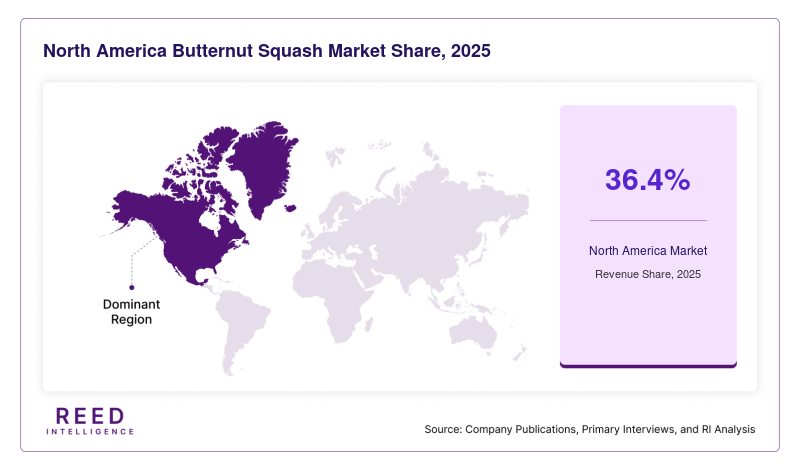
- North America dominated the market with a 36.4% share in 2025.
- Asia Pacific is expected to grow at the fastest CAGR of 10.8% during 2026–2034.
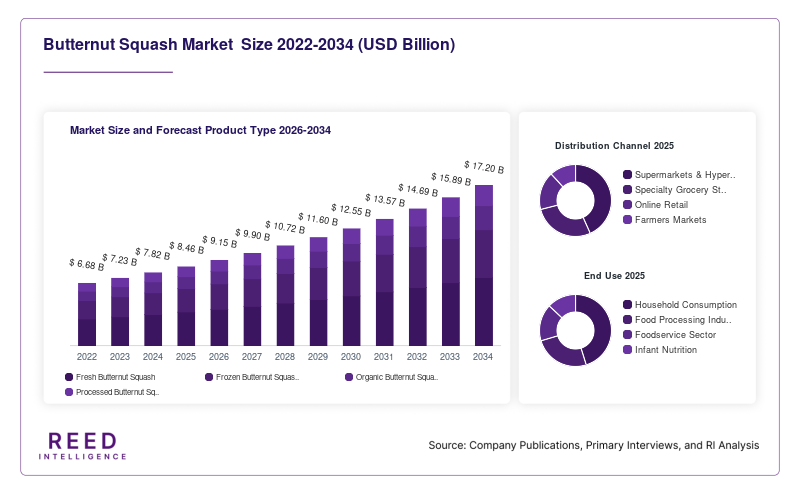
- By product type, fresh butternut squash accounted for the largest share of 52.7% in 2024, while organic butternut squash is projected to grow at a CAGR of 11.6%.
- By distribution channel, supermarkets and hypermarkets led with a 44.3% share, whereas online retail is expected to expand at a CAGR of 12.1%.
- By end use, household consumption held a 47.8% share, while food processing is forecast to grow at a CAGR of 10.9%.
- The United States remained the dominant country, with market values of USD 2.41 billion in 2024 and USD 2.63 billion in 2025.
Market Trends
Expansion of Organic and Specialty Cultivation
Organic butternut squash cultivation is gaining substantial traction as consumers increasingly prioritize chemical-free produce and transparent food sourcing. Retailers are expanding shelf space for certified organic squash varieties, while farmers are investing in regenerative agriculture techniques to meet premium demand. Specialty heirloom and mini butternut squash varieties are also entering the market, appealing to consumers interested in portion control, culinary experimentation, and differentiated nutritional profiles. This trend is especially visible in North America and Europe, where consumers are willing to pay higher prices for traceable and sustainably grown vegetables. As agricultural certifications become more standardized globally, organic butternut squash is expected to become a stronger contributor to revenue growth.
Growth of Value-Added Butternut Squash Products
Food manufacturers are increasingly transforming butternut squash into soups, frozen cubes, baby food, sauces, snacks, and puree concentrates, expanding its commercial value beyond fresh produce. Convenience-driven consumers are seeking easy-to-prepare vegetables that align with busy lifestyles, driving demand for pre-cut, microwavable, and frozen squash products. This trend has encouraged processors to innovate with packaging, preservation, and meal integration strategies. Butternut squash pasta sauces, roasted snacks, and blended health beverages are also entering premium retail categories. As convenience and nutrition continue to intersect, value-added processing is expected to increase product penetration in urban and international markets.
Market Drivers
Rising Consumer Preference for Functional and Nutrient-Rich Foods
The growing global emphasis on preventive health and nutrition is significantly boosting butternut squash demand. Rich in beta-carotene, potassium, and dietary fiber, butternut squash is increasingly recognized as a beneficial food for immunity, digestion, and cardiovascular wellness. Health-conscious consumers are incorporating squash into balanced diets, including vegan, paleo, and gluten-free meal plans. Public health campaigns promoting vegetable intake are further reinforcing consumer demand. This driver is especially influential in developed markets where dietary awareness is high, but it is also gaining momentum in emerging economies as middle-income consumers adopt healthier food habits.
Expansion of Modern Retail and Cold Chain Infrastructure
Improved food distribution systems are enabling butternut squash producers to access larger and more geographically diverse customer bases. Expansion of supermarkets, hypermarkets, and e-commerce grocery services has enhanced product visibility and availability. Cold storage and refrigerated transportation are reducing spoilage while supporting international trade of fresh and processed squash products. This infrastructure growth is particularly impactful in Asia Pacific and Latin America, where retail modernization is rapidly accelerating. Enhanced logistics not only improve product consistency but also encourage large-scale farming investments by reducing market-entry barriers.
Market Restraint
Climate Sensitivity and Agricultural Supply Volatility
Despite positive demand trends, butternut squash production remains vulnerable to weather fluctuations, pest outbreaks, and water scarcity, creating periodic supply instability. Extreme heat, drought, excessive rainfall, and changing seasonal cycles can significantly affect crop yield, quality, and harvest timing. Such agricultural variability often increases production costs and wholesale price volatility, impacting both growers and downstream distributors. For example, reduced harvests in key agricultural zones can disrupt supermarket supply chains and increase consumer prices, weakening demand in price-sensitive regions. Additionally, small-scale farmers often lack access to advanced irrigation, pest management, or crop insurance systems, making them particularly vulnerable to environmental shocks. This restraint remains a critical challenge for global market consistency.
Market Opportunities
Increasing Penetration in Infant Nutrition and Clinical Diets
Butternut squash is increasingly being incorporated into baby food, elderly nutrition, and therapeutic meal plans due to its digestibility and nutrient density. Its natural sweetness, smooth texture, and vitamin-rich composition make it an ideal ingredient for puree-based nutrition products. Baby food manufacturers are expanding squash blends as parents seek minimally processed, vegetable-based nutrition solutions. Similarly, hospitals and wellness institutions are integrating squash into dietary plans focused on digestive health and micronutrient support. This creates opportunities for processors to develop fortified or blended squash products tailored to specialized nutritional needs.
Export Potential in Emerging Agricultural Economies
Countries with expanding horticultural sectors are increasingly investing in butternut squash cultivation for export markets. Regions in Africa, Latin America, and Southeast Asia are leveraging favorable climates and lower production costs to supply fresh and processed squash to Europe and North America. Government-backed agricultural diversification initiatives are encouraging farmers to include squash in export portfolios. As international demand rises for both organic and conventional produce, these emerging suppliers can capitalize on strategic trade partnerships and seasonal advantages, creating new revenue streams while improving rural agricultural income.
Segmental Analysis
By Product Type
Fresh butternut squash dominated the market in 2024, accounting for 52.7% of total revenue. Consumers continue to prefer fresh produce for culinary versatility, affordability, and accessibility through retail and local markets. Fresh squash is widely used in soups, roasting, purees, and side dishes, making it the preferred category across household and foodservice sectors. Its longer shelf life compared to many vegetables also strengthens consumer purchasing patterns.
Organic butternut squash is projected to witness the fastest CAGR of 11.6% through 2034. Rising demand for pesticide-free produce, sustainability concerns, and premium health positioning are driving this growth. Organic-certified farms are benefiting from stronger margins, while retailers are increasingly promoting organic vegetable assortments to health-conscious shoppers.
By Distribution Channel
Supermarkets and hypermarkets held the largest market share of 44.3% in 2024 due to their wide product variety, pricing competitiveness, and convenience. These retail channels dominate urban consumer purchasing behavior by offering fresh, packaged, and frozen squash products under one roof. Promotional campaigns and seasonal merchandising further support sales volume.
Online retail is expected to grow at the fastest CAGR of 12.1% during the forecast period. E-commerce grocery adoption, doorstep delivery convenience, and digital consumer behavior are accelerating this segment. Subscription vegetable boxes and direct farm-to-consumer platforms are also expanding accessibility for premium squash products.
By End Use
Household consumption led the market with a 47.8% share in 2024, supported by home cooking trends, nutritional awareness, and culinary flexibility. Families are increasingly incorporating butternut squash into soups, salads, casseroles, and healthy snacks. Consumer education around vegetable nutrition is further reinforcing household demand.
Food processing is anticipated to grow at the fastest CAGR of 10.9% from 2026 to 2034. Processors are increasingly using squash in baby food, frozen meals, sauces, and health beverages. Demand for convenience foods with natural ingredients is encouraging manufacturers to diversify squash-based product portfolios.
Regional Analysis
North America
North America accounted for 36.4% of the global Butternut Squash Market share in 2025 and is projected to maintain steady growth at a CAGR of 7.4% through 2034. Strong consumer demand for healthy vegetables, broad retail availability, and advanced agricultural systems continue to support regional leadership. The market benefits from high household consumption, seasonal culinary demand, and widespread use in soups, packaged meals, and baby food products.
The United States remains the dominant country in North America due to extensive commercial farming, strong food processing capacity, and consumer preference for nutrient-rich produce. Rising demand for organic produce and farm-to-table food trends are further supporting market growth. Canada also contributes through greenhouse farming and frozen vegetable production.
Europe
Europe represented 24.1% of the global market share in 2025 and is forecast to grow at a CAGR of 7.9% during the assessment period. Demand is driven by rising vegan food trends, culinary diversity, and increasing adoption of seasonal vegetables across households and restaurants. European retailers are also emphasizing sustainable sourcing and organic produce, creating broader market opportunities.
Germany leads the European market due to strong organic retail channels and growing plant-based dietary patterns. The country’s focus on sustainable agriculture and food transparency has supported premium squash consumption. The United Kingdom and France are also seeing higher demand for processed squash soups and convenience foods.
Asia Pacific
Asia Pacific held 21.3% market share in 2025 and is expected to register the fastest CAGR of 10.8% from 2026 to 2034. Rapid urbanization, rising disposable income, and expanding modern grocery retail are driving demand for both fresh and processed butternut squash. Awareness of Western dietary trends and healthy meal planning is accelerating regional adoption.
China dominates the Asia Pacific market due to increasing vegetable diversification and large-scale agricultural investments. Expanding middle-class populations are driving packaged food purchases, while local food manufacturers are integrating squash into soups, beverages, and convenience meals. India is also emerging as a notable cultivation market.
Middle East & Africa
The Middle East & Africa captured 9.2% of global market share in 2025 and is anticipated to grow at a CAGR of 8.6% through 2034. Increased focus on food security, vegetable imports, and modern retail expansion is supporting market development. Demand is strongest in urban centers where imported produce and packaged foods are more accessible.
South Africa is the dominant regional market due to its horticultural capacity and export orientation. Improved irrigation practices and supermarket expansion are contributing to broader product reach. Gulf countries are also increasing imports as health-focused consumer trends strengthen.
Latin America
Latin America accounted for 9.0% of the market in 2025 and is forecast to grow at a CAGR of 8.8% over the forecast period. Agricultural abundance, favorable growing conditions, and expanding domestic consumption are supporting growth. Retail modernization and export opportunities are enhancing regional competitiveness.
Brazil leads the Latin American market through large-scale cultivation and increasing food processing investments. The country’s agricultural diversity and domestic nutrition awareness campaigns are promoting stronger vegetable consumption. Mexico is also expanding through export-oriented squash production.
Competitive Landscape
The Butternut Squash Market is moderately fragmented, with a mix of agricultural producers, food processors, seed developers, and retail distributors competing across regional and global markets. Leading companies are focusing on seed innovation, organic certification, contract farming, and processed food expansion to strengthen their competitive positioning. Dole Food Company remains a market leader due to its strong produce distribution infrastructure and diversified vegetable portfolio. Recent developments include increased investment in sustainable farming partnerships and expanded packaged produce offerings. Other notable players are enhancing market presence through frozen food innovation, export expansion, and strategic retail collaborations.
Key Players
- Dole Food Company
- Fresh Del Monte Produce
- Green Giant
- Nestlé Garden Gourmet
- Bonduelle Group
- Taylor Farms
- Farm Fresh Produce Inc.
- Sakata Seed Corporation
- Syngenta AG
- Bayer Crop Science
- Terranova Seeds
- Organic Valley Produce
- Birds Eye Foods
- SunOpta Inc.
- Earthbound Farm
- B&G Foods
Recent Developments
- Dole Food Company expanded its packaged seasonal vegetable line to include ready-to-cook butternut squash cubes.
- Bonduelle Group increased investment in frozen vegetable processing for export expansion.
- Syngenta AG introduced improved butternut squash seed varieties focused on climate resilience and higher yield.
Butternut Squash Market Segments
Product Type
- Fresh Butternut Squash
- Frozen Butternut Squash
- Organic Butternut Squash
- Processed Butternut Squash
Distribution Channel
- Supermarkets & Hypermarkets
- Specialty Grocery Stores
- Online Retail
- Farmers Markets
End Use
- Household Consumption
- Food Processing Industry
- Foodservice Sector
- Infant Nutrition
By Region
- North America
- Europe
- APAC
- Middle East and Africa
- LATAM