Cactus Water Market Size, Share Demand Report By Product Type (Pure/Unflavored Cactus Water, Flavored Cactus Water, Sparkling Cactus Water, Blended Functional Cactus Water), By Packaging (Bottles, Cans, Tetra Packs, Bulk Packs), By Distribution Channel (Supermarkets & Hypermarkets, Convenience Stores, Specialty Stores, Online Retail), By End User (Retail Consumers, Foodservice & Hospitality, Corporate & Institutional Buyers), By Region & Segment Forecasts, 2026–2034
USD 3950
Market Overview
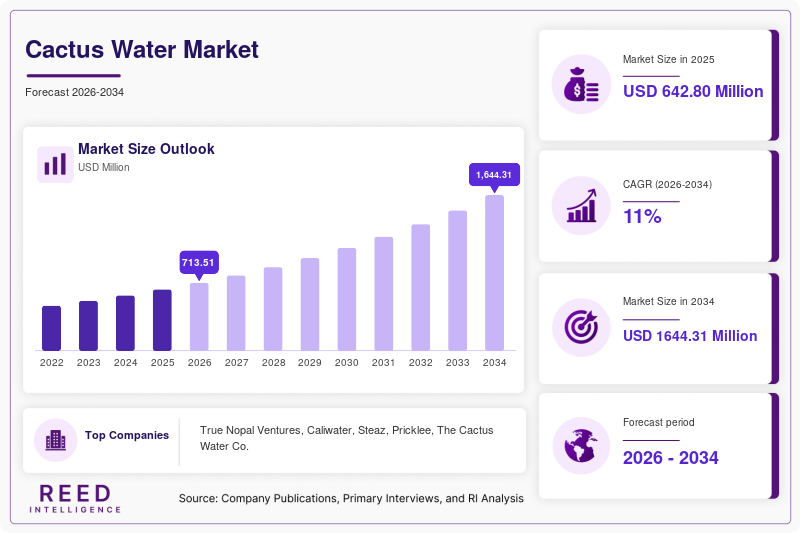
The global Cactus Water Market size was valued at USD 642.8 million in 2026 and is projected to reach USD 1,482.6 million by 2034, expanding at a CAGR of 11.0% during 2026–2034. The market growth has been supported by the global shift toward plant-based hydration beverages as consumers increasingly seek low-calorie, natural, and functional drink alternatives. Cactus water, derived primarily from prickly pear cactus, has gained traction for its electrolyte content, antioxidants, and clean-label appeal. Rising awareness of wellness beverages and demand for sustainable sourcing have further strengthened market penetration across retail and online channels.
Large beverage companies and niche wellness brands are investing in product diversification, flavor innovation, and wider shelf placement. In developed economies, cactus water is being positioned as a premium hydration drink, while emerging markets are adopting it as a natural refreshment category. The market is also benefiting from social media-driven health trends and increased consumer willingness to experiment with botanical beverages.
Key Highlights
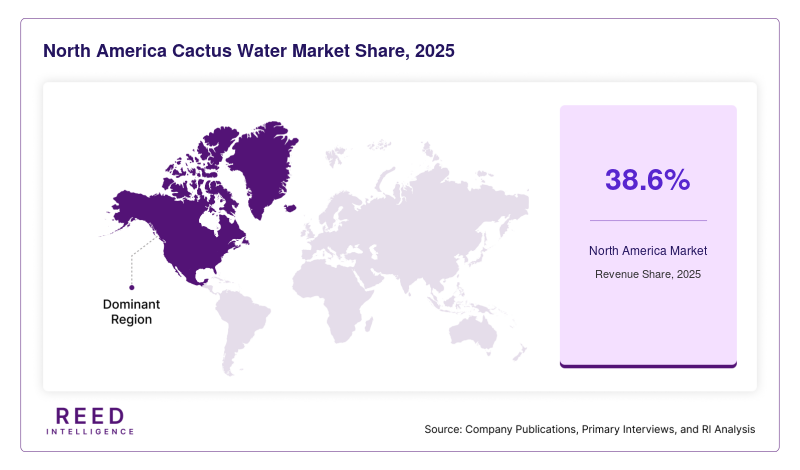
- North America dominated the global Cactus Water Market with 38.6% share in 2025.
- Asia Pacific is expected to register the fastest CAGR of 13.7% during 2026–2034.
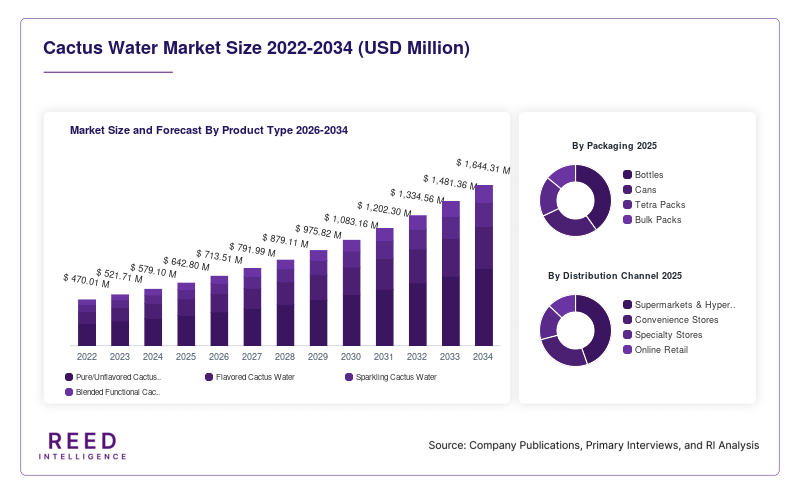
- By product type, Pure/Unflavored Cactus Water led with 56.4% share in 2025.
- By product type, Flavored Cactus Water is projected to grow at 12.9% CAGR through 2034.
- By packaging, Bottles held the highest 61.2% share in 2025.
- By packaging, Cans are anticipated to grow at 13.1% CAGR.
- By distribution channel, Supermarkets & Hypermarkets accounted for 42.8% share in 2025.
- By distribution channel, Online Retail is forecast to grow at 14.4% CAGR.
- The United States remained the dominant country, valued at USD 182.4 million in 2024 and USD 201.8 million in 2025.
Market Trends
Premium Functional Beverage Positioning
Brands are increasingly marketing cactus water as a premium functional beverage with hydration, antioxidant, and wellness benefits. Packaging upgrades, clean-label claims, and added nutrients are improving shelf visibility. This trend is helping the Cactus Water Market attract fitness consumers and urban professionals seeking better-for-you beverages.
Expansion of Flavored and Blended Variants
Manufacturers are launching cactus water infused with tropical fruits, citrus, herbs, and sparkling formats. These innovations are broadening consumer appeal beyond health-focused buyers. Flavor-led experimentation is expected to support repeat purchases and younger demographic engagement.
Market Drivers
Rising Preference for Natural Hydration Products
Consumers are reducing intake of sugary sodas and artificial drinks, creating demand for natural hydration alternatives. Cactus water offers low sugar content and plant-origin credentials, making it attractive in wellness-driven markets.
Growth of Clean-Label Beverage Consumption
Shoppers increasingly review ingredient labels before purchasing drinks. Minimal processing and recognizable ingredients have improved adoption of cactus water products across supermarkets, convenience stores, and digital channels.
Market Restraint
Limited Consumer Awareness in Mainstream Markets
Despite category growth, cactus water remains less familiar than coconut water or sports drinks in many countries. Limited awareness can slow trial rates and require higher marketing investment from brands.
Market Opportunities
Penetration into Sports Nutrition Channels
The expansion of fitness centers, yoga studios, and sports nutrition retailers creates strong placement opportunities for cactus water. Brands can position products as post-workout hydration beverages.
Private Label Product Launches
Retail chains are increasingly developing private label health beverages. Entry of store brands in cactus water can improve affordability and category visibility, especially in price-sensitive markets.
Segmental Analysis
By Product Type
Pure/Unflavored Cactus Water
Pure/unflavored cactus water held 56.4% share in 2025. Consumers preferred minimally processed beverages with natural taste and low ingredient complexity. This segment performed strongly in health-focused retail stores.
Flavored Cactus Water
Flavored cactus water is projected to grow at a CAGR of 12.9% through 2034. Fruit-infused and sparkling variants will attract younger consumers seeking taste variety and convenient refreshment options.
By Packaging
Bottles
Bottles accounted for 61.2% share in 2025. PET and glass bottle formats remained preferred for portability, resealability, and premium shelf presentation.
Cans
Cans are expected to expand at 13.1% CAGR during the forecast period. Lightweight logistics, recyclability, and growing demand for sparkling cactus beverages will support this segment.
By Distribution Channel
Supermarkets & Hypermarkets
Supermarkets and hypermarkets generated 42.8% share in 2025. Broad product visibility and impulse purchases drove strong in-store performance.
Online Retail
Online retail is forecast to grow at 14.4% CAGR through 2034. Subscription models, wellness marketplaces, and direct-to-consumer websites will accelerate digital sales.
By End User
Retail Consumers
Retail consumers held 74.5% share in 2025 due to everyday hydration use and household consumption patterns.
Foodservice & Hospitality
Foodservice & hospitality will grow at 11.8% CAGR as cafés, hotels, and wellness resorts introduce botanical beverage menus.
Regional Analysis
North America
North America accounted for 38.6% of the global Cactus Water Market share in 2025 and will expand at a CAGR of 10.4% during 2026–2034. Strong demand for functional beverages and established health retail networks supported the region. The United States led regional revenue due to high adoption of premium plant-based drinks and strong e-commerce beverage sales.
Europe
Europe held 24.1% market share in 2025 and will grow at a CAGR of 10.1% through 2034. Consumers favored natural and low-calorie beverages aligned with wellness trends. Germany dominated the region as organized retail chains expanded shelf space for specialty hydration products.
Asia Pacific
Asia Pacific represented 19.7% share in 2025 and will register the fastest CAGR of 13.7% from 2026 to 2034. Rapid urbanization and rising disposable incomes are expected to support demand. China led the region due to expanding premium beverage consumption and digital retail penetration.
Middle East & Africa
Middle East & Africa captured 9.2% share in 2025 and will grow at a CAGR of 9.8% during the forecast period. Demand for refreshing non-alcoholic beverages supported category expansion. United Arab Emirates remained the leading country due to tourism-driven retail formats and premium grocery chains.
Latin America
Latin America accounted for 8.4% share in 2025 and will advance at a CAGR of 10.9% through 2034. Familiarity with cactus-based ingredients and expanding modern retail channels supported growth. Mexico led the region owing to cultural acceptance of cactus-derived products and local sourcing advantages.
Competitive Landscape
The global Cactus Water Market remains moderately fragmented with participation from wellness beverage startups, natural drink specialists, and diversified beverage companies. Competition is based on flavor innovation, sustainable packaging, pricing strategy, and retail partnerships. Brands are investing in influencer marketing and digital-first campaigns to improve category education.
True Nopal Ventures emerged as a market leader through strong North American retail presence and broad flavored product offerings. In 2025, the company introduced aluminum can packaging to improve sustainability credentials and convenience positioning. Caliwater expanded celebrity-backed branding initiatives and online subscriptions. Steaz, known for organic beverages, leveraged health store networks for category expansion. Pricklee focused on prickly pear hydration messaging targeted at active consumers. The Cactus Water Co. strengthened private label manufacturing agreements for regional retailers.
New entrants are expected to focus on affordable packs, localized flavors, and hybrid drinks blended with vitamins or adaptogens.
Key Players List
- True Nopal Ventures
- Caliwater
- Steaz
- Pricklee
- The Cactus Water Co.
- BetterDays Beverage Co.
- Green Desert Drinks
- Nopalera Hydration Ltd.
- Pure Prickly Beverages
- Desert Bloom Drinks
- VitaCactus Nutrition
- Organica Refreshments
- Natural Springs Botanicals
- Blue Agave Beverage Group
- Oasis Functional Drinks
Recent Developments
- In 2025, several cactus water brands introduced recyclable aluminum can formats for sustainability-focused consumers.
- North American retailers expanded shelf placement for plant-based hydration drinks in wellness beverage aisles.
- Online subscription bundles for flavored cactus water gained traction among repeat buyers in 2025.
- Manufacturers launched sugar-free sparkling cactus water variants targeting younger consumers.
- Latin American producers increased export partnerships to serve U.S. and European specialty beverage demand.
Cactus Water Market Segments
By Product Type
- Pure/Unflavored Cactus Water
- Flavored Cactus Water
- Sparkling Cactus Water
- Blended Functional Cactus Water
By Packaging
- Bottles
- Cans
- Tetra Packs
- Bulk Packs
By Distribution Channel
- Supermarkets & Hypermarkets
- Convenience Stores
- Specialty Stores
- Online Retail
By End User
- Retail Consumers
- Foodservice & Hospitality
- Corporate & Institutional Buyers
By Region
- North America
- Europe
- APAC
- Middle East and Africa
- LATAM