Caffeic Acid Market Size, Share & Demand Report By Type (Natural Caffeic Acid, Synthetic Caffeic Acid), By Application (Food and Beverages, Pharmaceuticals, Cosmetics, Others), By End-Use Industry (Nutraceuticals, Cosmetics and Personal Care, Healthcare, Others), By Region & Segment Forecasts, 2025–2034
USD 3950
Market Overview
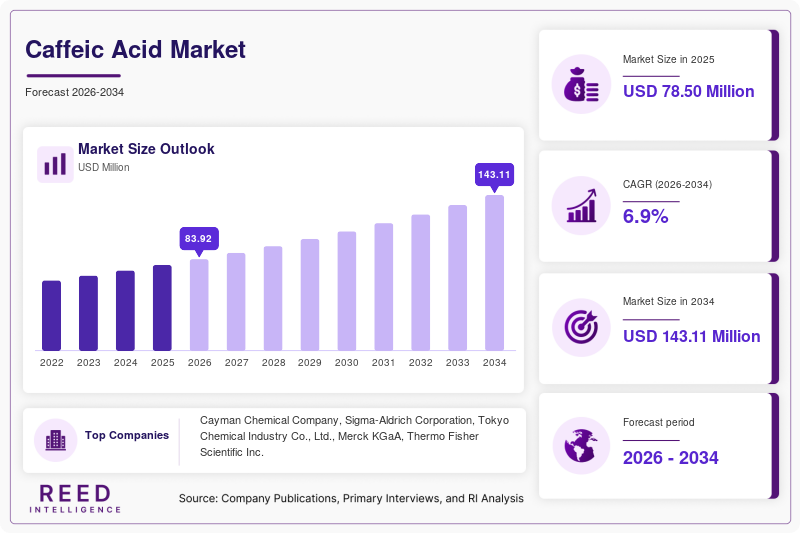
The Caffeic Acid Market size is estimated at USD 78.5 million and is projected to reach approximately USD 83.2 million in 2026. Over the forecast period from 2025 to 2034, the market is expected to grow at a CAGR of 6.9%, reaching nearly USD 150.6 million by 2034. This growth reflects increasing awareness of natural antioxidants and the expanding application scope of caffeic acid derivatives.
Caffeic acid, a hydroxycinnamic acid found in various plants, fruits, and coffee, has gained prominence due to its antioxidant, anti-inflammatory, and antimicrobial properties. Its integration into dietary supplements and functional foods is accelerating adoption, especially among health-conscious consumers. The rise in chronic diseases such as cardiovascular disorders and cancer has further driven interest in natural compounds that offer preventive health benefits.
Key Highlights
- The global market is projected to grow from USD 78.5 million in 2025 to USD 150.6 million by 2034, reflecting steady expansion driven by increasing applications across industries. This growth indicates rising commercial adoption and long-term demand stability.
- The market is expected to register a CAGR of 6.9% during the forecast period from 2025 to 2034. This consistent growth rate highlights sustained industry momentum supported by innovation and expanding end-use sectors.
- Rising demand for natural antioxidants and functional ingredients is a key factor influencing market expansion. Consumers are increasingly preferring plant-based compounds that support health and wellness, boosting product integration.
- Increasing applications in cosmetics and pharmaceuticals are contributing significantly to market growth. The compound’s antioxidant and anti-inflammatory properties make it suitable for skincare formulations and therapeutic uses.
Market Trends
Rising Adoption of Natural and Clean-Label Ingredients
The shift toward natural and clean-label products is shaping the Caffeic Acid Market significantly. Consumers are increasingly avoiding synthetic additives and seeking plant-derived compounds with proven health benefits. This trend is particularly evident in the food and beverage sector, where manufacturers are replacing artificial preservatives with natural antioxidants such as caffeic acid. The growing popularity of organic and minimally processed foods is further accelerating this transition. Companies are also emphasizing transparent labeling, which enhances consumer trust and drives product adoption. As a result, caffeic acid is gaining traction as a multifunctional ingredient that supports both preservation and nutritional enhancement in various applications.
Integration in Advanced Skincare and Nutraceutical Products
Another key trend is the integration of caffeic acid into advanced skincare formulations and nutraceutical products. The compound’s antioxidant and anti-inflammatory properties make it suitable for anti-aging creams, serums, and sun protection products. The demand for multifunctional skincare solutions has encouraged manufacturers to incorporate active botanical ingredients. In parallel, the nutraceutical sector is witnessing increased use of caffeic acid in dietary supplements aimed at improving overall wellness. The convergence of beauty and health industries is creating new opportunities, as consumers seek holistic solutions that address both internal and external health needs.
Market Drivers
Increasing Demand for Antioxidant-Rich Functional Ingredients
The growing awareness of oxidative stress and its impact on health is driving demand for antioxidant-rich compounds, including caffeic acid. Consumers are actively seeking products that support immune health and reduce the risk of chronic diseases. This has led to increased incorporation of caffeic acid in functional foods, beverages, and dietary supplements. The rising prevalence of lifestyle-related disorders such as diabetes and cardiovascular diseases is further fueling this demand. Manufacturers are responding by developing innovative formulations that combine caffeic acid with other bioactive compounds, enhancing product efficacy and market appeal.
Expansion of the Cosmetics and Personal Care Industry
The rapid growth of the global cosmetics industry is another major driver of the Caffeic Acid Market. The increasing focus on natural and sustainable beauty products has encouraged the use of plant-based ingredients. Caffeic acid is widely used in skincare products due to its ability to neutralize free radicals and protect against environmental damage. The demand for anti-aging and skin-rejuvenation products is particularly strong, especially in urban markets. Additionally, the rise of e-commerce and digital marketing is enabling brands to reach a wider audience, further boosting product adoption and market growth.
Market Restraint
Limited Raw Material Availability and Price Volatility
One of the primary challenges in the Caffeic Acid Market is the limited availability of raw materials and associated price volatility. Caffeic acid is primarily derived from natural sources such as coffee beans, fruits, and certain herbs, which are subject to seasonal variations and climatic conditions. Fluctuations in agricultural output can impact supply chains and increase production costs. This variability poses challenges for manufacturers in maintaining consistent product quality and pricing. For example, adverse weather conditions affecting coffee production can lead to a shortage of raw materials, thereby increasing costs for downstream industries. Such uncertainties can hinder market growth, particularly for small and medium-sized enterprises that lack robust supply chain networks.
Market Opportunities
Growth in Pharmaceutical Research and Drug Development
The expanding scope of pharmaceutical research presents significant opportunities for the Caffeic Acid Market. Ongoing studies are exploring its potential in treating various diseases, including cancer, neurodegenerative disorders, and inflammatory conditions. The compound’s ability to modulate cellular pathways and reduce oxidative damage makes it a promising candidate for drug development. Pharmaceutical companies are investing in research to develop caffeic acid-based formulations with enhanced bioavailability and efficacy. This growing interest is expected to open new revenue streams and drive market expansion over the forecast period.
Rising Demand in Emerging Economies
Emerging economies are offering lucrative growth opportunities for the Caffeic Acid Market. Increasing disposable incomes, urbanization, and changing lifestyles are driving demand for health and wellness products. Consumers in these regions are becoming more aware of the benefits of natural ingredients, leading to higher adoption rates. The expansion of retail networks and e-commerce platforms is further facilitating market penetration. Additionally, government initiatives promoting the use of natural and sustainable products are supporting market growth. These factors collectively create a favorable environment for manufacturers to expand their presence in emerging markets.
Segmental Analysis
By Type
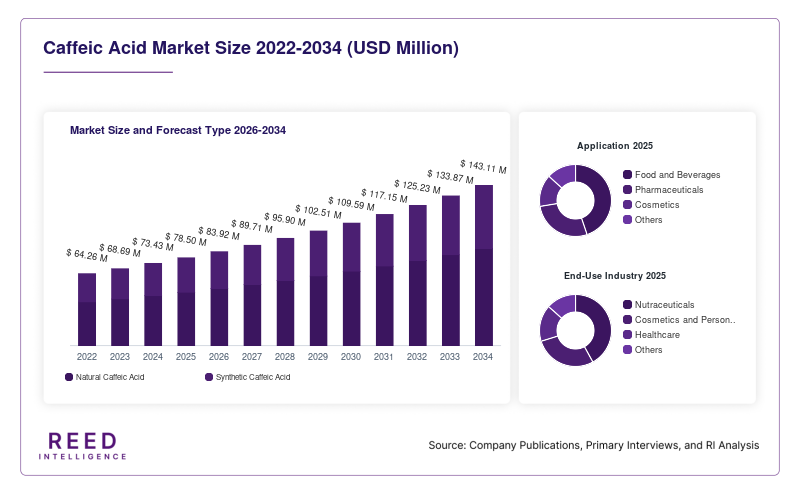
The synthetic caffeic acid segment dominated the market in 2024, accounting for approximately 58% of the total share. This dominance is attributed to its consistent quality, scalability, and cost-effectiveness compared to natural extraction methods. Synthetic production allows manufacturers to meet large-scale demand while maintaining uniform product specifications. The pharmaceutical and cosmetics industries prefer synthetic variants due to their high purity levels and controlled composition. Additionally, advancements in chemical synthesis technologies have improved efficiency and reduced production costs, further strengthening the position of this segment in the global market.
The natural caffeic acid segment is expected to be the fastest-growing, with a CAGR of 7.8% during the forecast period. Increasing consumer preference for plant-based and organic products is driving demand for naturally derived caffeic acid. The food and beverage industry, in particular, is adopting natural variants to meet clean-label requirements. A key growth factor is the rising demand for sustainable sourcing practices. Manufacturers are investing in eco-friendly extraction methods to enhance product appeal and comply with regulatory standards, thereby supporting segment growth.
By Application
The food and beverages segment held the largest market share in 2024, accounting for around 42%. Caffeic acid is widely used as a natural antioxidant and preservative in various food products. Its ability to extend shelf life and enhance nutritional value makes it a preferred choice for manufacturers. The increasing demand for functional foods and beverages is further driving segment growth. Additionally, regulatory approvals for natural additives are supporting the adoption of caffeic acid in this sector.
The pharmaceuticals segment is projected to grow at the highest CAGR of 7.6% during the forecast period. The increasing focus on developing natural and effective therapeutic solutions is driving demand for caffeic acid in drug formulations. A key growth factor is the expanding research on its health benefits, including anti-inflammatory and anticancer properties. Pharmaceutical companies are investing in clinical studies to validate these benefits, which is expected to boost segment growth significantly.
By End-Use
The nutraceutical industry dominated the market in 2024, holding a share of approximately 46%. The growing demand for dietary supplements and health products is driving this segment. Caffeic acid is widely used in nutraceutical formulations due to its antioxidant properties. The increasing focus on preventive healthcare is encouraging consumers to adopt supplements that support overall wellness. This trend is particularly strong among aging populations, which is contributing to segment growth.
The cosmetics and personal care segment is expected to grow at the fastest CAGR of 7.4%. The rising demand for natural and effective skincare products is driving this growth. Caffeic acid is increasingly used in anti-aging and skin protection formulations. A key growth factor is the shift toward clean beauty products. Consumers are seeking products free from harmful chemicals, which is encouraging manufacturers to incorporate natural ingredients like caffeic acid into their offerings.
Regional Analysis
North America
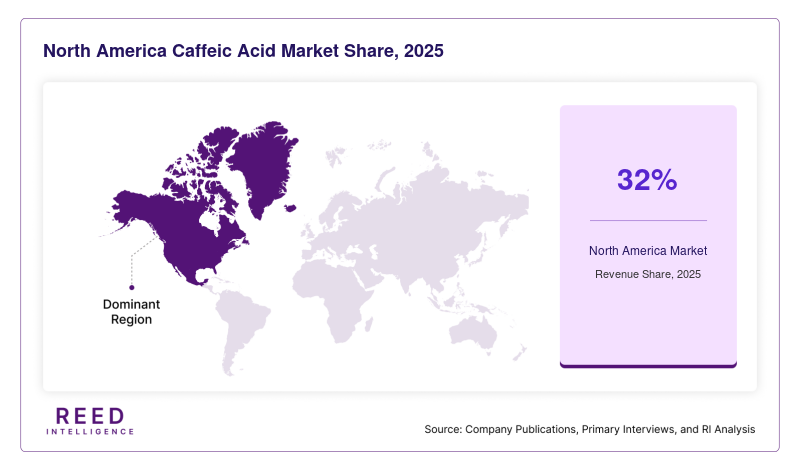
North America accounted for a significant share of the Caffeic Acid Market in 2025, holding approximately 32% of the global market. The region is expected to grow at a CAGR of 6.5% during the forecast period. Strong demand for dietary supplements and functional foods is driving market growth. The presence of established pharmaceutical and cosmetics industries further supports the adoption of caffeic acid. Increasing consumer awareness about natural antioxidants is also contributing to market expansion.
The United States dominates the regional market due to its advanced healthcare infrastructure and strong research capabilities. A unique growth factor in the region is the high level of investment in nutraceutical innovation. Companies are focusing on developing multifunctional products that combine health benefits with convenience, which is boosting demand for caffeic acid.
Europe
Europe held around 27% of the global market share in 2025 and is projected to grow at a CAGR of 6.3%. The region’s strict regulations on synthetic additives have encouraged the use of natural ingredients, including caffeic acid. The growing popularity of organic and clean-label products is further supporting market growth. Additionally, the presence of a well-established cosmetics industry is driving demand for bioactive compounds.
Germany leads the European market, supported by its strong industrial base and focus on sustainability. A unique growth factor is the increasing adoption of eco-friendly production processes. Manufacturers are investing in green extraction technologies to meet regulatory standards and consumer expectations, thereby enhancing market growth.
Asia Pacific
Asia Pacific is the fastest-growing region in the Caffeic Acid Market, with a CAGR of 7.5% and a market share of 25% in 2025. Rapid urbanization and increasing health awareness are key factors driving market growth. The region’s expanding food and beverage industry is also contributing to the rising demand for natural additives.
China dominates the regional market due to its large population and growing industrial base. A unique growth factor is the increasing focus on traditional medicine and herbal products. The integration of caffeic acid into traditional formulations is creating new growth opportunities and expanding its application scope.
Middle East & Africa
The Middle East & Africa region accounted for approximately 8% of the global market in 2025 and is expected to grow at a CAGR of 5.8%. The market is driven by increasing demand for health and wellness products. The growing awareness of natural ingredients is encouraging the adoption of caffeic acid in various applications.
South Africa is a key market in the region, supported by its developing healthcare sector. A unique growth factor is the rising popularity of herbal and plant-based products. Consumers are increasingly seeking natural alternatives, which is driving demand for caffeic acid-based formulations.
Latin America
Latin America held around 8% of the market share in 2025 and is projected to grow at a CAGR of 6.1%. The region is witnessing increasing demand for functional foods and dietary supplements. Economic development and improving healthcare infrastructure are supporting market growth.
Brazil leads the regional market due to its strong agricultural base and growing consumer awareness. A unique growth factor is the availability of raw materials, which supports local production of caffeic acid. This reduces dependency on imports and enhances market competitiveness.
Competitive Landscape
The Caffeic Acid Market is moderately fragmented, with several global and regional players competing based on product quality, innovation, and pricing strategies. Leading companies are focusing on research and development to expand their product portfolios and enhance application areas. Strategic collaborations, mergers, and acquisitions are common as companies aim to strengthen their market position.
A leading player in the market is Cayman Chemical Company, known for its extensive product portfolio and strong research capabilities. The company has recently introduced high-purity caffeic acid variants for pharmaceutical applications, reflecting its focus on innovation. Other key players are investing in sustainable production methods and expanding their distribution networks to gain a competitive edge. The increasing emphasis on natural and clean-label products is driving companies to develop eco-friendly solutions, which is shaping the competitive landscape.
Key Players
- Cayman Chemical Company
- Sigma-Aldrich Corporation
- Tokyo Chemical Industry Co., Ltd.
- Merck KGaA
- Thermo Fisher Scientific Inc.
- Alfa Aesar
- Santa Cruz Biotechnology, Inc.
- TCI America
- LGC Limited
- MP Biomedicals
- Extrasynthese
- Carbosynth Limited
- Chengdu Biopurify Phytochemicals Ltd.
- Shaanxi Huike Botanical Development Co., Ltd.
- Hunan Nutramax Inc.
Recent Developments
- In 2024, Cayman Chemical Company expanded its production capacity to meet increasing demand from pharmaceutical manufacturers.
- In 2023, Merck KGaA launched a new line of high-purity caffeic acid products targeting the cosmetics industry.
- In 2024, Tokyo Chemical Industry introduced eco-friendly extraction processes to enhance sustainability and reduce environmental impact.
Caffeic Acid Market Segments
Type
- Natural Caffeic Acid
- Synthetic Caffeic Acid
Application
- Food and Beverages
- Pharmaceuticals
- Cosmetics
- Others
End-Use Industry
- Nutraceuticals
- Cosmetics and Personal Care
- Healthcare
- Others
By Region
- North America
- Europe
- APAC
- Middle East and Africa
- LATAM