Candida Auris Infection Market Size, Share, Growth & Forecast Analysis Report By Type (Diagnostics, Therapeutics, Infection Control Products), By End Use (Hospitals, Diagnostic Laboratories, Research Institutes), By Distribution Channel (Hospital Procurement, Retail Pharmacy, Online Supply) & Regional Outlook 2026–2034
USD 3950
Market Overview
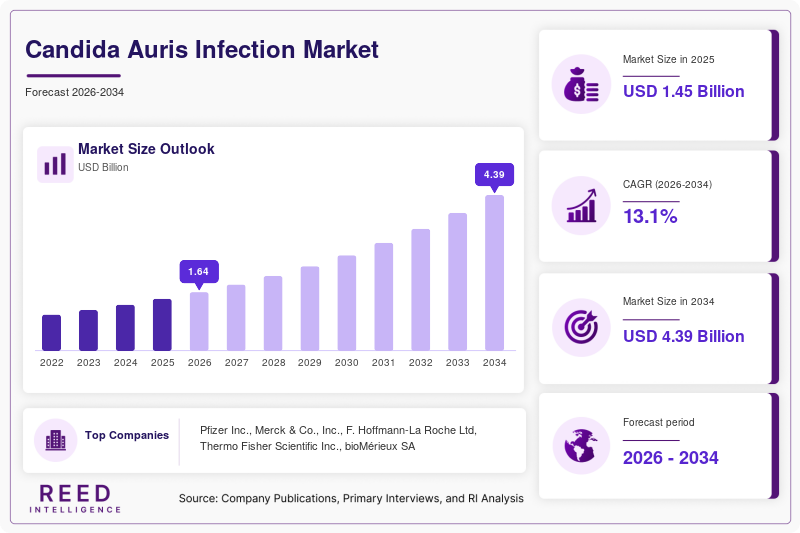
The Candida Auris Infection Market size was valued at USD 1.45 billion in 2026 and is projected to reach USD 3.85 billion by 2034, expanding at a CAGR of 13.1% during 2026–2034. The market growth is driven by rising multidrug-resistant fungal infections, increasing ICU admissions, and growing demand for rapid diagnostic technologies for early detection of Candida auris infections. Expanding healthcare infrastructure and strengthening infection control programs further support market expansion globally.
A key global factor driving the Candida Auris Infection Market is the rising burden of healthcare-associated infections, particularly among immunocompromised and elderly populations, along with increasing antimicrobial resistance surveillance initiatives worldwide.
Key Highlights
- North America held 38% share in 2025
- Asia Pacific projected fastest growth at 14.8% CAGR (2026–2034)
- Molecular diagnostics dominated diagnostic segment in 2025
- Rapid PCR testing expected to grow at 15.2% CAGR
- Hospitals held leading end-use share in 2025
- United States market reached USD 590 million in 2025
Market Trends
Rapid Molecular Diagnostic Adoption
The Candida Auris Infection Market is witnessing strong adoption of molecular diagnostic technologies such as PCR assays and sequencing-based platforms. These systems significantly reduce detection time compared to conventional culture methods, improving outbreak control in hospitals. Integration of automation and AI-based interpretation is further enhancing diagnostic efficiency and accuracy.
Expansion of Antifungal Stewardship Programs
Healthcare institutions are increasingly implementing antifungal stewardship programs to optimize drug usage and reduce resistance development. These programs improve patient outcomes and ensure rational use of antifungal therapies. Pharmaceutical companies are collaborating with hospitals to standardize treatment protocols for multidrug-resistant fungal infections.
Market Drivers
Rising Multidrug-Resistant Fungal Infections
The increasing prevalence of drug-resistant fungal pathogens is a major driver of the Candida Auris Infection Market. Candida auris infections are difficult to treat due to resistance to multiple antifungal drug classes, leading to prolonged hospital stays and increased healthcare burden. Growing immunocompromised patient populations further accelerate infection rates.
Expansion of Infection Surveillance Systems
Rising investment in infection surveillance programs across healthcare facilities is boosting market growth. Governments are enforcing mandatory reporting of fungal infections, while hospitals are adopting advanced monitoring systems. Improved sterilization technologies and UV-based disinfection systems are strengthening infection control measures.
Market Restraints
Diagnostic Misidentification Challenges
A key challenge in the Candida Auris Infection Market is the misidentification of the pathogen using conventional diagnostic methods. It is often confused with other Candida species, resulting in delayed treatment and underreporting. High costs of advanced molecular diagnostics also limit adoption in low-resource healthcare settings.
Market Opportunities
Development of Novel Antifungal Therapies
Ongoing research into next-generation antifungal drugs targeting resistant fungal mechanisms is creating significant growth opportunities. Pharmaceutical companies are focusing on innovative therapies that can overcome existing drug resistance and improve clinical outcomes for severe infections.
Growth of Point-of-Care Diagnostics
The increasing demand for rapid and decentralized testing is driving the development of point-of-care diagnostic solutions. These portable systems enable faster detection of Candida auris infections in emergency and remote healthcare settings, improving early treatment initiation and outbreak control.
Segmental Analysis
Diagnostics, Therapeutics, Infection Control Products
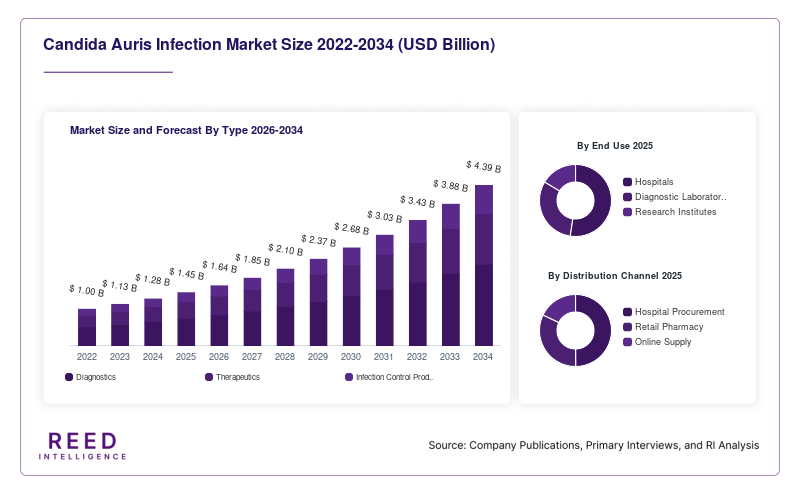
Diagnostics held 41% share in 2025 due to high demand for early detection and accurate identification of Candida auris infections. Molecular diagnostic platforms are widely adopted in hospitals for faster results and improved accuracy.
Infection control products are expected to grow at the fastest rate due to rising demand for sterilization systems, antimicrobial coatings, and advanced disinfection technologies aimed at reducing hospital-acquired infections.
Hospitals, Diagnostic Laboratories, Research Institutes
Hospitals dominated with 58% share in 2025 due to high ICU admissions and infection risk in critical care units. They remain the primary treatment centers for Candida auris infections.
Diagnostic laboratories are expected to grow rapidly due to outsourcing of fungal testing and increasing demand for specialized diagnostic services supported by automation technologies.
Hospital Procurement, Retail Pharmacy, Online Supply
Hospital procurement held 66% share in 2025 due to centralized purchasing of antifungal drugs and diagnostic kits.
Online supply channels are expanding due to digital transformation in healthcare procurement and rising availability of diagnostic products on e-commerce platforms.
Regional Analysis
North America
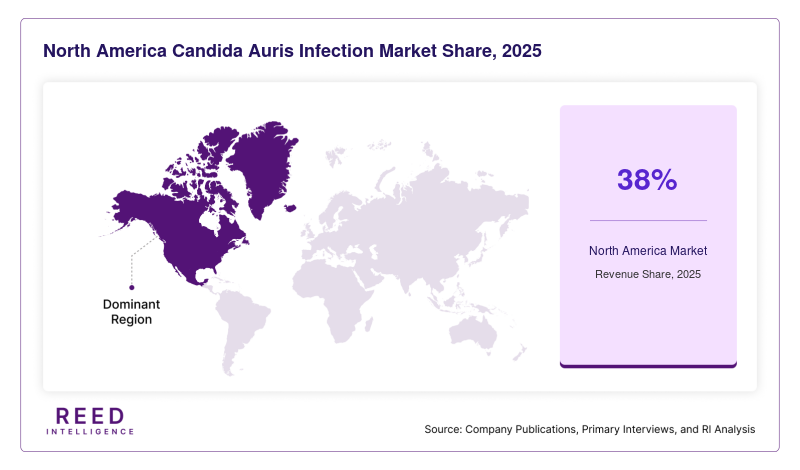
North America held 38% share of the Candida Auris Infection Market in 2025 and is expected to grow at 12.6% CAGR during 2026–2034. The region benefits from advanced healthcare infrastructure, strong diagnostic adoption, and robust infection surveillance systems. The United States dominates due to high healthcare expenditure and strong R&D in antifungal therapies.
Europe
Europe accounted for 27% share in 2025 and is projected to grow at 11.9% CAGR. Strong regulatory frameworks and structured infection reporting systems support growth. Germany leads the region due to advanced laboratory infrastructure and widespread hospital infection control measures.
Asia Pacific
Asia Pacific held 22% share in 2025 and is projected to grow at the fastest 14.8% CAGR. Rising healthcare investments, increasing ICU admissions, and growing awareness of fungal infections drive growth. India dominates due to expanding healthcare infrastructure and diagnostic adoption.
Middle East & Africa
Middle East & Africa held 7% share in 2025 and is expected to grow at 10.8% CAGR. Growth is driven by healthcare modernization and expanding hospital infrastructure. Saudi Arabia leads due to strong healthcare reforms and infection control investments.
Latin America
Latin America accounted for 6% share in 2025 and is projected to grow at 10.5% CAGR. Brazil dominates due to a large patient base, expanding healthcare sector, and rising adoption of infection control systems.
Competitive Landscape
The Candida Auris Infection Market is moderately consolidated with key players focusing on diagnostics innovation, antifungal drug development, and infection control solutions. Major companies include Pfizer Inc., Merck & Co., F. Hoffmann-La Roche Ltd, Thermo Fisher Scientific Inc., and bioMérieux SA. Pfizer leads the market with strong antifungal portfolio expansion and ongoing research in resistant fungal infections through strategic collaborations.
Key Players List
- Pfizer Inc.
- Merck & Co., Inc.
- F. Hoffmann-La Roche Ltd
- Thermo Fisher Scientific Inc.
- bioMérieux SA
- Abbott Laboratories
- Siemens Healthineers AG
- Becton, Dickinson and Company
- Cepheid (Danaher Corporation)
- Bruker Corporation
- Gilead Sciences, Inc.
- Astellas Pharma Inc.
- Novartis AG
- GlaxoSmithKline plc
- Sun Pharmaceutical Industries Ltd
Recent Developments
- Expansion of PCR-based fungal diagnostic panels for Candida auris detection
- Growth in antifungal stewardship collaborations across hospitals
- Integration of AI-based infection surveillance systems
- Development of combination antifungal therapies targeting resistant strains
- Strengthening of national fungal infection reporting frameworks
Candida Auris Infection Market Segments
By Type
- Diagnostics
- Therapeutics
- Infection Control Products
By End Use
- Hospitals
- Diagnostic Laboratories
- Research Institutes
By Distribution Channel
- Hospital Procurement
- Retail Pharmacy
- Online Supply
By Region
- North America
- Europe
- APAC
- Middle East and Africa
- LATAM