Canine Leptospirosi Market Size, Share & Demand Report By Product Type (Vaccines, Diagnostic Tests, Therapeutics), By Treatment Type (Antibiotic Therapy, Supportive Care, Combination Therapy), By Diagnostic Method (Serological Testing, Molecular Diagnostics, Rapid Testing), By End Use (Veterinary Clinics, Animal Hospitals, Homecare), By Distribution Channel (Veterinary Pharmacies, Online Channels, Retail Pharmacies) By Region & Segment Forecasts, 2025–2034
USD 3950
Market Overview
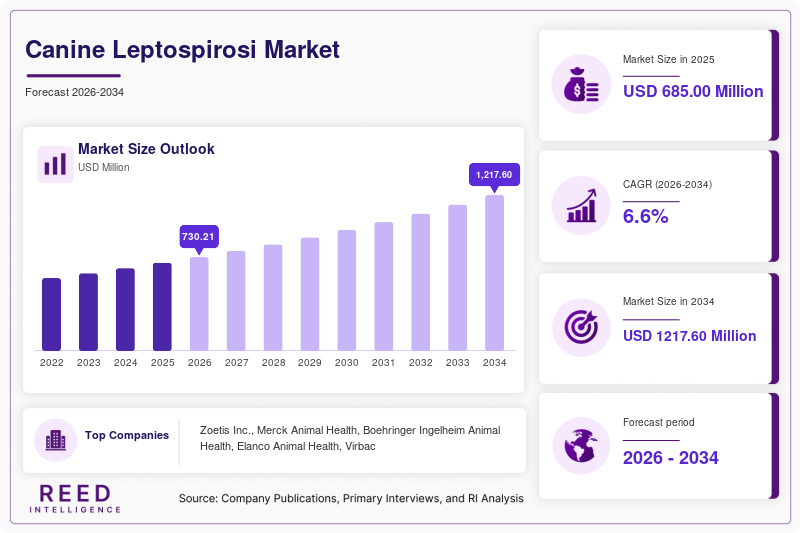
The Canine Leptospirosi Market size was valued at USD 685 million in 2025 and is projected to reach USD 1,214 million by 2034, expanding at a CAGR of 6.6% during the forecast period (2025–2034). The market growth is supported by rising awareness regarding zoonotic diseases and the increasing prevalence of leptospirosis infections among companion animals. Veterinary authorities and pet owners are increasingly prioritizing preventive vaccination and early diagnostic testing, which has strengthened the demand for canine leptospirosis-related therapeutics, vaccines, and diagnostic solutions.
One global factor supporting market expansion is the rising pet adoption rate worldwide. The growing companion animal population, particularly dogs, has increased the need for routine vaccinations, diagnostic screening, and preventive healthcare. Additionally, climate change and urbanization have contributed to favorable environmental conditions for leptospira bacteria, resulting in higher infection risks in both urban and rural areas. These factors collectively support consistent market demand across veterinary clinics and animal hospitals.
Key Highlights
- North America dominated the market with 38.4% share in 2025, while Asia Pacific is projected to grow at the fastest CAGR of 8.1%.
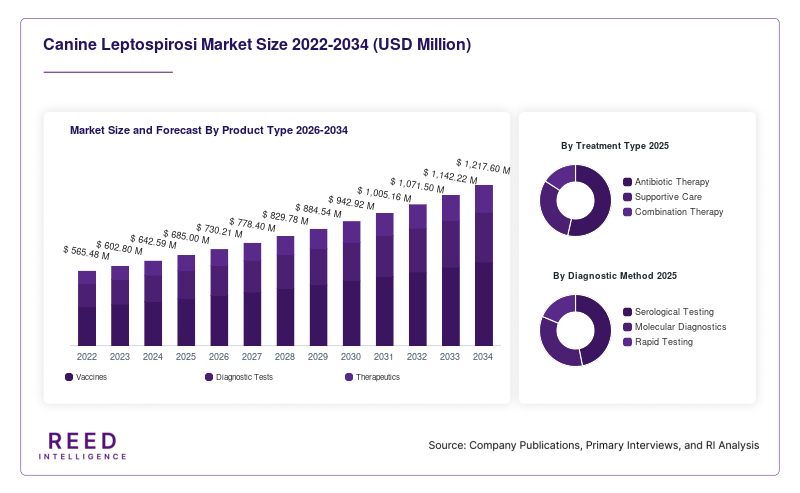
- By Product Type, Vaccines held the leading share at 41.7%, whereas Rapid Diagnostic Tests are expected to grow at 8.9% CAGR.
- By End-Use, Veterinary Clinics accounted for 46.3% share, while Homecare Testing is projected to grow at 9.4% CAGR.
- The United States remained the dominant country with USD 242 million in 2025, expected to reach USD 258 million in 2026.
Market Trends
Increasing Adoption of Multivalent Vaccines
Veterinary professionals are increasingly recommending multivalent vaccines that provide protection against multiple leptospira serovars. These vaccines reduce the frequency of vaccinations and improve compliance among pet owners. The trend is driven by improved vaccine formulations offering broader coverage, longer immunity duration, and enhanced safety profiles. As canine leptospirosis epidemiology varies across regions, multivalent solutions allow veterinarians to provide region-specific protection, thereby supporting market growth.
Integration of Point-of-Care Diagnostic Technologies
Point-of-care diagnostic tools are gaining traction in veterinary practices. Rapid antigen and antibody detection kits allow veterinarians to diagnose infections quickly and initiate early treatment. These solutions minimize laboratory dependency and improve treatment outcomes. The increasing availability of portable diagnostic devices and cost-effective rapid testing kits is accelerating adoption, particularly in emerging markets. This trend supports expansion of the Canine Leptospirosi Market by improving accessibility to early diagnosis and preventive healthcare.
Market Drivers
Rising Prevalence of Zoonotic Diseases in Dogs
The increasing incidence of zoonotic diseases, including leptospirosis, has driven demand for preventive vaccination and diagnostic screening. Urban flooding, increased wildlife interaction, and climate variations contribute to the spread of leptospira bacteria. Veterinarians and public health authorities are recommending regular vaccination programs, which has strengthened demand for canine leptospirosis products.
Growing Spending on Companion Animal Healthcare
Pet owners are allocating higher budgets toward preventive healthcare services. Increased awareness of vaccination schedules and routine diagnostic testing has supported the uptake of leptospirosis vaccines and treatment options. Veterinary infrastructure expansion, pet insurance coverage, and improved access to advanced healthcare solutions are encouraging early diagnosis and treatment. These factors are collectively driving growth in the Canine Leptospirosi Market.
Market Restraint
Limited Awareness in Developing Regions
Limited awareness regarding leptospirosis prevention remains a major restraint for the market. In several developing countries, pet owners often overlook vaccination schedules and preventive healthcare. The lack of routine diagnostic testing also leads to underreporting of cases. Additionally, limited access to veterinary infrastructure in rural areas restricts market penetration.
The cost of multivalent vaccines and advanced diagnostic tools further discourages adoption among price-sensitive pet owners. Inconsistent vaccination recommendations across regions also contribute to hesitation among veterinarians and pet owners. These factors collectively restrict the expansion of the Canine Leptospirosi Market, particularly in emerging economies.
Market Opportunities
Expansion of Veterinary Diagnostic Laboratories
The growing establishment of veterinary diagnostic laboratories presents a significant growth opportunity. These facilities support advanced serological and molecular testing for leptospirosis. Increased diagnostic capacity enables early detection and encourages preventive treatment. Expansion of laboratory networks in emerging economies is expected to boost market growth.
Development of Oral and Combination Therapies
Pharmaceutical companies are focusing on combination antibiotic therapies for improved treatment outcomes. Oral formulations that improve compliance are gaining interest among pet owners. Additionally, research into long-acting injectable antibiotics is expected to enhance treatment efficiency. These innovations will create new revenue streams in the Canine Leptospirosi Market during the forecast period.
Segmental Analysis
By Product Type
Vaccines dominated the Canine Leptospirosi Market with 41.7% share in 2025. Preventive vaccination programs were widely adopted among veterinary clinics. Multivalent vaccines provided protection against multiple serovars. High compliance among pet owners supported vaccine demand. Routine annual vaccination schedules further strengthened the segment.
Rapid Diagnostic Tests will grow at the fastest CAGR of 8.9%. These solutions will gain popularity due to quick results and portability. Veterinary clinics will increasingly adopt point-of-care testing. Rising demand for early diagnosis will support growth. Increased affordability of rapid kits will further boost adoption.
By Treatment Type
Antibiotic Therapy accounted for 46.2% share in 2025. Early antibiotic intervention reduced disease severity. Veterinary professionals widely recommended antibiotic treatment for confirmed cases. Established treatment protocols supported consistent demand.
Combination Therapy will grow at 8.3% CAGR. This approach will include antibiotics with supportive care. Improved treatment outcomes will encourage adoption. Increasing research into combination therapies will drive growth.
By Diagnostic Method
Serological Testing held 38.5% share in 2025. These tests were widely used for confirmation of infection. Veterinary laboratories relied on serological assays for routine diagnosis. Established diagnostic protocols supported the segment.
Molecular Diagnostics will grow at 9.1% CAGR. PCR-based testing will gain traction for accurate detection. Improved sensitivity and faster results will encourage adoption. Expansion of diagnostic laboratories will support growth.
By End Use
Veterinary Clinics dominated with 46.3% share in 2025. These facilities served as primary points of care. Routine vaccination and diagnosis were conducted in clinics. High patient inflow supported market growth.
Homecare Testing will grow at 9.4% CAGR. Pet owners will increasingly prefer convenient testing options. Availability of easy-to-use kits will support adoption. Rising awareness regarding early diagnosis will drive growth.
By Distribution Channel
Veterinary Pharmacies accounted for 44.8% share in 2025. These outlets distributed vaccines and therapeutics. Veterinary professionals recommended pharmacy-based purchases. Established supply chains supported the segment.
Online Channels will grow at 8.7% CAGR. E-commerce platforms will improve accessibility. Pet owners will increasingly purchase diagnostic kits online. Competitive pricing will support growth.
Regional Analysis
North America
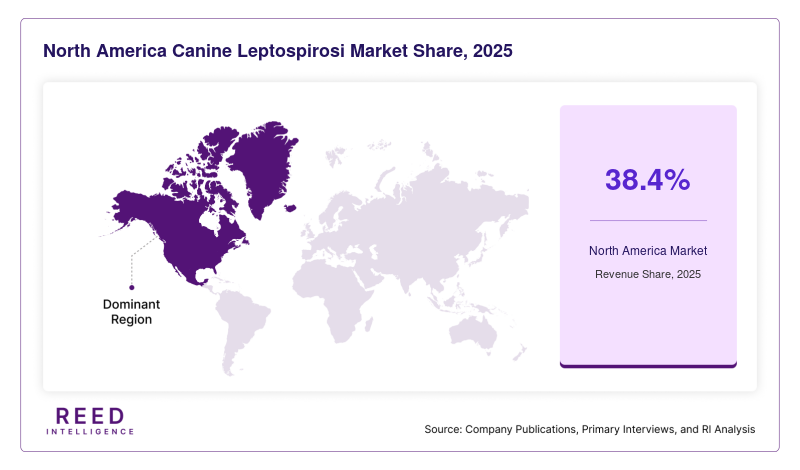
North America accounted for 38.4% of the Canine Leptospirosi Market share in 2025. The region benefited from well-established veterinary infrastructure and high pet healthcare expenditure. The market in this region will expand at a CAGR of 6.1% during 2025–2034. Increasing adoption of preventive vaccination programs and advanced diagnostic technologies will support future growth. The presence of large veterinary hospital chains and widespread pet insurance coverage contributed to strong market demand.
The United States dominated the regional market due to increased awareness regarding zoonotic disease prevention. The country experienced higher adoption of routine vaccination schedules. Growing urban pet populations and frequent environmental exposure to contaminated water sources supported vaccine demand. Additionally, veterinary associations promoting annual leptospirosis vaccination contributed to consistent market growth.
Europe
Europe held 26.7% share in 2025 and will grow at a CAGR of 6.3%. The region demonstrated steady demand due to strong regulatory support for animal healthcare. Increased awareness among pet owners regarding zoonotic disease transmission supported vaccination adoption. Veterinary practitioners increasingly recommended leptospirosis screening in routine check-ups.
Germany emerged as the dominant country within Europe. The country’s growth was supported by expanding veterinary clinics and strong pet ownership culture. Preventive vaccination programs were widely implemented across urban areas. Additionally, government initiatives supporting animal health monitoring improved diagnostic adoption. These factors contributed to sustained market expansion.
Asia Pacific
Asia Pacific captured 18.9% share in 2025 and is expected to grow at the fastest CAGR of 8.1%. The region’s growth will be supported by rising pet adoption and improving veterinary infrastructure. Increased awareness regarding zoonotic infections and rising disposable income will drive demand for vaccines and diagnostic solutions.
China dominated the regional market due to its growing companion animal population. Urbanization and increasing pet healthcare awareness supported vaccination demand. Veterinary clinics in metropolitan areas expanded preventive care services. Rising availability of rapid diagnostic kits also contributed to growth. These factors will support strong expansion in the region.
Middle East & Africa
The Middle East & Africa held 8.1% share in 2025 and will expand at a CAGR of 5.8%. The market growth will be supported by increasing veterinary healthcare investments. Awareness campaigns regarding zoonotic disease prevention will encourage vaccination adoption. Growing urban pet populations will also contribute to demand.
South Africa dominated the regional market due to expanding veterinary services. The country experienced increased demand for preventive vaccination. Veterinary clinics promoted routine screening for infectious diseases. Rising adoption of companion animals also supported growth in the regional market.
Latin America
Latin America accounted for 7.9% share in 2025 and is projected to grow at a CAGR of 6.7%. The region demonstrated growth potential due to increasing pet healthcare awareness. Expansion of veterinary clinics and improved access to vaccines will support market expansion.
Brazil emerged as the dominant country. The country experienced increased leptospirosis incidence due to climatic conditions. Veterinary professionals promoted vaccination campaigns in urban areas. Growing pet ownership and improved veterinary infrastructure supported market demand.
Competitive Landscape
The Canine Leptospirosi Market is moderately competitive with key players focusing on vaccine innovation and diagnostic advancements. Companies are investing in multivalent vaccines and rapid testing technologies to strengthen their portfolios. Strategic collaborations and product launches remain common growth strategies.
Zoetis emerged as the market leader due to its extensive veterinary vaccine portfolio and global distribution network. The company recently introduced an updated multivalent leptospirosis vaccine designed to provide broader serovar protection.
Other players are focusing on expanding diagnostic solutions and antibiotic therapies. Market participants are strengthening regional presence through partnerships with veterinary clinics and distributors. Continuous research and development initiatives are expected to intensify competition during the forecast period.
Key Players List
- Zoetis Inc.
- Merck Animal Health
- Boehringer Ingelheim Animal Health
- Elanco Animal Health
- Virbac
- Ceva Santé Animale
- Vetoquinol
- Heska Corporation
- IDEXX Laboratories
- Biogal Galed Labs
- Phibro Animal Health
- Bimeda Inc.
- Neogen Corporation
- Norbrook Laboratories
- HIPRA
Recent Developments
- 2024: Zoetis launched an expanded multivalent canine leptospirosis vaccine.
- 2024: IDEXX Laboratories introduced a rapid point-of-care leptospirosis diagnostic test.
- 2023: Boehringer Ingelheim expanded its veterinary vaccine manufacturing capacity.
- 2023: Virbac released an updated antibiotic treatment protocol for leptospirosis.
- 2023: Ceva Santé Animale partnered with veterinary clinics for vaccination awareness programs.
Canine Leptospirosi Market Segments
By Product Type
- Vaccines
- Diagnostic Tests
- Therapeutics
By Treatment Type
- Antibiotic Therapy
- Supportive Care
- Combination Therapy
By Diagnostic Method
- Serological Testing
- Molecular Diagnostics
- Rapid Testing
By End Use
- Veterinary Clinics
- Animal Hospitals
- Homecare
By Distribution Channel
- Veterinary Pharmacies
- Online Channels
- Retail Pharmacies
By Region
- North America
- Europe
- APAC
- Middle East and Africa
- LATAM