Canine Parvovirus Enteritis Market Size, Share & Demand Report By Product Type (Vaccines, Diagnostic Kits, Therapeutics), By Treatment Type (Supportive Care, Antiviral Drugs), By End User (Veterinary Clinics, Animal Hospitals, Animal Shelters), By Distribution Channel (Veterinary Pharmacies, Online Platforms, Retail Stores), By Region & Segment Forecasts, 2026–2034
USD 3950
Market Overview
The global Canine Parvovirus Enteritis Market was valued at approximately USD 1.18 billion in 2026 and is projected to reach USD 2.36 billion by 2034, expanding at a CAGR of 9.1% during the forecast period. The market growth is primarily driven by the rising global dog population and increasing awareness among pet owners regarding preventive veterinary care.
A key global factor supporting market expansion has been the increased adoption of companion animals, particularly post-pandemic, which has led to higher demand for vaccinations, diagnostics, and treatment solutions for infectious diseases such as canine parvovirus enteritis. Veterinary healthcare infrastructure has also improved in developing regions, enabling better disease management and contributing to market growth.
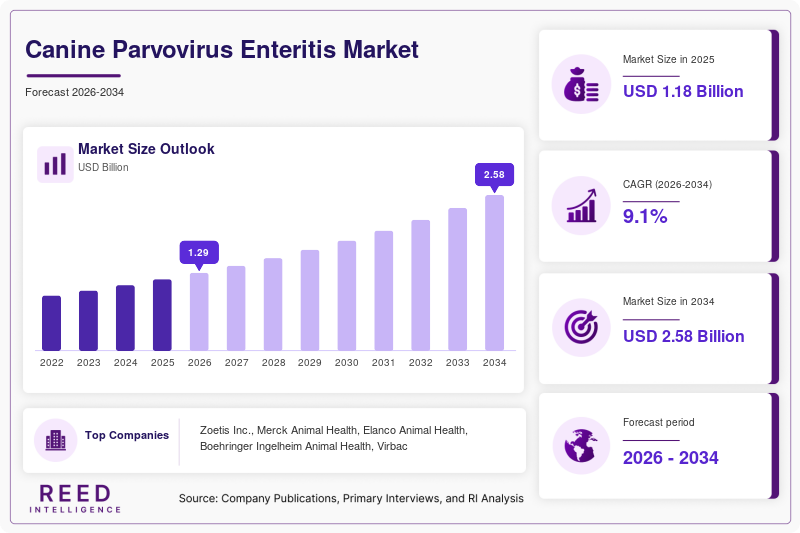
Key Highlights:
- North America dominated the market with a 38.6% share, while Asia Pacific is projected to grow at the fastest CAGR of 11.3%.
- Vaccines emerged as the leading product segment, whereas rapid diagnostic kits are expected to witness the fastest growth at a CAGR of 10.8%.
- Veterinary clinics held the largest share among end users, while animal shelters are anticipated to grow at the fastest rate.
- The U.S. market was valued at USD 420 million in 2024 and reached approximately USD 455 million in 2025.
Market Trends
Rising Adoption of Rapid Point-of-Care Diagnostics
The Canine Parvovirus Enteritis Market is witnessing a strong shift toward rapid point-of-care diagnostic solutions. Veterinary professionals increasingly prefer portable and easy-to-use diagnostic kits that deliver quick and accurate results within minutes. These tools reduce the time required for diagnosis, enabling faster clinical decisions and improving survival rates among infected dogs. The integration of immunoassay-based detection technologies has enhanced sensitivity and specificity, making these kits a preferred choice in both urban veterinary clinics and rural settings. This trend is expected to expand further as awareness regarding early disease detection grows among pet owners and veterinarians.
Growth of Preventive Vaccination Programs
Preventive healthcare is gaining importance across the global veterinary sector, significantly influencing the Canine Parvovirus Enteritis Market. Governments, NGOs, and private veterinary organizations are promoting vaccination drives to control the spread of infectious diseases in canine populations. Multivalent vaccines that provide protection against multiple diseases, including parvovirus, are becoming increasingly popular. This trend is particularly prominent in emerging markets where vaccination coverage has historically been low. As pet owners become more proactive about animal health, the demand for routine immunization is expected to drive sustained market growth.
Market Drivers
Increasing Companion Animal Ownership
The rising number of pet dogs globally is a primary driver of the Canine Parvovirus Enteritis Market. Urbanization, changing lifestyles, and growing emotional attachment to pets have contributed to increased dog adoption rates. As pet ownership rises, so does the demand for veterinary healthcare services, including vaccination and disease management. This trend is especially noticeable in developing economies where disposable income levels are improving, enabling higher spending on pet care.
Advancements in Veterinary Healthcare Infrastructure
Improved veterinary healthcare infrastructure is significantly driving the market. The expansion of veterinary clinics, hospitals, and diagnostic laboratories has enhanced access to advanced treatment and diagnostic services. Additionally, the availability of skilled veterinary professionals and modern equipment has improved disease detection and treatment outcomes. Governments and private organizations are investing in animal health initiatives, further strengthening the ecosystem supporting the Canine Parvovirus Enteritis Market.
Market Restraint
High Cost of Advanced Treatment and Limited Access in Rural Areas
Despite steady growth, the Canine Parvovirus Enteritis Market faces challenges due to the high cost of advanced treatment and limited access to veterinary services in rural regions. Treatment for canine parvovirus often involves intensive care, including intravenous fluids, medications, and prolonged hospitalization, which can be financially burdensome for pet owners.
In many developing regions, veterinary infrastructure remains underdeveloped, limiting access to timely diagnosis and treatment. Lack of awareness among pet owners about early symptoms and preventive measures further exacerbates the issue. Additionally, stray dog populations in several regions remain unvaccinated, contributing to the continued spread of the disease. These factors collectively hinder market growth and highlight the need for affordable solutions and broader healthcare access.
Market Opportunities
Expansion in Emerging Markets
Emerging economies present significant growth opportunities for the Canine Parvovirus Enteritis Market. Countries in Asia Pacific, Latin America, and Africa are experiencing rising pet adoption rates and improving veterinary infrastructure. Governments and animal welfare organizations are actively promoting vaccination and disease control programs. As awareness increases and disposable incomes rise, demand for veterinary healthcare products is expected to grow rapidly, offering lucrative opportunities for market players.
Development of Innovative Vaccines and Therapies
The development of next-generation vaccines and targeted therapies offers substantial opportunities for market expansion. Research efforts are focused on improving vaccine efficacy, reducing dosage frequency, and enhancing immune response. Additionally, advancements in antiviral treatments and supportive care therapies are expected to improve survival rates among infected animals. Companies investing in research and development are likely to gain a competitive edge, driving innovation within the Canine Parvovirus Enteritis Market.
Segmental Analysis
By Product Type
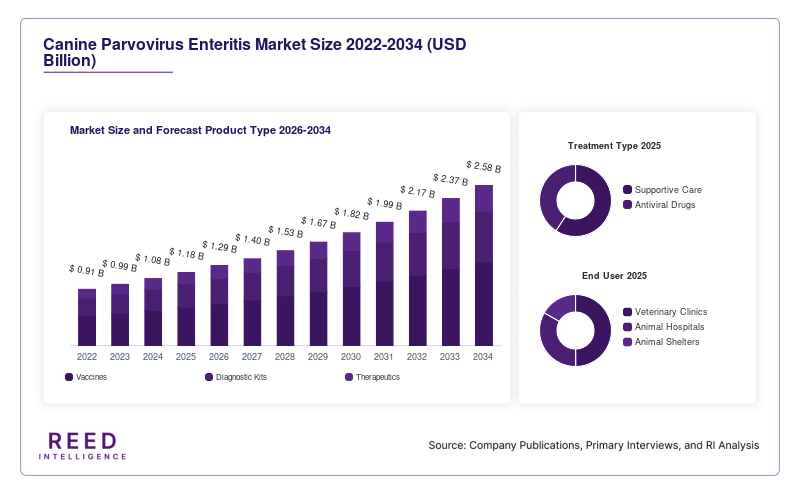
Vaccines dominated the Canine Parvovirus Enteritis Market in 2025, accounting for 52.4% of the share due to widespread use in preventive care.
Rapid diagnostic kits will grow at the fastest CAGR of 10.8% owing to their ability to provide quick and accurate results, enabling early intervention.
By Treatment Type
Supportive care therapies held the largest share at 47.1% in 2025 due to their critical role in managing infected cases.
Antiviral drugs are expected to grow at a CAGR of 9.9% as research advancements lead to more effective treatment options.
By End User
Veterinary clinics accounted for 49.6% of the market share in 2025 due to high patient inflow and accessibility.
Animal shelters will witness the fastest growth at a CAGR of 10.5%, driven by increasing adoption initiatives and disease control programs.
By Distribution Channel
Veterinary pharmacies dominated with a 44.2% share in 2025 due to direct product availability.
Online platforms are projected to grow at a CAGR of 11.1% as digital adoption increases and convenience drives purchasing behavior.
Regional Analysis
North America
North America accounted for approximately 38.6% of the Canine Parvovirus Enteritis Market in 2025 and will grow at a CAGR of 8.4% during the forecast period.
The United States dominated the region due to high pet ownership and well-established veterinary infrastructure. The presence of advanced diagnostic facilities and widespread adoption of preventive healthcare practices contributed significantly to market growth.
Europe
Europe held a market share of around 26.3% in 2025 and is expected to expand at a CAGR of 8.7%.
Germany led the region, supported by strong animal welfare regulations and high awareness regarding pet vaccination. Government initiatives promoting routine immunization further strengthened the market.
Asia Pacific
Asia Pacific captured nearly 18.9% of the market in 2025 and will register the fastest CAGR of 11.3%.
China emerged as the dominant country, driven by rising pet ownership and expanding veterinary services. Increasing urbanization and disposable income levels have boosted demand for animal healthcare products.
Middle East & Africa
The region accounted for about 8.1% of the market in 2025 and is projected to grow at a CAGR of 9.6%.
South Africa dominated the region due to improving veterinary infrastructure and growing awareness about animal health. Initiatives aimed at controlling infectious diseases have supported market expansion.
Latin America
Latin America held a share of approximately 8.1% in 2025 and is expected to grow at a CAGR of 9.2%.
Brazil led the region, supported by a large canine population and increasing investment in veterinary healthcare. Expanding access to veterinary clinics has contributed to market growth.

Competitive Landscape
The Canine Parvovirus Enteritis Market is moderately fragmented, with several global and regional players competing based on product innovation and distribution networks. Leading companies focus on vaccine development, diagnostic advancements, and strategic collaborations.
Zoetis Inc. is a key market leader, known for its extensive portfolio of veterinary vaccines and continuous investment in research. The company recently introduced an enhanced vaccine formulation aimed at improving immunity duration in canines.
Other major players emphasize expanding their geographic presence and strengthening partnerships with veterinary clinics to increase market penetration.
Key Players List
- Zoetis Inc.
- Merck Animal Health
- Elanco Animal Health
- Boehringer Ingelheim Animal Health
- Virbac
- Ceva Santé Animale
- Vetoquinol S.A.
- IDEXX Laboratories
- Heska Corporation
- Neogen Corporation
- Phibro Animal Health
- Indian Immunologicals Limited
- HIPRA
- Biogenesis Bago
- Zydus Animal Health
Recent Developments
- Zoetis Inc. launched an advanced canine vaccine with improved efficacy.
- Merck Animal Health expanded its diagnostic portfolio for infectious diseases.
- IDEXX Laboratories introduced a new rapid testing kit for parvovirus detection.
- Boehringer Ingelheim increased investment in veterinary vaccine R&D.
- Elanco Animal Health partnered with regional distributors to expand market reach.
Canine Parvovirus Enteritis Market Segments
Product Type
- Vaccines
- Diagnostic Kits
- Therapeutics
Treatment Type
- Supportive Care
- Antiviral Drugs
End User
- Veterinary Clinics
- Animal Hospitals
- Animal Shelters
Distribution Channel
- Veterinary Pharmacies
- Online Platforms
- Retail Stores
By Region
- North America
- Europe
- APAC
- Middle East and Africa
- LATAM