Canine Stem Cell Therapy Market Size, Share Demand Report By Therapy Type (Autologous Stem Cell Therapy, Allogeneic Stem Cell Therapy), By Application (Osteoarthritis, Orthopedic Injuries, Neurological Disorders, Inflammatory Diseases), By End-Use (Veterinary Hospitals & Clinics, Research Institutes, Specialty Veterinary Centers) By Region & Segment Forecasts, 2026–2034
USD 3950
Market Overview
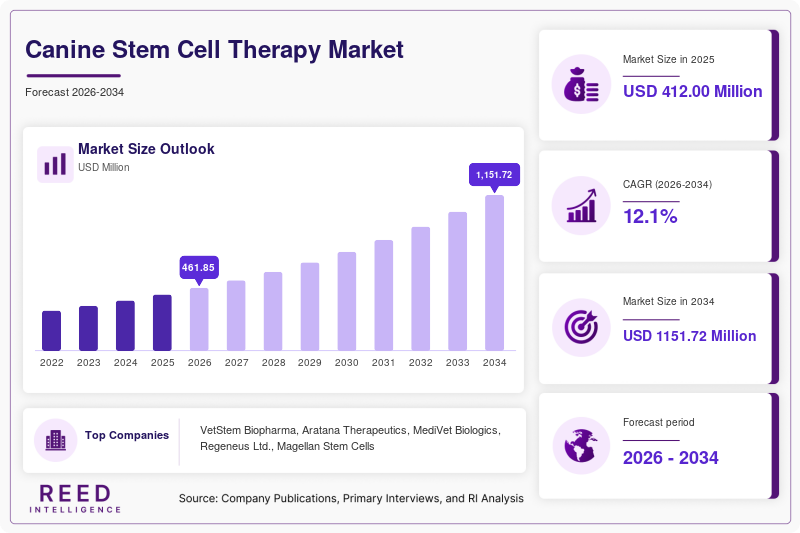
The Canine Stem Cell Therapy Market was valued at approximately USD 412 million in 2026 and is projected to reach USD 1,028 million by 2034, expanding at a compound annual growth rate (CAGR) of 12.1% during 2026–2034. The market is witnessing steady growth driven by increasing pet ownership, rising awareness regarding regenerative veterinary medicine, and the growing demand for advanced therapeutic solutions for chronic canine conditions such as osteoarthritis, hip dysplasia, and ligament injuries.
A major global factor supporting market expansion is the humanization of pets, which has led to higher spending on advanced veterinary treatments. Pet owners are increasingly willing to invest in innovative therapies that improve the quality of life and longevity of their animals. Additionally, the expansion of veterinary infrastructure and the integration of biotechnology into animal healthcare have significantly improved accessibility to stem cell-based treatments.
Key Highlights
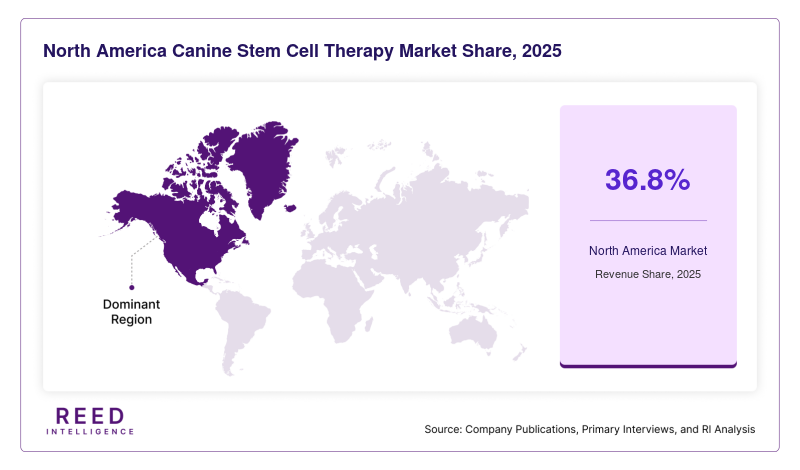
- North America dominated the market with a 36.8% share in 2025.
- Asia Pacific is expected to grow at the fastest CAGR of 13.4% during 2026–2034.
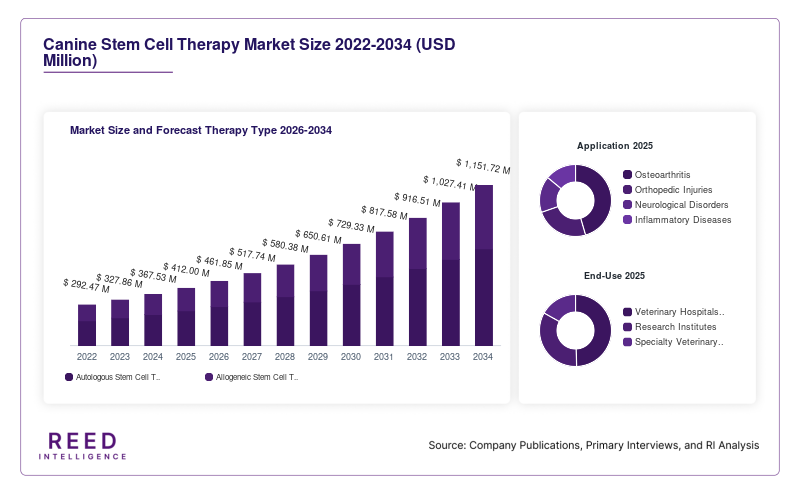
- By therapy type, autologous stem cell therapy accounted for the largest share of 54.6%, while allogeneic stem cell therapy is projected to grow at a CAGR of 13.9%.
- By application, osteoarthritis treatment led with a 42.3% share, whereas neurological disorders are expected to expand at a CAGR of 14.2%.
- The United States remained the dominant country, with market values of USD 305 million in 2024 and USD 338 million in 2025.
Market Trends
Rising Adoption of Regenerative Medicine in Veterinary Practice
The increasing adoption of regenerative medicine is a key trend shaping the Canine Stem Cell Therapy Market. Veterinary clinics are gradually integrating stem cell therapies as part of their treatment portfolios for chronic and degenerative diseases. This shift is driven by growing clinical evidence supporting the effectiveness of stem cells in reducing inflammation and promoting tissue repair. Moreover, veterinarians are receiving specialized training, enabling them to perform these procedures with improved accuracy and consistency. The availability of advanced laboratory services for stem cell processing further supports adoption. As pet owners seek alternatives to invasive surgeries, regenerative therapies are gaining preference, contributing to broader market acceptance and consistent demand growth.
Expansion of Veterinary Biobanking and Stem Cell Storage Services
Another notable trend is the expansion of veterinary biobanking services, allowing pet owners to store stem cells derived from their animals for future therapeutic use. This trend is gaining momentum as awareness increases regarding the long-term benefits of stem cell preservation. Biobanks are investing in cryopreservation technologies and offering customized storage plans, making services more accessible. This development is also encouraging early adoption of stem cell therapies, even before the onset of chronic diseases. Furthermore, partnerships between veterinary clinics and biobanking companies are enhancing service delivery, contributing to sustained growth in the market while supporting advancements in personalized veterinary medicine.
Market Drivers
Increasing Prevalence of Chronic and Degenerative Diseases in Dogs
The rising incidence of chronic conditions such as osteoarthritis, ligament injuries, and autoimmune diseases in dogs is a primary driver of the Canine Stem Cell Therapy Market. Aging pet populations are particularly susceptible to such conditions, leading to increased demand for long-term treatment solutions. Conventional therapies often provide limited relief and may involve significant side effects or repeated interventions. Stem cell therapy offers a promising alternative by addressing the underlying cause of tissue degeneration. Veterinary practitioners are increasingly recommending regenerative treatments due to their potential to improve mobility and reduce pain. This growing clinical need is driving consistent adoption of stem cell therapies across developed and emerging markets.
Growing Pet Ownership and Rising Expenditure on Animal Healthcare
The global increase in pet ownership, coupled with rising disposable income, is significantly contributing to market growth. Pet owners are treating animals as family members, leading to higher spending on advanced medical treatments. Veterinary healthcare expenditure has expanded to include specialized therapies such as stem cell treatments, which were previously considered niche. Insurance coverage for pet healthcare in certain regions is also supporting affordability and accessibility. Additionally, the expansion of veterinary clinics equipped with advanced technologies is making these therapies more widely available. This shift in consumer behavior is a critical factor driving the steady growth of the market.
Market Restraint
High Cost and Limited Standardization of Stem Cell Therapies
Despite its potential, the Canine Stem Cell Therapy Market faces a significant restraint in the form of high treatment costs and limited standardization. Stem cell therapy procedures involve specialized equipment, laboratory processing, and skilled professionals, all of which contribute to elevated costs. This makes the treatment less accessible to a large segment of pet owners, particularly in developing regions. Additionally, the lack of standardized protocols for stem cell extraction, processing, and administration leads to variability in outcomes. Regulatory frameworks for veterinary stem cell therapies are still evolving, which can create uncertainty among practitioners and pet owners. For example, differences in treatment methodologies across clinics may impact clinical efficacy and patient satisfaction. These challenges hinder widespread adoption and may slow market expansion, especially in cost-sensitive markets.
Market Opportunities
Expansion in Emerging Markets with Growing Veterinary Infrastructure
Emerging economies present significant growth opportunities for the Canine Stem Cell Therapy Market. Countries in Asia Pacific and Latin America are witnessing rapid development in veterinary infrastructure, including advanced clinics and diagnostic facilities. Increasing urbanization and rising pet ownership rates are driving demand for modern veterinary services. Governments and private investors are supporting the development of animal healthcare systems, creating a favorable environment for the adoption of innovative therapies. As awareness about stem cell treatments grows, these regions are expected to become key contributors to market expansion. Companies entering these markets early can benefit from untapped demand and establish strong regional presence.
Technological Advancements in Stem Cell Processing and Delivery
Continuous advancements in biotechnology are creating new opportunities within the market. Innovations in stem cell isolation, expansion, and delivery techniques are improving treatment outcomes and reducing procedural complexity. For instance, the development of ready-to-use allogeneic stem cell products is simplifying therapy administration and reducing treatment time. Additionally, advancements in imaging and diagnostic tools are enabling better patient selection and monitoring of treatment effectiveness. These technological improvements are expected to enhance the efficiency and scalability of stem cell therapies, making them more accessible and appealing to veterinary professionals and pet owners alike.
Segmental Analysis
By Therapy Type
Autologous stem cell therapy dominated the Canine Stem Cell Therapy Market, accounting for approximately 54.6% of the market share in 2024. This segment involves the use of stem cells derived from the patient’s own body, typically from adipose tissue or bone marrow. The dominance of this segment is attributed to its high compatibility and reduced risk of immune rejection. Veterinary practitioners often prefer autologous therapies due to their established safety profile and proven clinical outcomes. Additionally, the availability of in-clinic processing systems has simplified the procedure, making it more accessible to veterinary hospitals. The ability to deliver personalized treatment further supports the widespread adoption of autologous stem cell therapy.
Allogeneic stem cell therapy is the fastest-growing segment, expected to register a CAGR of 13.9% during the forecast period. This approach involves the use of donor-derived stem cells, which can be prepared in advance and stored for future use. The growth of this segment is driven by its convenience and scalability, as it eliminates the need for tissue harvesting from the patient. Advances in cell processing and storage technologies are improving the safety and efficacy of allogeneic therapies. Additionally, the development of standardized protocols is enhancing treatment consistency, making this segment increasingly attractive to veterinary professionals.
By Application
Osteoarthritis treatment is the leading application segment, holding approximately 42.3% of the market share in 2024. This dominance is driven by the high prevalence of joint disorders in aging dogs. Stem cell therapy has shown significant potential in reducing inflammation and promoting cartilage regeneration, making it a preferred treatment option for osteoarthritis. Veterinary clinics are increasingly offering stem cell treatments as an alternative to traditional therapies, which often provide limited relief. The growing awareness among pet owners regarding the benefits of regenerative medicine is further supporting the growth of this segment.
Neurological disorders represent the fastest-growing application segment, with a projected CAGR of 14.2%. Conditions such as spinal cord injuries and degenerative neurological diseases are driving demand for advanced treatment options. Stem cell therapy offers the potential to repair damaged nerve tissues and improve functional recovery. Ongoing research and clinical trials are expanding the scope of stem cell applications in neurology. The increasing availability of specialized veterinary services is also supporting the adoption of these therapies, contributing to the rapid growth of this segment.
By End-Use
Veterinary hospitals and clinics dominated the market, accounting for approximately 61.5% of the market share in 2024. These facilities are equipped with advanced diagnostic and treatment capabilities, enabling them to perform stem cell procedures effectively. The presence of trained professionals and access to specialized equipment contribute to the dominance of this segment. Additionally, veterinary hospitals often collaborate with biotechnology companies and research institutions, facilitating the adoption of innovative therapies. The increasing number of veterinary clinics offering stem cell treatments is further supporting the growth of this segment.
Research institutes and specialty centers are the fastest-growing end-use segment, expected to expand at a CAGR of 12.7%. These institutions play a critical role in advancing stem cell research and developing new treatment protocols. The growing focus on clinical trials and research initiatives is driving the demand for stem cell therapies in this segment. Additionally, collaborations between academic institutions and industry players are accelerating innovation. The increasing investment in veterinary research is expected to support the growth of this segment, contributing to overall market expansion.
Regional Analysis
North America
North America accounted for approximately 36.8% of the Canine Stem Cell Therapy Market share in 2025 and is projected to grow at a CAGR of 11.6% during the forecast period. The region benefits from advanced veterinary infrastructure, high pet ownership rates, and strong awareness regarding regenerative therapies. The presence of established biotechnology companies and ongoing research initiatives further supports market growth. Additionally, favorable reimbursement frameworks and increasing adoption of pet insurance contribute to higher treatment accessibility.
The United States dominates the regional market due to its well-developed veterinary healthcare system and high expenditure on pet care. A unique growth factor is the strong integration of biotechnology in veterinary medicine, enabling the rapid adoption of innovative therapies. The presence of specialized veterinary hospitals and trained professionals ensures consistent demand for stem cell treatments.
Europe
Europe held a 28.5% market share in 2025 and is expected to expand at a CAGR of 10.8% over the forecast period. The region’s growth is driven by increasing awareness about animal welfare and rising adoption of advanced veterinary treatments. Countries across Western Europe are investing in veterinary research and improving access to regenerative therapies. Regulatory support for innovative treatments is also encouraging market development.
Germany leads the European market, supported by a robust veterinary healthcare system and high pet ownership rates. A unique growth factor is the strong emphasis on animal welfare regulations, which encourages the adoption of advanced and minimally invasive treatments. This regulatory environment fosters innovation and supports market growth.
Asia Pacific
Asia Pacific accounted for 19.7% of the market share in 2025 and is projected to grow at the fastest CAGR of 13.4% during the forecast period. Rapid urbanization, increasing disposable income, and growing pet adoption are key factors driving regional growth. The expansion of veterinary clinics and diagnostic facilities is further enhancing market accessibility.
China dominates the Asia Pacific market, driven by a large pet population and increasing investment in veterinary infrastructure. A unique growth factor is the rapid expansion of private veterinary clinics, which are adopting advanced therapies to differentiate their services. This trend is accelerating the adoption of stem cell treatments.
Middle East & Africa
The Middle East & Africa region held a 7.2% market share in 2025 and is expected to grow at a CAGR of 9.5% during the forecast period. Market growth is supported by increasing awareness about pet health and gradual improvements in veterinary infrastructure. However, limited access to advanced therapies remains a challenge.
The United Arab Emirates is the leading country in the region, driven by rising pet ownership and high disposable income. A unique growth factor is the growing demand for premium veterinary services, which is encouraging the adoption of advanced treatments such as stem cell therapy.
Latin America
Latin America accounted for 7.8% of the market share in 2025 and is projected to grow at a CAGR of 10.2% over the forecast period. The region is witnessing increasing investment in veterinary healthcare and rising awareness about advanced treatment options. Expanding middle-class populations are also contributing to higher spending on pet care.
Brazil leads the Latin American market due to its large pet population and expanding veterinary infrastructure. A unique growth factor is the increasing availability of specialized veterinary clinics, which are introducing advanced therapies to meet growing demand. This development is supporting steady market growth.
Competitive Landscape
The Canine Stem Cell Therapy Market is moderately fragmented, with several established players and emerging companies competing based on technology, product innovation, and service offerings. Leading companies are focusing on expanding their product portfolios and strengthening their distribution networks to gain a competitive edge. Strategic collaborations with veterinary clinics and research institutions are also common, enabling companies to enhance their market presence.
VetStem Biopharma is considered a leading player in the market, supported by its extensive experience in regenerative veterinary medicine. The company has recently expanded its service offerings by introducing advanced stem cell processing technologies, improving treatment efficiency. Other companies are also investing in research and development to develop standardized and scalable stem cell solutions. The competitive landscape is expected to evolve further as new entrants introduce innovative products and services, intensifying competition.
Key Players
- VetStem Biopharma
- Aratana Therapeutics
- MediVet Biologics
- Stem Cell Vet
- Magellan Stem Cells
- Animal Cell Therapies
- Regeneus Ltd.
- Cell Therapy Sciences
- VetCell Therapeutics
- Kintaro Cells Power
- Animal Stem Care
- CellVet Biotech
- StemcellX Animal Health
- VetBio Solutions
- BioVet Stem Cell Technologies
Recent Developments
- In 2025, VetStem Biopharma introduced an enhanced stem cell processing platform to improve treatment turnaround time.
- In 2024, Regeneus Ltd. expanded its veterinary stem cell product portfolio targeting joint disorders in dogs.
- In 2025, MediVet Biologics entered a strategic partnership with veterinary clinics to expand its service network across North America.
Canine Stem Cell Therapy Market Segments
Therapy Type
- Autologous Stem Cell Therapy
- Allogeneic Stem Cell Therapy
Application
- Osteoarthritis
- Orthopedic Injuries
- Neurological Disorders
- Inflammatory Diseases
End-Use
- Veterinary Hospitals & Clinics
- Research Institutes
- Specialty Veterinary Centers
By Region
- North America
- Europe
- APAC
- Middle East and Africa
- LATAM