Capric Acid Market Size, Share & Demand Report By Type (Natural Capric Acid, Synthetic Capric Acid), By Application (Personal Care, Pharmaceuticals, Food & Beverages, Industrial Applications), By End-Use (Cosmetics & Personal Care Industry, Pharmaceutical Industry, Food Industry, Industrial Sector), By Region & Segment Forecasts, 2026–2034
USD 3950
Market Overview
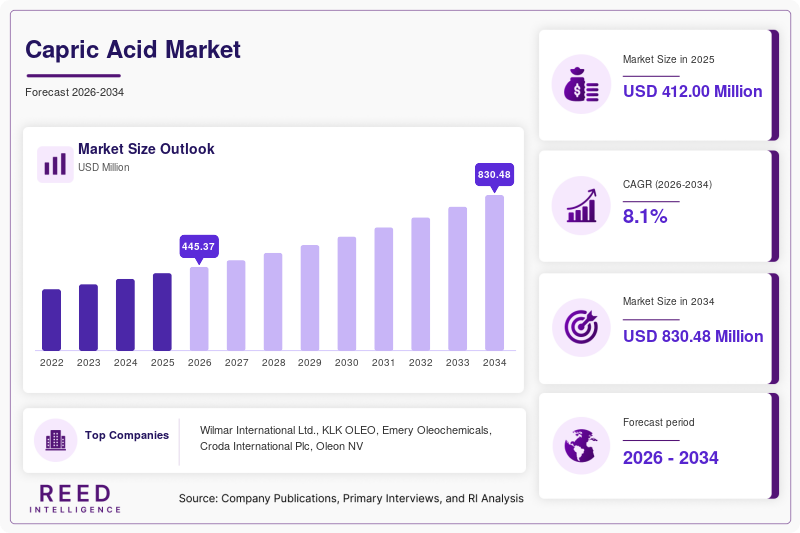
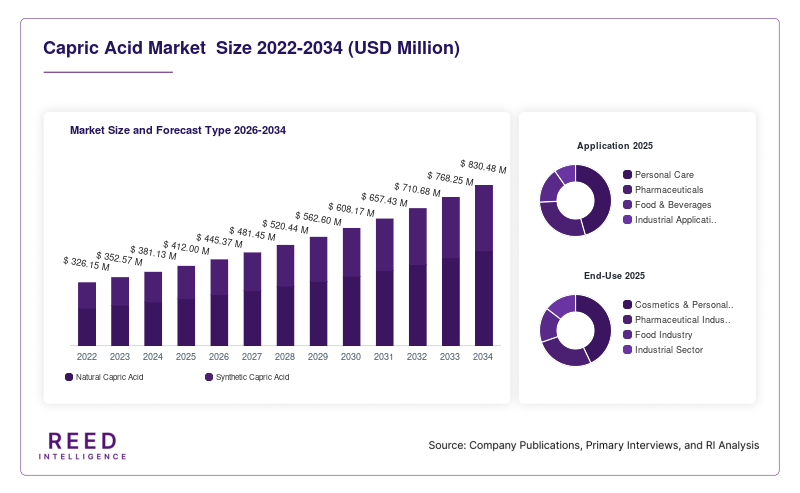
The global Capric Acid Market size was valued at approximately USD 412 million in 2026 and is projected to reach USD 768 million by 2034, expanding at a CAGR of 8.1% during the forecast period (2026–2034). The steady rise in demand for medium-chain fatty acids across industries such as personal care, pharmaceuticals, and food processing has supported this growth trajectory. Capric acid, also known as decanoic acid, is increasingly utilized for its antimicrobial properties, emulsification capabilities, and role in specialty chemical formulations.
A key global factor contributing to market expansion is the growing preference for bio-based and sustainable ingredients in industrial and consumer applications. Manufacturers are shifting toward plant-derived fatty acids, particularly from coconut and palm kernel oil, due to rising environmental awareness and regulatory pressures. This transition has encouraged investments in green chemistry and bio-refinery technologies, further supporting the adoption of capric acid across multiple sectors. Additionally, the expansion of the cosmetics and personal care industry, especially in emerging economies, has created consistent demand for capric acid-based emollients and surfactants.
Key Highlights
- North America dominated the market with a 33.6% share in 2025.
- Asia Pacific is expected to grow at the fastest CAGR of 9.4% during 2026–2034.
- By type, natural capric acid accounted for the largest share of 61.2%.
- while synthetic capric acid is projected to grow at a CAGR of 8.8%.
- By application, personal care products led with a 39.5% share, whereas pharmaceuticals are expected to expand at a CAGR of 9.1%.
- The United States remained the dominant country, with market values of USD 142 million in 2024 and USD 156 million in 2025.
Market Trends
Increasing demand for bio-based fatty acids
A noticeable trend in the Capric Acid Market is the rising demand for bio-based fatty acids derived from renewable sources. Industries such as cosmetics, food processing, and specialty chemicals are shifting away from petroleum-based ingredients toward plant-based alternatives. Capric acid sourced from coconut and palm kernel oil aligns with sustainability goals and supports eco-friendly product labeling. This trend is reinforced by consumer preference for clean-label products and regulatory encouragement for biodegradable materials. As a result, manufacturers are focusing on improving extraction techniques and supply chain efficiency to ensure consistent availability of high-quality natural capric acid.
Expanding use in pharmaceutical formulations
Another significant trend shaping the Capric Acid Market is its growing application in pharmaceutical formulations. Capric acid is increasingly used as an excipient and as a component in drug delivery systems due to its ability to enhance solubility and absorption of active ingredients. It also plays a role in antimicrobial treatments and metabolic therapies, particularly in ketogenic formulations. The pharmaceutical sector’s emphasis on improving drug efficacy and patient outcomes has led to increased research into medium-chain fatty acids. This trend is expected to accelerate as healthcare systems worldwide invest in advanced therapies and functional ingredients.
Market Drivers
Growth in personal care and cosmetics industry
The expansion of the global personal care and cosmetics industry is a primary driver for the Capric Acid Market. Capric acid is widely used in the formulation of skincare, haircare, and hygiene products due to its emollient and antimicrobial properties. Increasing consumer awareness regarding skin health and hygiene, coupled with rising disposable income in developing regions, has fueled demand for premium cosmetic products. Additionally, the trend toward natural and organic formulations has encouraged manufacturers to incorporate capric acid derived from plant sources. This growing demand across both mass-market and premium segments continues to strengthen the market outlook.
Rising adoption in food and beverage applications
Another key driver is the increasing use of capric acid in food and beverage applications. It is utilized as a flavoring agent, preservative, and functional ingredient in processed foods. The growing demand for packaged and convenience foods, particularly in urban areas, has led to higher consumption of additives that improve shelf life and taste. Capric acid also supports the development of specialized dietary products, including ketogenic and low-carb foods. As consumers focus more on nutrition and functional foods, the demand for medium-chain fatty acids like capric acid is expected to grow steadily.
Market Restraint
Volatility in raw material supply and pricing
A major restraint affecting the Capric Acid Market is the volatility in raw material supply and pricing. Capric acid is primarily derived from coconut oil and palm kernel oil, both of which are subject to fluctuations due to climatic conditions, geopolitical factors, and changes in agricultural output. Supply disruptions can significantly impact production costs and profit margins for manufacturers. Additionally, concerns related to deforestation and sustainability in palm oil production have led to stricter regulations and certifications, increasing operational complexity. These challenges can limit the scalability of production and create uncertainty in pricing, affecting overall market stability.
Market Opportunities
Advancements in green chemistry and bio-refining
The advancement of green chemistry and bio-refining technologies presents significant opportunities for the Capric Acid Market. Innovations in enzymatic processing and sustainable extraction methods are improving the efficiency and environmental footprint of capric acid production. Companies investing in these technologies can achieve higher yields while reducing waste and energy consumption. This aligns with global sustainability goals and enhances the appeal of capric acid in environmentally conscious markets. As industries increasingly adopt circular economy principles, the demand for sustainably produced fatty acids is expected to rise.
Emerging demand in industrial lubricants and coatings
Another promising opportunity lies in the use of capric acid in industrial lubricants and coatings. Its chemical stability and lubricating properties make it suitable for applications in machinery, automotive components, and protective coatings. As industries focus on improving operational efficiency and reducing maintenance costs, the demand for high-performance lubricants is increasing. Capric acid-based formulations offer advantages such as biodegradability and reduced environmental impact, making them attractive alternatives to conventional products. This expanding application scope is likely to create new growth avenues for market participants.
Segmental Analysis
By Type
Natural capric acid dominated the market, accounting for approximately 61.2% of the share in 2024. This dominance is attributed to the increasing demand for bio-based and sustainable products across industries. Natural capric acid, derived from coconut and palm kernel oil, is widely used in personal care and food applications due to its compatibility with clean-label trends. Manufacturers prefer natural sources to meet regulatory requirements and consumer expectations for environmentally friendly products. The growing emphasis on sustainability and eco-conscious manufacturing practices has further strengthened the position of natural capric acid in the market.
Synthetic capric acid is expected to witness the fastest growth, with a projected CAGR of 8.8% during the forecast period. This growth is driven by its cost-effectiveness and consistent quality, which make it suitable for industrial applications. Synthetic variants are increasingly used in lubricants, coatings, and chemical intermediates where performance and scalability are critical. Advancements in chemical synthesis technologies have improved production efficiency, enabling manufacturers to meet rising demand. The ability to customize properties for specific applications further supports the growth of synthetic capric acid.
By Application
Personal care products emerged as the dominant application segment, holding a market share of 39.5% in 2024. Capric acid is widely used in skincare and haircare formulations due to its moisturizing and antimicrobial properties. The growing demand for cosmetics, driven by increasing consumer awareness and rising disposable incomes, has significantly contributed to this segment’s growth. Additionally, the trend toward natural and organic products has encouraged the use of capric acid derived from plant sources. This segment continues to benefit from innovation in product formulations and expanding distribution channels.
The pharmaceutical segment is expected to grow at the fastest CAGR of 9.1% during the forecast period. This growth is driven by the increasing use of capric acid in drug delivery systems and therapeutic formulations. Its ability to enhance solubility and absorption of active ingredients makes it valuable in pharmaceutical applications. The rising focus on advanced therapies and functional ingredients has further supported this segment’s expansion. Ongoing research and development activities are expected to unlock new applications, contributing to sustained growth.
By End-Use
The cosmetics and personal care industry dominated the end-use segment, accounting for a significant share in 2024. Capric acid is widely used in formulations such as creams, lotions, and shampoos due to its functional properties. The increasing demand for premium and natural products has driven the adoption of capric acid in this sector. Manufacturers are focusing on developing innovative formulations to meet evolving consumer preferences. The growth of e-commerce and digital marketing has also expanded the reach of personal care products, supporting market expansion.
The industrial sector is projected to be the fastest-growing end-use segment, with a notable CAGR during the forecast period. This growth is driven by the increasing use of capric acid in lubricants, coatings, and chemical intermediates. Industrial applications require high-performance materials that offer durability and efficiency, making capric acid a suitable choice. The shift toward sustainable and biodegradable products has further enhanced its appeal in industrial applications. Continuous advancements in manufacturing technologies are expected to drive growth in this segment.
Regional Analysis
North America
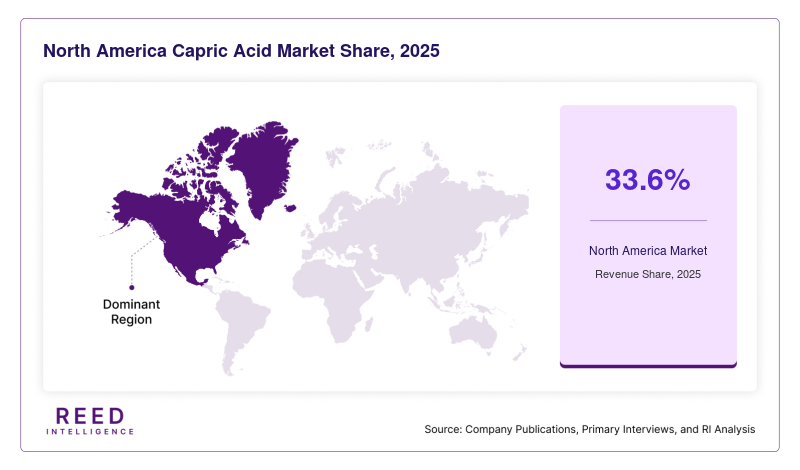
North America accounted for a significant share of the Capric Acid Market, contributing approximately 33.6% in 2025. The region is expected to grow at a CAGR of 7.5% during the forecast period. The presence of established personal care and pharmaceutical industries has supported steady demand for capric acid. Additionally, increasing investments in research and development have enhanced product innovation and application diversity. Regulatory support for bio-based chemicals has further encouraged manufacturers to adopt sustainable production methods.
The United States remains the dominant country in this region, driven by strong demand from the cosmetics and healthcare sectors. A key growth factor is the rising consumer preference for organic and natural products. This has led to increased adoption of plant-derived ingredients, including capric acid, in personal care formulations. The country’s advanced manufacturing infrastructure also supports large-scale production and distribution.
Europe
Europe held a market share of around 27.4% in 2025 and is projected to grow at a CAGR of 7.8% through 2034. The region’s focus on sustainability and environmental regulations has played a crucial role in driving the adoption of bio-based chemicals. Industries in Europe are increasingly shifting toward renewable raw materials, which has boosted the demand for capric acid derived from natural sources.
Germany is the leading country in this region, supported by its strong chemical manufacturing base. A unique growth factor is the emphasis on circular economy practices, which has encouraged the use of biodegradable and sustainable ingredients. This has created opportunities for capric acid in various industrial applications, including lubricants and coatings.
Asia Pacific
Asia Pacific is the fastest-growing region in the Capric Acid Market, with a projected CAGR of 9.4% during the forecast period. The region accounted for approximately 24.8% of the market in 2025. Rapid industrialization, urbanization, and population growth have significantly increased demand for personal care products and processed foods, driving the consumption of capric acid.
China dominates the regional market due to its large manufacturing base and availability of raw materials. A key growth factor is the expansion of the cosmetics and personal care industry, supported by rising disposable incomes and changing consumer preferences. The country’s strong supply chain for coconut and palm kernel oil also supports cost-effective production.
Middle East & Africa
The Middle East & Africa region held a market share of 7.2% in 2025 and is expected to grow at a CAGR of 6.9% during the forecast period. The region’s market growth is supported by increasing investments in industrial and chemical sectors. Additionally, the rising demand for personal care products has contributed to the adoption of capric acid.
Saudi Arabia is the leading country in this region, benefiting from its expanding industrial base. A unique growth factor is the diversification of the economy, which includes investments in specialty chemicals and manufacturing. This has created new opportunities for capric acid in various applications.
Latin America
Latin America accounted for approximately 7.0% of the Capric Acid Market in 2025 and is projected to grow at a CAGR of 7.1% through 2034. The region’s growth is driven by the increasing demand for cosmetics and processed foods. Additionally, the availability of raw materials supports local production.
Brazil leads the regional market, supported by its strong agricultural sector. A key growth factor is the increasing focus on bio-based products, which has encouraged the use of natural fatty acids. The country’s growing industrial base also supports the expansion of capric acid applications.
Competitive Landscape
The Capric Acid Market is characterized by moderate competition, with several global and regional players focusing on product innovation and capacity expansion. Leading companies are investing in sustainable production methods and expanding their product portfolios to meet diverse industry requirements. Strategic collaborations, mergers, and acquisitions are common strategies adopted to strengthen market presence.
A key leader in the market is Wilmar International Ltd., which has established a strong supply chain and extensive distribution network. The company recently expanded its production capacity for specialty fatty acids to meet rising demand from the personal care and pharmaceutical sectors. Other major players are also focusing on technological advancements and sustainability initiatives to gain a competitive edge. The market continues to evolve with increasing emphasis on eco-friendly products and efficient manufacturing processes.
Key Players List
- Wilmar International Ltd.
- KLK OLEO
- Emery Oleochemicals
- Croda International Plc
- Oleon NV
- IOI Oleochemical
- Musim Mas Group
- Pacific Oleochemicals Sdn Bhd
- VVF LLC
- Kao Corporation
- Arkema Group
- BASF SE
- Godrej Industries Ltd.
- Ecogreen Oleochemicals
- Procter & Gamble Chemicals
Recent Developments
- In 2025, Wilmar International Ltd. expanded its fatty acid production facility in Southeast Asia to increase output capacity.
- In 2024, Croda International Plc introduced a new range of bio-based capric acid derivatives for cosmetic applications.
- In 2025, KLK OLEO announced a strategic partnership with a pharmaceutical company to develop advanced drug delivery solutions using medium-chain fatty acids.
Capric Acid Market Segments
Type
- Natural Capric Acid
- Synthetic Capric Acid
Application
- Personal Care
- Pharmaceuticals
- Food & Beverages
- Industrial Applications
End-Use
- Cosmetics & Personal Care Industry
- Pharmaceutical Industry
- Food Industry
- Industrial Sector
By Region
- North America
- Europe
- APAC
- Middle East and Africa
- LATAM