Car Sharing Market Size, Share, Demand & Growth Analysis Report By Vehicle Type (Economy Cars, Premium Cars, SUVs, Electric Vehicles), By Service Model (Round-Trip Car Sharing, Free-Floating Car Sharing, Peer-to-Peer Car Sharing), By End User (Individual Users, Corporate Users), By Region (North America, Europe, Asia Pacific, Middle East & Africa, Latin America) – Global Forecast 2026–2034
USD 3950
Market Overview
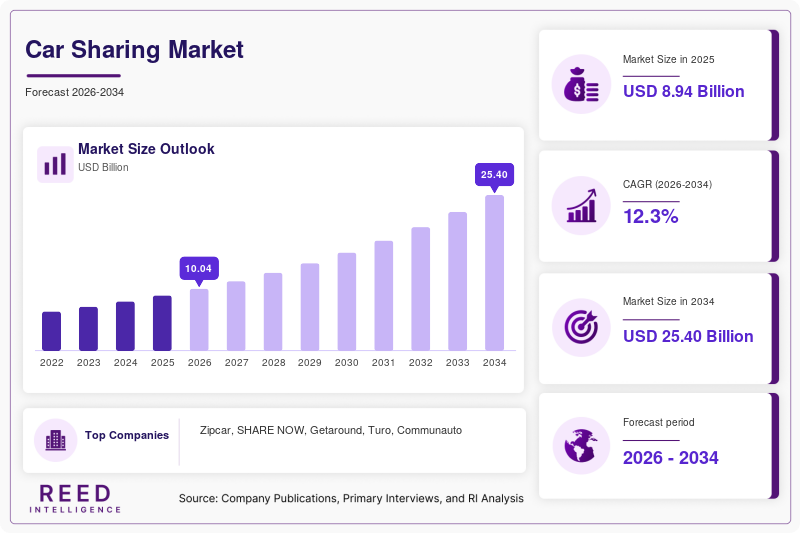
The Car Sharing Market size was valued at USD 8.94 billion in 2026 and is projected to reach USD 22.67 billion by 2034, expanding at a CAGR of 12.3% during 2026–2034. The market continues to evolve as urban mobility patterns shift toward flexible, cost-efficient, and technology-enabled transportation solutions. Car sharing services allow users to access vehicles on demand without the financial burden of ownership, creating an attractive alternative for urban commuters, students, tourists, and environmentally conscious consumers.
A major global factor supporting market growth is the increasing focus on sustainable transportation and reduced vehicle emissions. Governments across developed and emerging economies are encouraging shared mobility services through supportive regulations, smart city initiatives, and investments in digital transportation infrastructure. Rising fuel costs, parking constraints in metropolitan areas, and growing awareness regarding vehicle utilization efficiency have further accelerated adoption.
The integration of mobile applications, real-time vehicle tracking, digital payment systems, and artificial intelligence-based fleet management solutions has significantly improved user experience. Operators are increasingly deploying electric and hybrid vehicles within shared fleets, aligning business strategies with environmental objectives and evolving consumer preferences.
Key Highlights
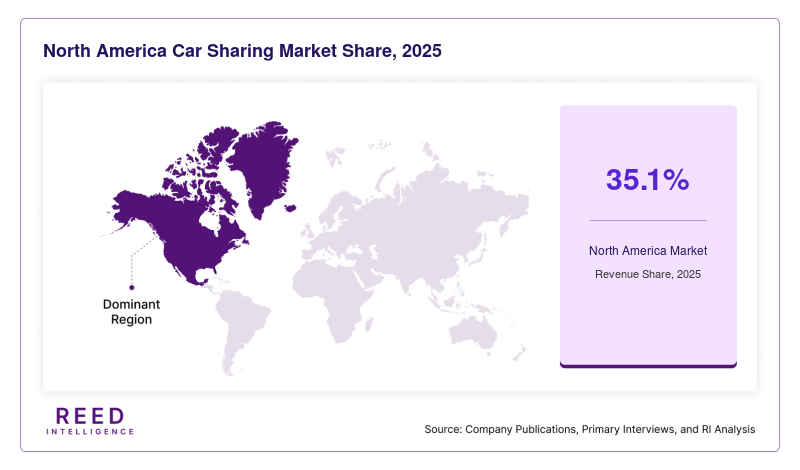
- North America dominated the market with a 35.1% share in 2025, while Asia Pacific is expected to grow at the fastest CAGR of 14.1% during 2026–2034.
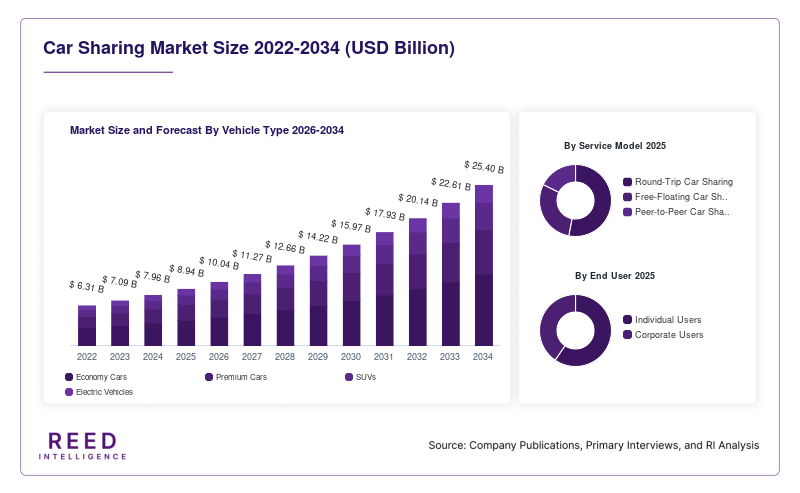
- By Vehicle Type, Economy Cars accounted for the largest share of 46.3%, while Electric Vehicles are projected to grow at a CAGR of 15.8%.
- By Service Model, Round-Trip Car Sharing led with a 52.7% share, whereas Free-Floating Car Sharing is expected to expand at a CAGR of 14.6%.
- By End User, Individual Users held a 68.9% share, while Corporate Users are projected to grow at a CAGR of 13.7%.
- The United States remained the dominant country, with market values of USD 2.31 billion in 2024 and USD 2.58 billion in 2025.
Market Trends
Expansion of Electric Vehicle Fleets in Shared Mobility Networks
One of the most influential trends shaping the Car Sharing Market is the rapid deployment of electric vehicles across shared mobility fleets. Service providers are increasingly investing in battery-powered vehicles to reduce operational emissions and comply with evolving environmental regulations. Electric fleets offer lower maintenance costs and improved energy efficiency, making them attractive for operators managing large vehicle inventories. Many municipalities are also providing incentives, charging infrastructure support, and preferential parking access for electric shared vehicles.
The trend is particularly visible in large metropolitan areas where governments are implementing low-emission zones and sustainability targets. Consumers are showing growing interest in environmentally responsible transportation options, encouraging operators to expand electric vehicle availability. Advanced battery technology, improved driving ranges, and faster charging capabilities are expected to further strengthen electric vehicle adoption within the car sharing ecosystem over the forecast period.
Integration of Artificial Intelligence and Predictive Fleet Management
Artificial intelligence is becoming a central component of modern car sharing operations. Providers are utilizing machine learning algorithms, predictive analytics, and real-time data monitoring to optimize fleet utilization, vehicle positioning, and maintenance schedules. These technologies help operators reduce downtime, improve vehicle availability, and enhance customer satisfaction.
AI-powered demand forecasting allows companies to identify peak usage periods and strategically distribute vehicles across high-demand locations. Predictive maintenance systems can detect potential mechanical issues before failures occur, reducing repair costs and improving fleet reliability. Furthermore, intelligent route optimization and dynamic pricing models are helping operators maximize profitability while maintaining competitive pricing structures. As digital transformation accelerates across transportation services, AI-driven fleet management is expected to become a standard operational framework throughout the industry.
Market Drivers
Rising Urbanization and Declining Preference for Vehicle Ownership
The growing concentration of populations in urban areas is creating favorable conditions for the Car Sharing Market. Congested roads, limited parking availability, and rising vehicle ownership costs are encouraging consumers to seek flexible mobility alternatives. Younger demographics increasingly prioritize access over ownership, viewing transportation as a service rather than a long-term asset investment.
Monthly expenses associated with purchasing, maintaining, insuring, and parking private vehicles continue to rise across major cities. Car sharing services provide a practical solution by allowing users to pay only when transportation is needed. This model offers greater financial flexibility while eliminating responsibilities related to vehicle maintenance and depreciation. The ongoing expansion of urban populations and changing consumer attitudes toward mobility are expected to remain major growth drivers throughout the forecast period.
Growth of Smart Cities and Digital Transportation Infrastructure
The development of smart cities worldwide is significantly supporting market expansion. Governments and municipal authorities are investing in intelligent transportation systems, connected infrastructure, and digital mobility platforms that improve the accessibility and efficiency of shared transportation services. These initiatives create an environment where car sharing can seamlessly integrate with public transit networks and multimodal mobility ecosystems.
Advancements in mobile connectivity, cloud computing, GPS technology, and digital payment solutions have simplified vehicle booking and management processes. Users can locate, reserve, unlock, and return vehicles through mobile applications within minutes. Such convenience has increased consumer acceptance and usage frequency. As smart city projects continue expanding across developed and emerging economies, car sharing providers are expected to benefit from stronger infrastructure support and broader consumer adoption.
Market Restraint
Operational Complexity and High Fleet Management Costs
Despite strong growth prospects, the Car Sharing Market faces challenges associated with fleet management and operational expenses. Maintaining a large fleet requires substantial investments in vehicle acquisition, insurance, maintenance, cleaning, parking arrangements, software infrastructure, and customer support systems. These costs can place significant pressure on profitability, particularly in highly competitive urban markets.
Vehicle damage, theft, misuse, and inconsistent demand patterns further complicate operations. Operators must continuously monitor fleet conditions and redistribute vehicles to maintain service quality. In some cities, regulatory uncertainty and parking restrictions can increase operating costs and reduce expansion opportunities. For example, providers entering new metropolitan markets often face substantial upfront investments in fleet deployment and digital infrastructure before achieving sustainable utilization rates. These challenges may limit profitability and slow expansion efforts for smaller market participants.
Market Opportunities
Emerging Demand in Tier-Two and Tier-Three Cities
Significant opportunities are emerging beyond major metropolitan centers as shared mobility awareness increases in smaller cities. Rising urban development, expanding digital connectivity, and growing smartphone penetration are creating favorable conditions for car sharing adoption in secondary urban markets. Consumers in these locations often face transportation gaps that can be addressed through flexible vehicle access solutions.
Operators are increasingly evaluating expansion strategies targeting underserved regions where competition remains relatively limited. Local governments are also exploring mobility initiatives designed to reduce congestion and improve transportation accessibility. As infrastructure development progresses and consumer familiarity with digital mobility platforms increases, tier-two and tier-three cities are expected to become important growth avenues for industry participants during the forecast period.
Corporate Mobility and Subscription-Based Transportation Services
The increasing adoption of corporate mobility programs presents another attractive opportunity for market participants. Businesses are seeking cost-effective transportation alternatives that reduce capital expenditures associated with maintaining dedicated vehicle fleets. Car sharing services provide flexible transportation solutions for employee travel, client meetings, and short-term mobility requirements.
Subscription-based mobility models are also gaining momentum. These services offer users predictable monthly costs combined with access to multiple vehicle categories. Such arrangements appeal to consumers seeking convenience without long-term ownership commitments. The combination of corporate demand, flexible subscriptions, and integrated mobility packages is expected to create new revenue streams and strengthen market growth over the coming years.
Segmental Analysis
By Vehicle Type
Economy Cars represented the dominant subsegment and accounted for 46.3% of the market share in 2024. These vehicles remain the preferred option due to their affordability, fuel efficiency, and suitability for short-distance urban travel. Most car sharing users prioritize convenience and cost savings, making economy vehicles the most utilized category within shared fleets. Operators also benefit from lower acquisition and maintenance expenses compared with premium vehicle categories. The widespread availability of economy cars enables providers to maintain competitive pricing structures and maximize fleet utilization rates. Their versatility across commuting, shopping, and personal transportation needs continues to support strong demand in both developed and emerging markets.
Electric Vehicles are projected to be the fastest-growing subsegment, expanding at a CAGR of 15.8% during the forecast period. The growth is driven by increasing environmental awareness, government incentives, and advancements in battery technology. Shared mobility providers are actively replacing conventional vehicles with electric alternatives to reduce operating costs and align with sustainability objectives. Improved charging infrastructure and longer driving ranges are enhancing consumer confidence and service reliability. In addition, cities implementing emission reduction targets are encouraging operators to deploy larger electric fleets. These factors collectively position electric vehicles as a major growth catalyst within the evolving car sharing industry landscape.
By Service Model
Round-Trip Car Sharing held the largest market share of 52.7% in 2024. This model requires users to return vehicles to their original pickup location, making fleet management more predictable and operationally efficient. The structure is widely utilized by commuters, students, and occasional drivers seeking reliable access to transportation. Operators benefit from simplified vehicle tracking and maintenance scheduling, while users appreciate consistent availability and straightforward booking processes. The model remains particularly popular in regions with established shared mobility infrastructure and designated parking facilities. Its ability to support predictable utilization patterns has contributed significantly to its continued market leadership.
Free-Floating Car Sharing is expected to record the fastest growth, registering a CAGR of 14.6% through 2034. Unlike round-trip systems, users can pick up and leave vehicles within designated service zones, offering greater flexibility and convenience. This operational model aligns well with urban mobility needs, particularly in densely populated cities where consumers prioritize efficiency and spontaneous travel options. Technological advancements in GPS tracking, mobile connectivity, and digital fleet management are facilitating wider deployment of free-floating services. As urban consumers increasingly seek seamless transportation experiences, demand for this flexible service model is expected to accelerate substantially.
By End User
Individual Users accounted for the largest share of 68.9% in 2024, making them the dominant end-user segment within the Car Sharing Market. The segment benefits from growing consumer preference for on-demand transportation solutions that eliminate ownership-related expenses. Individuals increasingly utilize car sharing services for commuting, shopping, social activities, and occasional travel requirements. Rising urbanization, parking constraints, and evolving lifestyle preferences continue driving adoption among personal users. Mobile applications and digital payment systems have simplified access to shared vehicles, encouraging frequent usage. The convenience, affordability, and flexibility associated with car sharing services have strengthened the segment's leading position across global markets.
Corporate Users are anticipated to witness the fastest growth, with a projected CAGR of 13.7% during 2026–2034. Organizations are increasingly adopting shared mobility solutions to reduce transportation costs and improve operational efficiency. Car sharing services provide businesses with flexible access to vehicles without the capital investment and maintenance responsibilities associated with fleet ownership. Many companies are integrating shared mobility into employee travel programs as part of broader sustainability initiatives. The growing emphasis on cost optimization, environmental responsibility, and workforce mobility is expected to drive substantial demand from corporate customers throughout the forecast period.
Regional Analysis
North America
North America accounted for 35.1% of the Car Sharing Market in 2025 and is expected to expand at a CAGR of 11.4% through 2034. The region benefits from advanced digital infrastructure, high smartphone penetration, and strong consumer familiarity with shared mobility platforms. Mature urban transportation ecosystems and widespread adoption of app-based services have contributed significantly to market development. Increasing sustainability initiatives and growing interest in reducing vehicle ownership costs continue supporting demand across major metropolitan areas.
The United States remains the dominant country within the regional market. A key growth factor is the increasing integration of car sharing services with corporate mobility programs and multimodal transportation networks. Businesses are adopting shared transportation solutions to optimize travel expenses and improve operational flexibility. Strong investments in mobility technology and electric vehicle deployment further support market expansion throughout the country.
Europe
Europe represented 29.4% of the global market in 2025 and is projected to grow at a CAGR of 11.8% during the forecast period. The region benefits from strong environmental regulations, widespread public transportation infrastructure, and increasing consumer preference for sustainable mobility solutions. Urban congestion and parking constraints encourage residents to utilize shared vehicles as an alternative to private car ownership. The presence of established mobility providers further supports market growth.
Germany leads the European market due to its advanced automotive ecosystem and high adoption of digital mobility services. A unique growth factor is the implementation of low-emission urban zones across major cities. These policies encourage consumers to use shared transportation options, particularly electric vehicle fleets, contributing to sustained market development and increasing service penetration.
Asia Pacific
Asia Pacific held 22.7% market share in 2025 and is anticipated to register the fastest CAGR of 14.1% through 2034. Rapid urbanization, expanding middle-class populations, and increasing smartphone usage are driving market expansion throughout the region. Governments are investing heavily in smart transportation systems, while consumers increasingly seek affordable and flexible mobility solutions. The large population base creates substantial opportunities for service providers.
China dominates the regional market due to its extensive urban population and strong digital ecosystem. A distinctive growth factor is government support for shared and electric mobility initiatives. Investments in charging infrastructure, intelligent transportation systems, and sustainable urban development programs continue accelerating adoption rates and creating favorable conditions for market participants.
Middle East & Africa
The Middle East & Africa accounted for 6.4% of the market in 2025 and is expected to expand at a CAGR of 10.6% during 2026–2034. Market growth is supported by increasing urbanization, tourism activity, and digital transformation initiatives. Several countries are investing in smart city development programs that encourage adoption of innovative transportation services. Growing awareness of mobility-as-a-service concepts is also contributing to demand.
The United Arab Emirates represents the leading country within the region. A unique growth factor is the government's commitment to smart mobility and autonomous transportation initiatives. Large-scale infrastructure projects and technology-driven urban development programs are fostering favorable conditions for shared mobility operators and attracting new market investments.
Latin America
Latin America captured 6.4% market share in 2025 and is forecast to grow at a CAGR of 10.9% through 2034. Rising urban populations, traffic congestion, and increasing digital payment adoption are contributing to market development. Consumers are gradually embracing shared transportation services as economical alternatives to vehicle ownership. Expanding internet connectivity and mobile application usage are further enhancing service accessibility across regional markets.
Brazil remains the dominant country in Latin America. A significant growth factor is the rising adoption of app-based transportation solutions among younger urban consumers. Increased digital engagement and evolving mobility preferences are creating strong demand for flexible transportation services, encouraging providers to expand fleet availability and geographic coverage.
Competitive Landscape
The Car Sharing Market remains moderately consolidated, with established mobility providers competing alongside emerging technology-driven operators. Market participants focus on fleet expansion, digital platform enhancement, strategic partnerships, and electric vehicle deployment to strengthen competitive positioning. Companies are increasingly leveraging artificial intelligence, predictive analytics, and real-time fleet monitoring technologies to improve operational efficiency and customer experience.
Zipcar continues to be a leading participant due to its extensive network coverage, strong brand recognition, and established customer base. The company recently expanded its electric vehicle offerings across several metropolitan markets to support sustainability objectives and enhance service differentiation.
Other notable companies are strengthening market presence through geographic expansion and mobility ecosystem integration. Strategic collaborations with municipalities, public transportation authorities, and corporate clients are becoming increasingly common. Competitive intensity is expected to increase as providers invest in autonomous mobility technologies, advanced digital platforms, and flexible subscription-based service models designed to attract diverse customer segments.
Key Players
- Zipcar
- SHARE NOW
- Getaround
- Turo
- Communauto
- GreenMobility
- Modo Cooperative
- Hiyacar
- Socar
- Evie Carshare
- BlueSG
- Ubeeqo
- GoGet
- Cambio Mobility Service
- Gig Car Share
Recent Developments
- In 2026, a major car sharing operator introduced an AI-powered fleet optimization platform designed to improve vehicle availability and utilization rates across urban markets.
- In 2025, a leading mobility provider expanded its electric vehicle fleet by more than 25% across North America and Europe to support sustainability goals.
- In 2025, several car sharing companies partnered with municipal transportation agencies to integrate shared vehicles into multimodal mobility applications.
- In 2024, a prominent shared mobility platform launched subscription-based vehicle access programs targeting frequent urban commuters.
- In 2024, multiple operators expanded service coverage into secondary cities to capture growing demand outside major metropolitan areas.
Car Sharing Market Segments
By Vehicle Type
- Economy Cars
- Premium Cars
- SUVs
- Electric Vehicles
By Service Model
- Round-Trip Car Sharing
- Free-Floating Car Sharing
- Peer-to-Peer Car Sharing
By End User
- Individual Users
- Corporate Users
By Region
- North America
- Europe
- APAC
- Middle East and Africa
- LATAM