Carbon Fibre Composites Prosthetic Market Size, Share, Demand Report By Product Type (Lower Limb Prosthetics, Upper Limb Prosthetics, Sports & Performance Prosthetics, Cosmetic Prosthetics), By End-Use (Hospitals, Prosthetic Clinics, Rehabilitation Centers, Homecare Settings), By Application (Mobility Assistance, Sports & Athletic Performance, Daily Living Support, Rehabilitation Therapy), and Regional Forecasts, 2026–2034
USD 3950
Market Overview
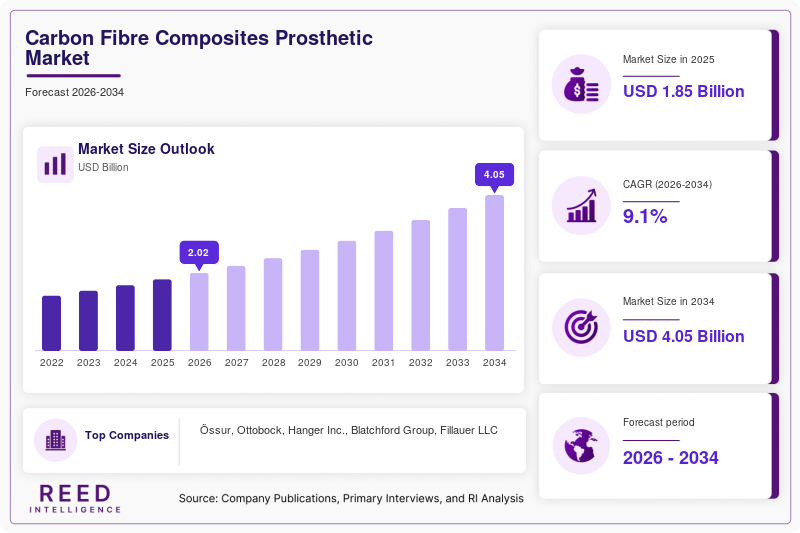
The Carbon Fibre Composites Prosthetic Market size was valued at approximately USD 1.85 billion in 2026 and is projected to reach USD 3.72 billion by 2034, expanding at a CAGR of 9.1% during the forecast period (2026–2034). The market continues to evolve due to the growing adoption of lightweight, durable, and high-performance prosthetic solutions, particularly among active users and athletes. Carbon fibre composites offer superior strength-to-weight ratio, fatigue resistance, and flexibility compared to traditional materials, making them highly suitable for advanced prosthetic limbs.
A key global factor supporting market growth is the increasing prevalence of limb loss caused by diabetes, trauma, and vascular diseases. Rising healthcare expenditure and improved access to rehabilitation services have further encouraged the integration of technologically advanced prosthetics. Additionally, the growing emphasis on patient mobility, quality of life, and personalized healthcare solutions has accelerated innovation in carbon fibre prosthetic components.
Key Highlights
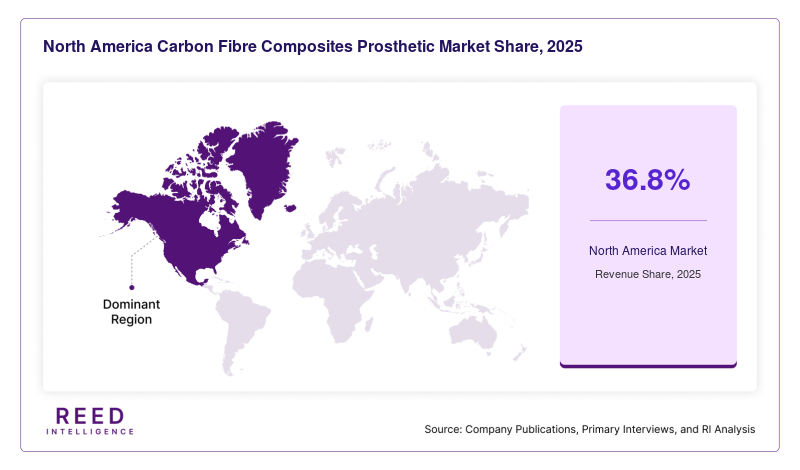
- North America dominated the market with a 36.8% share in 2025.
- Asia Pacific is expected to grow at the fastest CAGR of 10.7% during 2026–2034.
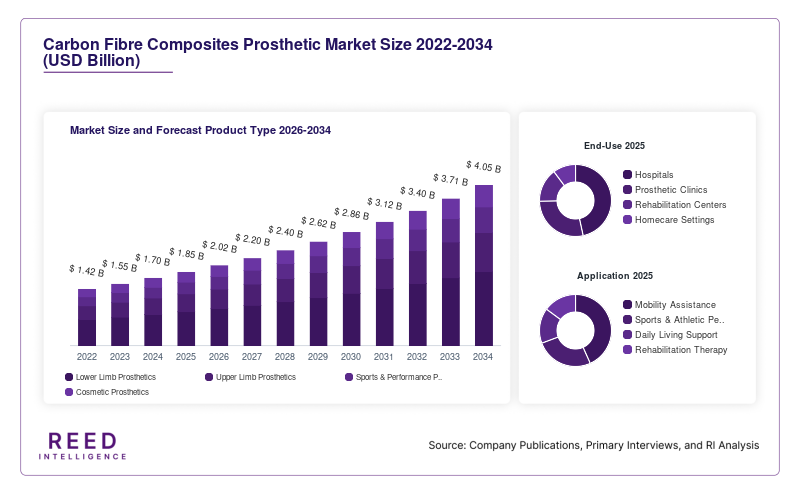
- By product type, lower limb prosthetics accounted for the largest share of 57.4%, while upper limb prosthetics are projected to grow at a CAGR of 9.8%.
- By end-use, hospitals led with a 44.1% share, whereas prosthetic clinics are expected to expand at a CAGR of 9.6%.
- The United States remained the dominant country, with market values of USD 620 million in 2024 and USD 680 million in 2025.
Market Trends
Increasing Integration of Smart Prosthetics with Carbon Fibre Components
The market is witnessing a shift toward smart prosthetics that combine carbon fibre structures with embedded sensors and microprocessors. These devices enhance functionality by enabling real-time adjustments based on user movement and terrain. Carbon fibre composites serve as the structural backbone, providing strength and flexibility while maintaining a lightweight design. This trend is particularly prominent in developed markets where patients demand high-performance solutions that replicate natural limb movement. The integration of IoT-enabled systems and AI-based gait analysis further enhances user experience. As technology costs gradually decline, smart prosthetics are becoming more accessible, thereby supporting broader market adoption.
Growing Demand for Customization and 3D Printing Technologies
Customization has become a central trend in the Carbon Fibre Composites Prosthetic Market, driven by the need for personalized fit and improved patient comfort. Advanced manufacturing techniques such as 3D printing and digital scanning enable precise fabrication of prosthetic components tailored to individual anatomy. Carbon fibre materials are increasingly used in hybrid manufacturing processes to ensure durability while maintaining design flexibility. This trend is gaining traction in both clinical and homecare settings, where patient-specific solutions lead to better outcomes. Additionally, customization reduces the need for frequent adjustments, improving long-term usability and patient satisfaction.
Market Drivers
Rising Incidence of Limb Amputations Globally
The increasing number of amputations due to chronic diseases such as diabetes, peripheral artery disease, and traumatic injuries is a major driver for the market. Aging populations and lifestyle-related health conditions have contributed to higher amputation rates, particularly in North America and parts of Europe. Carbon fibre prosthetics are preferred in these cases due to their durability and ability to support active lifestyles. The growing patient pool has encouraged healthcare providers to adopt advanced prosthetic technologies, thereby driving market growth. Governments and healthcare organizations are also expanding rehabilitation programs, further supporting demand.
Advancements in Material Science and Engineering
Continuous advancements in material science have significantly improved the performance characteristics of carbon fibre composites. Innovations such as enhanced resin systems, improved fibre alignment, and hybrid composite structures have increased strength, flexibility, and fatigue resistance. These improvements allow prosthetics to withstand high-impact activities while maintaining comfort. Additionally, research into cost-effective production methods is making carbon fibre prosthetics more accessible. As manufacturers continue to innovate, the market is expected to benefit from improved product offerings and wider adoption across various user groups.
Market Restraint
High Cost of Carbon Fibre Prosthetic Solutions
Despite their advantages, carbon fibre prosthetics remain relatively expensive compared to traditional alternatives such as plastic or metal-based devices. The high cost is attributed to raw material expenses, complex manufacturing processes, and the need for skilled labor. This pricing barrier limits adoption, particularly in low- and middle-income regions where healthcare budgets are constrained. Insurance coverage for advanced prosthetics is also inconsistent across different countries, further restricting access. As a result, many patients continue to rely on basic prosthetic solutions that do not offer the same level of performance or comfort. The industry is working toward reducing costs through automation and economies of scale, but affordability remains a key challenge that could slow market expansion.
Market Opportunities
Expansion in Emerging Markets
Emerging economies present significant growth opportunities for the Carbon Fibre Composites Prosthetic Market. Increasing healthcare investments, rising awareness about advanced prosthetic solutions, and improving access to medical services are driving demand in these regions. Governments are also implementing initiatives to support individuals with disabilities, including subsidies and rehabilitation programs. As infrastructure improves, manufacturers have the opportunity to establish local production facilities, reducing costs and increasing market penetration. This expansion is expected to contribute significantly to overall market growth during the forecast period.
Development of Sports and Performance Prosthetics
The growing popularity of adaptive sports and fitness activities has created a niche market for high-performance prosthetics. Carbon fibre composites are widely used in sports prosthetics due to their ability to store and release energy efficiently. Athletes require devices that offer speed, flexibility, and durability, making carbon fibre an ideal material. This segment is expected to grow rapidly as more individuals participate in competitive and recreational sports. Manufacturers are focusing on developing specialized products tailored to different sports, further expanding market opportunities.
Segmental Analysis
By Product Type
Lower limb prosthetics dominated the market in 2024, accounting for approximately 57.4% of the total share. These prosthetics are widely used due to the higher incidence of lower limb amputations caused by diabetes and vascular diseases. Carbon fibre composites are particularly suitable for lower limb applications as they provide strength, flexibility, and energy return, enabling users to perform daily activities with ease. The demand for advanced knee and foot prosthetics has also contributed to the dominance of this segment. Additionally, increasing awareness about mobility solutions and improved access to healthcare services have further supported growth.
Upper limb prosthetics are expected to be the fastest-growing segment, with a CAGR of 9.8% during the forecast period. The growth is driven by advancements in myoelectric prosthetics and increasing demand for functional and aesthetic solutions. Carbon fibre materials enhance the durability and lightweight nature of these devices, improving user comfort. The integration of advanced technologies such as sensors and AI-based controls further boosts adoption. As manufacturers continue to innovate, the upper limb segment is expected to witness significant growth.
By End-Use
Hospitals accounted for the largest share of 44.1% in 2024, driven by the availability of advanced medical facilities and skilled professionals. Hospitals play a critical role in the initial fitting and rehabilitation process, making them a primary point of care for prosthetic users. The adoption of carbon fibre prosthetics in hospitals is supported by the need for high-quality solutions that ensure patient mobility and recovery. Additionally, the presence of multidisciplinary teams enhances the effectiveness of prosthetic treatment.
Prosthetic clinics are projected to grow at the fastest CAGR of 9.6% during the forecast period. These specialized centers focus on personalized care and offer customized solutions tailored to individual needs. The growing preference for outpatient services and specialized care has contributed to the expansion of prosthetic clinics. Carbon fibre composites are widely used in these settings due to their adaptability and performance benefits. As demand for customized prosthetics increases, clinics are expected to play a more prominent role in the market.
By Application
Mobility applications dominated the market in 2024, accounting for a significant share due to the primary need for functional prosthetics. Carbon fibre prosthetics are widely used for walking, running, and other physical activities, making them essential for improving patient quality of life. The increasing focus on active lifestyles and rehabilitation has further driven demand in this segment. Manufacturers are continuously developing advanced solutions that enhance mobility and performance, supporting market growth.
Sports and performance applications are expected to grow at the fastest CAGR of 10.2%. The rising popularity of adaptive sports and increasing participation in athletic activities have created demand for high-performance prosthetics. Carbon fibre composites are ideal for these applications due to their energy-return capabilities and durability. Athletes require specialized devices that can withstand high-impact activities, driving innovation in this segment. As awareness about adaptive sports increases, this segment is expected to witness strong growth.
Regional Analysis
North America
North America accounted for approximately 36.8% of the market share in 2025 and is expected to grow at a CAGR of 8.7% during the forecast period. The region benefits from advanced healthcare infrastructure, high adoption of innovative technologies, and strong reimbursement frameworks. The presence of leading prosthetic manufacturers and research institutions further supports market growth. Increasing awareness about advanced prosthetic solutions and a growing number of amputees contribute to sustained demand.
The United States dominates the North American market, driven by high healthcare spending and strong research capabilities. A key growth factor is the increasing adoption of technologically advanced prosthetics among veterans and athletes. Government support programs and private insurance coverage have also improved accessibility, encouraging the use of carbon fibre prosthetics across various demographics.
Europe
Europe held a significant share of around 28.5% in 2025 and is projected to grow at a CAGR of 8.9%. The region’s growth is supported by well-established healthcare systems and increasing investments in medical technology. Countries such as Germany, the UK, and France are leading contributors, with a strong focus on rehabilitation and patient care.
Germany emerges as the dominant country in the region due to its advanced manufacturing capabilities and strong focus on innovation. A unique growth factor is the integration of prosthetic solutions into comprehensive rehabilitation programs, which enhances patient outcomes and drives demand for high-quality carbon fibre prosthetics.
Asia Pacific
Asia Pacific is expected to witness the fastest growth, with a CAGR of 10.7% during the forecast period, holding a 19.6% share in 2025. Rapid urbanization, increasing healthcare investments, and rising awareness about advanced prosthetics are key growth drivers. The region also benefits from a large patient pool and improving access to medical services.
China dominates the Asia Pacific market, supported by expanding healthcare infrastructure and government initiatives. A unique growth factor is the growing adoption of cost-effective manufacturing techniques, which reduce the overall cost of prosthetic devices and increase accessibility for a broader population.
Middle East & Africa
The Middle East & Africa region accounted for 8.1% of the market share in 2025 and is projected to grow at a CAGR of 9.3%. The market is driven by increasing healthcare investments and rising awareness about advanced prosthetic solutions. However, limited access to specialized care in certain areas remains a challenge.
Saudi Arabia leads the region, driven by significant healthcare spending and modernization initiatives. A key growth factor is the increasing focus on medical tourism, which has led to the adoption of advanced prosthetic technologies in specialized healthcare facilities.
Latin America
Latin America held a market share of 7.0% in 2025 and is expected to grow at a CAGR of 9.0%. The region is witnessing gradual improvements in healthcare infrastructure and increasing awareness about advanced prosthetic solutions. Brazil and Mexico are key contributors to market growth.
Brazil dominates the regional market, supported by government initiatives and expanding healthcare access. A unique growth factor is the growing number of rehabilitation centers, which provide specialized services and promote the adoption of carbon fibre prosthetics.
Competitive Landscape
The Carbon Fibre Composites Prosthetic Market is moderately competitive, with several global and regional players focusing on innovation and product development. Leading companies are investing in research and development to enhance the performance and affordability of carbon fibre prosthetics. Strategic partnerships, mergers, and acquisitions are common strategies adopted to expand market presence and strengthen product portfolios.
A key market leader is Össur, known for its advanced prosthetic solutions and strong global presence. The company continues to invest in innovation, particularly in smart prosthetics and digital integration. A recent development includes the launch of a new carbon fibre prosthetic foot designed for high-performance users, offering improved energy return and durability. Other major players are also focusing on expanding their product offerings and entering emerging markets to capture growth opportunities.
Key Players
- Össur
- Ottobock
- Hanger Inc.
- Fillauer LLC
- Blatchford Group
- WillowWood Global LLC
- Steeper Group
- College Park Industries
- Proteor Group
- Endolite India Ltd.
- Ortho Europe
- Trulife
- Naked Prosthetics
- Advanced Arm Dynamics
- Freedom Innovations
Recent Developments
- A leading manufacturer introduced a next-generation carbon fibre prosthetic knee with enhanced energy efficiency and adaptive control features.
- Several companies expanded their production facilities in Asia Pacific to reduce manufacturing costs and improve supply chain efficiency.
- A strategic partnership between a prosthetic company and a technology firm resulted in the development of AI-enabled carbon fibre prosthetics for improved mobility and user experience.
Carbon Fibre Composites Prosthetic Market Segments
Product Type
- Lower Limb Prosthetics
- Upper Limb Prosthetics
- Sports & Performance Prosthetics
- Cosmetic Prosthetics
End-Use
- Hospitals
- Prosthetic Clinics
- Rehabilitation Centers
- Homecare Settings
Application
- Mobility Assistance
- Sports & Athletic Performance
- Daily Living Support
- Rehabilitation Therapy
By Region
- North America
- Europe
- APAC
- Middle East and Africa
- LATAM