Cargo Hold Coating Market Size, Share Demand Report By Type (Epoxy Coatings, Polyurethane Coatings, Acrylic Coatings, Others), By Application (Bulk Carriers, Container Ships, Tankers, General Cargo Ships), By End-Use (Commercial Shipping, Offshore, Defense) By Region & Segment Forecasts, 2026–2034
USD 3950
Market Overview
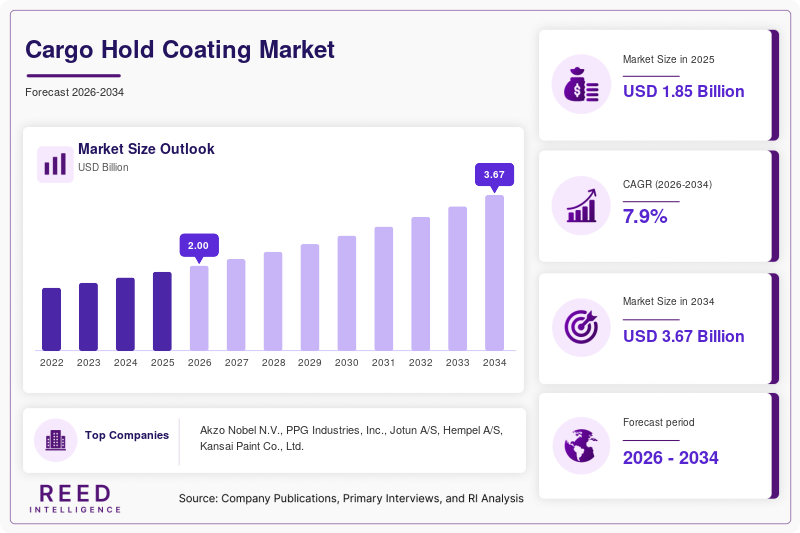
The Cargo Hold Coating Market was valued at approximately USD 1.85 billion in 2026 and is projected to reach USD 3.42 billion by 2034, expanding at a CAGR of 7.9% during the forecast period (2026–2034). This growth reflects the increasing demand for protective coatings in marine cargo holds to enhance durability, corrosion resistance, and compliance with international maritime standards. Cargo hold coatings are widely used in bulk carriers, tankers, and container ships to protect steel structures from aggressive cargo materials such as coal, grains, and chemicals.
A major global factor supporting market growth is the steady expansion of seaborne trade volumes. As international trade continues to rely heavily on maritime transportation, shipowners are investing in advanced coating systems that extend vessel lifespan and reduce maintenance costs. The adoption of environmentally compliant coatings, driven by stringent regulations on volatile organic compounds (VOCs), is also contributing to the market’s evolution.
Key Highlights
- North America dominated the market with a 32.8% share in 2025.
- Asia Pacific is expected to grow at the fastest CAGR of 9.3% during 2026–2034.
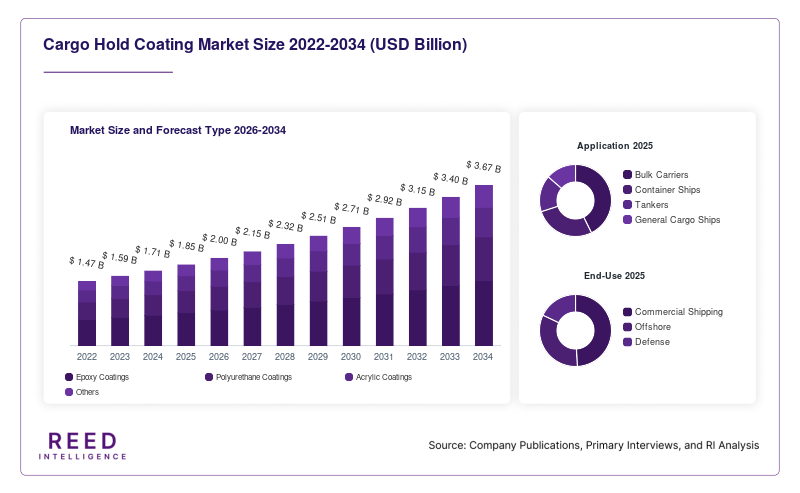
- By type, epoxy coatings accounted for the largest share of 46.7%.
- while polyurethane coatings are projected to grow at a CAGR of 8.8%.
- By application, bulk carriers led with a 49.5% share, whereas container ships are expected to expand at a CAGR of 8.5%.
- The United States remained the dominant country, with market values of USD 420 million in 2024 and USD 455 million in 2025.
Market Trends
Rising Adoption of Eco-Friendly and Low-VOC Coatings
The Cargo Hold Coating Market is witnessing a notable shift toward environmentally sustainable coating solutions. Manufacturers are increasingly developing low-VOC and solvent-free coatings to comply with global environmental regulations and maritime safety standards. These coatings reduce harmful emissions during application and curing, aligning with stricter guidelines set by international maritime organizations. Shipowners are adopting such solutions not only for compliance but also to enhance their environmental performance ratings. Additionally, waterborne coatings are gaining traction due to their reduced toxicity and improved worker safety. This trend is expected to continue as sustainability becomes a key purchasing criterion, particularly among large shipping companies aiming to meet decarbonization targets and corporate environmental goals.
Integration of Advanced Coating Technologies for Durability
Another key trend shaping the Cargo Hold Coating Market is the integration of advanced technologies to enhance coating performance. Innovations such as nano-enhanced coatings and hybrid systems are improving resistance to abrasion, chemical exposure, and moisture ingress. These coatings provide longer service intervals, reducing downtime and maintenance costs for ship operators. Smart coatings with self-healing and anti-corrosive properties are also emerging, offering improved lifecycle value. As vessel operators seek cost-efficient solutions with extended durability, the demand for technologically advanced coatings is increasing. This trend is particularly prominent in newer vessels, where long-term performance is a priority during initial coating selection.
Market Drivers
Growth in Global Maritime Trade and Fleet Expansion
The expansion of global maritime trade is a primary driver for the Cargo Hold Coating Market. Increasing demand for bulk commodities such as coal, iron ore, and agricultural products has led to a rise in the number of bulk carriers and cargo vessels. As new ships are constructed and older vessels undergo refurbishment, the need for high-performance coatings grows steadily. Cargo hold coatings play a critical role in maintaining structural integrity and preventing contamination of transported goods. Shipowners are prioritizing coatings that offer enhanced durability and minimal maintenance, especially as operational efficiency becomes a key focus area. The continued growth of international trade routes further reinforces this demand.
Stringent Regulatory Standards for Marine Coatings
Regulatory frameworks governing marine coatings are becoming increasingly stringent, driving the adoption of advanced coating solutions. Regulations related to corrosion protection, hygiene standards for food-grade cargo, and environmental emissions are compelling ship operators to invest in compliant coatings. For instance, coatings used in cargo holds transporting grains or edible materials must meet strict safety and contamination standards. Additionally, restrictions on VOC emissions are pushing manufacturers to innovate and develop eco-friendly alternatives. These regulatory pressures are creating a consistent demand for high-quality coatings, ensuring that the market continues to expand in line with evolving compliance requirements.
Market Restraint
High Application and Maintenance Costs
One of the key challenges in the Cargo Hold Coating Market is the high cost associated with application and maintenance. Advanced coatings often require specialized surface preparation, skilled labor, and controlled application environments to ensure optimal performance. These requirements significantly increase the overall cost for shipowners, particularly for large vessels with extensive cargo hold areas. Additionally, periodic inspections and recoating add to long-term operational expenses.
The financial burden is more pronounced for small and mid-sized shipping companies that operate on limited budgets. In such cases, cost considerations may lead to the selection of lower-quality coatings, which can result in reduced durability and higher maintenance frequency over time. Moreover, fluctuations in raw material prices, particularly for resins and solvents, further impact the cost structure of coating products. This restraint can slow down the adoption of premium coating solutions, especially in price-sensitive markets, thereby affecting overall market growth.
Market Opportunities
Increasing Demand for Retrofitting and Maintenance Services
The growing number of aging vessels presents a significant opportunity for the Cargo Hold Coating Market. Many ships in operation require periodic maintenance and retrofitting to remain compliant with safety and environmental standards. This creates a steady demand for recoating services and advanced coating systems that can enhance vessel performance. Shipowners are increasingly opting for coatings that offer quick curing times and minimal downtime during maintenance operations. The expansion of ship repair yards and dry dock facilities further supports this trend, providing a robust platform for coating manufacturers to offer specialized solutions tailored to retrofitting needs.
Expansion in Emerging Maritime Economies
Emerging economies in Asia Pacific, Latin America, and Africa are investing heavily in port infrastructure and maritime trade capabilities. This expansion is creating new opportunities for the Cargo Hold Coating Market. As these regions develop their shipping fleets and enhance trade routes, the demand for protective coatings is expected to rise. Local shipbuilding activities, coupled with government initiatives to boost exports, are driving the adoption of high-performance coatings. Additionally, increasing awareness about the benefits of advanced coatings in reducing maintenance costs is encouraging shipowners in these regions to invest in premium solutions, further supporting market growth.
Segmental Analysis
By Type
Epoxy coatings dominated the Cargo Hold Coating Market in 2024, accounting for approximately 46.7% of the total share. These coatings are widely preferred due to their excellent adhesion, chemical resistance, and durability. Epoxy coatings provide strong protection against corrosion and abrasion, making them suitable for cargo holds exposed to harsh materials such as coal and ores. Their ability to form a tough, impermeable barrier ensures long-lasting performance, reducing maintenance requirements. Additionally, epoxy coatings are compatible with various substrates, enhancing their versatility across different vessel types. The widespread use of epoxy coatings reflects their reliability and cost-effectiveness in demanding marine environments.
Polyurethane coatings are expected to be the fastest-growing subsegment, with a projected CAGR of 8.8% during the forecast period. These coatings offer superior flexibility, UV resistance, and aesthetic properties compared to traditional epoxy systems. The increasing demand for coatings that can withstand varying environmental conditions is driving the adoption of polyurethane solutions. Their ability to maintain structural integrity under thermal expansion and contraction makes them suitable for modern vessels operating in diverse climates. Furthermore, advancements in formulation technologies are improving their performance, making them an attractive option for shipowners seeking long-term durability and reduced maintenance costs.
By Application
Bulk carriers accounted for the largest share of the Cargo Hold Coating Market in 2024, with a share of 49.5%. These vessels transport large quantities of raw materials, which can cause significant wear and corrosion within cargo holds. As a result, high-performance coatings are essential to protect the structural integrity of these ships. The demand for durable coatings in bulk carriers is driven by the need to minimize maintenance downtime and extend vessel lifespan. Additionally, coatings used in these vessels must comply with stringent safety standards, particularly when transporting hazardous materials, further supporting their widespread adoption.
Container ships are expected to witness the fastest growth, with a CAGR of 8.5% during the forecast period. The expansion of global trade and e-commerce is driving the demand for container shipping, leading to increased investments in coating solutions. These vessels require coatings that offer quick curing times and high resistance to environmental factors. The growing emphasis on operational efficiency and cost reduction is encouraging shipowners to adopt advanced coatings that enhance performance and durability. This trend is expected to drive the growth of the container ship segment in the coming years.
By End-Use
Commercial shipping dominated the market in 2024, accounting for a significant share due to the extensive use of cargo vessels in global trade. This segment includes bulk carriers, tankers, and container ships that require high-performance coatings to withstand harsh operating conditions. The increasing volume of international trade is driving the demand for coatings in this segment. Shipowners are focusing on solutions that offer long-term protection and reduce maintenance costs, contributing to the dominance of commercial shipping in the market.
The offshore segment is projected to be the fastest-growing, with a CAGR of 8.2% during the forecast period. This growth is driven by increasing offshore exploration and production activities, which require specialized vessels with durable coating systems. Offshore vessels operate in highly corrosive environments, necessitating the use of advanced coatings that can withstand extreme conditions. The rising demand for energy resources is expected to drive the expansion of this segment, creating opportunities for coating manufacturers to develop innovative solutions tailored to offshore applications.
Regional Analysis
North America
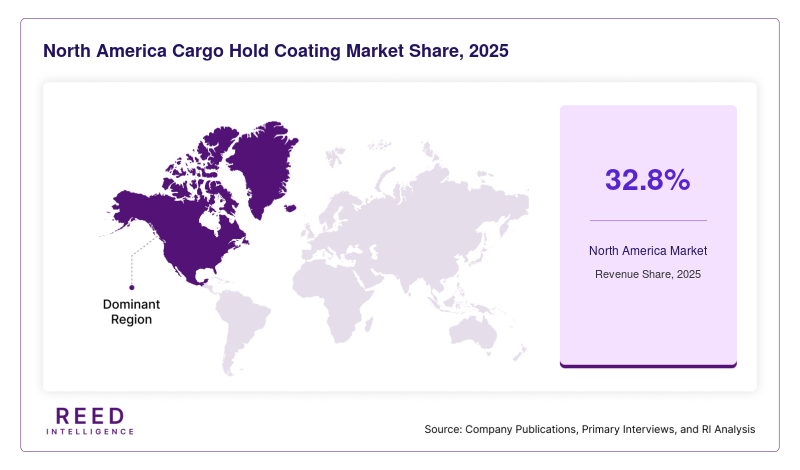
North America accounted for approximately 32.8% of the Cargo Hold Coating Market share in 2025 and is projected to grow at a CAGR of 6.8% during the forecast period. The region benefits from a well-established maritime infrastructure and a strong presence of coating manufacturers. The demand for high-performance coatings is driven by the need to maintain aging fleets and ensure compliance with stringent environmental regulations. Technological advancements in coating formulations also contribute to steady market growth in this region.
The United States remains the dominant country in North America, supported by its extensive shipping activities and advanced ship maintenance facilities. A unique growth factor in this region is the increasing investment in eco-friendly coating technologies. Shipowners are adopting low-VOC coatings to align with regulatory standards and improve sustainability metrics, which is boosting demand for innovative coating solutions.
Europe
Europe held a market share of 27.5% in 2025 and is expected to grow at a CAGR of 6.5% through 2034. The region’s strong maritime heritage and focus on environmental compliance drive the demand for advanced cargo hold coatings. European countries are known for their stringent regulations related to marine emissions and safety standards, which encourage the use of high-quality coatings.
Germany is a key contributor to the European market, driven by its robust shipbuilding industry and technological expertise. A unique growth factor in this region is the emphasis on research and development in coating technologies. European manufacturers are actively developing innovative solutions that offer improved durability and reduced environmental impact, enhancing the region’s market position.
Asia Pacific
Asia Pacific is the fastest-growing region, with a CAGR of 9.3% during the forecast period and a market share of 24.6% in 2025. The region’s growth is fueled by rapid industrialization, expanding shipbuilding activities, and increasing trade volumes. Countries such as China, South Korea, and Japan play a significant role in driving demand for cargo hold coatings.
China dominates the Asia Pacific market, supported by its large shipbuilding capacity and strong export-oriented economy. A unique growth factor in this region is the expansion of domestic shipping fleets to support regional trade. This has led to increased demand for durable and cost-effective coating solutions, making Asia Pacific a key growth hub for the market.
Middle East & Africa
The Middle East & Africa region accounted for 8.7% of the market share in 2025 and is projected to grow at a CAGR of 7.1%. The region’s strategic location along major trade routes supports maritime activities, driving the demand for cargo hold coatings. Investments in port infrastructure and shipping operations further contribute to market growth.
The United Arab Emirates is a leading market within this region, benefiting from its advanced port facilities and growing shipping industry. A unique growth factor is the increasing focus on logistics and trade diversification. Governments are investing in maritime infrastructure to reduce dependence on oil revenues, which is boosting demand for coating solutions in cargo vessels.
Latin America
Latin America held a market share of 6.4% in 2025 and is expected to grow at a CAGR of 6.9% during the forecast period. The region’s growth is driven by increasing exports of commodities such as agricultural products and minerals. As maritime trade expands, the need for protective coatings in cargo holds continues to rise.
Brazil is the dominant country in Latin America, supported by its strong agricultural export sector. A unique growth factor in this region is the modernization of port infrastructure and shipping fleets. Government initiatives aimed at improving trade efficiency are encouraging the adoption of advanced coating solutions, contributing to market growth.
Competitive Landscape
The Cargo Hold Coating Market is moderately consolidated, with key players focusing on product innovation, strategic partnerships, and regional expansion. Leading companies are investing in research and development to introduce advanced coatings that meet evolving regulatory and performance requirements. The competitive landscape is characterized by the presence of both global and regional players, each striving to strengthen their market position.
Akzo Nobel N.V. is considered a market leader, known for its extensive portfolio of marine coatings and strong global presence. The company has recently introduced a new range of eco-friendly coatings designed to reduce environmental impact while maintaining high performance standards. Other prominent players are also focusing on sustainability and innovation to gain a competitive edge.
Key Players List
- Akzo Nobel N.V.
- PPG Industries, Inc.
- Jotun A/S
- Hempel A/S
- Kansai Paint Co., Ltd.
- Nippon Paint Holdings Co., Ltd.
- Chugoku Marine Paints, Ltd.
- Sherwin-Williams Company
- BASF SE
- RPM International Inc.
- Axalta Coating Systems Ltd.
- KCC Corporation
- Berger Paints India Limited
- Asian Paints Limited
- Teknos Group
Recent Developments
- In 2025, a leading coatings manufacturer launched a low-VOC cargo hold coating designed for improved environmental compliance and durability.
- In 2024, a major player expanded its production facility in Asia Pacific to meet growing regional demand.
- In 2025, a strategic partnership was formed between a coating company and a shipbuilder to develop customized coating solutions for next-generation vessels.
Cargo Hold Coating Market Segments
Type
- Epoxy Coatings
- Polyurethane Coatings
- Acrylic Coatings
- Others
Application
- Bulk Carriers
- Container Ships
- Tankers
- General Cargo Ships
End-Use
- Commercial Shipping
- Offshore
- Defense
By Region
- North America
- Europe
- APAC
- Middle East and Africa
- LATAM