Carnitine Supplement Market Size, Share & Demand Report By Type (L-Carnitine, Acetyl-L-Carnitine, Propionyl-L-Carnitine), By Application (Dietary Supplements, Sports Nutrition, Pharmaceuticals), By End-Use (Adults, Geriatric, Athletes), By Distribution Channel (Online Retail, Pharmacies, Specialty Stores), By Region & Segment Forecasts, 2026–2034
USD 3950
Market Overview
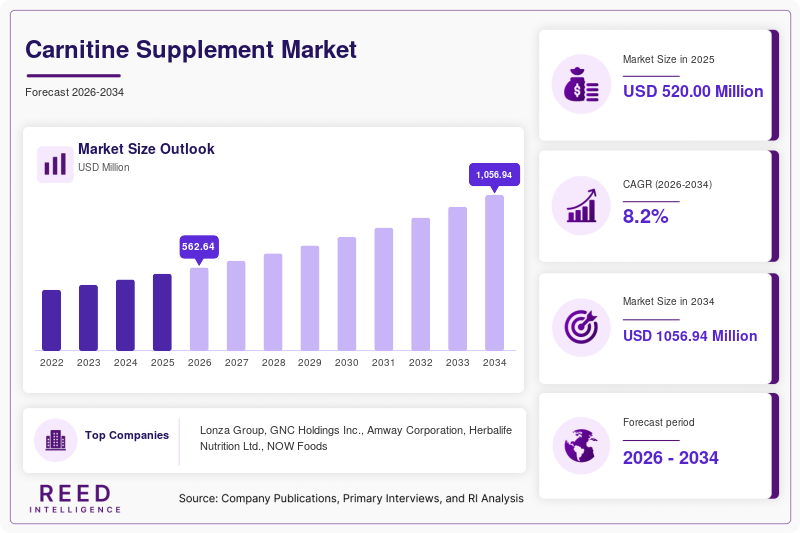
The Carnitine Supplement Market size was valued at approximately USD 520 million in 2026 and is projected to reach USD 980 million by 2034, expanding at a CAGR of 8.2% during the forecast period (2026–2034). The market growth is primarily supported by the rising global emphasis on preventive healthcare and nutritional supplementation. Increasing awareness regarding metabolic health, energy production, and weight management has led consumers to incorporate carnitine-based supplements into their daily routines. The growing fitness culture, coupled with the expansion of e-commerce platforms, has further facilitated product accessibility and consumer adoption across both developed and emerging economies.
Additionally, the aging population worldwide has contributed to increased demand for supplements that support cardiovascular health and muscle function. Carnitine plays a critical role in fatty acid metabolism and energy production, making it particularly relevant for individuals managing chronic conditions or seeking improved physical performance. Manufacturers are focusing on product innovation, including flavored liquids, capsules, and combination formulas, to cater to diverse consumer preferences and expand market penetration
Key Highlights
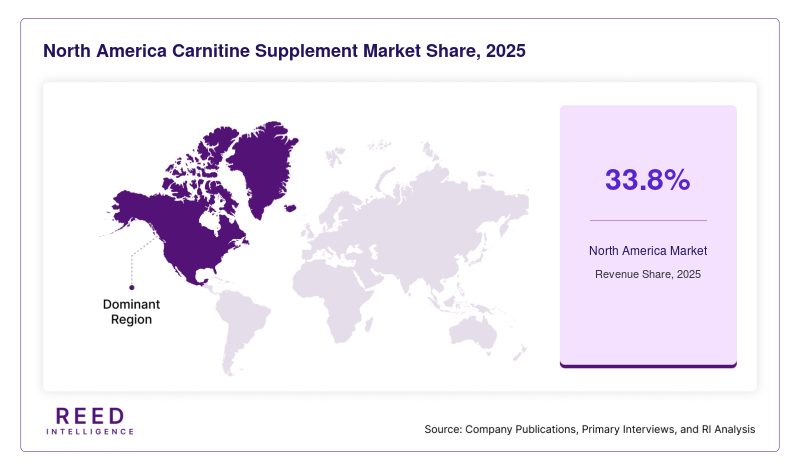
- North America dominated the market with a 33.8% share in 2025.
- Asia Pacific is expected to grow at the fastest CAGR of 10.9% during 2026–2034.
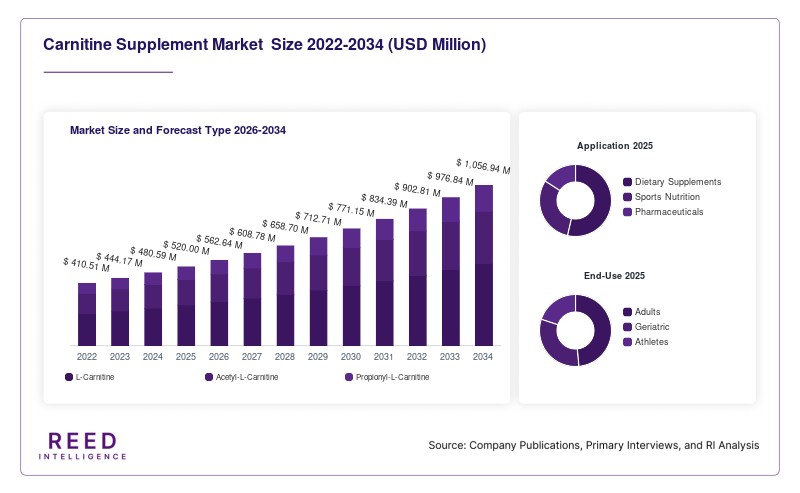
- By type, L-carnitine accounted for the largest share of 44.6%, while acetyl-L-carnitine is projected to grow at a CAGR of 9.6%.
- By application, dietary supplements led with a 48.3% share, whereas sports nutrition is expected to expand at a CAGR of 9.8%.
- The United States remained the dominant country, with market values of USD 210 million in 2024 and USD 230 million in 2025.
Market Trends
Rising Demand for Clean-Label and Plant-Based Supplements
Consumers are increasingly seeking clean-label and plant-based formulations within the Carnitine Supplement Market. This trend is driven by heightened awareness about ingredient transparency, sustainability, and ethical sourcing. Manufacturers are responding by offering products free from artificial additives, allergens, and genetically modified components. The demand for vegan-friendly carnitine alternatives, often synthesized through fermentation processes, is gaining traction among health-conscious and environmentally aware consumers. This shift is also influencing packaging strategies, with brands adopting eco-friendly materials to align with consumer values. As regulatory scrutiny intensifies, clean-label positioning is expected to remain a key differentiator in the competitive landscape.
Expansion of Personalized Nutrition Solutions
Personalized nutrition is emerging as a prominent trend shaping the Carnitine Supplement Market. Advances in digital health technologies, including wearable devices and health-tracking applications, enable consumers to tailor supplement intake based on individual metabolic needs and fitness goals. Companies are leveraging data analytics and genetic insights to develop customized carnitine formulations targeting specific health outcomes such as weight loss, cognitive function, or athletic performance. Subscription-based models and direct-to-consumer channels are facilitating this trend by offering tailored supplement plans. This approach not only enhances customer engagement but also drives brand loyalty, positioning personalized nutrition as a significant growth avenue.
Market Drivers
Growing Awareness of Metabolic Health and Fitness
The increasing global focus on metabolic health and physical fitness is a major driver of the Carnitine Supplement Market. Consumers are becoming more proactive in managing weight, energy levels, and overall well-being, leading to higher adoption of supplements that support fat metabolism. Carnitine’s role in transporting fatty acids into mitochondria for energy production makes it a preferred ingredient among fitness enthusiasts and athletes. The proliferation of fitness centers, online workout programs, and health influencers has amplified awareness about the benefits of carnitine supplementation. This trend is particularly strong among younger demographics seeking performance enhancement and improved endurance.
Increasing Prevalence of Lifestyle-Related Disorders
The rising incidence of lifestyle-related disorders such as obesity, diabetes, and cardiovascular diseases is driving demand for carnitine supplements. These conditions often require nutritional interventions to support metabolic processes and improve energy utilization. Healthcare professionals are increasingly recommending carnitine as part of dietary regimens to address deficiencies and enhance treatment outcomes. Additionally, the aging population is contributing to market growth, as older individuals seek supplements to maintain muscle function and reduce fatigue. The integration of carnitine into functional foods and beverages further broadens its application, supporting sustained market expansion.
Market Restraint
Regulatory Challenges and Product Standardization Issues
The Carnitine Supplement Market faces significant challenges related to regulatory compliance and product standardization. Dietary supplements are subject to varying regulations across regions, creating complexities for manufacturers in terms of labeling, safety testing, and approval processes. Inconsistent quality standards and the presence of counterfeit or substandard products can undermine consumer trust and hinder market growth. For instance, differences in permissible health claims between regions can limit marketing strategies and delay product launches. Additionally, stringent regulations in developed markets may increase operational costs, impacting profit margins. Addressing these challenges requires continuous investment in quality assurance and adherence to evolving regulatory frameworks.
Market Opportunities
Growth in Emerging Markets and E-commerce Channels
Emerging economies present substantial growth opportunities for the Carnitine Supplement Market. Rising disposable incomes, urbanization, and increasing health awareness are driving demand for nutritional supplements in regions such as Asia Pacific and Latin America. The expansion of e-commerce platforms has significantly improved product accessibility, enabling consumers to explore a wide range of carnitine supplements. Online retail channels also provide manufacturers with valuable consumer insights, facilitating targeted marketing strategies. As digital infrastructure continues to develop, e-commerce is expected to play a pivotal role in market expansion.
Innovation in Functional and Combination Products
Product innovation represents a key opportunity in the Carnitine Supplement Market. Manufacturers are developing combination products that integrate carnitine with other functional ingredients such as vitamins, amino acids, and herbal extracts. These formulations cater to specific health needs, including weight management, cognitive enhancement, and sports performance. The introduction of novel delivery formats, such as gummies and ready-to-drink beverages, enhances consumer convenience and appeal. Continuous research and development efforts are expected to drive innovation, enabling companies to differentiate their offerings and capture new market segments.
Segmental Analysis
By Type
L-carnitine emerged as the dominant subsegment in 2024, accounting for approximately 44.6% of the Carnitine Supplement Market share. Its widespread use in dietary supplements and functional foods is driven by its proven benefits in energy production and fat metabolism. L-carnitine is commonly used in capsule and liquid forms, making it accessible to a broad consumer base. The subsegment’s dominance is further supported by its affordability and availability across various distribution channels. Manufacturers continue to focus on enhancing product quality and expanding applications, reinforcing the strong market position of L-carnitine.
Acetyl-L-carnitine is projected to be the fastest-growing subsegment, with a CAGR of 9.6% during the forecast period. This growth is attributed to its potential cognitive benefits and increasing use in neurological health supplements. The rising prevalence of age-related cognitive decline has boosted demand for acetyl-L-carnitine formulations. Additionally, ongoing research highlighting its role in brain health and mental performance supports its adoption. Manufacturers are investing in innovative formulations to cater to this growing demand, driving the subsegment’s expansion.
By Application
Dietary supplements accounted for the largest share of the Carnitine Supplement Market in 2024, capturing approximately 48.3% of total revenue. The dominance of this subsegment is driven by the widespread use of carnitine in general health and wellness products. Consumers increasingly incorporate dietary supplements into their daily routines to improve energy levels and support metabolic health. The availability of diverse product formats, including capsules, powders, and liquids, enhances consumer accessibility and convenience. Strong marketing strategies and endorsements by health professionals further contribute to the subsegment’s growth.
Sports nutrition is expected to be the fastest-growing application segment, with a CAGR of 9.8% during the forecast period. The rising popularity of fitness activities and professional sports drives demand for performance-enhancing supplements. Carnitine’s role in improving endurance and reducing fatigue makes it a preferred ingredient in sports nutrition products. The increasing number of fitness enthusiasts and athletes worldwide supports the growth of this subsegment. Manufacturers are introducing specialized formulations targeting specific performance goals, further boosting market expansion.
By End-Use
Adults represented the dominant end-use segment in 2024, accounting for approximately 52.7% of the Carnitine Supplement Market share. The high adoption rate among adults is driven by increasing awareness of health and fitness. This demographic actively seeks supplements to manage weight, enhance energy levels, and support overall well-being. The availability of targeted marketing campaigns and product formulations tailored to adult consumers further strengthens this segment’s dominance. Additionally, the growing prevalence of lifestyle-related disorders among adults contributes to sustained demand.
The geriatric population is anticipated to be the fastest-growing end-use segment, with a CAGR of 9.1% during the forecast period. This growth is driven by the increasing aging population and rising demand for supplements that support muscle function and reduce fatigue. Carnitine’s role in improving energy metabolism makes it particularly beneficial for older individuals. Healthcare professionals often recommend carnitine supplementation to address age-related deficiencies. As awareness continues to grow, the geriatric segment is expected to contribute significantly to market expansion.
Regional Analysis
North America
North America accounted for a significant share of the Carnitine Supplement Market in 2025, contributing approximately 33.8% of global revenue. The region is expected to maintain steady growth with a CAGR of 7.6% during the forecast period. High consumer awareness regarding dietary supplements and strong distribution networks support market expansion. The presence of established manufacturers and advanced healthcare infrastructure further strengthens the region’s market position.
The United States dominates the North American market, driven by a well-established fitness culture and high adoption of nutritional supplements. A unique growth factor is the increasing integration of supplements into preventive healthcare practices. Consumers are actively seeking products that enhance energy levels and support metabolic health, driving sustained demand for carnitine-based formulations.
Europe
Europe held a substantial share of the Carnitine Supplement Market in 2025, accounting for approximately 27.4% of global revenue. The region is projected to grow at a CAGR of 7.8% during the forecast period. Stringent regulatory standards ensure product quality, which enhances consumer confidence. The growing popularity of sports nutrition and functional foods also contributes to market growth.
Germany emerges as the dominant country in Europe, supported by a strong emphasis on health and wellness. A unique growth factor is the increasing demand for plant-based supplements, driven by rising vegan and vegetarian populations. This trend encourages manufacturers to develop innovative, sustainable carnitine products tailored to regional preferences.
Asia Pacific
Asia Pacific is the fastest-growing region in the Carnitine Supplement Market, with a CAGR of 10.9% during the forecast period. The region accounted for approximately 22.6% of global revenue in 2025. Rapid urbanization, increasing disposable incomes, and growing health awareness are key factors driving market expansion.
China leads the Asia Pacific market, supported by a large population and expanding middle class. A unique growth factor is the rising popularity of traditional wellness practices combined with modern supplementation. Consumers are increasingly adopting carnitine supplements as part of holistic health regimens, boosting regional demand.
Middle East & Africa
The Middle East & Africa region accounted for a smaller share of the Carnitine Supplement Market in 2025, approximately 8.1%, but is expected to grow at a CAGR of 8.5%. Increasing awareness of health and fitness, along with improving economic conditions, supports market growth.
The United Arab Emirates stands out as a dominant country in this region. A unique growth factor is the rising number of fitness centers and wellness initiatives promoting active lifestyles. Government efforts to encourage healthy living further contribute to the adoption of dietary supplements, including carnitine.
Latin America
Latin America represented around 8.1% of the Carnitine Supplement Market in 2025 and is projected to grow at a CAGR of 8.3%. The region benefits from increasing consumer awareness and expanding retail networks. The growing popularity of sports and fitness activities also drives demand for supplements.
Brazil dominates the Latin American market, supported by a large consumer base and strong fitness culture. A unique growth factor is the increasing influence of social media on health trends, encouraging consumers to adopt dietary supplements for weight management and performance enhancement.
Competitive Landscape
The Carnitine Supplement Market is characterized by the presence of several established players and emerging companies focusing on product innovation and strategic expansion. Leading companies are investing in research and development to introduce advanced formulations and improve product efficacy. The market is moderately competitive, with players competing on factors such as quality, pricing, and brand reputation.
Lonza Group is recognized as a leading player in the market, leveraging its strong expertise in ingredient manufacturing and global distribution network. The company recently expanded its production capacity for carnitine-based ingredients to meet increasing demand. Other key players are adopting strategies such as partnerships, acquisitions, and product launches to strengthen their market position. The competitive landscape is expected to evolve further as new entrants introduce innovative products and technologies.
Key Players List
- Lonza Group
- NOW Foods
- GNC Holdings Inc.
- Amway Corporation
- Herbalife Nutrition Ltd.
- Nature’s Bounty
- NutraKey
- MusclePharm Corporation
- Optimum Nutrition
- Douglas Laboratories
- Kirkman Group
- Holland & Barrett
- Vitacost
- Swanson Health Products
- Twinlab Consolidation Corporation
Recent Developments
- Several companies have introduced innovative carnitine supplement formulations, including ready-to-drink beverages and flavored gummies, to enhance consumer convenience and appeal.
- A major manufacturer expanded its production facility in Asia to meet growing regional demand and improve supply chain efficiency.
- Strategic collaborations between supplement brands and fitness organizations have increased product visibility and consumer engagement, supporting market growth.
Carnitine Supplement Market Segments
Type
- L-Carnitine
- Acetyl-L-Carnitine
- Propionyl-L-Carnitine
Application
- Dietary Supplements
- Sports Nutrition
- Pharmaceuticals
End-Use
- Adults
- Geriatric
- Athletes
Distribution Channel
- Online Retail
- Pharmacies
- Specialty Stores
By Region
- North America
- Europe
- APAC
- Middle East and Africa
- LATAM