Cascara Product Market Size, Share & Demand Report By Product Type (Cascara Tea, Cascara Extract, Cascara Powder), By Application (Beverages, Food Products, Dietary Supplements), By End-Use (Food and Beverage Industry, Nutraceutical Industry, Retail and Household) By Region & Segment Forecasts, 2026–2034
USD 3950
Market Overview
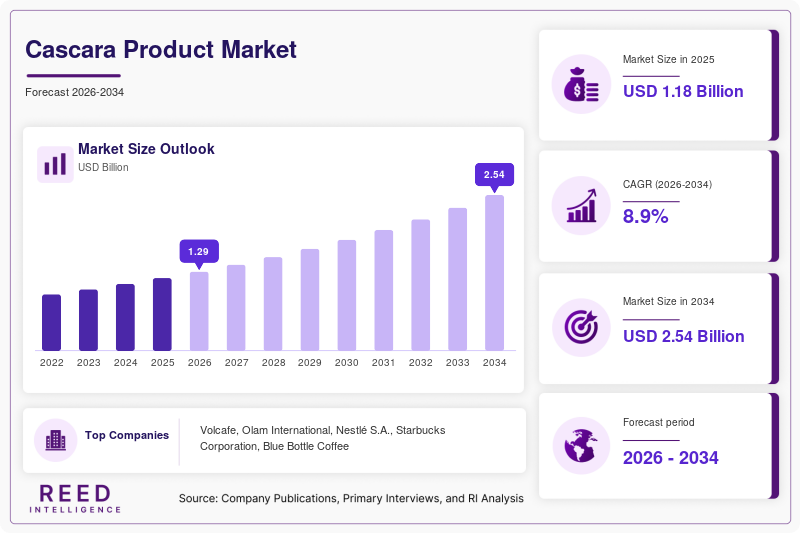
The global Cascara Product Market size was valued at approximately USD 1.18 billion in 2026 and is projected to reach USD 2.34 billion by 2034, expanding at a CAGR of 8.9% during the forecast period (2026–2034). Cascara, derived from dried coffee cherry husks, has gained traction as a sustainable and functional ingredient in beverages, snacks, and nutraceutical formulations. The market growth is largely supported by the rising global demand for upcycled food products, as consumers increasingly prioritize environmental responsibility and waste reduction in their purchasing decisions. Cascara aligns well with circular economy principles, converting coffee byproducts into value-added consumables, which has improved its acceptance among environmentally conscious consumers.
The growing interest in natural caffeine alternatives and antioxidant-rich beverages has further accelerated demand for cascara-based teas, energy drinks, and infusions. Manufacturers are investing in product innovation to improve taste profiles and expand application areas, especially in ready-to-drink beverages and health supplements. Additionally, increasing awareness about functional ingredients has supported the integration of cascara into premium food and beverage offerings across both developed and emerging economies.
Key Highlights
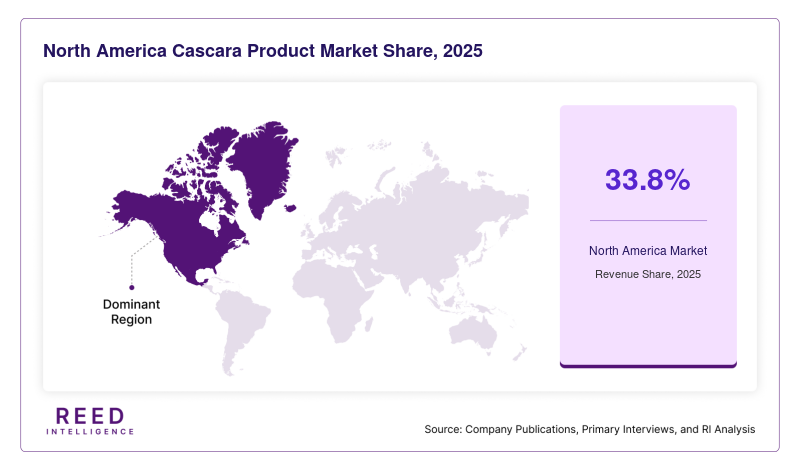
- North America dominated the market with a 33.8% share in 2025.
- Asia Pacific is expected to grow at the fastest CAGR of 10.7% during 2026–2034.
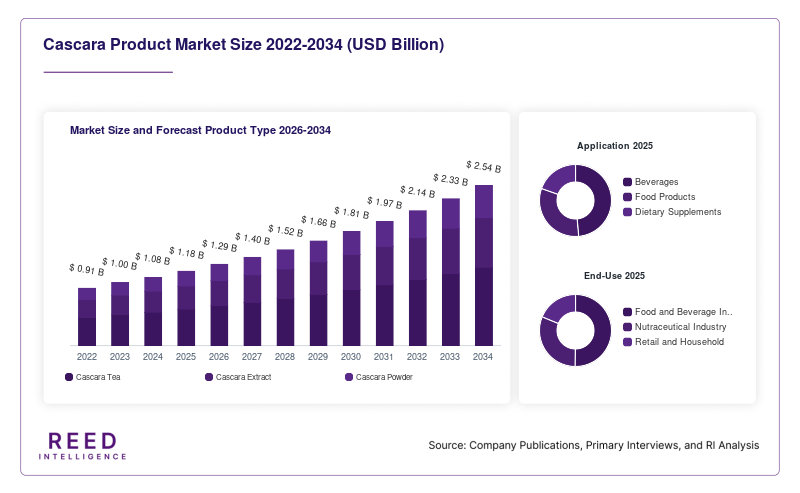
- By product type, cascara tea accounted for the largest share of 42.6%, while cascara extract is projected to grow at a CAGR of 11.3%.
- By application, beverages led with a 48.9% share, whereas dietary supplements are expected to expand at a CAGR of 10.9%.
- The United States remained the dominant country, with market values of USD 420 million in 2024 and USD 468 million in 2025.
Market Trends
Rising adoption of sustainable and upcycled food ingredients
The Cascara Product Market is experiencing a steady shift toward sustainable consumption patterns, driven by consumer awareness about food waste and environmental impact. Cascara, as a byproduct of coffee processing, is gaining recognition as an upcycled ingredient that aligns with sustainability goals. Food and beverage companies are increasingly incorporating cascara into their product lines to meet eco-conscious consumer expectations and reduce raw material wastage. This trend is also supported by regulatory encouragement in several regions that promote circular economy practices and sustainable sourcing. Brands are using sustainability claims as a marketing tool, which enhances product visibility and consumer engagement. The use of cascara in beverages, snacks, and functional foods reflects a broader movement toward responsible production systems, creating long-term growth potential for the market.
Expansion of functional beverage segment
Another notable trend is the increasing integration of cascara into functional beverages, including ready-to-drink teas, energy drinks, and wellness infusions. Consumers are actively seeking alternatives to traditional caffeinated drinks that offer additional health benefits, such as antioxidants and mild energy enhancement. Cascara provides a balanced caffeine content along with polyphenols, making it suitable for health-oriented beverage formulations. Beverage manufacturers are leveraging this profile to create innovative offerings that cater to fitness enthusiasts and wellness-focused consumers. The premiumization of beverages has further encouraged the inclusion of cascara as a specialty ingredient. This trend is expected to drive product differentiation and strengthen market competitiveness as companies continue to diversify their portfolios.
Market Drivers
Increasing demand for natural caffeine alternatives
The demand for natural and plant-based caffeine sources is a significant driver for the Cascara Product Market. Consumers are becoming more cautious about synthetic additives and highly processed ingredients, leading to a preference for naturally derived alternatives. Cascara offers a mild caffeine content compared to coffee, making it appealing to individuals seeking balanced energy without strong stimulatory effects. This has led to its adoption in beverages targeted at young professionals and health-conscious consumers. Additionally, its natural origin supports clean-label product development, which is a key purchasing factor in modern markets. As consumer awareness regarding ingredient transparency increases, cascara is expected to gain further traction as a reliable and sustainable caffeine source.
Growth in specialty coffee and allied industries
The expansion of the specialty coffee industry has indirectly contributed to the growth of cascara products. As coffee producers seek to maximize value from their crops, cascara has emerged as an additional revenue stream. Coffee farms and cooperatives are increasingly processing and selling cascara alongside coffee beans, enhancing profitability and resource efficiency. This integration has improved supply chain stability and product availability in the market. Furthermore, collaborations between coffee producers and beverage manufacturers have enabled the development of premium cascara-based products. The alignment between specialty coffee culture and cascara utilization continues to strengthen market growth, especially in regions with established coffee consumption patterns.
Market Restraint
Regulatory uncertainties and limited consumer awareness
Despite its growing popularity, the Cascara Product Market faces challenges related to regulatory frameworks and consumer awareness. In several countries, cascara has only recently gained approval for human consumption, and regulatory inconsistencies persist across regions. These variations create barriers for global market expansion and complicate product standardization. Additionally, limited consumer familiarity with cascara affects its adoption rate, particularly in regions where coffee byproducts are not traditionally consumed. Manufacturers must invest in marketing and educational initiatives to inform consumers about its benefits and usage. The lack of standardized quality guidelines also raises concerns regarding safety and consistency, which can impact consumer trust and hinder market growth in the long term.
Market Opportunities
Product diversification across food and nutraceutical sectors
The increasing application of cascara beyond beverages presents a significant opportunity for market expansion. Manufacturers are exploring its use in bakery products, confectionery, and dietary supplements due to its antioxidant properties and unique flavor profile. Cascara powder and extracts are being incorporated into energy bars, cereals, and functional snacks, catering to health-conscious consumers. This diversification enables companies to tap into multiple revenue streams and reduce dependence on a single product category. The nutraceutical sector, in particular, offers strong growth potential, as consumers seek natural ingredients that support wellness and preventive healthcare. Continued innovation in formulation and packaging is expected to enhance product appeal and drive adoption across diverse consumer segments.
Expansion in emerging markets
Emerging economies represent a promising growth avenue for the Cascara Product Market. Rising disposable incomes, urbanization, and evolving dietary preferences are contributing to increased demand for premium and functional food products. Countries in Asia Pacific and Latin America are witnessing a growing interest in specialty beverages and health-oriented ingredients. Local coffee production in these regions also supports cascara availability, reducing supply chain costs and encouraging domestic consumption. Market players are investing in distribution networks and partnerships to strengthen their presence in these regions. As awareness increases and regulatory frameworks become more supportive, emerging markets are expected to contribute significantly to overall market growth.
Segmental Analysis
By Product Type
Cascara tea emerged as the dominant subsegment, accounting for a 42.6% share in 2024. Its popularity can be attributed to its traditional preparation method and widespread consumer acceptance as a beverage alternative. Cascara tea offers a mild caffeine content and a fruity flavor profile, making it appealing to a broad consumer base. The segment benefits from strong demand in specialty cafés and retail outlets, where it is positioned as a premium product. Additionally, its compatibility with various flavors and ingredients supports product innovation and enhances market penetration across different regions.
Cascara extract is projected to be the fastest-growing subsegment, with a CAGR of 11.3% during the forecast period. The growth is driven by its versatility in applications, including dietary supplements, functional foods, and beverages. Extracts provide higher concentration levels of active compounds, making them suitable for health-focused formulations. The increasing demand for natural ingredients in nutraceuticals further supports this segment’s growth. Manufacturers are investing in advanced extraction technologies to improve product quality and consistency, which is expected to drive adoption in multiple industries.
By Application
The beverages segment dominated the market, holding a 48.9% share in 2024. Cascara’s primary use in beverages is supported by its compatibility with various drink formulations, including teas, energy drinks, and flavored infusions. The segment benefits from growing consumer interest in functional beverages that offer both taste and health benefits. Beverage manufacturers are leveraging cascara’s unique properties to create innovative products that cater to evolving consumer preferences. The increasing popularity of ready-to-drink formats further enhances the segment’s growth potential.
Dietary supplements are expected to be the fastest-growing subsegment, with a CAGR of 10.9%. The rising demand for natural health products and preventive healthcare solutions is driving the adoption of cascara in supplement formulations. Its antioxidant content and mild stimulant properties make it suitable for wellness-oriented products. Manufacturers are focusing on developing capsules, powders, and liquid extracts to meet diverse consumer needs. This segment’s growth is supported by increasing awareness of health benefits and the expansion of the nutraceutical industry.
By End-Use
The food and beverage industry accounted for the largest share of 54.3% in 2024, driven by extensive use of cascara in product formulations. The segment benefits from strong demand for innovative and sustainable ingredients that enhance product differentiation. Cascara’s unique flavor and functional properties make it suitable for a wide range of applications, including snacks, desserts, and beverages. Manufacturers are continuously exploring new ways to incorporate cascara into their product lines, supporting market growth.
The nutraceutical industry is anticipated to be the fastest-growing end-use segment, with a CAGR of 11.1%. The increasing focus on health and wellness has driven demand for natural ingredients with functional benefits. Cascara’s antioxidant properties and potential health advantages make it a suitable ingredient for dietary supplements and wellness products. Companies are investing in research and development to explore new applications and improve product efficacy. This trend is expected to drive significant growth in the segment over the forecast period.
Regional Analysis
North America
North America accounted for a significant share of 33.8% in 2025 and is projected to maintain steady growth with a CAGR of 8.1% during the forecast period. The region’s strong preference for specialty beverages and sustainable products has supported the adoption of cascara-based offerings. The presence of established beverage manufacturers and increasing demand for functional drinks contribute to consistent market expansion. Additionally, consumer inclination toward clean-label and organic products has further enhanced market penetration across the region.
The United States dominates the regional market due to its advanced food and beverage industry and high consumer awareness. A unique growth factor in the country is the increasing popularity of ready-to-drink cascara beverages, driven by busy lifestyles and convenience-oriented consumption patterns. This has encouraged manufacturers to invest in innovative packaging and flavor variations, strengthening the market position of cascara products.
Europe
Europe held a market share of approximately 27.4% in 2025 and is expected to grow at a CAGR of 8.5% through 2034. The region’s emphasis on sustainability and waste reduction aligns well with cascara’s upcycled nature. Regulatory support for sustainable food practices has facilitated market growth, while increasing consumer awareness about eco-friendly products continues to drive demand. The expansion of specialty cafés and artisanal beverage brands has also contributed to the popularity of cascara-based drinks.
Germany leads the European market due to its strong focus on environmental sustainability and innovation in the food sector. A key growth factor is the increasing demand for organic and ethically sourced ingredients, which has encouraged the adoption of cascara in premium product lines. This trend is expected to sustain market growth and support product innovation in the region.
Asia Pacific
Asia Pacific is anticipated to register the fastest CAGR of 10.7% during the forecast period, supported by rising urbanization and changing consumer preferences. The region accounted for a 21.6% market share in 2025, with increasing demand for functional beverages driving growth. Expanding middle-class populations and growing awareness of health benefits associated with natural ingredients are key factors contributing to market expansion.
China dominates the regional market, driven by its large population and increasing consumption of health-oriented beverages. A unique growth factor is the rapid expansion of e-commerce platforms, which has improved product accessibility and consumer reach. This has enabled manufacturers to introduce cascara products to a broader audience, accelerating market growth.
Middle East & Africa
The Middle East & Africa region held a 9.2% share in 2025 and is projected to grow at a CAGR of 7.6%. The region’s developing food and beverage industry and increasing interest in specialty products are supporting market growth. While awareness of cascara remains limited, gradual improvements in distribution networks and marketing efforts are enhancing product visibility.
Ethiopia stands out as a dominant country due to its strong coffee production base. A key growth factor is the traditional familiarity with coffee byproducts, which facilitates the acceptance of cascara products. This cultural alignment supports local consumption and provides opportunities for export-oriented growth strategies.
Latin America
Latin America accounted for a 8.0% share in 2025 and is expected to grow at a CAGR of 8.9% during the forecast period. The region’s extensive coffee production provides a steady supply of cascara, supporting market development. Increasing investments in value-added products and sustainable practices are driving market growth across key countries.
Brazil dominates the regional market due to its large-scale coffee production and well-established agricultural infrastructure. A unique growth factor is the integration of cascara processing into existing coffee supply chains, which enhances efficiency and reduces production costs. This approach supports market expansion and strengthens regional competitiveness.
Competitive Landscape
The Cascara Product Market is moderately fragmented, with several regional and global players competing on product quality, innovation, and sustainability practices. Leading companies are focusing on expanding their product portfolios and strengthening supply chains to maintain competitive advantage. The market is characterized by collaborations between coffee producers and beverage manufacturers, which enhance product availability and innovation.
Volcafe is considered a leading player in the market, leveraging its extensive coffee supply network to produce high-quality cascara products. A recent development includes the introduction of a new cascara extract line aimed at the nutraceutical industry, reflecting the company’s focus on diversification. Other key players are investing in sustainable sourcing practices and marketing initiatives to improve brand visibility and consumer engagement.
Key Players
- Volcafe
- Olam International
- Nestlé S.A.
- Starbucks Corporation
- Blue Bottle Coffee
- Cascara Co.
- Stumptown Coffee Roasters
- Kohana Coffee
- Ritual Coffee Roasters
- Square Mile Coffee Roasters
- Tim Hortons
- Lavazza Group
- Peet’s Coffee
- Allegro Coffee Company
- Coffee Cherry Co.
Recent Developments
- Several companies have introduced ready-to-drink cascara beverages with improved flavor profiles to attract a broader consumer base.
- A leading coffee producer launched a cascara-based dietary supplement line targeting wellness-focused consumers.
- Strategic partnerships between coffee farms and beverage manufacturers have been established to enhance supply chain efficiency and product innovation.
Cascara Product Market Segments
Product Type
- Cascara Tea
- Cascara Extract
- Cascara Powder
Application
- Beverages
- Food Products
- Dietary Supplements
End-Use
- Food and Beverage Industry
- Nutraceutical Industry
- Retail and Household
By Region
- North America
- Europe
- APAC
- Middle East and Africa
- LATAM