Cat Bed Market Size, Share & Demand Report By Type (Standard Plush Beds, Orthopedic Beds, Heated Beds, Covered Beds), By Application (Indoor, Outdoor, Travel), By End-Use (Household, Commercial) & Segment Forecasts, 2026–2034
USD 3950
Market Overview
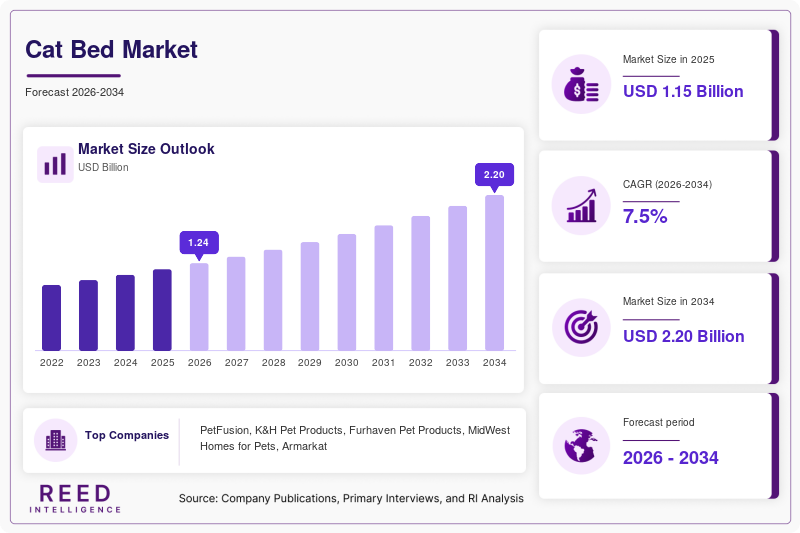
The global Cat Bed Market size was valued at approximately USD 1.15 billion in 2026 and is projected to reach USD 2.05 billion by 2034, expanding at a CAGR of 7.5% during the forecast period (2026–2034). The market growth is largely supported by the rising trend of pet humanization, where pet owners increasingly treat cats as family members and invest in premium comfort products. This behavioral shift has influenced purchasing patterns, with consumers prioritizing high-quality, ergonomic, and aesthetically appealing cat beds.
In addition, urbanization and the growing number of nuclear households have contributed to increased pet adoption rates, particularly among millennials and Gen Z consumers. These demographics are more inclined toward spending on specialized pet accessories that enhance the well-being of their pets. The availability of diverse product types, including orthopedic beds, heated beds, and eco-friendly materials, has further expanded the market scope. E-commerce platforms have also played a significant role in boosting sales by offering a wide range of options, competitive pricing, and convenient delivery.
Key Highlights
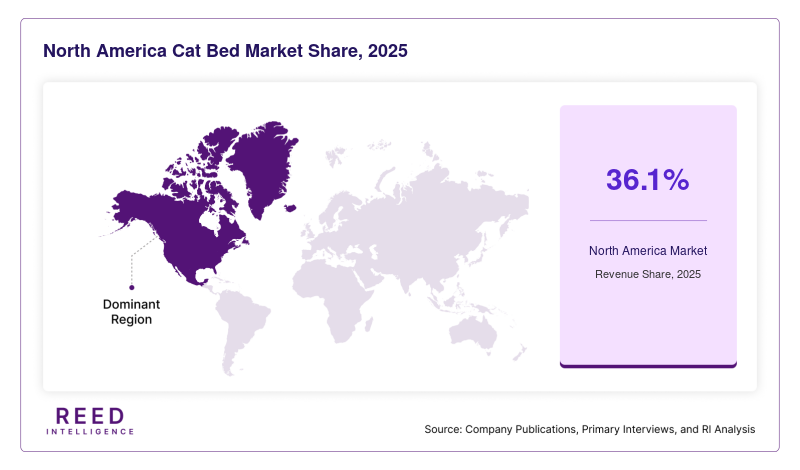
- North America dominated the market with a 36.1% share in 2025.
- Asia Pacific is expected to grow at the fastest CAGR of 9.3% during 2026–2034.
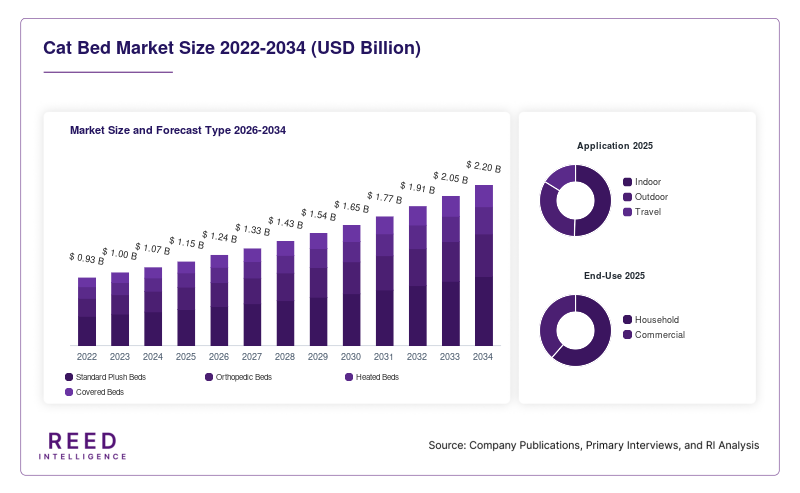
- By type, standard plush beds accounted for the largest share of 42.7%, while orthopedic beds are projected to grow at a CAGR of 8.8%.
- By application, indoor use led with a 68.4% share, whereas travel-friendly beds are expected to expand at a CAGR of 9.6%.
- The United States remained the dominant country, with market values of USD 320 million in 2024 and USD 345 million in 2025.
Market Trends
Growing demand for eco-friendly and sustainable pet products
Sustainability has become an important factor influencing purchasing decisions in the Cat Bed Market. Consumers are increasingly seeking products made from organic cotton, recycled fibers, and biodegradable materials. This trend is driven by heightened environmental awareness and a desire to reduce carbon footprints. Manufacturers are responding by introducing eco-friendly product lines that align with sustainability goals while maintaining durability and comfort.
Brands are also adopting sustainable packaging solutions and ethical sourcing practices to appeal to environmentally conscious buyers. Certifications and transparency in manufacturing processes are becoming key differentiators in the competitive landscape. Additionally, premium pricing for sustainable products is gaining acceptance, especially among urban consumers. This trend is expected to accelerate as regulatory frameworks and consumer expectations around environmental responsibility continue to evolve.
Integration of design aesthetics with home décor
Another notable trend in the Cat Bed Market is the increasing emphasis on design aesthetics. Pet owners are no longer satisfied with basic functional products; instead, they prefer cat beds that complement their home interiors. This has led to the development of stylish, minimalist, and customizable designs that blend seamlessly with modern living spaces.
Manufacturers are collaborating with designers to create visually appealing products that cater to various décor themes. The use of neutral colors, premium fabrics, and modular designs is becoming more common. This trend is particularly strong in urban markets, where space optimization and visual harmony are important considerations. As a result, cat beds are evolving from simple pet accessories into lifestyle products, contributing to higher average selling prices and increased market value.
Market Drivers
Rising pet ownership and humanization of pets
The increasing number of cat owners globally is a major driver of the Cat Bed Market. Factors such as urban living, companionship needs, and lifestyle changes have contributed to higher adoption rates. Pet humanization further amplifies this trend, as owners seek to provide their pets with comfort and care similar to that of family members.
This behavioral shift has led to increased spending on premium pet products, including specialized beds designed for comfort, health, and convenience. Consumers are willing to invest in features such as orthopedic support, temperature control, and washable materials. The influence of social media and pet-centric communities has also encouraged owners to showcase their pets’ lifestyles, indirectly promoting higher consumption of pet accessories.
Expansion of e-commerce and direct-to-consumer channels
The rapid growth of e-commerce platforms has significantly boosted the Cat Bed Market. Online retail offers a wide variety of products, competitive pricing, and convenience, making it a preferred channel for consumers. Direct-to-consumer models have enabled brands to establish stronger relationships with customers and gather valuable insights for product development.
Digital marketing strategies, including targeted advertising and influencer collaborations, have enhanced product visibility and consumer engagement. Subscription models and personalized recommendations are further improving customer retention. The ease of comparing products and reading reviews has increased consumer confidence in online purchases. As internet penetration continues to rise globally, the e-commerce segment is expected to play a crucial role in sustaining market growth.
Market Restraint
Price sensitivity and availability of low-cost alternatives
Despite steady growth, the Cat Bed Market faces challenges related to price sensitivity among consumers. A significant portion of the market, particularly in developing regions, prefers low-cost alternatives or substitutes such as household items used as pet bedding. This limits the adoption of premium products and affects overall revenue growth.
The presence of unorganized players offering inexpensive products further intensifies competition and puts pressure on established brands to maintain competitive pricing. Additionally, frequent discounting in online channels can impact profit margins. While premium segments continue to grow, the overall market expansion may be constrained by affordability concerns. Manufacturers need to balance quality and cost to cater to a broader consumer base while maintaining brand value.
Market Opportunities
Increasing demand for smart and functional pet products
The integration of technology into pet products presents a significant opportunity for the Cat Bed Market. Smart cat beds equipped with features such as temperature control, health monitoring, and automated cleaning are gaining attention. These innovations cater to tech-savvy consumers who seek convenience and enhanced pet care solutions.
The development of multifunctional products that combine sleeping, playing, and monitoring functionalities is expected to drive demand. Partnerships with technology companies and investments in research and development can accelerate innovation in this segment. As awareness of pet health and wellness increases, smart products are likely to gain wider acceptance, contributing to higher market value.
Growth potential in emerging markets
Emerging economies offer substantial growth opportunities for the Cat Bed Market due to rising disposable incomes and increasing pet adoption rates. Urbanization and changing lifestyles are encouraging consumers to invest in pet care products. The expansion of retail infrastructure and e-commerce platforms in these regions is improving product accessibility.
Local manufacturers are also entering the market with affordable options tailored to regional preferences. International brands are leveraging strategic partnerships and localization strategies to penetrate these markets. As awareness of pet comfort and hygiene grows, demand for specialized cat beds is expected to increase, creating new revenue streams for industry players.
Segmental Analysis
By Type
The standard plush beds segment dominated the Cat Bed Market in 2024, accounting for approximately 42.7% of the total share. These beds are widely preferred due to their affordability, comfort, and availability in various designs and sizes. Plush beds are suitable for a wide range of cat breeds and are commonly used for indoor settings. Their soft materials and ease of maintenance make them a popular choice among consumers. Additionally, manufacturers offer a variety of customization options, including colors, patterns, and shapes, which enhances their appeal.
Orthopedic beds are emerging as the fastest-growing segment, with a projected CAGR of 8.8% during the forecast period. These beds are designed to provide enhanced support and comfort, particularly for older cats or those with joint issues. The growing awareness of pet health and wellness is driving demand for orthopedic products. Advanced materials such as memory foam and gel-infused cushions are being used to improve functionality. As consumers increasingly prioritize their pets’ well-being, the demand for specialized bedding solutions is expected to rise.
By Application
Indoor applications dominated the market in 2024, holding a share of 68.4%. Most cat owners prefer indoor environments for their pets, which increases the demand for indoor-specific bedding solutions. These beds are designed to complement home interiors and provide a comfortable resting space for cats. Features such as washable covers, anti-slip bases, and compact designs contribute to their popularity.
Travel-friendly beds are the fastest-growing application segment, with a CAGR of 9.6%. The increasing trend of pet travel and outdoor activities is driving demand for portable and lightweight bedding solutions. These products are designed for convenience, with features such as foldability and easy storage. The growing number of pet-friendly accommodations and transportation options is further supporting this segment’s growth.
By End-Use
Household use dominated the Cat Bed Market in 2024, accounting for a significant share due to the large number of individual pet owners. This segment benefits from consistent demand driven by pet adoption trends and consumer spending on pet care. Household users prioritize comfort, design, and affordability when selecting cat beds.
Commercial use, including pet hotels, veterinary clinics, and shelters, is the fastest-growing segment with a CAGR of 8.5%. The expansion of pet care services and facilities is driving demand for durable and easy-to-maintain bedding solutions. These institutions require products that can withstand frequent use and cleaning. As the pet care industry continues to grow, the commercial segment is expected to contribute significantly to market expansion.
Regional Analysis
North America
North America accounted for approximately 36.1% of the Cat Bed Market share in 2025 and is expected to maintain steady growth with a CAGR of 6.8% during the forecast period. The region benefits from high pet ownership rates, strong consumer spending on pet care, and the presence of established market players. Premium product adoption is particularly high, driven by consumer preference for quality and innovation.
The United States dominates the regional market, supported by a large population of pet owners and advanced retail infrastructure. A key growth factor is the increasing focus on pet health and wellness, which drives demand for specialized products such as orthopedic and temperature-regulated beds. Continuous product innovation and strong brand loyalty further support market expansion.
Europe
Europe held a market share of around 24.5% in 2025 and is projected to grow at a CAGR of 6.9% during the forecast period. The region is characterized by high awareness of animal welfare and a preference for sustainable products. Consumers are increasingly opting for eco-friendly cat beds, contributing to market growth.
Germany is the leading country in the European market, driven by strong pet ownership trends and high disposable incomes. A unique growth factor is the emphasis on sustainability, with consumers favoring products made from organic and recyclable materials. Regulatory support for environmentally friendly products further enhances market potential.
Asia Pacific
Asia Pacific is expected to witness the fastest growth, with a CAGR of 9.3% from 2026 to 2034, and accounted for a 21.8% share in 2025. Rapid urbanization, rising disposable incomes, and increasing pet adoption rates are key factors driving market growth in the region.
China leads the market in Asia Pacific, supported by a growing middle-class population and expanding e-commerce sector. A unique growth factor is the increasing influence of social media and pet culture, which encourages consumers to invest in premium pet products. Local manufacturing capabilities also contribute to competitive pricing and market expansion.
Middle East & Africa
The Middle East & Africa region held a market share of approximately 9.2% in 2025 and is expected to grow at a CAGR of 6.5%. The market is gradually expanding due to rising awareness of pet care and increasing urbanization.
The United Arab Emirates is the dominant country in this region, driven by high disposable incomes and a growing expatriate population. A unique growth factor is the increasing adoption of luxury pet products, reflecting changing consumer preferences and lifestyle trends. Retail expansion and online platforms are further supporting market growth.
Latin America
Latin America accounted for around 8.4% of the market share in 2025 and is projected to grow at a CAGR of 6.7%. The region is experiencing steady growth due to rising pet ownership and improving economic conditions.
Brazil leads the market in Latin America, supported by a large pet population and increasing consumer spending on pet care. A unique growth factor is the growing popularity of locally manufactured products that cater to regional preferences. Expanding retail networks and e-commerce adoption are also contributing to market development.
Competitive Landscape
The Cat Bed Market is characterized by the presence of both established players and emerging companies, leading to a competitive environment. Key players focus on product innovation, quality improvement, and strategic partnerships to strengthen their market position. The market leader, PetFusion, has established a strong presence through its premium product offerings and focus on ergonomic designs.
Recent developments include the introduction of eco-friendly product lines and smart bedding solutions. Companies are investing in research and development to create differentiated products that cater to evolving consumer preferences. Mergers, acquisitions, and collaborations are also common strategies used to expand market reach and enhance product portfolios. The competitive landscape is expected to remain dynamic as new entrants continue to introduce innovative solutions.
Key Players
- PetFusion
- K&H Pet Products
- Furhaven Pet Products
- MidWest Homes for Pets
- Armarkat
- Best Friends by Sheri
- Kitty City
- Amazon Basics
- Petmate
- Go Pet Club
- Aspen Pet
- Milliard
- PAWZ Road
- Meowfia
- Hepper
Recent Developments
- PetFusion launched a new eco-friendly cat bed line using recycled materials to address sustainability trends.
- K&H Pet Products introduced a smart heated cat bed with adjustable temperature controls.
- Furhaven expanded its product portfolio with orthopedic beds designed for senior cats, focusing on enhanced comfort and support.
Cat Bed Market Segments
Type
- Standard Plush Beds
- Orthopedic Beds
- Heated Beds
- Covered Beds
Application
- Indoor
- Outdoor
- Travel
End-Use
- Household
- Commercial
By Region
- North America
- Europe
- APAC
- Middle East and Africa
- LATAM