CBD Infused Ice Cream Market Size, Share & Demand Report By Product Type (Dairy-Based CBD Ice Cream, Plant-Based CBD Ice Cream), By Distribution Channel (Specialty Stores, Supermarkets & Hypermarkets, Online Retail, Convenience Stores), By End-Use (Household, Foodservice), By Region & Segment Forecasts, 2026–2034
USD 3950
Market Overview
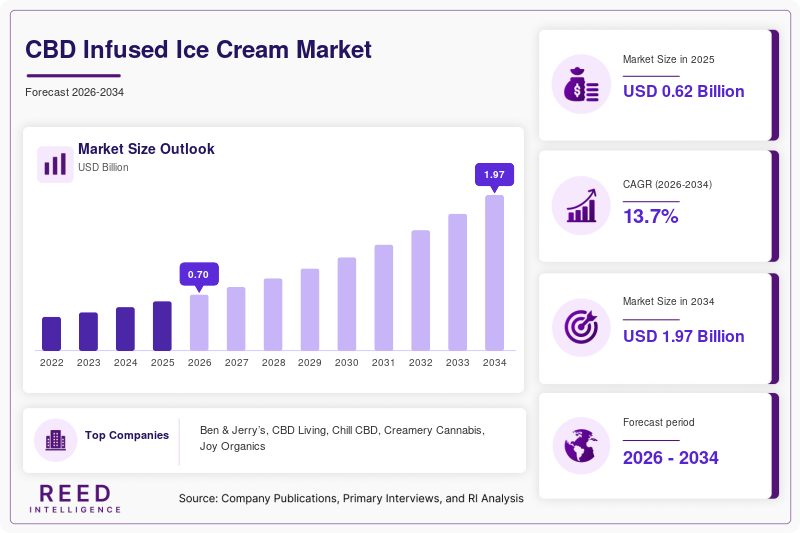
The CBD Infused Ice Cream Market was valued at approximately USD 0.62 billion in 2026 and is projected to reach USD 1.74 billion by 2034, expanding at a CAGR of 13.7% during the forecast period (2026–2034). The market is experiencing steady growth as consumer interest in functional foods and wellness-oriented indulgence products continues to rise. CBD-infused desserts, particularly ice cream, are gaining traction among urban consumers seeking relaxation benefits combined with premium taste experiences. The increasing legalization of cannabidiol-based products across multiple regions has also strengthened product availability and retail penetration.
A key global factor supporting market growth is the shift toward plant-based wellness consumption. Consumers are increasingly integrating cannabidiol into their daily routines, not only in oils and supplements but also in innovative food formats. Ice cream manufacturers are leveraging this trend by introducing novel flavors and formulations that blend indulgence with perceived health benefits. Additionally, the expansion of e-commerce channels has enabled smaller brands to reach niche audiences, further supporting market expansion.
Key Highlights
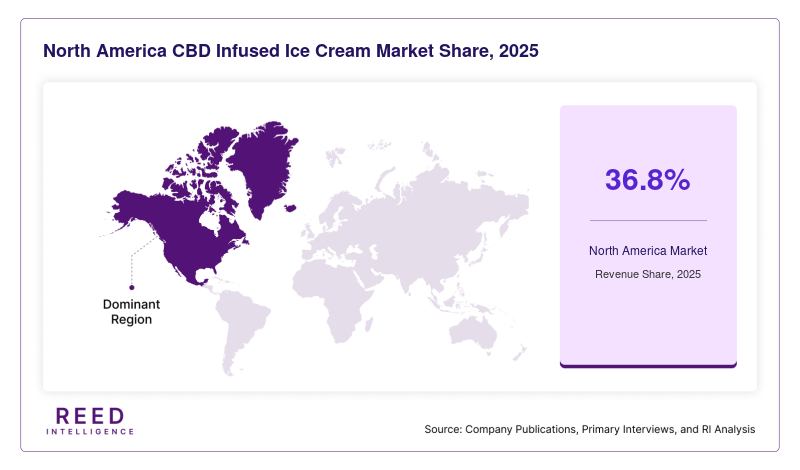
- North America dominated the market with a 36.8% share in 2025.
- Asia Pacific is expected to grow at the fastest CAGR of 14.9% during 2026–2034.
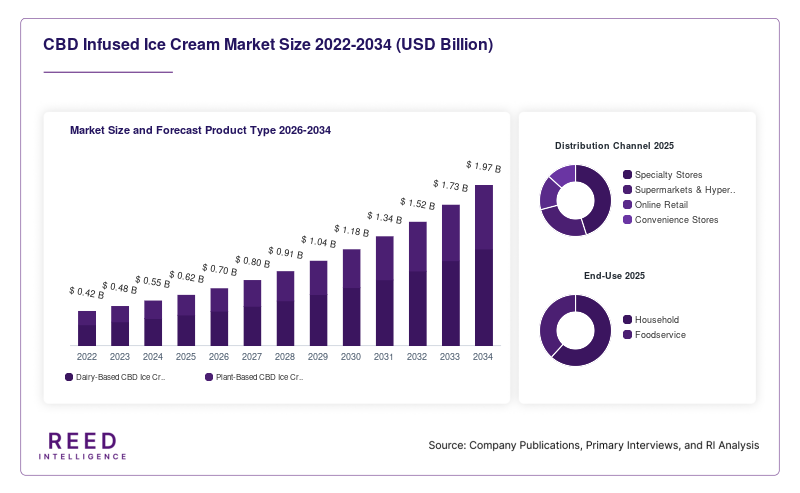
- By product type, dairy-based CBD ice cream accounted for the largest share of 57.6%.
- while plant-based CBD ice cream is projected to grow at a CAGR of 15.8%.
- By distribution channel, specialty stores led with a 42.3% share, whereas online retail is expected to expand at a CAGR of 16.4%.
- The United States remained the dominant country, with market values of USD 480 million in 2024 and USD 545 million in 2025.
Market Trends
Rising demand for premium functional desserts
Consumers are increasingly drawn to premium desserts that offer more than traditional taste profiles. CBD infused ice cream fits within this evolving demand, as it combines indulgence with functional benefits such as relaxation and stress management. Premiumization has become a defining trend, with brands introducing artisanal flavors, organic ingredients, and clean-label formulations. These products often target affluent urban populations willing to pay higher prices for differentiated experiences. The trend is further supported by social media influence and lifestyle branding, which position CBD ice cream as a modern wellness indulgence. As a result, companies are investing in packaging innovation, flavor diversification, and small-batch production to capture niche yet high-value consumer segments.
Expansion of plant-based and vegan CBD ice cream options
The shift toward plant-based diets is influencing product innovation across the CBD infused ice cream market. Manufacturers are increasingly developing vegan formulations using almond, coconut, oat, and cashew milk bases. This trend aligns with the broader movement toward sustainability and lactose-free consumption. Plant-based CBD ice creams appeal not only to vegans but also to flexitarian consumers seeking healthier alternatives. The incorporation of natural sweeteners and organic CBD extracts further enhances product appeal. Retailers are also allocating more shelf space to plant-based frozen desserts, improving visibility and accessibility. As consumer awareness regarding environmental impact grows, plant-based CBD ice cream is expected to become a significant growth driver within the industry.
Market Drivers
Increasing legalization and regulatory clarity for CBD products
The progressive legalization of cannabidiol across key markets has played a critical role in shaping the CBD infused ice cream market. Regulatory frameworks are becoming clearer, allowing manufacturers to confidently develop and distribute CBD-based food products. In regions such as North America and parts of Europe, evolving policies have reduced entry barriers for both established companies and startups. This has led to increased product launches and expanded distribution networks. Regulatory clarity also boosts consumer confidence, as products are subject to quality standards and labeling requirements. As more countries adopt favorable policies, the global market is expected to witness broader acceptance and higher adoption rates across diverse consumer segments.
Growing consumer interest in stress-relief and wellness products
Modern lifestyles characterized by high stress levels are driving demand for products that promote relaxation and well-being. CBD infused ice cream is positioned as a convenient and enjoyable way to incorporate cannabidiol into daily routines. Consumers are increasingly seeking alternatives to traditional stress-relief solutions, and functional foods offer a discreet and appealing option. The rise of wellness culture, particularly among millennials and Gen Z, has further amplified this demand. Brands are leveraging this trend by highlighting calming effects and natural ingredients in their marketing strategies. This driver is expected to sustain long-term growth as awareness of mental wellness continues to expand globally.
Market Restraint
Regulatory inconsistencies and product standardization challenges
Despite growing acceptance, the CBD infused ice cream market faces challenges related to regulatory inconsistencies across regions. Different countries maintain varying rules regarding CBD usage in food products, leading to complexities in product formulation, labeling, and distribution. These inconsistencies can limit cross-border trade and hinder market scalability for manufacturers. Additionally, the lack of standardized dosage guidelines creates uncertainty among consumers, affecting purchasing decisions. Companies must invest in compliance and testing to ensure product safety, which increases operational costs. For example, a brand operating in North America may face restrictions when entering Asian or Middle Eastern markets, delaying expansion plans. This restraint continues to impact industry growth, particularly for small and medium-sized enterprises.
Market Opportunities
Innovation in flavor profiles and product customization
The CBD infused ice cream market presents strong opportunities for innovation in flavor development and customization. Consumers are increasingly seeking unique and personalized food experiences, encouraging brands to experiment with exotic flavors such as matcha, lavender, and tropical fruit blends. Limited-edition releases and seasonal offerings can attract repeat customers and create brand differentiation. Customization, including adjustable CBD dosages, is also gaining attention as consumers look for tailored wellness solutions. This opportunity allows companies to cater to diverse preferences and expand their product portfolios. As competition intensifies, innovation will play a key role in capturing market share and maintaining consumer engagement.
Expansion into emerging markets with rising disposable incomes
Emerging economies offer significant growth potential for the CBD infused ice cream market. Rising disposable incomes, urbanization, and increasing awareness of wellness products are driving demand in regions such as Asia Pacific and Latin America. Younger populations in these markets are more open to experimenting with novel food concepts, including CBD-infused products. Retail infrastructure improvements and the growth of online platforms further support market entry. Companies that establish early presence in these regions can benefit from first-mover advantages. Strategic partnerships with local distributors and adaptation to regional tastes will be critical for success in these high-growth markets.
Segmental Analysis
By Product Type
Dairy-based CBD ice cream emerged as the dominant subsegment, accounting for 57.6% of the market share in 2024. This dominance is attributed to traditional consumer preferences for dairy-based desserts and the widespread availability of milk-based ice cream products. Established brands have leveraged existing manufacturing infrastructure to introduce CBD-infused variants, ensuring consistent quality and taste. Additionally, dairy-based products often provide a creamier texture, which enhances consumer appeal. The segment also benefits from strong brand loyalty and familiarity, making it easier for companies to introduce CBD formulations without significant resistance. Retailers continue to prioritize dairy-based offerings due to their proven sales performance and broader consumer acceptance.
Plant-based CBD ice cream is the fastest-growing subsegment, projected to expand at a CAGR of 15.8% during the forecast period. This growth is driven by increasing demand for vegan and lactose-free alternatives. Consumers are becoming more conscious of dietary preferences and environmental impact, prompting manufacturers to develop plant-based formulations. Innovations in ingredient sourcing and processing have improved taste and texture, making these products more competitive with traditional dairy options. Additionally, the alignment of plant-based products with wellness trends enhances their appeal. As more consumers adopt flexible diets, this subsegment is expected to witness sustained growth.
By Distribution Channel
Specialty stores dominated the distribution channel segment, holding a 42.3% share in 2024. These stores provide curated product selections and personalized customer experiences, which are crucial for niche products like CBD infused ice cream. Consumers often rely on knowledgeable staff for guidance on product selection and dosage, making specialty stores a preferred choice. Additionally, these outlets frequently host product demonstrations and sampling events, which encourage trial and repeat purchases. The presence of premium and artisanal brands further strengthens the position of specialty stores in the market.
Online retail is the fastest-growing distribution channel, with a projected CAGR of 16.4%. The convenience of e-commerce platforms allows consumers to explore a wide range of products from the comfort of their homes. Online channels also enable brands to reach a broader audience, including regions with limited physical retail presence. Digital marketing strategies, such as social media campaigns and influencer collaborations, play a significant role in driving online sales. Furthermore, subscription models and direct-to-consumer approaches are gaining popularity, providing recurring revenue streams for companies.
By End-Use
Household consumption accounted for the largest share of 61.2% in 2024, driven by increasing demand for at-home indulgence products. Consumers are incorporating CBD infused ice cream into their daily routines as a convenient way to relax and unwind. The availability of multiple flavors and packaging sizes supports household adoption. Additionally, the rise of home-based entertainment and social gatherings has boosted demand for premium dessert options. Brands are focusing on packaging innovations to enhance shelf life and convenience, further supporting this segment.
Foodservice is the fastest-growing end-use segment, expected to grow at a CAGR of 14.2%. Restaurants, cafes, and dessert parlors are increasingly incorporating CBD infused ice cream into their menus to attract customers seeking unique experiences. The ability to offer customized desserts and pairings enhances the appeal of this segment. Foodservice establishments also serve as a platform for product discovery, encouraging consumers to explore CBD-infused offerings. As the hospitality industry continues to recover and expand, this segment is expected to witness significant growth.
Regional Analysis
North America
North America held a dominant share of 36.8% in 2025 and is expected to maintain steady growth at a CAGR of 12.8% during the forecast period. The region benefits from early adoption of CBD products and well-established retail channels. Consumer awareness regarding cannabidiol benefits is high, supporting demand for innovative food products. Additionally, strong presence of premium ice cream brands contributes to market expansion.
The United States leads the regional market due to widespread legalization and a mature consumer base. A unique growth factor is the integration of CBD products into mainstream retail chains, including supermarkets and specialty stores. This accessibility enhances product visibility and encourages trial among new consumers, further strengthening market growth.
Europe
Europe accounted for a 24.5% market share in 2025 and is projected to grow at a CAGR of 13.2%. The region is witnessing increasing acceptance of CBD products, supported by evolving regulations. Countries such as the UK and Germany are emerging as key markets, driven by rising demand for functional foods and premium desserts.
Germany stands out as the dominant country in Europe, supported by strong consumer interest in organic and natural products. A unique growth factor is the region’s emphasis on clean-label formulations, encouraging manufacturers to use high-quality ingredients and transparent labeling practices.
Asia Pacific
Asia Pacific is expected to register the fastest CAGR of 14.9% during the forecast period, with a 2025 market share of 18.7%. Rapid urbanization and changing consumer lifestyles are driving demand for innovative food products. The region’s expanding middle class is also contributing to increased spending on premium desserts.
Japan leads the regional market due to its advanced food innovation ecosystem. A unique growth factor is the popularity of functional foods in Japanese culture, which aligns well with CBD infused ice cream offerings. This cultural alignment supports faster adoption compared to other emerging markets.
Middle East & Africa
The Middle East & Africa region held a 9.6% market share in 2025 and is projected to grow at a CAGR of 11.4%. Market growth is relatively moderate due to regulatory restrictions in several countries. However, increasing exposure to global food trends is gradually influencing consumer preferences.
The United Arab Emirates is the dominant country in this region. A unique growth factor is the presence of luxury retail environments that promote premium products, including CBD-infused desserts. This supports niche market development despite regulatory limitations.
Latin America
Latin America accounted for a 10.4% share in 2025 and is expected to grow at a CAGR of 13.6%. The region is witnessing rising interest in alternative wellness products, supported by improving economic conditions. Increasing penetration of modern retail formats is also aiding market growth.
Brazil dominates the regional market due to its large consumer base and growing interest in health-oriented products. A unique growth factor is the expansion of local startups focusing on CBD-infused foods, which enhances product availability and fosters competitive dynamics.
Competitive Landscape
The CBD infused ice cream market is characterized by a mix of established food companies and emerging startups focusing on innovation and niche positioning. The market is moderately fragmented, with companies competing on product quality, flavor innovation, and brand identity. Leading players are investing in research and development to enhance product formulations and ensure compliance with regulatory standards. Strategic partnerships and collaborations are also common, enabling companies to expand distribution networks and reach new customer segments.
One of the leading companies in the market is Ben & Jerry’s, which has shown interest in launching CBD-infused products in regions where regulations permit. A recent development includes pilot testing of CBD-based frozen desserts in select markets, highlighting the company’s commitment to innovation. Other companies are focusing on direct-to-consumer models and leveraging digital platforms to strengthen their market presence.
Key Players List
- Ben & Jerry’s
- CBD Living
- Chill CBD
- Creamery Cannabis
- Joy Organics
- Sundae School
- Green Roads
- Endoca
- Hemp Bombs
- PureKana
- Lord Jones
- CBDfx
- Kiva Confections
- Veritas Farms
- Medterra
Recent Developments
- A leading ice cream brand introduced a limited-edition CBD infused flavor line targeting urban consumers seeking premium dessert experiences.
- Several startups expanded their online retail presence through subscription-based models, improving customer retention and recurring revenue.
- A regional manufacturer partnered with a CBD supplier to develop standardized formulations, ensuring consistent product quality and regulatory compliance.
CBD Infused Ice Cream Market Segments
Product Type
- Dairy-Based CBD Ice Cream
- Plant-Based CBD Ice Cream
Distribution Channel
- Specialty Stores
- Supermarkets & Hypermarkets
- Online Retail
- Convenience Stores
End-Use
- Household
- Foodservice
By Region
- North America
- Europe
- APAC
- Middle East and Africa
- LATAM