Cellulose Film Market Size, Share & Demand Report By Type (Transparent Cellulose Film, Colored Cellulose Film, Metallized Cellulose Film, Printed Cellulose Film), By Application (Food Packaging, Pharmaceutical Packaging, Labels & Tapes, Decorative Packaging, Industrial Packaging), By Coating Type (Uncoated, Moisture Resistant, Heat Sealable, Barrier Coated), By End-Use Industry (Consumer Goods, Healthcare, Retail, Industrial), By Region & Segment Forecasts, 2026–2034
USD 3950
Market Overview
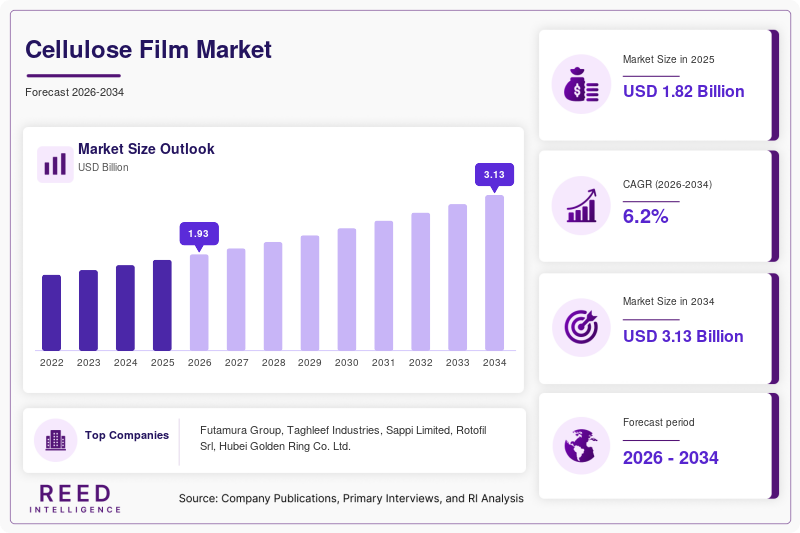
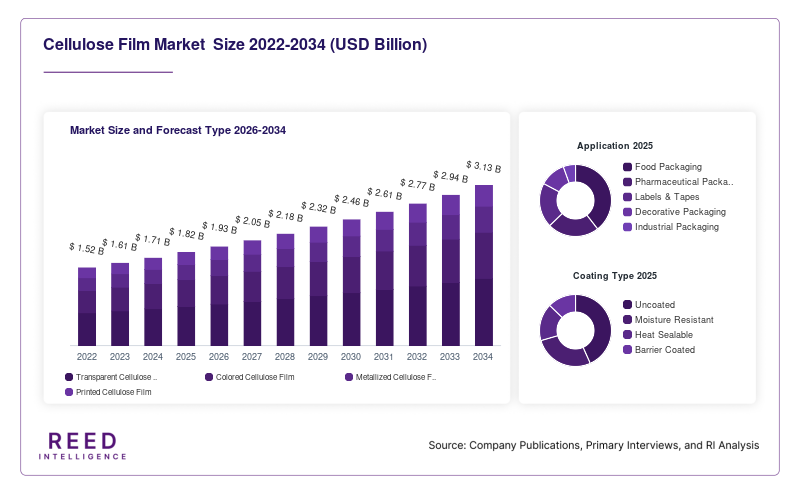
The global Cellulose Film Market Size was valued at USD 1.82 billion in 2026 and is projected to reach USD 2.94 billion by 2034, expanding at a CAGR of 6.2% during 2026–2034. The market is gaining momentum as industries seek renewable, compostable, and high-performance packaging materials that can reduce dependence on petroleum-based plastics. Cellulose film, produced from wood pulp or cotton linters, offers strong barrier properties, printability, transparency, and biodegradability, making it suitable for food packaging, labels, tapes, medical wraps, and industrial laminates.
A major global factor supporting the growth of the Cellulose Film Market is the rising regulatory focus on single-use plastic reduction. Governments across developed and emerging economies are implementing packaging waste directives, recycling mandates, and extended producer responsibility frameworks. These policy changes are encouraging manufacturers to shift toward cellulose-based alternatives for flexible packaging and specialty applications.
Key Highlights
- Dominant Region: Europe held 34.1% share of the global market in 2025.
- Fastest-Growing Region: Asia Pacific is expected to register a 7.4% CAGR through 2034.
- Leading Type Segment: Transparent cellulose film accounted for 46.8% share in 2025.
- Fastest-Growing Type: Metallized cellulose film is projected to grow at 7.1% CAGR.
- Leading Application Segment: Food packaging represented 51.6% share in 2025.
- Fastest-Growing Application: Pharmaceutical packaging is forecast to grow at 7.6% CAGR.
- Dominant Country: Germany was valued at USD 198 million in 2024 and USD 209 million in 2025.
Market Trends
Shift Toward Compostable Flexible Packaging
One of the most visible trends in the Cellulose Film Market is the rapid shift toward compostable flexible packaging solutions. Consumer goods companies are replacing multilayer plastic films with cellulose-based wraps, pouches, and labels that decompose under industrial composting conditions. Food brands are especially adopting cellulose films for snacks, bakery goods, tea bags, and confectionery packaging due to their natural appearance and good oxygen barrier properties. This trend is expected to accelerate as retailers introduce packaging scorecards and sustainability targets.
High-Barrier Functional Coatings
Manufacturers are increasingly investing in advanced coatings to improve moisture resistance, aroma retention, grease protection, and heat sealability. Earlier cellulose films faced limitations in humid conditions, but newer coated variants now serve premium food and healthcare applications. These innovations are helping the Cellulose Film Market compete with synthetic polymers in demanding packaging environments. Functional coatings are also enabling downgauging, which reduces material consumption and total packaging weight.
Market Drivers
Expansion of Sustainable Food Packaging Demand
The growth of packaged and convenience food consumption is creating strong demand for sustainable wrapping materials. Food processors require transparent films with printability, shelf-life support, and brand appeal. Cellulose film meets these needs while offering renewable feedstock advantages. As global food exports and private-label brands expand, the Cellulose Film Market is benefiting from rising usage across confectionery wraps, produce packaging, and dry food packs.
Brand Commitments to Plastic Reduction
Large consumer goods companies have announced targets to reduce virgin plastic use and increase recyclable or compostable packaging content. These commitments are translating into procurement shifts toward cellulose-based materials. The Cellulose Film Market is gaining from pilot programs and commercial rollouts across cosmetics, gift wraps, labels, and household goods packaging where appearance and sustainability messaging are equally important.
Market Restraint
Higher Cost Compared with Conventional Plastic Films
A major challenge for the Cellulose Film Market is the relatively higher production cost compared with standard polypropylene or polyethylene films. Raw material processing, coating technology, and smaller production scale often increase unit pricing. Cost-sensitive sectors may delay conversion unless regulatory pressure or premium branding benefits justify the transition. Limited composting infrastructure in some countries also affects purchasing decisions.
Market Opportunities
Growth in Pharmaceutical and Medical Packaging
Sterile wraps, strip packs, sachets, and protective overwraps are emerging as promising areas for cellulose films. The healthcare sector values clean processing, barrier performance, and specialty coating compatibility. As medical product consumption rises globally, the Cellulose Film Market is expected to gain new demand from regulated packaging formats.
E-Commerce Sustainable Wrapping Solutions
Online retail growth is generating demand for protective wraps, decorative packaging, tamper-evident seals, and paper-film hybrid solutions. Cellulose film can offer transparent presentation and lower environmental impact for premium shipments. This creates long-term opportunities for converters serving e-commerce brands and subscription box providers.
Segmental Analysis
By Type
Transparent cellulose film held the leading 46.8% share of the Cellulose Film Market in 2025 due to wide use in food wraps, labels, and gift packaging where product visibility is essential.
Metallized cellulose film will grow at a 7.1% CAGR through 2034 as brands seek improved aroma barriers and premium shelf appeal. Demand will rise in confectionery and snack packaging.
By Coating Type
Uncoated cellulose film accounted for 39.5% share in 2025 because of lower cost and use in decorative, stationery, and light-duty applications.
Heat-sealable coated films are projected to grow at 7.3% CAGR as automated packaging lines increasingly require sealing efficiency. Food processors will prefer these variants for higher throughput operations.
By Application
Food packaging dominated the Cellulose Film Market with 51.6% share in 2025. Usage remained high in bakery wraps, candy twists, produce packs, and tea envelopes.
Pharmaceutical packaging will grow at 7.6% CAGR through 2034. Demand will increase as healthcare manufacturers require specialty barrier films for sachets, overwraps, and regulated packaging formats.
By End Use Industry
Consumer goods accounted for 42.7% share in 2025 due to demand from cosmetics, gifting products, and household packaged items.
Healthcare will be the fastest-growing end-use segment with 7.0% CAGR as hygiene standards and medical consumables packaging volumes continue to rise.
By Thickness
Medium-gauge films held 44.2% share in 2025 because they balanced strength, clarity, and processing efficiency across broad applications.
Thin-gauge films will expand at 6.9% CAGR as companies reduce material use and shipping weight. Lightweight packaging goals will support adoption.
By Distribution Channel
Direct sales represented 63.4% share in 2025, driven by long-term supply agreements between film manufacturers and converters.
Online and specialty sourcing channels are forecast to grow at 7.2% CAGR as smaller brands seek customized sustainable packaging materials with lower order volumes.
Regional Analysis
North America
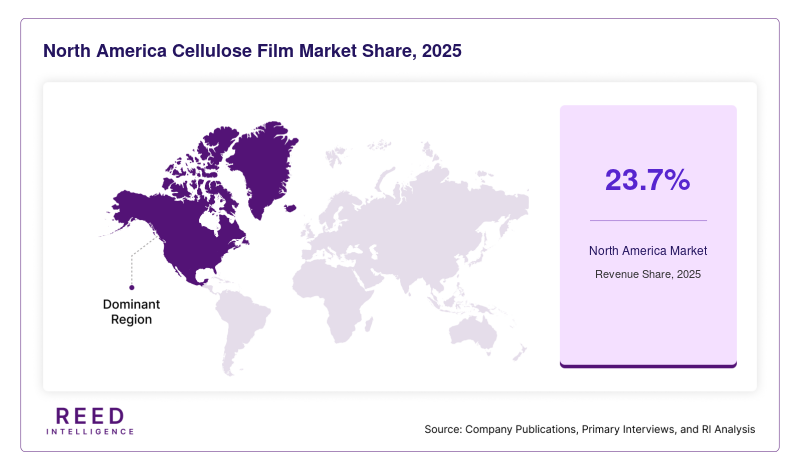
North America accounted for 23.7% of the global Cellulose Film Market in 2025. The region is expected to expand at a 5.8% CAGR through 2034. Demand was supported by premium food packaging, personal care products, and specialty labeling applications. Strong retail packaging standards also supported steady adoption.
The United States remained the dominant country in the region. Growth was supported by corporate sustainability pledges and investments in compostable packaging portfolios. Food brands increasingly adopted cellulose wraps for organic snacks, bakery goods, and seasonal confectionery products.
Europe
Europe held 34.1% share of the Cellulose Film Market in 2025, making it the leading regional market. The region is projected to grow at a 5.9% CAGR during the forecast period. Mature packaging industries, environmental regulations, and advanced converting infrastructure supported leadership.
Germany was the dominant country. Its growth was driven by strong industrial packaging standards and a developed food processing sector. German manufacturers also invested in bio-based material innovation, helping accelerate commercial adoption of coated cellulose films.
Asia Pacific
Asia Pacific captured 27.6% of the global Cellulose Film Market in 2025. It is expected to register the fastest growth at a 7.4% CAGR through 2034. Rising packaged food demand, urbanization, and expanding retail networks supported market momentum across multiple countries.
China led the regional market. Growth was supported by large-scale packaging conversion capacity and increasing policy attention toward plastic waste reduction. Domestic food exporters also expanded usage of cellulose-based wraps for premium overseas shipments.
Middle East & Africa
Middle East & Africa represented 7.2% share of the Cellulose Film Market in 2025. The region is forecast to grow at a 5.4% CAGR through 2034. Demand remained concentrated in food imports, hospitality packaging, and specialty consumer products.
The United Arab Emirates was the leading country. Growth was supported by premium retail channels and tourism-linked packaged goods demand. Brands increasingly preferred visually appealing sustainable packaging for chocolates, dates, and gifting products.
Latin America
Latin America held 7.4% of the global Cellulose Film Market in 2025. The region is expected to grow at a 6.1% CAGR through 2034. Rising urban consumption and modernization of retail packaging systems contributed to market development.
Brazil dominated the region. Growth was driven by a large food and beverage industry and increasing demand for eco-conscious packaging in metropolitan markets. Local converters also expanded specialty film printing capabilities.
Competitive Landscape
The global Cellulose Film Market remains moderately consolidated with a mix of specialty film producers and packaging material companies. Leading participants focus on coating innovation, biodegradable certifications, and partnerships with converters. Product customization and supply consistency remain key competitive factors.
Futamura Group remained the market leader due to its broad cellulose film portfolio and global presence. The company recently expanded production capacity for compostable packaging films to meet rising demand from food brands.
Other active companies include Taghleef Industries, Sappi Limited, Rotofil, and Hubei Golden Ring. These companies are investing in improved barrier technology, regional distribution, and application development programs for premium packaging uses.
Key Players List
- Futamura Group
- Taghleef Industries
- Sappi Limited
- Rotofil Srl
- Hubei Golden Ring Co. Ltd.
- Innovia Films
- Eastman Chemical Company
- Treofan Group
- Celanese Corporation
- Weifang Henglian Cellophane Co. Ltd.
- Biofilm SA
- Celfa Industries
- Zhejiang Koray New Materials
- Shanghai Cellulose Packaging Co.
- Uflex Limited
Recent Developments
- Futamura Group expanded compostable film capacity in Europe in 2025.
- Taghleef Industries launched new high-barrier cellulose laminate grades.
- Sappi Limited introduced renewable fiber-based packaging film solutions.
- Regional converters in Asia Pacific added printing and coating lines for cellulose substrates.
- Multiple food brands adopted cellulose wraps for premium confectionery launches in 2025.
Cellulose Film Market Segments
Type
- Transparent Cellulose Film
- Colored Cellulose Film
- Metallized Cellulose Film
- Printed Cellulose Film
Application
- Food Packaging
- Pharmaceutical Packaging
- Labels & Tapes
- Decorative Packaging
- Industrial Packaging
Coating Type
- Uncoated
- Moisture Resistant
- Heat Sealable
- Barrier Coated
End-Use Industry
- Consumer Goods
- Healthcare
- Retail
- Industrial
Distribution Channel
- Direct Sales
- Distributors
- Online Channels
- Specialty Packaging Suppliers
By Region
- North America
- Europe
- APAC
- Middle East and Africa
- LATAM