Centella Asiatica Market Size, Share & Demand Report By Type (Extract, Powder, Whole Herb), By Application (Skincare, Pharmaceuticals, Food & Beverages), By End-Use (Cosmetics & Personal Care, Nutraceuticals, Healthcare) & Segment Forecasts, 2025–2034
USD 3950
Market Overview
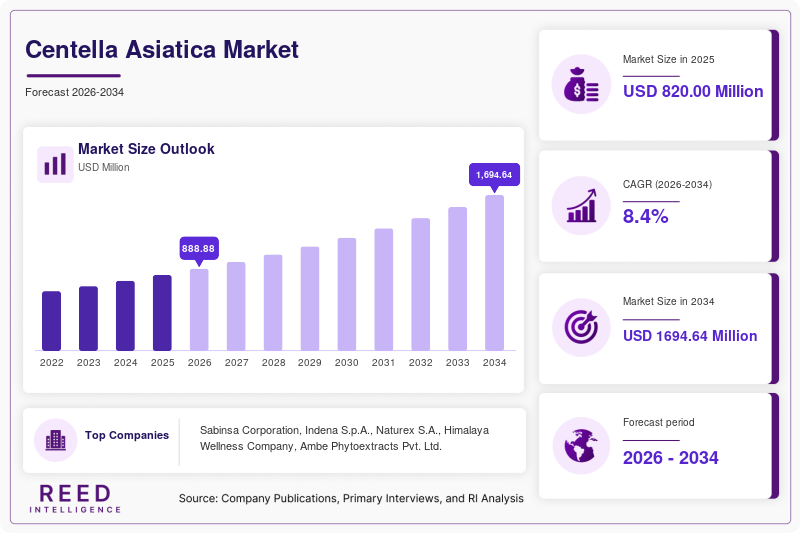
The Centella Asiatica Market size has experienced consistent expansion over the past decade, driven by increasing demand for plant-based ingredients in skincare, pharmaceuticals, and nutraceuticals. In 2025, the global market size is estimated to reach approximately USD 820 million, with further growth to around USD 890 million in 2026. The market is projected to expand at a compound annual growth rate (CAGR) of 8.4% from 2025 to 2034, ultimately reaching an estimated USD 1.75 billion by 2034. This steady growth trajectory reflects a combination of consumer awareness, product innovation, and increasing investments in botanical extraction technologies.
One of the primary growth factors is the rising consumer inclination toward natural and herbal products. Centella Asiatica, commonly known for its skin-repairing and anti-inflammatory properties, is increasingly being incorporated into cosmetics and personal care products. The demand is particularly strong in anti-aging formulations, where the ingredient is valued for its collagen-boosting capabilities. Additionally, the expansion of the nutraceutical industry has fueled the adoption of Centella Asiatica in dietary supplements aimed at improving cognitive function and circulation.
Key Highlights
- Market size projected to reach USD 1.75 billion by 2034
- CAGR of 8.4% from 2025 to 2034
- Strong demand from cosmetics and nutraceutical sectors
- Growing adoption in pharmaceutical applications
- Increasing innovation in extraction technologies
Market Trends
Rising Integration in Clean Beauty and Dermatological Products
The shift toward clean beauty has significantly influenced the Centella Asiatica Market. Consumers are actively seeking products with transparent ingredient lists and minimal chemical additives, which has elevated the demand for plant-based ingredients. Centella Asiatica has emerged as a preferred component due to its soothing and healing properties, especially for sensitive and acne-prone skin. Skincare brands are increasingly highlighting the ingredient in product labeling, contributing to its visibility and market penetration. The trend is further supported by dermatologists recommending Centella-based formulations for post-procedure skin care and barrier repair.
Expansion in Functional Foods and Nutraceuticals
Another notable trend is the increasing use of Centella Asiatica in functional foods and dietary supplements. The ingredient is being incorporated into capsules, beverages, and herbal teas aimed at enhancing cognitive health, reducing stress, and improving circulation. As consumers become more health-conscious, the demand for plant-derived supplements has risen significantly. Manufacturers are leveraging this trend by introducing innovative product formats and blends. This expansion into the nutraceutical segment is expected to create sustained demand and diversify revenue streams within the market.
Market Drivers
Increasing Consumer Preference for Natural Ingredients
The growing preference for natural and organic products is a key driver of the Centella Asiatica Market. Consumers are becoming more aware of the potential side effects of synthetic ingredients, leading to a shift toward herbal alternatives. Centella Asiatica is widely recognized for its safety profile and effectiveness, making it a preferred choice in skincare and wellness products. This trend is particularly strong among younger consumers and urban populations, who prioritize sustainability and ingredient transparency. As a result, manufacturers are reformulating existing products and launching new ones featuring Centella Asiatica.
Expanding Applications in Pharmaceutical and Medical Fields
The pharmaceutical industry is increasingly exploring the therapeutic benefits of Centella Asiatica. Scientific studies have demonstrated its effectiveness in wound healing, anti-inflammatory treatments, and neurological support. This has led to its inclusion in various medical formulations, including ointments and oral supplements. The growing acceptance of herbal medicine in mainstream healthcare systems further supports this trend. Additionally, ongoing research and clinical trials are expected to unlock new applications, strengthening the role of Centella Asiatica in the pharmaceutical sector.
Market Restraint
Variability in Raw Material Quality and Supply Chain Challenges
One of the primary challenges in the Centella Asiatica Market is the variability in raw material quality. The plant is typically sourced from different regions, and its chemical composition can vary depending on environmental conditions such as soil quality, climate, and harvesting practices. This inconsistency affects the concentration of active compounds, leading to variations in product efficacy. Manufacturers often face difficulties in maintaining standardized quality, which can impact brand reputation and consumer trust.
Additionally, supply chain disruptions pose a significant restraint. The reliance on agricultural production makes the market vulnerable to factors such as weather conditions and geopolitical issues. For example, unexpected climate changes in key producing regions can reduce crop yield, leading to price fluctuations and supply shortages. These challenges require companies to invest in sustainable sourcing practices and quality control measures, which can increase operational costs and limit market growth.
Market Opportunities
Growth in Emerging Markets and E-commerce Channels
Emerging markets present significant growth opportunities for the Centella Asiatica Market. Countries in Asia, Latin America, and Africa are witnessing increasing demand for herbal and natural products due to rising disposable incomes and urbanization. Additionally, the rapid expansion of e-commerce platforms has made these products more accessible to a broader consumer base. Online channels allow smaller brands to reach global markets, increasing competition and innovation. This trend is expected to drive market growth by expanding the consumer base and enhancing product availability.
Development of Advanced Extraction and Formulation Technologies
Technological advancements in extraction and formulation offer promising opportunities for market expansion. New techniques such as supercritical fluid extraction and nano-encapsulation enhance the stability and bioavailability of active compounds in Centella Asiatica. These innovations improve product performance and open new application areas, particularly in pharmaceuticals and high-end cosmetics. Companies investing in research and development can gain a competitive advantage by offering superior products. This opportunity is likely to drive premiumization and increase the overall market value.
Segmental Analysis
By Type
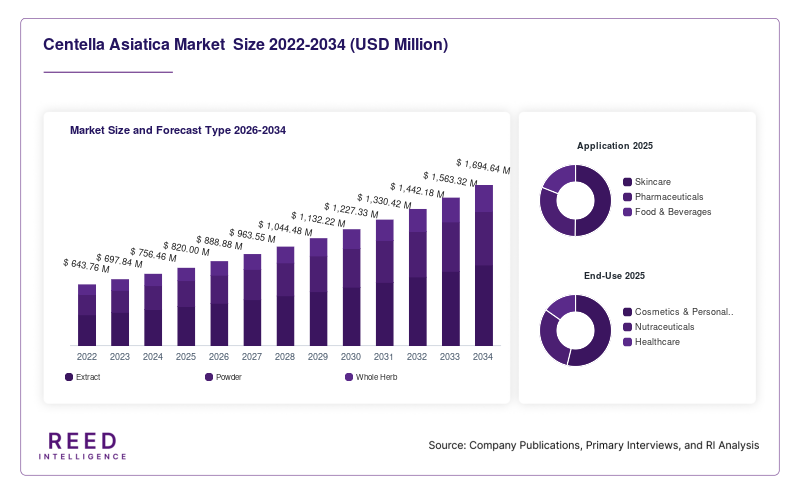
The extract segment dominated the Centella Asiatica Market in 2024, accounting for approximately 62% of the total market share. This dominance is attributed to the high demand for standardized extracts in cosmetics, pharmaceuticals, and nutraceuticals. Extracts offer higher concentrations of active compounds, making them more effective and versatile in various applications. Manufacturers prefer extracts due to their ease of formulation and consistent quality. The segment’s growth is further supported by advancements in extraction technologies, which enhance the purity and stability of active ingredients.
The powder segment is expected to be the fastest-growing, with a projected CAGR of 9.1% during the forecast period. The growth is driven by its increasing use in dietary supplements and functional foods. Powdered forms are easy to incorporate into capsules, beverages, and food products, making them highly versatile. Additionally, the rising popularity of herbal supplements and health-conscious consumer behavior contribute to the segment’s growth. Manufacturers are focusing on improving the solubility and bioavailability of powdered extracts to enhance their effectiveness.
By Application
The skincare segment held the largest share in 2024, accounting for around 55% of the market. This is primarily due to the widespread use of Centella Asiatica in creams, serums, and lotions aimed at improving skin health. The ingredient’s anti-inflammatory and collagen-boosting properties make it highly effective in treating acne, scars, and signs of aging. The growing demand for natural and organic skincare products further supports this segment’s dominance. Additionally, increasing consumer awareness and the influence of social media trends contribute to higher adoption rates.
The pharmaceutical segment is expected to be the fastest-growing, with a CAGR of 8.9% over the forecast period. The growth is driven by increasing research on the therapeutic benefits of Centella Asiatica. Its applications in wound healing, neurological treatments, and anti-inflammatory formulations are gaining traction. The rising acceptance of herbal medicine and supportive regulatory frameworks further boost the segment’s growth. Pharmaceutical companies are investing in clinical trials to validate the efficacy of Centella Asiatica, which is expected to drive future demand.
By End-Use
The cosmetics and personal care segment dominated the market in 2024, accounting for approximately 58% of the total share. This dominance is driven by the increasing demand for natural ingredients in beauty products. Centella Asiatica is widely used in anti-aging, moisturizing, and soothing formulations, making it a key component in skincare products. The segment’s growth is further supported by the rising popularity of clean beauty and the increasing influence of digital marketing strategies. Manufacturers are continuously launching new products to meet evolving consumer preferences.
The nutraceutical segment is projected to be the fastest-growing, with a CAGR of 9.3% during the forecast period. The growth is driven by increasing consumer awareness of health and wellness. Centella Asiatica is gaining popularity as a dietary supplement due to its potential benefits in improving cognitive function and reducing stress. The expansion of the functional food industry and the growing demand for plant-based supplements further support this segment’s growth. Companies are focusing on innovative product formats to attract a wider consumer base.
Regional Analysis
North America
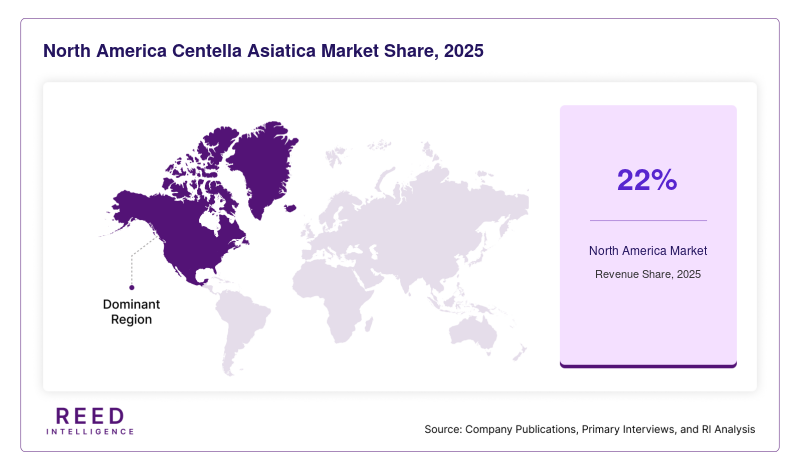
North America accounted for approximately 22% of the global Centella Asiatica Market share in 2025 and is expected to grow at a CAGR of 7.8% through 2034. The region’s growth is driven by strong demand for natural skincare products and increasing awareness of herbal supplements. The presence of established cosmetic brands and advanced distribution networks supports market expansion. Additionally, regulatory frameworks that allow the use of botanical ingredients in personal care products contribute to steady growth.
The United States dominates the North American market due to its large consumer base and high spending on premium skincare products. A key growth factor is the increasing adoption of clean beauty trends, which emphasize transparency and sustainability. This has led to a surge in demand for Centella Asiatica-based products, particularly among millennials and Gen Z consumers.
Europe
Europe held around 20% market share in 2025 and is projected to grow at a CAGR of 7.5% during the forecast period. The region’s growth is supported by stringent regulations that encourage the use of safe and natural ingredients. European consumers are highly conscious of product quality and sustainability, which aligns with the properties of Centella Asiatica. The presence of established cosmetic and pharmaceutical industries further supports market development.
Germany leads the European market due to its strong pharmaceutical sector and focus on herbal medicine. A unique growth factor is the country’s emphasis on clinical validation and quality standards, which has increased the adoption of Centella Asiatica in medicinal products. This trend is expected to continue, driving market growth.
Asia Pacific
Asia Pacific dominated the market with a share of approximately 38% in 2025 and is expected to grow at a CAGR of 9.2% through 2034. The region’s dominance is attributed to the widespread use of Centella Asiatica in traditional medicine systems and its abundant availability. Countries such as China, India, and South Korea are key contributors to market growth, supported by strong manufacturing capabilities and increasing export activities.
China is the leading country in the region due to its large-scale production and integration of traditional medicine into modern healthcare. A key growth factor is the rising demand for herbal cosmetics and functional foods, which has led to increased consumption of Centella Asiatica extracts. This trend is expected to sustain regional dominance.
Middle East & Africa
The Middle East & Africa region accounted for around 10% market share in 2025 and is projected to grow at a CAGR of 7.2%. The market is gradually expanding due to increasing awareness of natural products and improving distribution networks. The region’s growing population and rising disposable income contribute to demand for personal care and wellness products.
South Africa leads the market in this region, driven by the growing adoption of herbal skincare products. A unique growth factor is the increasing influence of global beauty trends, which has encouraged consumers to explore plant-based ingredients. This is expected to boost demand for Centella Asiatica.
Latin America
Latin America held approximately 10% market share in 2025 and is expected to grow at a CAGR of 7.6%. The region’s growth is driven by rising consumer awareness and increasing demand for affordable natural products. The expanding cosmetics industry and growing e-commerce penetration further support market development.
Brazil dominates the Latin American market due to its large population and strong beauty industry. A key growth factor is the increasing popularity of herbal and organic skincare products, which has led to higher demand for Centella Asiatica. This trend is expected to drive sustained growth in the region.
Competitive Landscape
The Centella Asiatica Market is moderately fragmented, with several global and regional players competing based on product quality, innovation, and pricing strategies. Key companies are focusing on expanding their product portfolios and strengthening their distribution networks to gain a competitive edge. Strategic collaborations, mergers, and acquisitions are also common, as companies aim to enhance their market presence.
One of the leading players in the market is Sabinsa Corporation, known for its extensive range of herbal extracts and strong focus on research and development. The company has recently introduced advanced extraction techniques to improve the efficacy of its Centella Asiatica products. Other prominent players are also investing in sustainable sourcing practices and quality control measures to meet increasing consumer demand. The competitive landscape is expected to remain dynamic, with innovation playing a crucial role in determining market leadership.
Key Players
- Sabinsa Corporation
- Indena S.p.A.
- Naturex S.A.
- Himalaya Wellness Company
- Ambe Phytoextracts Pvt. Ltd.
- Herbal Creations
- Botanic Healthcare Group
- Green Labs LLC
- Arjuna Natural Pvt. Ltd.
- Layn Natural Ingredients
- Martin Bauer Group
- Organic Herb Inc.
- Xi’an Lyphar Biotech Co., Ltd.
- Alchem International Pvt. Ltd.
- Sydler Group
Recent Developments
- In 2024, Sabinsa Corporation launched a new high-purity Centella Asiatica extract with enhanced bioavailability for skincare applications.
- In 2023, Indena S.p.A. expanded its production capacity to meet increasing demand for botanical extracts, including Centella Asiatica.
- In 2024, Himalaya Wellness Company introduced a new range of skincare products featuring Centella Asiatica as a key ingredient.
Centella Asiatica Market Segments
Type
- Extract
- Powder
- Whole Herb
Application
- Skincare
- Pharmaceuticals
- Food & Beverages
End-Use
- Cosmetics & Personal Care
- Nutraceuticals
- Healthcare
By Region
- North America
- Europe
- APAC
- Middle East and Africa
- LATAM