Cercarial Dermatitis Market Size, Share & Demand Report By Treatment Type (Topical Corticosteroids, Antihistamines, Calamine Lotions, Others), By Drug Type (Over-the-Counter Drugs, Prescription Drugs), By End-Use (Hospitals, Clinics, Homecare Settings), By Distribution Channel (Retail Pharmacies, Hospital Pharmacies, Online Pharmacies), By Region & Segment Forecasts, 2025–2034
USD 3950
Market Overview
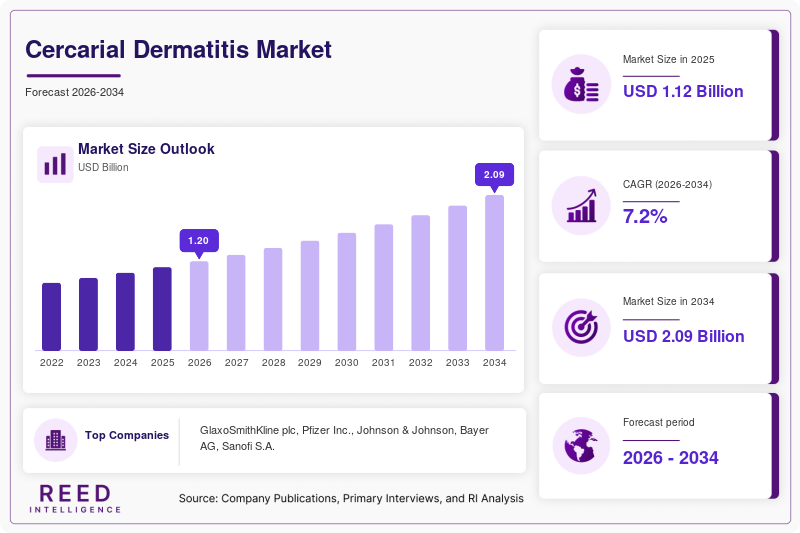
The Cercarial Dermatitis Market was valued at approximately USD 1.12 billion in 2025 and is projected to reach USD 2.08 billion by 2034, expanding at a CAGR of 7.2% during the forecast period (2025–2034). The market reflects steady expansion driven by increasing exposure to freshwater bodies, rising awareness of parasitic skin conditions, and improved dermatological diagnostics globally. Cercarial dermatitis, commonly known as swimmer’s itch, is gaining clinical attention due to its prevalence in recreational water zones and its growing incidence linked to environmental changes.
A key global factor supporting market growth is the rising impact of climate variability on freshwater ecosystems, which has led to an increase in parasite-host interactions. Warmer temperatures and altered water patterns have expanded the habitats of host organisms such as snails and waterfowl, increasing the frequency of cercarial outbreaks. This has intensified demand for preventive treatments, topical therapies, and diagnostic solutions.
Key Highlights:
- North America dominated the market with a 38.6% share in 2025, while Asia Pacific is expected to register the fastest CAGR of 8.5% during the forecast period.
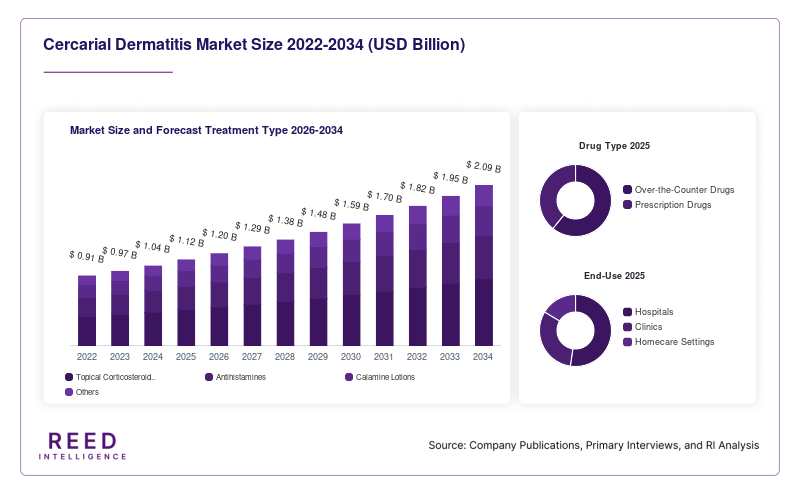
- Topical corticosteroids led the treatment segment with a 42.3% share in 2024, while antihistamines are projected to grow at a CAGR of 8.1%.
- Hospitals remained the dominant end-use segment with a 46.7% share, whereas homecare settings are expected to grow at a CAGR of 7.9%.
- The United States accounted for USD 312 million in 2024 and increased to USD 330 million in 2025.
Market Trends
Increasing Adoption of Preventive Skincare Solutions
Preventive care has become a notable trend within the Cercarial Dermatitis Market. Consumers and healthcare providers are emphasizing early-stage prevention through protective creams, barrier lotions, and post-exposure cleansing solutions. This shift is driven by rising awareness among travelers and outdoor enthusiasts regarding waterborne parasites. Manufacturers are introducing dermatologically tested formulations with anti-inflammatory and anti-parasitic properties, catering to both prescription and over-the-counter demand.
Integration of Environmental Monitoring with Healthcare Response Another emerging trend is the integration of environmental surveillance systems with public health responses. Authorities and research institutions are increasingly using water quality monitoring and parasite detection technologies to predict outbreaks. This data-driven approach enables timely alerts and preventive measures, such as restricted water access or public advisories. The trend is also encouraging collaboration between environmental agencies and healthcare providers, which supports the growth of diagnostic and preventive segments in the Cercarial Dermatitis Market.
Market Drivers
Rising Incidence of Waterborne Parasitic Infections
The increasing incidence of parasitic infections in freshwater bodies is a major driver for the Cercarial Dermatitis Market. Growing human interaction with natural water sources for recreation, such as swimming and fishing, has led to higher exposure rates. The expansion of aquatic parasite populations due to ecological changes has further intensified infection risks, thereby driving demand for effective treatments and preventive measures.
Growing Awareness and Access to Dermatological Care
Improved awareness about skin-related diseases and access to dermatological services have significantly contributed to market growth. Public health campaigns and digital health platforms have enhanced knowledge about symptoms, prevention, and treatment options. Additionally, the availability of over-the-counter medications and tele-dermatology consultations has increased treatment adoption rates, particularly in urban areas. This expanding healthcare access continues to support the growth trajectory of the Cercarial Dermatitis Market.
Market Restraints
Limited Disease Severity and Self-Limiting Nature
A primary restraint in the Cercarial Dermatitis Market is the self-limiting nature of the condition. In many cases, cercarial dermatitis resolves without medical intervention within a few days, reducing the need for advanced or prolonged treatment. This characteristic limits the demand for prescription medications and specialized therapies.
Additionally, underreporting of cases due to mild symptoms further restricts market expansion. Many individuals opt for home remedies or over-the-counter solutions without seeking professional medical advice. This behavior impacts the overall market size and reduces the penetration of advanced treatment options. Furthermore, the lack of standardized treatment protocols across regions contributes to variability in care approaches, which may hinder consistent market growth.
Market Opportunities
Development of Targeted Topical Therapies
There is a growing opportunity for the development of advanced topical treatments specifically designed for cercarial dermatitis. Pharmaceutical companies are investing in formulations that combine anti-inflammatory, anti-parasitic, and soothing properties. These targeted therapies can improve patient outcomes and provide faster symptom relief, creating a competitive advantage in the market.
Expansion in Emerging Economies
Emerging economies present significant growth opportunities for the Cercarial Dermatitis Market. Increasing healthcare investments, rising disposable incomes, and expanding medical infrastructure are improving access to dermatological treatments. Additionally, the growing popularity of recreational water activities in these regions is contributing to higher exposure rates. Market players can leverage these factors by introducing cost-effective solutions and expanding distribution networks in untapped markets.
Segmental Analysis
By Treatment Type
Topical corticosteroids dominated the Cercarial Dermatitis Market with a 42.3% share in 2024. Their widespread use in reducing inflammation and itching made them the preferred treatment option among healthcare providers.
Antihistamines are projected to be the fastest-growing subsegment, with a CAGR of 8.1%. Their effectiveness in managing allergic reactions and improving patient comfort will drive their adoption, especially in combination therapies.
By Drug Type
Over-the-counter drugs accounted for the largest share at 55.6% in 2024. Easy accessibility and affordability made them a popular choice among consumers experiencing mild symptoms.
Prescription medications are expected to grow at a CAGR of 7.8%, driven by increasing consultations with dermatologists and the availability of advanced treatment options.
By End-Use
Hospitals held the dominant share of 46.7% in 2024 due to their comprehensive treatment capabilities and access to specialized dermatological care.
Homecare settings will grow at a CAGR of 7.9%, supported by the rising preference for self-treatment and the availability of effective OTC solutions.
By Distribution Channel
Retail pharmacies dominated with a 48.2% share in 2024, benefiting from widespread accessibility and consumer trust.
Online pharmacies are projected to grow at a CAGR of 9.2%, driven by digitalization and the convenience of home delivery services.
Regional Analysis
North America
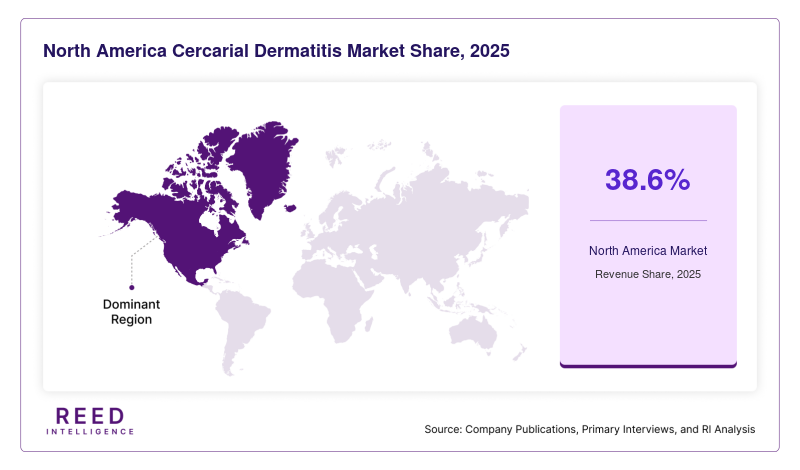
North America accounted for 38.6% of the Cercarial Dermatitis Market share in 2025 and maintained a dominant position due to advanced healthcare systems and widespread awareness. The region will grow at a CAGR of 6.8% through 2034. High participation in recreational water activities and strong diagnostic capabilities contributed to market expansion.
The United States led the regional market, driven by established dermatology practices and structured public health monitoring systems. The presence of organized recreational water bodies and routine surveillance programs supported early detection and treatment adoption.
Europe
Europe held a 27.4% market share in 2025 and will expand at a CAGR of 6.9 during the forecast period. The region experienced consistent demand due to increasing outdoor tourism and well-developed healthcare infrastructure. Regulatory support for water quality monitoring also contributed to market stability.
Germany dominated the European market, supported by strong environmental monitoring initiatives and awareness campaigns. The country’s emphasis on preventive healthcare and early diagnosis contributed to sustained growth.
Asia Pacific
Asia Pacific captured 18.2% of the market share in 2025 and will register the fastest CAGR of 8.5% through 2034. Rapid urbanization, increasing healthcare access, and growing tourism activities in freshwater destinations contributed to market expansion.
China emerged as the leading country in the region, driven by expanding healthcare infrastructure and rising public awareness. Government initiatives to improve water sanitation and disease monitoring further supported market growth.
Middle East & Africa
The Middle East & Africa accounted for 8.1% of the market share in 2025 and will grow at a CAGR of 7.1% during the forecast period. The region’s growth was supported by increasing healthcare investments and rising awareness of skin diseases.
South Africa led the regional market due to its growing tourism sector and improving healthcare facilities. Increased exposure to natural water sources contributed to higher demand for treatment solutions.
Latin America
Latin America held a 7.7% share in 2025 and will grow at a CAGR of 7.3% through 2034. The region experienced moderate growth driven by expanding healthcare access and rising awareness of parasitic infections.
Brazil dominated the Latin American market due to its extensive freshwater resources and active public health initiatives. Increasing recreational water activities supported the demand for preventive and treatment solutions.
Competitive Landscape
The Cercarial Dermatitis Market is moderately fragmented, with a mix of global pharmaceutical companies and regional players. Leading companies focus on product innovation, strategic collaborations, and geographic expansion to strengthen their market position.
A key market leader is GlaxoSmithKline plc, which has maintained a strong presence through its diverse dermatology portfolio. The company recently introduced an advanced topical formulation aimed at improving symptom relief and patient compliance.
Other major players are actively investing in research and development to enhance treatment efficacy and expand their product offerings. Strategic partnerships with healthcare providers and distributors are also helping companies increase market penetration and reach a broader consumer base.
Key Players
- GlaxoSmithKline plc
- Pfizer Inc.
- Johnson & Johnson
- Bayer AG
- Sanofi S.A.
- Novartis AG
- Merck & Co., Inc.
- Sun Pharmaceutical Industries Ltd.
- Cipla Limited
- Dr. Reddy’s Laboratories Ltd.
Recent Developments
- 2024: A leading pharmaceutical company launched a combination topical therapy designed for rapid symptom relief.
- 2024: Expansion of online pharmacy platforms improved access to dermatological treatments globally.
- 2025: Increased investment in research for anti-parasitic skincare formulations was observed across major players.
- 2025: Strategic collaborations between healthcare providers and environmental agencies enhanced disease monitoring systems.
Cercarial Dermatitis Market Segments
Treatment Type
- Topical Corticosteroids
- Antihistamines
- Calamine Lotions
- Others
Drug Type
- Over-the-Counter Drugs
- Prescription Drugs
End-Use
- Hospitals
- Clinics
- Homecare Settings
Distribution Channel
- Retail Pharmacies
- Hospital Pharmacies
- Online Pharmacies
By Region
- North America
- Europe
- APAC
- Middle East and Africa
- LATAM