Chaga Mushroom Market Size, Share & Demand Report By Product Form (Powder, Liquid Extract, Capsules, Raw Chaga Chunks), By Application (Dietary Supplements, Functional Beverages, Functional Foods, Personal Care Products), By Distribution Channel (Health & Specialty Stores, Supermarkets & Hypermarkets, Online Retail, Pharmacies), By Region & Segment Forecasts, 2025–2033
USD 3950
Market Overview
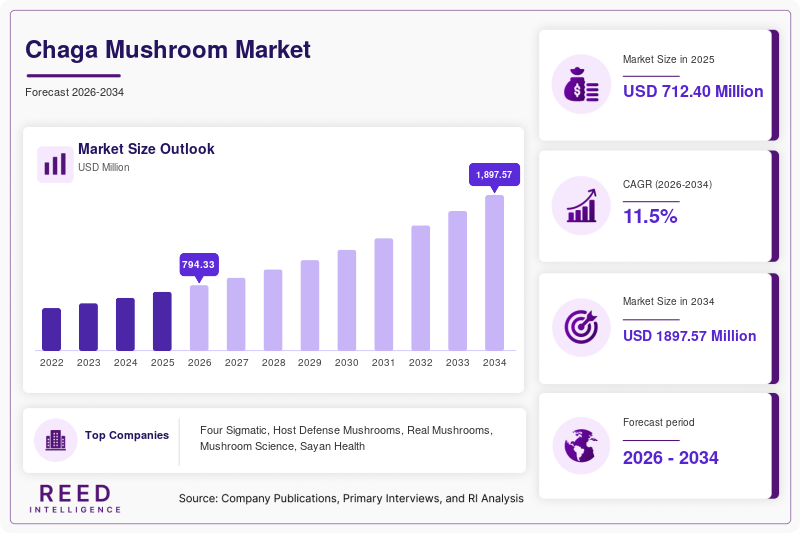
The Chaga Mushroom Market size was valued at USD 712.4 million in 2024 and is projected to reach USD 1.89 billion by 2033, registering a CAGR of 11.5% during 2025–2033. The market has experienced steady expansion as consumers increasingly seek natural functional ingredients that support wellness-oriented lifestyles. Chaga mushrooms, derived primarily from birch trees in cold climates, have gained industry attention for their bioactive compounds such as polysaccharides and antioxidants. These compounds are widely used across nutraceuticals, functional beverages, dietary supplements, and personal care formulations.
A key global factor supporting the growth of the Chaga Mushroom Market has been the growing consumer preference for plant-based health products. The shift toward preventive health management has encouraged manufacturers to incorporate botanical ingredients in formulations designed for immunity support and daily wellness. This shift has expanded the market footprint beyond traditional herbal medicine users to mainstream health-conscious consumers. In addition, advancements in mushroom extraction technologies and standardized formulations have enabled product consistency, supporting wider commercial adoption.
Key Highlights
- North America dominated with 38.6% market share in 2025, while Asia Pacific will register the fastest growth at 13.1% CAGR.
- Powder form held the largest share among product forms, while liquid extracts will expand fastest with a 12.9% CAGR.
- Dietary supplements represented the leading application segment, while functional beverages will record the highest growth at 13.4% CAGR.
- The United States remained the dominant country, with market values of USD 214.6 million in 2024 and USD 238.1 million in 2025.
Market Trends
Integration of Chaga Mushroom in Functional Beverages
The functional beverage industry has become an important platform for the expansion of the Chaga Mushroom Market. Beverage manufacturers have increasingly incorporated Chaga extracts into ready-to-drink teas, coffee alternatives, and wellness tonics. This trend reflects a broader movement toward convenient nutrition products that combine taste with perceived health benefits. As consumers seek daily routines that support wellness goals, beverages infused with mushroom extracts have gained shelf space in supermarkets and specialty health stores.
Product innovation has been visible in cold brew drinks, adaptogenic blends, and herbal beverages that include Chaga as a key ingredient. The use of mushroom-based ingredients also aligns with clean-label trends, encouraging brands to highlight natural and plant-derived formulations. As beverage manufacturers diversify their functional product lines, Chaga-infused drinks are expected to remain a visible trend shaping the Chaga Mushroom Market.
Expansion of Mushroom-Based Skincare Products
Another emerging trend in the Chaga Mushroom Market is the growing adoption of mushroom extracts in skincare formulations. Cosmetic brands have begun using Chaga extracts in creams, serums, and facial masks due to their antioxidant properties. The personal care sector has explored botanical ingredients that support skin hydration and protection from environmental stressors.
Consumers interested in natural beauty products are increasingly exploring ingredient-focused skincare solutions. As a result, Chaga-based cosmetic products are appearing in premium beauty brands and organic skincare lines. This trend is gradually strengthening the connection between the Chaga Mushroom Market and the broader natural cosmetics industry.
Market Drivers
Increasing Demand for Herbal Nutraceuticals
The global nutraceutical sector has contributed significantly to the growth of the Chaga Mushroom Market. Consumers are incorporating botanical ingredients into daily wellness routines through capsules, powders, and herbal blends. Chaga mushrooms are recognized for their naturally occurring compounds, making them attractive ingredients for supplement manufacturers.
As consumers shift toward preventive health strategies, dietary supplements containing mushroom extracts are gaining popularity. The inclusion of Chaga in immune-support blends and antioxidant formulations has strengthened its presence in nutraceutical product portfolios. Retailers specializing in health supplements have also expanded their mushroom-based product offerings, supporting steady growth of the Chaga Mushroom Market.
Growth of Online Health Product Retail
The expansion of online retail platforms has created new distribution opportunities for the Chaga Mushroom Market. E-commerce channels enable smaller specialty brands to reach consumers without relying solely on traditional retail networks. Digital marketplaces allow manufacturers to promote niche health ingredients to targeted audiences interested in functional nutrition.
Online platforms also facilitate product education through detailed descriptions, ingredient transparency, and consumer reviews. These factors help build consumer confidence in mushroom-based supplements. As online health product sales continue to expand globally, digital commerce will remain an important driver supporting the Chaga Mushroom Market.
Market Restraint
Limited Raw Material Availability
One notable challenge affecting the Chaga Mushroom Market is the limited availability of naturally sourced Chaga mushrooms. The fungus typically grows on mature birch trees in cold climates, including parts of Northern Europe, Russia, Canada, and Alaska. Because Chaga develops slowly in natural environments, large-scale harvesting can place pressure on natural ecosystems.
Supply limitations create fluctuations in raw material availability and can lead to inconsistent pricing for manufacturers. Companies that rely heavily on wild harvesting may experience difficulties maintaining stable supply chains. In addition, regulatory oversight in certain regions has increased to prevent unsustainable harvesting practices.
These supply challenges can influence production planning for manufacturers operating in the Chaga Mushroom Market. While cultivation research and controlled growing techniques are being explored, natural sourcing still represents a significant portion of global supply. As a result, balancing sustainability with market demand remains an ongoing challenge for industry participants.
Market Opportunities
Development of Standardized Extract Products
Standardization of mushroom extracts presents a promising opportunity for the Chaga Mushroom Market. Manufacturers are exploring advanced extraction technologies to create consistent concentrations of bioactive compounds. Standardized extracts enable supplement companies to maintain uniform product quality and dosage.
This development is particularly important for international markets where regulatory frameworks require consistent ingredient composition. Standardized Chaga extracts can facilitate wider adoption across nutraceutical and pharmaceutical formulations. As research into mushroom bioactive compounds expands, standardized ingredient solutions are expected to create additional opportunities within the Chaga Mushroom Market.
Expansion into Functional Food Products
Functional food innovation represents another growth avenue for the Chaga Mushroom Market. Food manufacturers are incorporating mushroom powders into snack bars, cereals, and baking mixes designed to provide nutritional value beyond basic calories.
Consumers interested in convenient health-focused foods are exploring products that integrate functional ingredients into everyday meals. Chaga mushroom powder offers versatility in formulation and can be blended into various food categories without significant changes to taste profiles. As functional food development continues globally, this category is expected to create new revenue streams for companies operating in the Chaga Mushroom Market.
Segmental Analysis
By Product Form
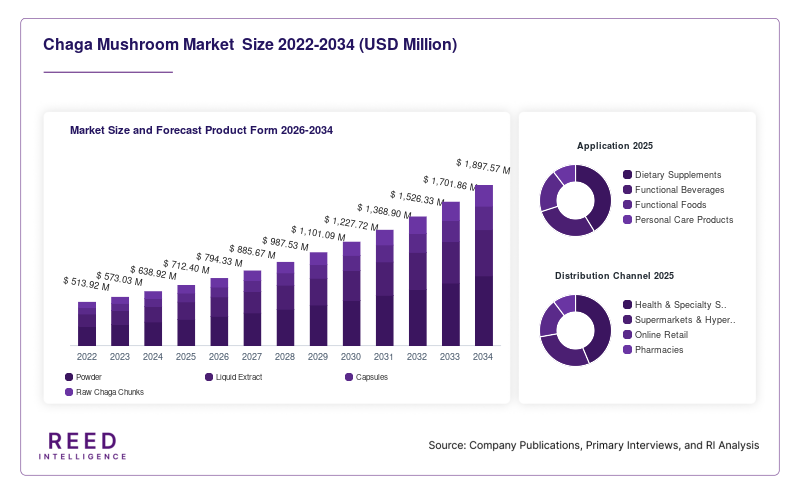
The powder segment held the dominant position in the Chaga Mushroom Market, accounting for 44.8% of total revenue in 2024. Powdered Chaga mushrooms have been widely used due to their flexibility in formulation across multiple product categories. Manufacturers often use powder form in dietary supplements, beverage mixes, and functional food products. Powdered Chaga also allows consumers to easily incorporate the ingredient into smoothies, teas, and coffee alternatives. Its long shelf life and ease of transportation have further supported its widespread adoption across global markets.
The liquid extract segment will record the fastest expansion in the Chaga Mushroom Market, with a projected CAGR of 12.9% during 2025–2033. Liquid extracts will gain traction due to their concentrated composition and convenient dosage formats. Consumers seeking rapid absorption and ready-to-use supplements will increasingly prefer liquid formulations. Manufacturers will continue developing advanced extraction processes that maintain the natural compound profile of Chaga mushrooms. As premium supplement products gain popularity, liquid extracts will become an important growth segment.
By Application
The dietary supplements segment dominated the Chaga Mushroom Market in 2024, accounting for 48.3% of total market share. Capsules, tablets, and powdered supplements have been widely adopted by consumers seeking convenient ways to incorporate mushroom-based ingredients into daily routines. Supplement brands have introduced Chaga-based formulas that combine multiple mushroom varieties, providing broader product portfolios within the nutraceutical category. The availability of supplements in health stores and online platforms has strengthened their presence across global markets.
The functional beverages segment will emerge as the fastest-growing application within the Chaga Mushroom Market, expanding at a CAGR of 13.4% through 2033. Beverage companies will continue introducing ready-to-drink teas, herbal tonics, and coffee alternatives containing mushroom extracts. The rising popularity of wellness beverages will encourage brands to experiment with adaptogenic and botanical ingredients. As beverage manufacturers focus on ingredient transparency and natural formulations, Chaga mushroom extracts will increasingly appear in beverage innovation pipelines.
By Distribution Channel
The health and specialty stores segment accounted for the largest share of the Chaga Mushroom Market in 2024, representing 36.7% of total sales. These stores provide curated product selections focused on wellness, organic foods, and natural supplements. Consumers visiting specialty retailers often seek detailed product knowledge and ingredient transparency, making these stores a preferred distribution channel for mushroom-based supplements. The presence of trained staff and educational marketing materials has also strengthened consumer engagement.
The online retail segment will register the fastest growth within the Chaga Mushroom Market, with a CAGR of 13.6% during the forecast period. E-commerce platforms will enable direct engagement between manufacturers and consumers while reducing distribution barriers. Online marketplaces will allow smaller brands to compete with established companies by offering niche mushroom-based products. Digital marketing campaigns, subscription models, and educational content will continue driving online sales growth within the market.
Regional Analysis
North America
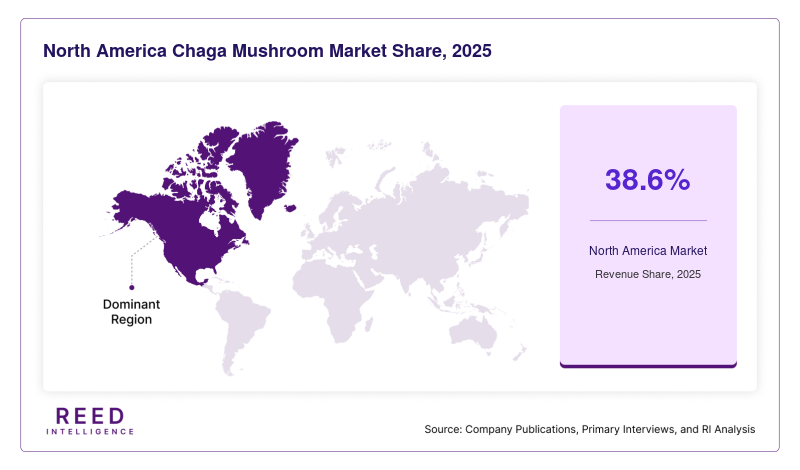
North America accounted for 38.6% of the global Chaga Mushroom Market share in 2025 and represented the largest regional market. The region will continue expanding and is expected to register a CAGR of 10.9% during 2025–2033. Market growth in this region has been influenced by strong consumer awareness regarding functional nutrition and botanical supplements. Retail distribution networks, including natural food stores and wellness-focused retailers, have played an important role in supporting market expansion. Product availability across multiple formats such as powders, capsules, and beverages has also increased consumer accessibility.
The United States remained the dominant country within the regional Chaga Mushroom Market. Growth in the country has been supported by an established dietary supplement industry that continuously introduces new herbal formulations. American brands have invested in research-backed ingredient positioning and transparent product labeling, which has helped strengthen consumer trust. The presence of specialized mushroom supplement companies has also expanded product portfolios, contributing to sustained growth across the United States.
Europe
Europe represented 26.4% of the global Chaga Mushroom Market share in 2025. The region will witness a CAGR of 11.2% during the forecast period. European consumers have shown increasing interest in natural wellness products derived from traditional botanical ingredients. The popularity of herbal infusions and natural supplements has supported the gradual adoption of mushroom-based formulations.
Within Europe, Finland emerged as a dominant country in the Chaga Mushroom Market due to its proximity to natural birch forests where Chaga mushrooms grow abundantly. Finnish companies have developed processing expertise and established supply chains for harvesting and processing Chaga. Local manufacturers have also introduced Chaga-based beverages and herbal drinks that are marketed as part of traditional Nordic wellness culture. This regional specialization has contributed to the growing European market presence.
Asia Pacific
Asia Pacific accounted for 21.7% of the global Chaga Mushroom Market in 2025 and will register the fastest growth at a CAGR of 13.1% through 2033. The region’s market expansion will be supported by rising disposable incomes and increasing interest in herbal wellness solutions. Consumers across several Asian countries are exploring functional ingredients that align with traditional herbal practices.
China remained the dominant country within the Asia Pacific Chaga Mushroom Market. The country has extensive experience in cultivating and processing medicinal mushrooms used in traditional herbal preparations. Chinese manufacturers have also developed large-scale extraction facilities capable of producing concentrated mushroom ingredients. This manufacturing capacity has supported domestic consumption while enabling exports to international markets. As regional health product consumption expands, China will continue to influence the regional market trajectory.
Middle East & Africa
The Middle East & Africa accounted for approximately 7.1% of the global Chaga Mushroom Market share in 2025 and will experience a CAGR of 9.6% through 2033. Although the regional market remains smaller than those of North America and Europe, gradual growth is occurring due to expanding awareness of functional foods and natural health products.
Within this region, the United Arab Emirates has emerged as a leading market for Chaga mushroom products. Retail expansion in premium wellness stores and specialty nutrition outlets has increased product availability. Consumers in urban areas have begun exploring imported functional ingredients as part of modern wellness lifestyles. The country’s role as a regional trade hub has also facilitated the distribution of Chaga-based products across neighboring markets.
Latin America
Latin America represented 6.2% of the global Chaga Mushroom Market share in 2025 and will grow at a CAGR of 10.2% during the forecast period. Increasing interest in botanical nutrition and herbal supplements has gradually supported market expansion across the region. Health-conscious consumers are exploring plant-based wellness solutions that align with traditional herbal practices.
Brazil dominated the regional Chaga Mushroom Market due to its rapidly growing dietary supplement sector. Brazilian consumers have increasingly adopted functional ingredients within daily nutrition routines. Local supplement manufacturers are introducing mushroom-based blends that combine Chaga with other herbal ingredients. As the region’s nutraceutical industry continues to develop, Brazil will remain a key contributor to regional market growth.
Competitive Landscape
The Chaga Mushroom Market remains moderately fragmented, with a mix of specialty mushroom companies, nutraceutical manufacturers, and natural ingredient suppliers competing globally. Market participants focus on product innovation, ingredient sourcing strategies, and expanding distribution networks to strengthen their market positions.
Four Sigmatic is widely recognized as a leading company in the Chaga Mushroom Market due to its strong portfolio of mushroom-based beverages and supplements. The company has expanded its product range to include instant coffee blends and ready-to-drink beverages infused with Chaga and other functional mushrooms. Recently, the company introduced new mushroom-based drink mixes designed for wellness-focused consumers.
Other companies such as Host Defense Mushrooms, Real Mushrooms, Mushroom Science, and Sayan Health have also expanded their product portfolios with Chaga-based supplements and extracts. Strategic partnerships with online retailers and wellness brands remain common strategies used by market participants to increase product visibility and global reach.
Key Players
- Host Defense Mushrooms
- Real Mushrooms
- Mushroom Science
- Sayan Health
- Nammex
- Oriveda
- Nutra Green Biotechnology
- Aloha Medicinals
- Mushroom Harvest
Recent Developments
- Several supplement manufacturers introduced organic-certified Chaga mushroom extracts to meet increasing consumer demand for clean-label ingredients.
- Functional beverage companies launched mushroom-infused coffee alternatives incorporating Chaga powder.
- Nutraceutical brands expanded standardized Chaga extract formulations for use in capsules and liquid supplements.
- Ingredient suppliers developed dual-extraction processing techniques to improve compound retention in Chaga mushroom extracts.
- Online wellness platforms introduced subscription-based mushroom supplement programs, increasing consumer access to Chaga products.
Chaga Mushroom Market Segments
Product Form
- Powder
- Liquid Extract
- Capsules
- Raw Chaga Chunks
Application
- Dietary Supplements
- Functional Beverages
- Functional Foods
- Personal Care Products
Distribution Channel
- Health & Specialty Stores
- Supermarkets & Hypermarkets
- Online Retail
- Pharmacies
By Region
- North America
- Europe
- APAC
- Middle East and Africa
- LATAM