Chilblains Treatment Market Size, Share & Demand Report By Drug Type (Topical Corticosteroids, Calcium Channel Blockers, Vasodilators, Others), By Distribution Channel (Retail Pharmacies, Hospital Pharmacies, Online Pharmacies), By End-Use (Hospitals & Clinics, Homecare Settings, Others), By Region & Segment Forecasts, 2026–2034
USD 3950
Market Overview
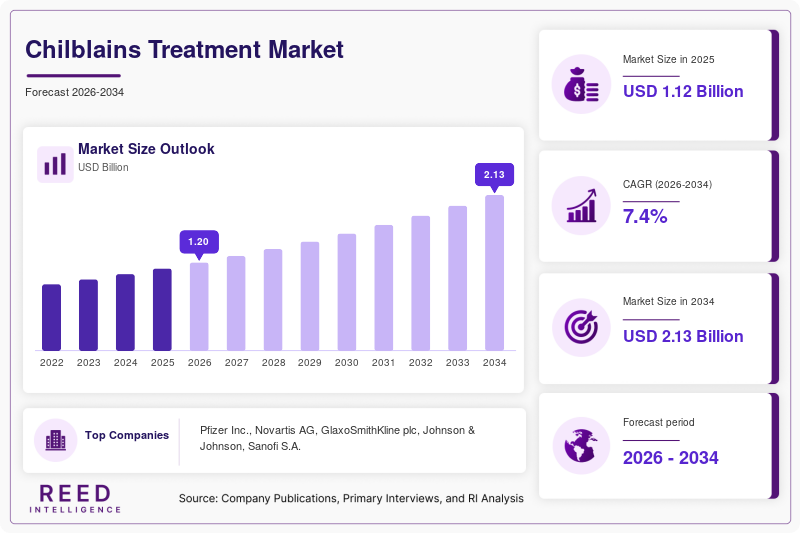
The global Chilblains Treatment Market size was valued at approximately USD 1.12 billion in 2026 and is projected to reach USD 1.98 billion by 2034, expanding at a CAGR of 7.4% during the forecast period (2026–2034). Chilblains, also known as pernio, are inflammatory skin conditions triggered by prolonged exposure to cold and damp environments, leading to rising demand for effective pharmacological and topical therapies. The increasing prevalence of cold-climate-related dermatological conditions, coupled with improved awareness about early diagnosis and treatment, continues to support market growth across developed and emerging economies.
A key global factor driving market expansion is the rising incidence of climate variability, which has increased exposure to cold stress conditions in regions not traditionally associated with extreme winters. This shift has broadened the patient pool and encouraged pharmaceutical companies to invest in targeted treatments, including vasodilators and corticosteroid-based topical formulations. Furthermore, advancements in dermatological research and increasing accessibility to over-the-counter (OTC) remedies have strengthened market penetration.
Key Highlights
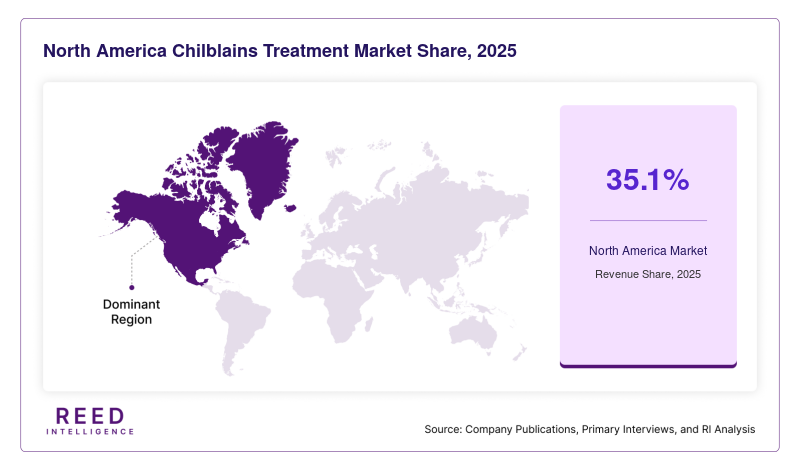
- North America dominated the market with a 35.1% share in 2025.
- Asia Pacific is expected to grow at the fastest CAGR of 8.9% during 2026–2034.
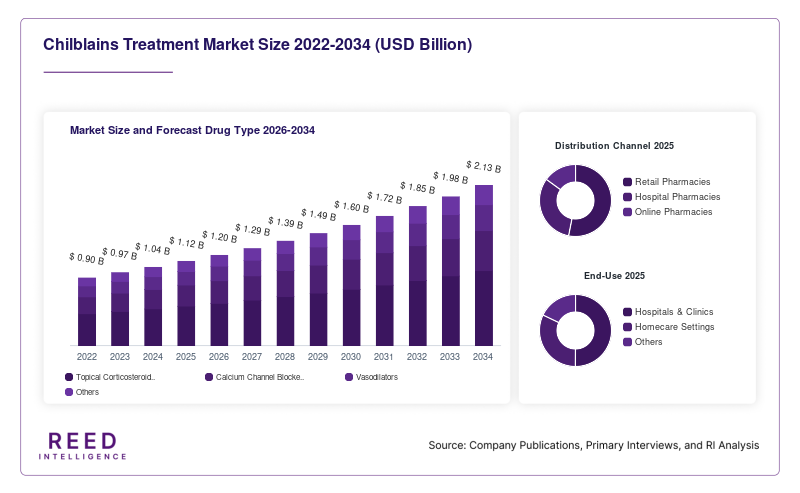
- By drug type, topical corticosteroids accounted for the largest share of 40.3%, while calcium channel blockers are projected to grow at a CAGR of 9.5%.
- By distribution channel, retail pharmacies led with a 46.8% share, whereas online pharmacies are expected to expand at a CAGR of 10.2%.
- The United States remained the dominant country, with market values of USD 420 million in 2024 and USD 455 million in 2025.
Market Trends
Increasing Preference for Topical and Non-Invasive Treatments
A noticeable trend in the Chilblains Treatment Market is the growing preference for topical and non-invasive treatment options. Patients are increasingly opting for creams, ointments, and gels that offer localized relief without systemic side effects. This shift is supported by advancements in dermatological formulations that enhance drug absorption and efficacy. Manufacturers are focusing on improving the texture, absorption rate, and duration of action of topical therapies, making them more appealing to patients. Additionally, the convenience of over-the-counter availability has contributed to widespread adoption. As healthcare awareness increases, consumers are prioritizing treatments that provide quick relief with minimal discomfort, thereby influencing product innovation and market dynamics.
Expansion of Digital Health and Online Pharmacy Channels
The integration of digital health platforms and the expansion of online pharmacies represent another key trend shaping the market. Consumers are increasingly using digital platforms for self-diagnosis, consultation, and procurement of medications. Online pharmacies offer convenience, competitive pricing, and access to a wider range of products, which is particularly beneficial in remote or underserved regions. Teledermatology services have also gained traction, allowing patients to receive expert advice without visiting healthcare facilities. This trend has encouraged pharmaceutical companies to strengthen their online presence and collaborate with digital platforms. As internet penetration continues to rise globally, the role of e-commerce in driving market growth is expected to become more significant.
Market Drivers
Rising Prevalence of Cold-Induced Dermatological Conditions
The increasing prevalence of cold-induced skin disorders is a primary driver of the Chilblains Treatment Market. Changing climatic conditions, including fluctuating temperatures and extended winter seasons, have led to a higher incidence of chilblains in both traditional cold regions and temperate climates. Individuals exposed to damp and cold environments, such as outdoor workers and elderly populations, are particularly vulnerable. This growing patient base has increased demand for effective treatment solutions. Healthcare providers are also emphasizing early diagnosis and management, which further boosts treatment adoption. As awareness campaigns and educational initiatives continue to expand, more individuals are seeking timely medical intervention, thereby supporting sustained market growth.
Advancements in Pharmaceutical Formulations and Drug Delivery
Technological advancements in drug formulation and delivery systems are significantly contributing to market expansion. Pharmaceutical companies are investing in research and development to create more effective and safer treatment options. Innovations such as controlled-release formulations, improved topical carriers, and combination therapies are enhancing treatment outcomes. These advancements not only improve patient compliance but also reduce the risk of side effects. Additionally, the introduction of novel vasodilators and anti-inflammatory agents has expanded the therapeutic landscape. Regulatory support for new drug approvals further accelerates innovation, enabling companies to bring advanced products to market. This continuous evolution in treatment options is a key factor driving the growth of the Chilblains Treatment Market.
Market Restraint
Limited Awareness and Underdiagnosis in Emerging Regions
One of the major challenges facing the Chilblains Treatment Market is the limited awareness and underdiagnosis of the condition in emerging regions. In many developing countries, chilblains are often misdiagnosed or overlooked due to lack of awareness among both patients and healthcare providers. This results in delayed treatment and reduced demand for specialized therapies. Additionally, limited access to dermatological care and diagnostic facilities further exacerbates the issue. The absence of standardized treatment guidelines in certain regions also contributes to inconsistent management practices. For instance, rural populations may rely on traditional remedies rather than seeking medical treatment, which restricts market growth. Addressing this restraint requires targeted awareness campaigns, improved healthcare infrastructure, and training programs for healthcare professionals to ensure accurate diagnosis and effective treatment.
Market Opportunities
Growing Demand in Emerging Economies
Emerging economies present significant growth opportunities for the Chilblains Treatment Market. Rapid urbanization, improving healthcare infrastructure, and increasing disposable incomes are driving demand for dermatological treatments in these regions. Governments are investing in healthcare systems, expanding access to medical services, and promoting awareness about skin conditions. As a result, more patients are seeking professional treatment for chilblains. Pharmaceutical companies are also focusing on expanding their presence in these markets through strategic partnerships and distribution networks. The introduction of affordable treatment options tailored to local needs further enhances market potential. As awareness continues to grow, emerging economies are expected to contribute significantly to overall market expansion.
Innovation in Personalized and Preventive Care
The shift toward personalized and preventive healthcare offers promising opportunities for market growth. Advances in medical research are enabling the development of tailored treatment approaches based on individual patient profiles. Personalized therapies can improve treatment efficacy and reduce recurrence rates, making them highly attractive to patients and healthcare providers. Additionally, there is increasing focus on preventive measures, such as protective skincare products and lifestyle modifications, to reduce the risk of chilblains. Companies are investing in research to develop innovative products that address both treatment and prevention. This trend is expected to create new revenue streams and strengthen market competitiveness in the coming years.
Segmental Analysis
By Drug Type
Topical corticosteroids emerged as the dominant subsegment in 2024, accounting for approximately 40.3% of the market share. These treatments are widely used due to their effectiveness in reducing inflammation and alleviating symptoms such as itching and swelling. The ease of application and availability of over-the-counter options further contribute to their widespread adoption. Healthcare providers often recommend topical corticosteroids as a first-line treatment, making them a preferred choice among patients. Additionally, ongoing research to improve formulation quality and minimize side effects continues to strengthen their position in the market.
Calcium channel blockers are projected to be the fastest-growing subsegment, expanding at a CAGR of 9.5% during the forecast period. These drugs help improve blood circulation, addressing one of the root causes of chilblains. Increasing awareness about their benefits and growing adoption in severe cases are driving demand. Pharmaceutical companies are focusing on developing advanced formulations with improved efficacy and reduced side effects. The rising prevalence of chronic cases requiring systemic treatment further supports the growth of this subsegment.
By Distribution Channel
Retail pharmacies dominated the market in 2024, holding a share of 46.8%. These pharmacies provide easy access to both prescription and over-the-counter medications, making them a convenient option for patients. The presence of trained pharmacists who can offer guidance on medication usage further enhances their appeal. Additionally, retail pharmacies often have established relationships with healthcare providers, ensuring a steady supply of products. The widespread availability of retail outlets, particularly in urban areas, contributes to their leading position in the market.
Online pharmacies are expected to grow at the fastest CAGR of 10.2% during the forecast period. The increasing adoption of digital platforms and e-commerce has transformed the way patients access medications. Online pharmacies offer convenience, competitive pricing, and home delivery services, making them an attractive option for consumers. The integration of telemedicine services further enhances their value proposition. As internet penetration continues to rise, particularly in emerging markets, the demand for online pharmacy services is expected to increase significantly.
By End-Use
Hospitals and clinics accounted for the largest share of 52.1% in 2024, driven by the availability of specialized healthcare professionals and advanced diagnostic facilities. Patients with severe or persistent symptoms often seek treatment in these settings, where they can receive comprehensive care. Hospitals and clinics also play a crucial role in educating patients about preventive measures and treatment options. The presence of experienced dermatologists ensures accurate diagnosis and effective treatment, contributing to the dominance of this segment.
Homecare settings are anticipated to be the fastest-growing subsegment, with a CAGR of 8.7% during the forecast period. The increasing preference for self-care and home-based treatment options is driving this growth. Patients are opting for convenient and cost-effective solutions that can be administered without frequent visits to healthcare facilities. The availability of user-friendly topical treatments and digital health tools supports this trend. As awareness about chilblains management continues to grow, homecare settings are expected to gain significant traction.
Regional Analysis
North America
North America accounted for a significant share of the Chilblains Treatment Market, capturing approximately 35.1% in 2025 and expected to grow at a CAGR of 6.8% during the forecast period. The region benefits from advanced healthcare infrastructure, high awareness levels, and strong presence of pharmaceutical companies. Increased prevalence of cold weather conditions in certain parts of the region also contributes to demand for treatment solutions.
The United States remains the dominant country in North America, driven by strong healthcare spending and widespread access to dermatological care. A unique growth factor in this region is the increasing adoption of telemedicine services, which allows patients to access treatment quickly and efficiently, thereby boosting market growth.
Europe
Europe held a substantial market share of around 28.4% in 2025 and is projected to grow at a CAGR of 7.1%. The region experiences cold climatic conditions, particularly in Northern and Eastern Europe, which increases the incidence of chilblains. Strong regulatory frameworks and healthcare systems support the availability of advanced treatment options.
Germany leads the European market due to its well-established healthcare infrastructure and high awareness among the population. A unique growth factor in Europe is the increasing focus on preventive healthcare measures, including public health campaigns promoting skin protection during winter months.
Asia Pacific
Asia Pacific is expected to witness the fastest growth, with a CAGR of 8.9% during the forecast period and a market share of 21.6% in 2025. Rapid urbanization, improving healthcare access, and rising awareness about dermatological conditions are driving market expansion in the region.
China dominates the Asia Pacific market due to its large population and growing healthcare investments. A unique growth factor is the increasing penetration of online pharmacies, which enhances accessibility to treatment options, especially in rural and remote areas.
Middle East & Africa
The Middle East & Africa region accounted for approximately 7.3% of the market share in 2025 and is projected to grow at a CAGR of 6.2%. Although the region generally experiences warmer climates, certain areas with colder conditions contribute to demand for chilblains treatment.
South Africa is a key market in this region, supported by improving healthcare infrastructure and rising awareness. A unique growth factor is the expansion of healthcare services in rural areas, which increases access to diagnosis and treatment for skin conditions.
Latin America
Latin America held a market share of about 7.6% in 2025 and is expected to grow at a CAGR of 6.5%. The region is witnessing gradual improvements in healthcare systems and increasing awareness about dermatological conditions.
Brazil dominates the Latin American market due to its large population and expanding healthcare sector. A unique growth factor is the growing adoption of over-the-counter treatments, which makes chilblains therapies more accessible to a broader population.
Competitive Landscape
The Chilblains Treatment Market is characterized by moderate competition, with several established pharmaceutical companies and emerging players competing for market share. Leading companies focus on product innovation, strategic partnerships, and geographic expansion to strengthen their market position. The presence of both global and regional players creates a dynamic competitive environment.
A leading player in the market is Pfizer Inc., which has a strong portfolio of dermatological products and a robust global distribution network. The company recently introduced an advanced topical formulation aimed at improving treatment efficacy and patient compliance. Other major companies are also investing in research and development to introduce novel therapies and expand their product offerings. Strategic collaborations with healthcare providers and digital platforms are becoming increasingly common, enabling companies to enhance their market reach and improve customer engagement.
Key Players
- Pfizer Inc.
- Novartis AG
- GlaxoSmithKline plc
- Johnson & Johnson
- Sanofi S.A.
- Bayer AG
- AbbVie Inc.
- Merck & Co., Inc.
- Eli Lilly and Company
- Teva Pharmaceutical Industries Ltd.
- Sun Pharmaceutical Industries Ltd.
- Cipla Ltd.
- Dr. Reddy’s Laboratories Ltd.
- Aurobindo Pharma Ltd.
- Almirall S.A.
Recent Developments
- Several companies have introduced new topical formulations aimed at improving treatment outcomes and reducing side effects.
- Strategic collaborations between pharmaceutical companies and online pharmacy platforms have increased product accessibility and distribution reach.
- Investments in research and development have led to the introduction of advanced drug delivery systems, enhancing the effectiveness of chilblains treatments.
Chilblains Treatment Market Segments
Drug Type
- Topical Corticosteroids
- Calcium Channel Blockers
- Vasodilators
- Others
Distribution Channel
- Retail Pharmacies
- Hospital Pharmacies
- Online Pharmacies
End-Use
- Hospitals & Clinics
- Homecare Settings
- Others
By Region
- North America
- Europe
- APAC
- Middle East and Africa
- LATAM