Children Rechargeable Hearing Aids Market Size, Share & Demand Report By Product Type (Behind-the-Ear (BTE), Receiver-in-Canal (RIC), In-the-Ear (ITE), Others), By Hearing Loss Severity (Mild, Moderate, Severe, Profound), By Distribution Channel (Audiology Clinics, Hospitals, Retail Hearing Centers, Online Hearing Care Platforms), By Region & Segment Forecasts, 2026–2034
USD 3950
Market Overview
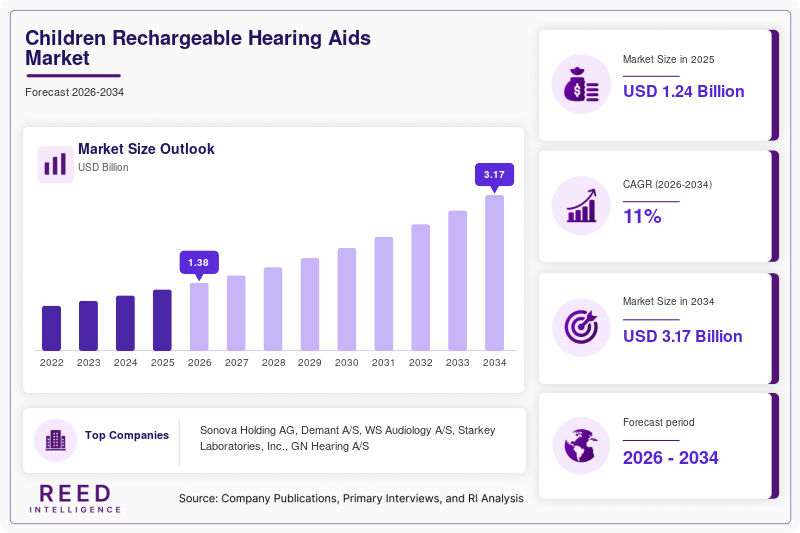
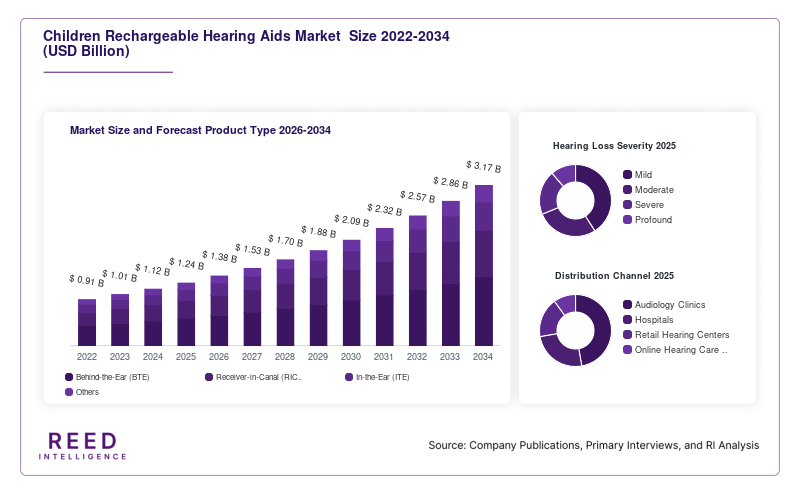
The Children Rechargeable Hearing Aids Market size was valued at approximately USD 1.24 billion in 2026 and is projected to reach USD 2.86 billion by 2034, expanding at a CAGR of 11.0% during the forecast period from 2026 to 2034. The market continues to gain momentum as healthcare systems, educational institutions, and parents increasingly prioritize early hearing intervention among children with mild to profound hearing impairments. Rechargeable hearing aids have emerged as a preferred solution due to their convenience, reduced battery replacement requirements, improved environmental sustainability, and enhanced performance capabilities.
A major global factor supporting market growth is the increasing implementation of newborn hearing screening programs across both developed and developing economies. Early diagnosis enables timely treatment, resulting in higher adoption of pediatric hearing devices. Healthcare providers are also emphasizing continuous hearing support during childhood to improve speech development, educational outcomes, and social integration. Advances in lithium-ion battery technology, wireless connectivity, AI-enabled sound processing, and moisture-resistant designs have further enhanced product acceptance among caregivers and clinicians.
Key Highlights
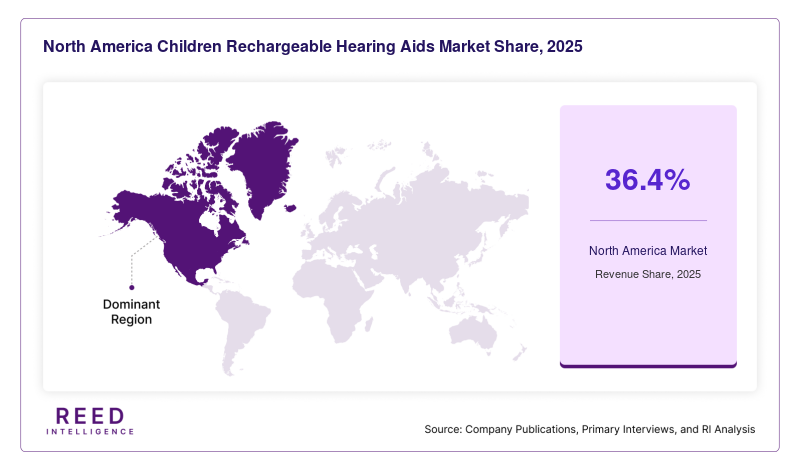
- North America dominated the market with a 36.4% share in 2025, while Asia Pacific is expected to grow at the fastest CAGR of 12.8% during 2026–2034.
- By Product Type, Behind-the-Ear (BTE) rechargeable hearing aids accounted for the largest share of 48.7%, while Receiver-in-Canal (RIC) rechargeable hearing aids are projected to grow at a CAGR of 12.9%.
- By Hearing Loss Severity, moderate hearing loss represented the largest share of 42.1%, whereas severe hearing loss devices are expected to expand at a CAGR of 12.3%.
- By Distribution Channel, audiology clinics led with a 54.6% share, while online hearing care platforms are anticipated to grow at a CAGR of 13.6%.
- The United States remained the dominant country, with market values of USD 405 million in 2024 and USD 452 million in 2025.
Market Trends
Growing Integration of Smart Connectivity Features
One of the most notable trends shaping the Children Rechargeable Hearing Aids Market is the increasing integration of smart connectivity technologies. Modern pediatric hearing aids are increasingly equipped with Bluetooth functionality, smartphone connectivity, wireless classroom compatibility, and remote monitoring systems. These features enable parents and audiologists to adjust settings remotely while ensuring optimal hearing performance in different environments. The demand for seamless connectivity has increased as children spend more time in digital learning environments. Manufacturers are investing heavily in software ecosystems that support real-time adjustments, personalized hearing profiles, and data analytics. As educational institutions adopt more technology-enabled learning methods, connected hearing devices are becoming an important component of pediatric hearing care, strengthening long-term market growth.
Rising Demand for Sustainable Rechargeable Solutions
The transition from disposable batteries to rechargeable systems has become a significant market trend. Parents increasingly prefer rechargeable hearing aids because they eliminate the recurring cost and inconvenience of replacing batteries. Rechargeable models also reduce the risk associated with battery handling by young children. Environmental awareness has further accelerated the shift toward sustainable hearing solutions. Manufacturers are introducing longer-lasting battery technologies capable of delivering all-day performance with a single charge. Charging accessories designed for travel, school use, and overnight charging are improving user convenience. As battery efficiency continues to improve and device sizes become more compact, rechargeable hearing aids are expected to become the standard option for pediatric patients across both developed and emerging healthcare markets.
Market Drivers
Expansion of Early Hearing Detection and Intervention Programs
The increasing adoption of early hearing detection and intervention programs is a major growth driver for the Children Rechargeable Hearing Aids Market. Governments and healthcare organizations worldwide are implementing universal newborn hearing screening initiatives to identify hearing impairment at an early stage. Early diagnosis significantly improves speech development, language acquisition, and educational outcomes. As a result, healthcare professionals increasingly recommend hearing aids soon after diagnosis. Pediatric audiology services are expanding in hospitals and specialty clinics, enabling faster treatment initiation. The growing focus on preventive healthcare and early intervention has increased awareness among parents regarding the benefits of hearing support technologies, resulting in stronger demand for rechargeable hearing aid solutions designed specifically for children.
Technological Advancements in Pediatric Hearing Devices
Continuous technological innovation is accelerating market growth. Manufacturers are introducing advanced digital signal processing, noise reduction capabilities, directional microphones, AI-assisted sound adaptation, and wireless connectivity features that improve hearing experiences for children. Rechargeable lithium-ion batteries provide longer operating times and higher reliability compared with traditional disposable batteries. Modern pediatric hearing aids are also becoming more durable and resistant to moisture, dust, and accidental impacts. These improvements enhance user comfort and encourage adoption among caregivers. As hearing technology becomes increasingly sophisticated while remaining user-friendly, the market is witnessing strong demand from healthcare providers seeking effective and convenient hearing solutions for pediatric patients across different age groups.
Market Restraint
High Device Costs and Limited Accessibility in Developing Regions
The high cost of advanced rechargeable hearing aids remains a significant restraint for market expansion. Pediatric hearing aids often require specialized fitting, regular audiological assessments, software updates, and maintenance services, increasing the overall treatment expense. Although rechargeable models reduce long-term battery replacement costs, their initial purchase price remains higher than many conventional alternatives. This creates affordability challenges for families without adequate insurance coverage or government assistance programs. In several developing countries, pediatric audiology infrastructure remains limited, restricting access to diagnostic and treatment services. Rural communities often face shortages of qualified hearing specialists, delaying diagnosis and intervention. For example, families in low-income regions may postpone hearing aid adoption despite medical recommendations due to financial constraints. These accessibility challenges can reduce treatment rates and slow market penetration in emerging economies despite growing awareness of pediatric hearing health.
Market Opportunities
Expansion of Tele-Audiology and Remote Hearing Care Services
The emergence of tele-audiology presents substantial growth opportunities for the Children Rechargeable Hearing Aids Market. Remote hearing assessments, virtual consultations, and cloud-based device adjustments are transforming pediatric hearing care delivery. Parents increasingly value the convenience of accessing audiology services without frequent clinic visits. Telehealth platforms enable specialists to support children in remote and underserved locations where audiology resources may be limited. Hearing aid manufacturers are integrating remote programming capabilities into their product portfolios, allowing clinicians to optimize performance from a distance. As healthcare systems continue investing in digital health infrastructure, tele-audiology solutions are expected to improve treatment accessibility and create new revenue opportunities for device manufacturers and service providers.
Increasing Penetration in Emerging Healthcare Markets
Emerging economies offer considerable untapped growth potential due to improving healthcare infrastructure and rising awareness of hearing disorders. Countries across Asia Pacific, Latin America, and parts of the Middle East are expanding pediatric healthcare services and strengthening hearing screening programs. Growing disposable incomes and improving health insurance coverage are making advanced hearing technologies more accessible to families. Manufacturers are introducing cost-effective rechargeable hearing aid models tailored to regional market needs. Strategic partnerships with hospitals, schools, and community healthcare providers are also enhancing market penetration. As diagnosis rates increase and governments prioritize childhood healthcare outcomes, demand for rechargeable pediatric hearing solutions is expected to rise significantly across these rapidly developing markets.
Segmental Analysis
By Product Type
Behind-the-Ear (BTE) rechargeable hearing aids represented the dominant subsegment, accounting for approximately 48.7% of the market share in 2024. These devices are widely preferred for pediatric patients because they provide strong amplification capabilities, durability, and flexibility across different levels of hearing loss. BTE models can accommodate growing children through replaceable earmolds, making them a practical long-term solution. Healthcare professionals often recommend these devices due to their reliability and compatibility with educational hearing assistance systems. Their larger size also allows integration of advanced rechargeable batteries and connectivity features, supporting strong adoption across hospitals, audiology clinics, and hearing care centers worldwide.
Receiver-in-Canal (RIC) rechargeable hearing aids are expected to register the fastest CAGR of 12.9% during the forecast period. Growth is driven by improvements in miniaturization technologies and increasing demand for discreet hearing solutions among older children and adolescents. RIC devices provide enhanced sound quality, comfort, and aesthetic appeal while maintaining advanced digital hearing capabilities. Manufacturers continue investing in pediatric adaptations that improve durability and ease of use. The growing acceptance of wireless connectivity, smartphone integration, and personalized hearing profiles is further supporting the adoption of RIC rechargeable hearing aids in developed and emerging markets.
By Hearing Loss Severity
Moderate hearing loss devices accounted for the largest market share of approximately 42.1% in 2024. This dominance reflects the relatively high prevalence of moderate hearing impairment among pediatric populations. Children with moderate hearing loss often benefit significantly from early hearing aid intervention, enabling improved speech recognition, communication skills, and educational performance. Healthcare providers frequently recommend hearing aids for this patient group because treatment outcomes are highly favorable when intervention occurs early. Increasing awareness among parents and educators regarding the impact of untreated hearing loss has further strengthened demand for rechargeable devices targeting moderate hearing impairment.
Devices designed for severe hearing loss are anticipated to grow at the fastest CAGR of 12.3% through 2034. Advances in amplification technology, digital signal processing, and feedback reduction systems are enabling improved hearing outcomes for children with greater hearing challenges. Enhanced rechargeable battery performance allows these devices to deliver sustained power throughout the day. Healthcare providers are increasingly recommending advanced hearing aids before considering more invasive treatment options. Rising diagnosis rates and expanding access to specialized pediatric audiology services are expected to support robust growth within this subsegment over the coming years.
By Distribution Channel
Audiology clinics held the largest share of approximately 54.6% in 2024. These facilities remain the primary point of diagnosis, hearing assessment, fitting, and ongoing management for pediatric hearing aid users. Parents often rely on specialized audiologists for professional guidance when selecting appropriate hearing solutions for children. Clinics provide customized fitting services, hearing evaluations, device programming, and long-term support, which contribute to high patient trust levels. The growing availability of pediatric audiology specialists and increasing healthcare referrals continue to strengthen the importance of audiology clinics within the overall market ecosystem.
Online hearing care platforms are projected to expand at the fastest CAGR of 13.6% during the forecast period. The rapid adoption of telehealth services and digital healthcare solutions is driving growth within this channel. Parents increasingly value the convenience of remote consultations, virtual follow-up appointments, and online access to hearing care information. Manufacturers are integrating cloud-based support tools that facilitate remote adjustments and device monitoring. As digital healthcare infrastructure improves globally, online hearing care platforms are expected to play an increasingly important role in expanding access to pediatric hearing services and rechargeable hearing aid products.
Regional Analysis
North America
North America accounted for approximately 36.4% of the global Children Rechargeable Hearing Aids Market in 2025 and maintained its position as the leading regional market. The region benefits from strong healthcare infrastructure, extensive insurance coverage, and widespread awareness regarding pediatric hearing disorders. Market growth is supported by established newborn hearing screening programs and advanced audiology services. The regional market is expected to expand at a CAGR of 10.1% through 2034 as technological innovations continue to improve device performance and accessibility.
The United States remains the dominant contributor within North America. A key growth factor is the extensive network of pediatric hearing specialists and educational support programs available for children with hearing impairment. Schools increasingly incorporate assistive hearing technologies into learning environments, supporting higher adoption rates. Continuous product innovation and favorable reimbursement policies further strengthen market demand across the country.
Europe
Europe represented approximately 27.8% of the global market in 2025 and continues to demonstrate stable growth prospects. The region benefits from well-established healthcare systems, supportive regulatory frameworks, and increasing awareness regarding childhood hearing health. Governments across several European countries actively support hearing screening initiatives and early intervention programs. The market is projected to register a CAGR of 9.7% during the forecast period as healthcare providers continue emphasizing early diagnosis and treatment.
Germany leads the European market due to its advanced healthcare infrastructure and strong adoption of medical technologies. A unique growth factor is the increasing collaboration between hearing care providers and educational institutions. These partnerships facilitate earlier diagnosis and ongoing support for children with hearing impairments. The availability of reimbursement programs also encourages greater utilization of rechargeable hearing aid solutions.
Asia Pacific
Asia Pacific captured nearly 22.5% of the global Children Rechargeable Hearing Aids Market in 2025 and is expected to record the fastest CAGR of 12.8% through 2034. Rapid healthcare modernization, rising awareness of hearing disorders, and expanding pediatric healthcare services are driving market growth. Governments across the region are increasing investments in hearing screening programs and audiology infrastructure. Growing middle-class populations are also contributing to stronger demand for advanced hearing technologies.
China remains the dominant country in the Asia Pacific market. A major growth factor is the rapid expansion of healthcare access in urban and semi-urban areas. Government-led healthcare reforms and increased investment in medical technology adoption are improving diagnosis and treatment rates. Local manufacturers are also introducing affordable rechargeable hearing aid options, making advanced hearing solutions accessible to a broader population.
Middle East & Africa
The Middle East & Africa region accounted for approximately 6.5% of the global market in 2025 and is expected to grow at a CAGR of 10.4% during the forecast period. Market growth is supported by increasing healthcare investments, rising awareness campaigns, and gradual improvements in audiology infrastructure. Although adoption levels remain lower than in developed regions, expanding healthcare services are creating favorable conditions for market development.
Saudi Arabia leads the regional market due to substantial healthcare spending and modernization initiatives. A unique growth factor is the growing emphasis on specialized pediatric healthcare services. Healthcare facilities are increasingly investing in diagnostic equipment and hearing care programs targeting childhood disorders. These developments are improving access to hearing assessments and supporting higher adoption of rechargeable hearing aid solutions.
Latin America
Latin America held approximately 6.8% of the global Children Rechargeable Hearing Aids Market in 2025 and is projected to grow at a CAGR of 10.8% through 2034. Rising healthcare awareness, expanding access to audiology services, and increasing government healthcare expenditures are supporting regional growth. Market participants are strengthening distribution networks and educational outreach efforts to improve treatment adoption among pediatric populations.
Brazil dominates the Latin American market. A significant growth factor is the expansion of public healthcare programs focused on childhood wellness and disability support. Greater awareness regarding hearing impairment and improved access to diagnostic services are encouraging earlier intervention. The increasing availability of rechargeable hearing aid technologies through hospitals and specialty clinics further contributes to market expansion across the country.
Competitive Landscape
The Children Rechargeable Hearing Aids Market is moderately consolidated, with established hearing technology companies competing through innovation, product performance, connectivity features, and pediatric-focused solutions. Leading manufacturers continue investing in rechargeable battery technology, artificial intelligence integration, remote care capabilities, and enhanced durability to strengthen their market positions.
Sonova remains a market leader due to its broad pediatric hearing care portfolio and strong global distribution network. The company recently expanded its rechargeable hearing aid offerings with enhanced wireless connectivity and remote fitting capabilities aimed at improving pediatric patient experiences. Other major participants include Demant, WS Audiology, Starkey, and GN Hearing, all of which continue introducing advanced rechargeable solutions tailored to children. Strategic collaborations with healthcare providers, educational institutions, and audiology clinics are becoming increasingly important competitive strategies. Companies are also expanding their presence in emerging markets through localized product development and distribution partnerships. Continued innovation in battery life, comfort, connectivity, and sound processing technology is expected to shape future competitive dynamics.
Key Players
- Sonova
- Demant A/S
- WS Audiology
- Starkey Laboratories
- GN Hearing
- RION Co., Ltd.
- MED-EL
- Cochlear Limited
- Eargo Inc.
- Horentek
- Audina Hearing Instruments
- Beltone
- Unitron
- Oticon
- Phonak
Recent Developments
- In 2025, a leading hearing technology manufacturer expanded its pediatric rechargeable hearing aid production facility to meet rising global demand and improve delivery timelines for children's hearing care solutions.
- In 2025, a major audiology company launched a new generation of rechargeable pediatric hearing aids featuring enhanced Bluetooth connectivity, remote fitting capabilities, and extended battery life for school-age users.
- In 2024, several pediatric healthcare networks partnered with hearing aid providers to expand early hearing intervention programs and improve access to rechargeable hearing devices for children diagnosed through newborn screening initiatives.
- In 2024, a global hearing care provider introduced advanced AI-enabled sound processing technology in its children's rechargeable hearing aid portfolio to improve speech recognition in classroom and social environments.
- In 2025, a prominent hearing solutions company invested in digital tele-audiology platforms, enabling remote device programming, monitoring, and follow-up care for pediatric hearing aid users in underserved regions.
Children Rechargeable Hearing Aids Market Segments
Product Type
- Behind-the-Ear (BTE)
- Receiver-in-Canal (RIC)
- In-the-Ear (ITE)
- Others
Hearing Loss Severity
- Mild
- Moderate
- Severe
- Profound
Distribution Channel
- Audiology Clinics
- Hospitals
- Retail Hearing Centers
- Online Hearing Care Platforms
By Region
- North America
- Europe
- APAC
- Middle East and Africa
- LATAM