Chlorine Compressor Market Size, Share & Demand Report By Type (Centrifugal Compressors, Reciprocating Compressors, Diaphragm Compressors), By Application (Water Treatment, Chemical Processing, Pharmaceuticals, Others), By End-Use Industry (Chemical Industry, Water & Wastewater Treatment, Oil & Gas, Others) By Region & Segment Forecasts, 2026–2034
USD 3950
Market Overview
The global Chlorine Compressor Market size was valued at approximately USD 1.48 billion in 2026 and is projected to reach USD 2.76 billion by 2034, expanding at a CAGR of 8.1% during the forecast period (2026–2034). The market is experiencing steady expansion due to the increasing demand for chlorine across industries such as water treatment, chemicals, and pharmaceuticals. Chlorine compressors play a critical role in safely handling and transporting chlorine gas under pressure, ensuring operational efficiency and regulatory compliance in industrial processes.
A key global factor supporting market growth is the rising investment in water treatment infrastructure. Governments and municipalities worldwide are focusing on improving access to clean water and sanitation systems, especially in developing economies. Chlorine remains a widely used disinfectant in water treatment, which directly increases the need for reliable and efficient compressor systems. Additionally, the modernization of chemical processing facilities and stricter safety regulations regarding chlorine handling are encouraging the adoption of advanced compressor technologies with improved sealing, corrosion resistance, and monitoring systems.
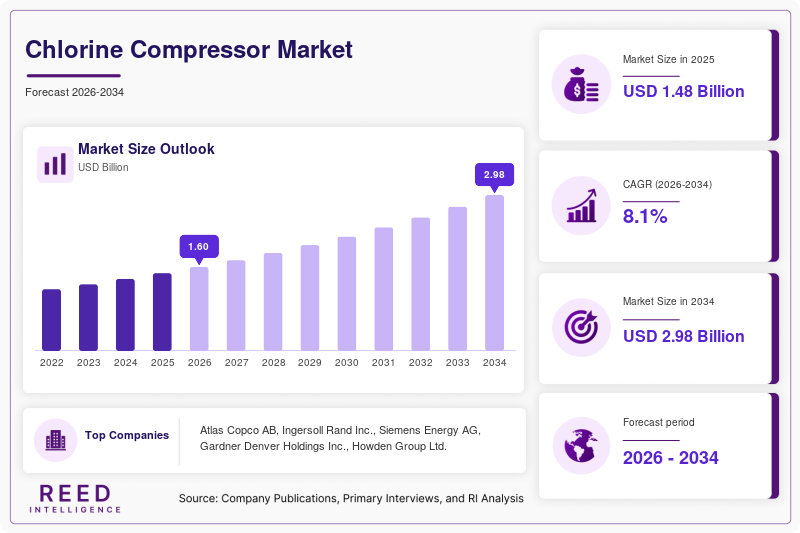
Key Highlights
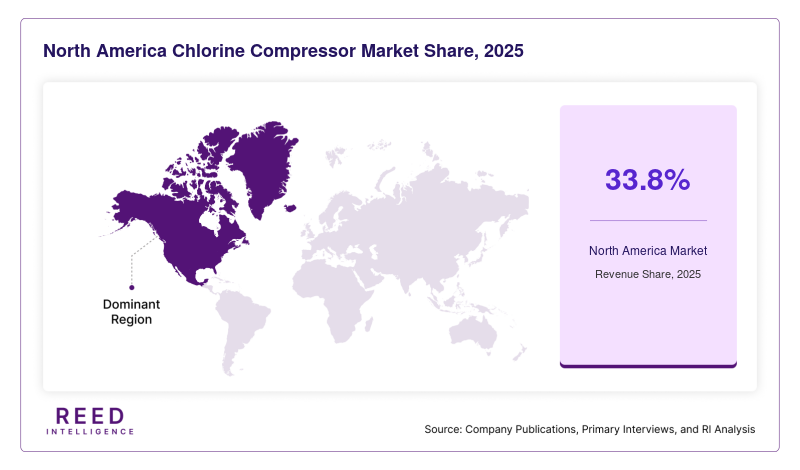
- North America dominated the market with a 33.8% share in 2025.
- Asia Pacific is expected to grow at the fastest CAGR of 9.6% during 2026–2034.
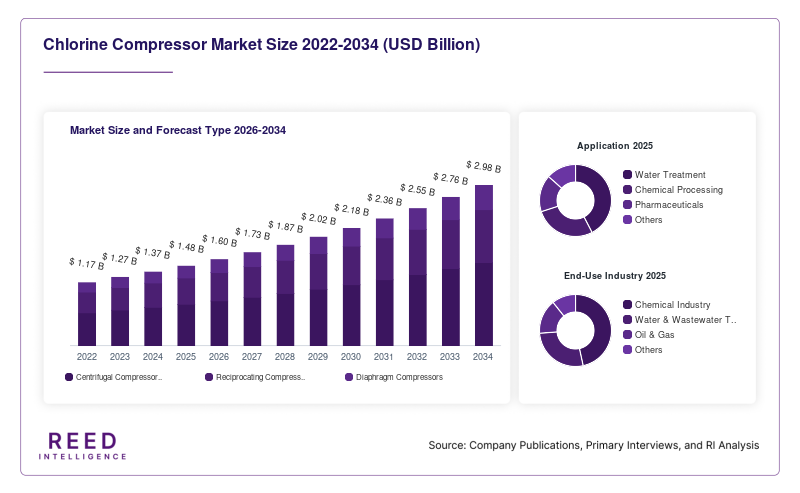
- By type, centrifugal compressors accounted for the largest share of 42.3%, while diaphragm compressors are projected to grow at a CAGR of 9.9%.
- By application, water treatment led with a 39.5% share, whereas chemical processing is expected to expand at a CAGR of 9.2%.
- The United States remained the dominant country, with market values of USD 420 million in 2024 and USD 455 million in 2025.
Market Trends
Growing adoption of energy-efficient compressor technologies
Energy efficiency has become a central trend in the Chlorine Compressor Market as industries aim to reduce operational costs and carbon emissions. Manufacturers are focusing on designing compressors with optimized energy consumption, improved motor efficiency, and reduced leakage. Variable speed drives and advanced control systems are increasingly being integrated into compressor units, allowing operators to adjust performance based on demand. This trend is particularly prominent in large-scale chemical and water treatment facilities where energy costs account for a significant portion of operational expenses. As sustainability goals become more stringent across industries, energy-efficient chlorine compressors are gaining traction, supporting long-term market growth.
Increasing integration of digital monitoring and automation
Digital transformation is reshaping industrial equipment, including chlorine compressors. Companies are incorporating smart sensors, IoT-enabled monitoring systems, and predictive maintenance tools into compressor designs. These technologies help detect potential faults, reduce downtime, and improve operational safety when handling hazardous gases like chlorine. Automation also enhances process efficiency by enabling real-time adjustments and remote control capabilities. This trend is especially relevant in regions with advanced industrial infrastructure, where companies are prioritizing reliability and safety. The growing emphasis on digitalization is expected to drive innovation and create new opportunities in the market.
Market Drivers
Expansion of water treatment infrastructure
The expansion of water treatment facilities globally is a major driver of the Chlorine Compressor Market. Increasing urbanization and population growth have created a higher demand for clean and safe drinking water. Governments are investing heavily in wastewater treatment plants and desalination projects, where chlorine is widely used as a disinfectant. Chlorine compressors are essential for handling and transporting chlorine gas efficiently within these facilities. In emerging economies, infrastructure development projects are accelerating the adoption of modern equipment, further boosting demand. This driver is expected to remain strong as access to clean water continues to be a global priority.
Growth of chemical manufacturing industry
The chemical industry is another significant contributor to market growth. Chlorine is a key raw material in the production of various chemicals, including PVC, solvents, and disinfectants. As industrialization progresses, especially in Asia Pacific and Latin America, the demand for chlorine-based products is increasing. This directly drives the need for reliable compression systems capable of handling chlorine safely. Additionally, the expansion of specialty chemical production and the development of new applications for chlorine derivatives are supporting market growth. The increasing focus on process efficiency and safety in chemical plants further strengthens the demand for advanced chlorine compressors.
Market Restraint
High maintenance and safety concerns
One of the primary restraints in the Chlorine Compressor Market is the high maintenance requirement and safety concerns associated with handling chlorine gas. Chlorine is highly corrosive and toxic, requiring specialized materials and robust sealing systems in compressors. Over time, wear and tear can lead to leakage risks, which pose serious safety hazards and require frequent inspections and maintenance. These factors increase operational costs for end users, particularly in small and medium-sized facilities. Additionally, strict regulatory standards for chlorine handling can lead to higher compliance costs and limit market entry for smaller manufacturers. For example, industries operating in regions with stringent environmental regulations must invest heavily in safety systems and monitoring equipment, which can slow down adoption rates. These challenges may hinder market growth, especially in cost-sensitive regions.
Market Opportunities
Rising demand in emerging economies
Emerging economies present significant growth opportunities for the Chlorine Compressor Market. Rapid industrialization, urbanization, and infrastructure development in countries across Asia Pacific, Latin America, and Africa are driving the demand for chlorine in water treatment and chemical manufacturing. Governments in these regions are investing in large-scale infrastructure projects, including wastewater treatment plants and industrial zones. This creates a favorable environment for the adoption of chlorine compressors. Additionally, increasing awareness about water quality and sanitation is further boosting demand. Manufacturers can capitalize on this opportunity by offering cost-effective and durable solutions tailored to the needs of developing markets.
Technological advancements in compressor design
Advancements in compressor technology offer new opportunities for market growth. Innovations such as corrosion-resistant materials, improved sealing mechanisms, and energy-efficient designs are enhancing the performance and reliability of chlorine compressors. The development of compact and modular systems is also gaining popularity, especially in facilities with space constraints. Furthermore, the integration of digital monitoring and predictive maintenance tools is creating opportunities for value-added services. These technological improvements not only reduce operational costs but also enhance safety, making them attractive to end users. As industries continue to adopt advanced technologies, the demand for next-generation chlorine compressors is expected to increase.
Segmental Analysis
By Type
Centrifugal compressors held the largest share of 42.3% in 2024, driven by their high efficiency and ability to handle large volumes of chlorine gas. These compressors are widely used in large-scale industrial applications, including chemical processing and water treatment. Their continuous operation capability and lower maintenance requirements compared to other types make them a preferred choice for major facilities. Additionally, advancements in design and materials have improved their performance and durability, further supporting their dominance in the market.
Diaphragm compressors are the fastest-growing subsegment, with a projected CAGR of 9.9% during the forecast period. These compressors are gaining popularity due to their superior safety features, as they prevent gas leakage by isolating the gas from mechanical components. This makes them ideal for handling hazardous gases like chlorine. The increasing focus on safety and regulatory compliance is driving the adoption of diaphragm compressors, especially in industries with strict safety standards.
By Application
Water treatment accounted for the largest share of 39.5% in 2024, driven by the widespread use of chlorine as a disinfectant. Municipal and industrial water treatment facilities rely heavily on chlorine compressors to ensure efficient and safe handling of chlorine gas. The growing demand for clean water and the expansion of wastewater treatment infrastructure are key factors supporting this segment’s dominance. Additionally, government initiatives to improve sanitation and water quality are further boosting demand.
Chemical processing is the fastest-growing application segment, with a CAGR of 9.2% during the forecast period. The increasing demand for chlorine-based chemicals, such as PVC and solvents, is driving the need for reliable compression systems. The expansion of chemical manufacturing facilities, particularly in emerging economies, is a major growth factor. Additionally, the development of new applications for chlorine derivatives is expected to further support this segment.
By End-Use Industry
The chemical industry held the largest share of 44.8% in 2024, as chlorine is a key raw material in various chemical processes. The demand for chlorine compressors in this sector is driven by the need for efficient and safe handling of chlorine gas. The growth of the chemical industry, particularly in developing regions, is a major factor supporting this segment. Additionally, advancements in chemical manufacturing technologies are increasing the demand for high-performance compressors.
The water and wastewater treatment industry is the fastest-growing end-use segment, with a CAGR of 9.5% during the forecast period. The increasing focus on water quality and sanitation is driving the demand for chlorine compressors in this sector. Government investments in infrastructure and the expansion of treatment facilities are key growth factors. Additionally, the rising awareness about environmental sustainability is expected to further boost demand.
Regional Analysis
North America
North America held a significant share of 33.8% in 2025 and is expected to grow at a CAGR of 7.4% during the forecast period. The region’s strong industrial base, particularly in chemical manufacturing and water treatment, supports the demand for chlorine compressors. The presence of established infrastructure and stringent safety regulations further drives the adoption of advanced compressor systems.
The United States dominates the regional market due to its extensive chemical industry and well-developed water treatment facilities. A key growth factor is the modernization of aging infrastructure, which requires the replacement of outdated equipment with advanced and energy-efficient compressors. This trend is expected to sustain market growth in the region.
Europe
Europe accounted for approximately 27.6% of the market share in 2025 and is projected to grow at a CAGR of 7.8% during 2026–2034. The region’s focus on environmental sustainability and strict regulatory standards drives the demand for efficient and safe chlorine compressors. Investments in water treatment and chemical processing industries also contribute to market growth.
Germany is the leading country in this region, supported by its strong chemical manufacturing sector. A unique growth factor is the emphasis on green technologies and energy efficiency, which encourages the adoption of advanced compressor systems. This focus is expected to drive innovation and market expansion.
Asia Pacific
Asia Pacific is the fastest-growing region, with a CAGR of 9.6% during the forecast period and a market share of 24.1% in 2025. Rapid industrialization, urbanization, and increasing investments in infrastructure are key factors driving market growth. The region’s expanding chemical and water treatment industries further support demand.
China dominates the Asia Pacific market due to its large-scale industrial base and significant investments in water treatment infrastructure. A key growth factor is the government’s focus on improving environmental standards and water quality, which drives the adoption of chlorine compressors in various applications.
Middle East & Africa
The Middle East & Africa region held a market share of 7.5% in 2025 and is expected to grow at a CAGR of 8.3%. The region’s increasing focus on water desalination and treatment projects supports the demand for chlorine compressors. Industrial growth in sectors such as oil and gas also contributes to market expansion.
Saudi Arabia is the leading country in this region, driven by its investments in desalination plants. A unique growth factor is the high demand for water purification technologies in arid regions, which significantly boosts the need for chlorine compressors.
Latin America
Latin America accounted for 7.0% of the market share in 2025 and is projected to grow at a CAGR of 8.0%. The region’s growing industrial sector and increasing investments in infrastructure are key drivers of market growth. Water treatment and chemical industries are major contributors.
Brazil dominates the regional market due to its expanding industrial base. A key growth factor is the government’s focus on improving sanitation and water quality, which drives the adoption of chlorine compressors in municipal and industrial applications.
Competitive Landscape
The Chlorine Compressor Market is moderately competitive, with several global and regional players focusing on innovation and strategic partnerships. Companies are investing in research and development to introduce advanced compressor technologies with improved efficiency and safety features. The market leader, Atlas Copco, maintains a strong position due to its extensive product portfolio and global presence. The company recently introduced a new range of energy-efficient compressors designed for hazardous gas applications, enhancing its market position.
Other key players are also focusing on expanding their market presence through mergers, acquisitions, and collaborations. The adoption of digital technologies and the development of customized solutions are common strategies among leading companies. Additionally, manufacturers are targeting emerging markets to capitalize on growth opportunities.
Key Players
- Atlas Copco AB
- Ingersoll Rand Inc.
- Siemens Energy AG
- Gardner Denver Holdings Inc.
- Howden Group Ltd.
- Burckhardt Compression AG
- Kobelco Compressors Corporation
- Sundyne LLC
- Ariel Corporation
- Kaeser Kompressoren SE
- BOGE Compressors
- Hitachi Industrial Equipment Systems
- Mitsubishi Heavy Industries Ltd.
- Shenyang Blower Works Group
- FS-Elliott Co., LLC
Recent Developments
- In 2025, Atlas Copco launched a new series of chlorine compressors with enhanced corrosion resistance and digital monitoring features.
- In 2024, Siemens Energy expanded its compressor manufacturing facility to meet growing demand in Asia Pacific.
- In 2025, Burckhardt Compression introduced an advanced diaphragm compressor designed for high-pressure chlorine applications, improving safety and efficiency.
Chlorine Compressor Market Segments
Type
- Centrifugal Compressors
- Reciprocating Compressors
- Diaphragm Compressors
Application
- Water Treatment
- Chemical Processing
- Pharmaceuticals
- Others
End-Use Industry
- Chemical Industry
- Water & Wastewater Treatment
- Oil & Gas
- Others
By Region
- North America
- Europe
- APAC
- Middle East and Africa
- LATAM