Choline Chloride Market Size, Share Demand Report By Type (Choline Chloride 50%, Choline Chloride 60% Corn Cob, Liquid Choline Chloride), By Application (Animal Feed, Pharmaceuticals, Food & Beverages), By End-Use (Livestock Farming, Aquaculture, Healthcare) By Region & Segment Forecasts, 2026–2034
USD 3950
Market Overview
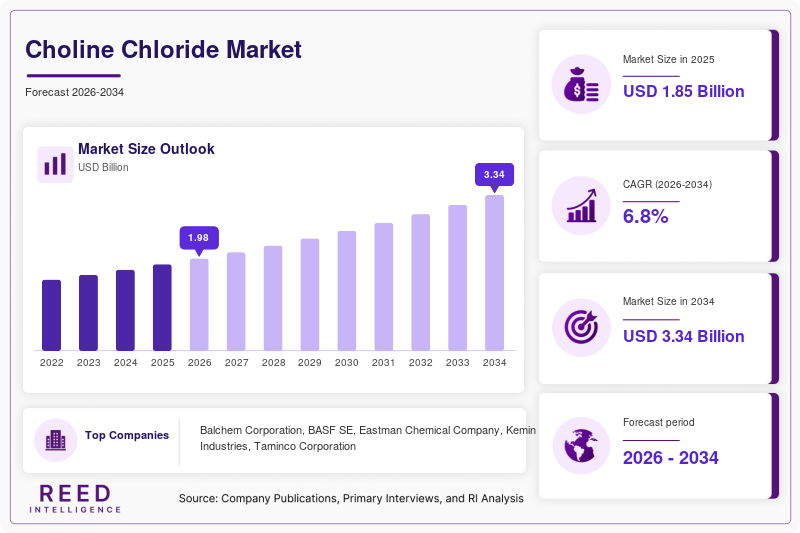
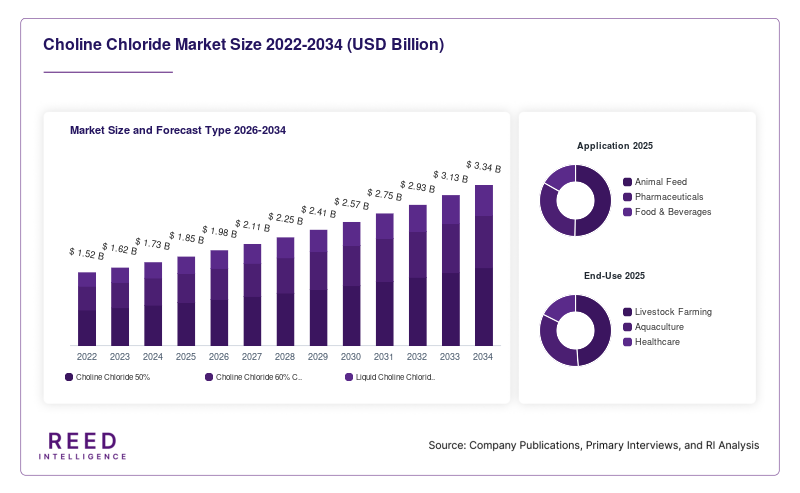
The global Choline Chloride Market size was valued at approximately USD 1.85 billion in 2026 and is projected to reach USD 3.12 billion by 2034, expanding at a CAGR of 6.8% during the forecast period (2026–2034). Choline chloride is widely used as a feed additive in poultry, swine, and aquaculture industries, where it plays a crucial role in improving animal growth, metabolism, and overall health. The increasing demand for high-quality animal protein across developing and developed economies continues to create sustained consumption of feed additives, supporting the overall market growth trajectory.
A key global factor supporting market expansion is the rising consumption of meat and dairy products driven by population growth and dietary shifts toward protein-rich foods. This trend has encouraged livestock producers to adopt performance-enhancing feed additives such as choline chloride, which helps prevent fatty liver syndrome and improves feed efficiency. Additionally, the expansion of industrial livestock farming and the integration of advanced feed technologies have contributed to increased product penetration.
Key Highlights
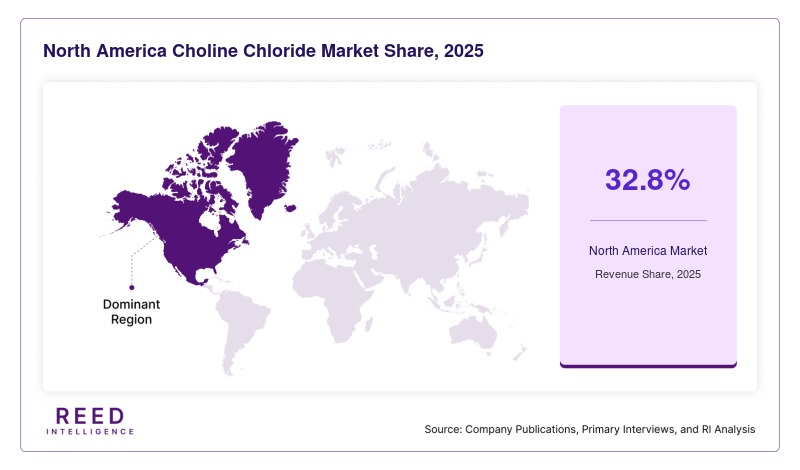
- North America dominated the market with a 32.8% share in 2025.
- Asia Pacific is expected to grow at the fastest CAGR of 7.6% during 2026–2034.
- By type, choline chloride 60% corn cob accounted for the largest share of 41.3%, while liquid choline chloride is projected to grow at a CAGR of 7.9%.
- By application, animal feed led with a 72.5% share, whereas pharmaceuticals are expected to expand at a CAGR of 7.2%.
- China remained the dominant country, with market values of USD 320 million in 2024 and USD 350 million in 2025.
Market Trends
Rising adoption of precision animal nutrition
The increasing adoption of precision animal nutrition is shaping the growth trajectory of the choline chloride market. Livestock producers are focusing on optimizing feed formulations to improve animal health, productivity, and feed conversion ratios. Choline chloride is gaining importance as a critical nutrient that supports liver function, fat metabolism, and overall animal performance. With the growing use of data-driven feeding strategies and digital monitoring systems, producers are tailoring feed compositions to specific animal requirements, thereby increasing the demand for high-quality additives such as choline chloride.
Moreover, advancements in feed science have enabled the development of customized blends that include choline chloride in precise concentrations. This trend is particularly evident in large-scale poultry and swine operations, where even marginal improvements in feed efficiency can lead to significant cost savings. The shift toward sustainable livestock production practices also supports this trend, as optimized nutrition reduces waste and environmental impact while enhancing output quality.
Expansion of aquaculture and alternative protein sources
The rapid expansion of aquaculture and the growing interest in alternative protein sources are influencing market trends. Aquaculture has emerged as one of the fastest-growing food production sectors globally, driven by the need to meet rising seafood demand. Choline chloride is increasingly used in fish feed formulations to enhance growth rates and improve nutrient absorption, making it a vital component in aquaculture nutrition strategies.
Additionally, the emergence of alternative protein sources such as insect-based feed and plant-based aquafeed is creating new avenues for choline chloride applications. Manufacturers are developing innovative feed solutions that incorporate essential nutrients, including choline chloride, to maintain nutritional balance. This trend is supported by regulatory frameworks encouraging sustainable aquaculture practices and reducing reliance on traditional fishmeal. As aquaculture continues to scale, the demand for effective feed additives is expected to rise steadily.
Market Drivers
Increasing global demand for animal protein
The growing global demand for animal protein is a primary driver of the choline chloride market. Rising population levels, urbanization, and increasing disposable incomes have led to higher consumption of meat, eggs, and dairy products. This surge in demand has intensified livestock production activities, prompting farmers to adopt efficient feed additives that improve animal growth and productivity. Choline chloride plays a crucial role in enhancing feed efficiency and preventing metabolic disorders, making it an essential ingredient in modern animal nutrition.
Furthermore, commercial livestock operations are expanding rapidly, particularly in emerging economies, where industrial farming practices are replacing traditional methods. This transition has increased the need for standardized and high-quality feed additives. Choline chloride helps optimize production cycles and reduce mortality rates, thereby supporting profitability. As dietary patterns continue to shift toward protein-rich foods, the demand for feed additives is expected to remain strong.
Growth in industrial livestock farming
The expansion of industrial livestock farming is another significant factor driving market growth. Large-scale farming operations require consistent and efficient feed solutions to maintain productivity and meet market demand. Choline chloride is widely used in such operations due to its proven benefits in improving animal health and performance. Its inclusion in feed formulations helps prevent deficiencies and supports overall metabolic functions.
In addition, technological advancements in feed manufacturing have facilitated the integration of choline chloride into various feed types, including pellets and liquid formulations. This has improved its accessibility and usability across different farming systems. Governments and industry stakeholders are also promoting modern farming techniques to enhance food security, further boosting the adoption of feed additives. As industrial livestock farming continues to expand, the demand for choline chloride is expected to grow steadily.
Market Restraint
Volatility in raw material prices and supply chain challenges
Fluctuations in raw material prices and supply chain disruptions pose a notable restraint to the choline chloride market. The production of choline chloride relies on key chemical inputs such as ethylene oxide and trimethylamine, which are subject to price volatility due to changes in crude oil prices and global supply dynamics. These fluctuations can significantly impact manufacturing costs and profit margins, making it challenging for producers to maintain stable pricing.
Additionally, supply chain disruptions caused by geopolitical tensions, trade restrictions, and logistical challenges can hinder the availability of raw materials and finished products. For instance, delays in transportation or shortages of essential inputs can lead to production slowdowns and increased operational costs. Small and medium-sized manufacturers are particularly vulnerable to these challenges, as they may lack the resources to absorb cost variations. This restraint can limit market growth, especially in regions with less developed infrastructure.
Market Opportunities
Increasing demand for functional feed additives
The rising demand for functional feed additives presents a significant opportunity for the choline chloride market. Livestock producers are increasingly focusing on improving animal health and productivity through enhanced nutrition. Functional additives such as choline chloride provide specific health benefits, including improved liver function and better nutrient absorption. This has led to their growing adoption in feed formulations across poultry, swine, and aquaculture sectors.
Moreover, the trend toward preventive healthcare in livestock farming is driving the use of nutritional supplements that reduce the risk of diseases. Choline chloride plays a vital role in maintaining metabolic balance, making it a preferred choice among feed manufacturers. As awareness about the benefits of functional additives continues to grow, the demand for choline chloride is expected to increase, creating new growth opportunities for market players.
Expansion into pharmaceutical and personal care applications
The expanding application of choline chloride in pharmaceuticals and personal care products offers another promising opportunity. In the pharmaceutical sector, choline chloride is used as a nutritional supplement to support brain health and liver function. Its role in treating certain medical conditions and improving cognitive performance has led to increased research and development activities.
In the personal care industry, choline chloride is being explored for its potential benefits in skincare and cosmetic formulations. Its moisturizing and conditioning properties make it suitable for use in various products. As consumer awareness about health and wellness continues to rise, the demand for multifunctional ingredients is expected to grow. This diversification of applications beyond animal feed is likely to open new revenue streams for manufacturers.
Segmental Analysis
By Type
Choline chloride 60% corn cob emerged as the dominant subsegment, accounting for 41.3% of the market share in 2024. This form is widely used due to its cost-effectiveness and ease of handling in feed formulations. It is particularly popular in poultry and swine industries, where large volumes of feed are required. The solid form allows for better storage and transportation, making it a preferred choice among manufacturers. Additionally, its compatibility with various feed ingredients enhances its usability across different applications.
Liquid choline chloride is gaining traction as the fastest-growing subsegment, with a projected CAGR of 7.9%. Its growth is driven by its higher concentration and ease of mixing in liquid feed formulations. It is increasingly used in modern farming systems that rely on automated feeding processes. The ability to deliver precise dosages and improve nutrient absorption is a key factor supporting its growth.
By Application
Animal feed dominated the market, accounting for 72.5% of the share in 2024. The widespread use of choline chloride in poultry, swine, and aquaculture feed is the primary driver of this segment. It plays a crucial role in improving animal health, enhancing growth rates, and preventing metabolic disorders. The increasing demand for high-quality animal protein has further boosted the adoption of feed additives.
The pharmaceutical segment is expected to grow at a CAGR of 7.2%, driven by increasing awareness about health and wellness. Choline chloride is used in dietary supplements and medications to support liver function and cognitive health. Ongoing research and development activities are expanding its applications, contributing to segment growth.
By End-Use
The livestock farming segment accounted for the largest share in 2024, driven by the extensive use of choline chloride in feed formulations. Large-scale farming operations require efficient feed solutions to maintain productivity and profitability. The growing demand for meat and dairy products has further supported this segment.
The aquaculture segment is expected to grow at a CAGR of 7.5%, driven by the rapid expansion of fish farming. Choline chloride is used to enhance growth and improve feed efficiency in aquatic species. Increasing investments in aquaculture and rising seafood consumption are key factors driving this segment.
Regional Analysis
North America
North America held a significant share of the choline chloride market, accounting for 32.8% in 2025, and is expected to grow at a CAGR of 5.9% during the forecast period. The region benefits from a well-established livestock industry and advanced feed manufacturing infrastructure. High demand for meat and dairy products, along with strict regulations regarding animal nutrition, has supported the adoption of high-quality feed additives such as choline chloride.
The United States remains the dominant country in this region due to its large-scale poultry and swine production. A key growth factor is the increasing focus on improving feed efficiency and reducing environmental impact. Producers are adopting advanced nutrition strategies to optimize livestock performance, which continues to drive the demand for choline chloride.
Europe
Europe accounted for a considerable share of the market in 2025 and is projected to grow at a CAGR of 5.6%. The region’s growth is supported by strong regulatory frameworks that emphasize animal health and welfare. The demand for high-quality feed additives is driven by the need to comply with strict standards and ensure sustainable farming practices.
Germany is the leading country in this region, supported by its advanced agricultural sector and strong focus on innovation. A unique growth factor is the increasing adoption of organic and specialty feed products, which require carefully balanced nutritional formulations. This trend is contributing to the steady demand for choline chloride.
Asia Pacific
Asia Pacific is expected to register the fastest growth, with a CAGR of 7.6% during the forecast period, supported by its expanding livestock and aquaculture industries. The region accounted for a substantial market share in 2025 due to high population density and rising demand for protein-rich foods.
China dominates the regional market, driven by its large-scale livestock production and growing aquaculture sector. A key growth factor is the rapid industrialization of farming practices, which has increased the demand for efficient feed additives. Government initiatives to enhance food security further support market expansion.
Middle East & Africa
The Middle East & Africa region is witnessing moderate growth, with a projected CAGR of 5.2%. The market share in 2025 was relatively smaller compared to other regions, but increasing investments in livestock farming are driving growth.
Saudi Arabia leads the market in this region, supported by government initiatives to reduce dependency on imports. A unique growth factor is the expansion of poultry farming to meet rising domestic demand. This has led to increased adoption of feed additives, including choline chloride.
Latin America
Latin America accounted for a steady share of the market in 2025 and is expected to grow at a CAGR of 5.8%. The region’s growth is driven by its strong agricultural base and increasing exports of meat products.
Brazil is the dominant country, benefiting from its large livestock industry and favorable climatic conditions. A key growth factor is the rising demand for high-quality feed to enhance export competitiveness. This has encouraged the adoption of advanced feed additives such as choline chloride.
Competitive Landscape
The choline chloride market is moderately consolidated, with several global and regional players competing based on product quality, pricing, and distribution networks. Companies are focusing on expanding their production capacities and enhancing their product portfolios to meet growing demand. Strategic collaborations and investments in research and development are common strategies adopted by market participants.
Balchem Corporation is recognized as a leading player in the market, known for its strong product portfolio and global presence. The company has recently expanded its production capabilities to cater to increasing demand from the animal feed sector. Other key players are also focusing on technological advancements and sustainable production methods to gain a competitive edge. The competitive landscape is expected to remain dynamic, with continuous innovation and expansion activities.
Key Players
- Balchem Corporation
- BASF SE
- Eastman Chemical Company
- Kemin Industries
- Taminco Corporation
- Algry Química S.L.
- Jubilant Life Sciences
- NB Group Co., Ltd.
- Hebei Dayang Animal Husbandry Machinery Co.
- Shandong Yinfeng Biological Technology
- Jiangsu Mupro IFT Corp.
- Balaji Amines Ltd.
- GHW International
- Liaoning Biochem Co., Ltd.
- Impextraco NV
Recent Developments
- A leading manufacturer expanded its production facility in Asia Pacific to meet growing regional demand.
- A key player introduced a new liquid formulation to improve feed efficiency in aquaculture.
- Strategic partnerships were formed between feed manufacturers and chemical companies to develop advanced nutritional solutions.
Choline Chloride Market Segments
Type
- Choline Chloride 50%
- Choline Chloride 60% Corn Cob
- Liquid Choline Chloride
Application
- Animal Feed
- Pharmaceuticals
- Food & Beverages
End-Use
- Livestock Farming
- Aquaculture
- Healthcare
By Region
- North America
- Europe
- APAC
- Middle East and Africa
- LATAM