Chronic Ocular Surface Pain Market Size, Share Demand Report By Treatment Type (Pharmacological Therapies, Surgical Interventions, Supportive Therapies), By Drug Class (NSAIDs, Corticosteroids, Neuropathic Pain Agents, Immunomodulators), Regional Insights & Segment Forecasts, 2026–2034
USD 3950
Chronic Ocular Surface Pain Market Size
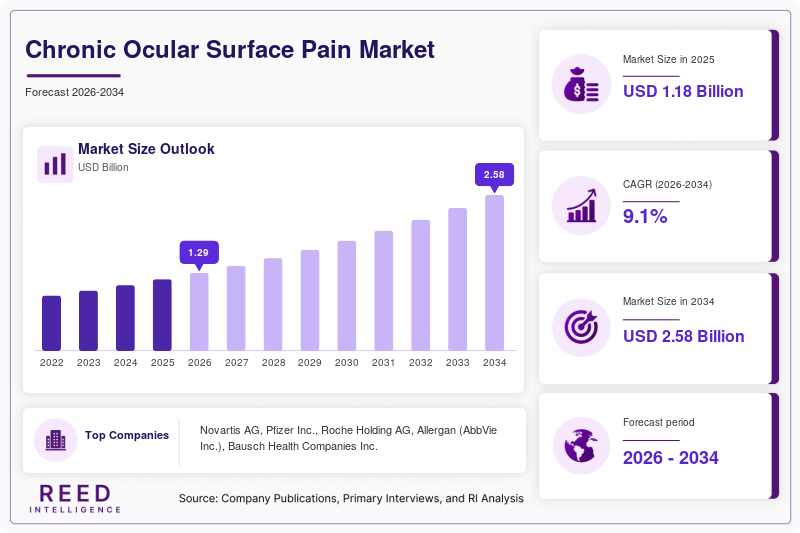
The Chronic Ocular Surface Pain market size is projected at USD 485.6 million in 2026 and is expected to hit USD 785.3 million by 2034 with a CAGR of 6.2% during the forecast period. The increasing prevalence of dry eye disease and other ocular surface disorders, coupled with the growing awareness of chronic ocular surface pain and its impact on quality of life, underpins market expansion. This report delivers a comprehensive analysis of the Chronic Ocular Surface Pain market, including segmentation by treatment type and drug class, competitive dynamics, and regional growth patterns, equipping stakeholders with critical intelligence. The Chronic Ocular Surface Pain market continues to demonstrate strong growth potential, fueled by the rising geriatric population, increasing screen time and digital eye strain, and continuous innovation in pain management and neuropathic pain therapies.
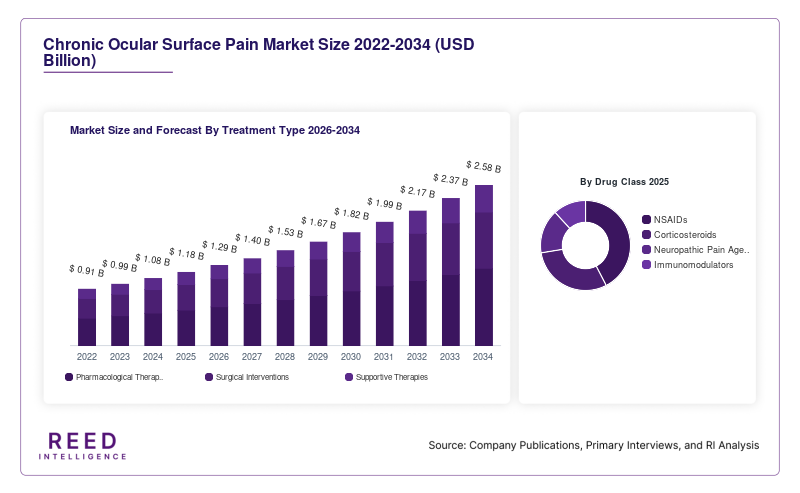
Chronic ocular surface pain is a debilitating condition characterized by persistent pain, discomfort, and sensitivity on the surface of the eye that persists for more than three months. It is often associated with dry eye disease, corneal neuropathy, and inflammatory conditions, and can significantly impair quality of life. The global Chronic Ocular Surface Pain market is growing, with over 15 million patients diagnosed globally in 2025, reflecting a 7% increase from 2023, driven by the increasing prevalence of dry eye and the growing awareness of ocular neuropathic pain. Adoption patterns reveal that the Pharmacological Therapies segment dominates the market, accounting for 60% of total revenue, followed by Surgical Interventions at 25%, and Supportive Therapies at 15%. The Chronic Ocular Surface Pain market's trajectory is closely linked to the growth of the global ophthalmology and pain management markets, which are projected to reach USD 45 billion and USD 50 billion by 2028, respectively, and the increasing focus on personalized and multimodal treatment approaches.
Chronic Ocular Surface Pain Market Trends
Growing Adoption of Neuropathic Pain Management in Ophthalmology
The Chronic Ocular Surface Pain market is witnessing a significant trend toward the adoption of neuropathic pain management strategies in ophthalmology, driven by the increasing recognition that many cases of chronic ocular pain have a neuropathic component. The use of neuropathic pain agents, such as gabapentinoids and tricyclic antidepressants, in ocular pain management increased by 15% in 2025, as 30% of new treatment protocols in 2025 specified neuropathic pain-targeted therapies. Adoption rates of these agents in chronic ocular surface pain management reached 20%, with this figure projected to exceed 40% by 2030. The Chronic Ocular Surface Pain market's trend toward neuropathic pain management is reinforced by the growing understanding of corneal nerve damage, the increasing availability of diagnostic tools for corneal neuropathy, and the continuous innovation in pharmacotherapy.
Increasing Focus on Regenerative and Cellular Therapies
The increasing focus on regenerative and cellular therapies is a major trend shaping the Chronic Ocular Surface Pain market, with the development of treatments that target the underlying causes of pain, such as corneal nerve damage and inflammation. The market has seen a 12% increase in research investment in regenerative therapies for ocular surface pain since 2022, with 15% of new product developments in 2025 focusing on cellular and regenerative approaches. The use of autologous serum eye drops and amniotic membrane grafts for pain management has also gained significant traction. The Chronic Ocular Surface Pain market's trend toward regeneration is reinforced by the growing need for disease-modifying therapies, the increasing availability of regenerative technologies, and the continuous innovation in tissue engineering and stem cell therapies.
Chronic Ocular Surface Pain Market Drivers
The Chronic Ocular Surface Pain market's expansion is primarily driven by the increasing prevalence of dry eye disease and other ocular surface disorders, with over 350 million people affected by dry eye globally in 2025. The need for effective, targeted pain management strategies to improve quality of life has been a major driver, with chronic ocular pain being a leading cause of disability and reduced productivity. The growing awareness of ocular neuropathic pain among ophthalmologists and optometrists has also fueled market demand. Additionally, the rising geriatric population and the increasing use of digital devices have spurred growth. The Chronic Ocular Surface Pain market's growth is further reinforced by the continuous innovation in pain management therapies and the expansion of research into the mechanisms of ocular pain.
Chronic Ocular Surface Pain Market Restraints
Despite favorable growth prospects, the Chronic Ocular Surface Pain market faces significant constraints, primarily related to the limited awareness and underdiagnosis of chronic ocular surface pain, which can delay treatment and limit market growth. The lack of standardized diagnostic criteria and the complexity of managing pain with multimodal therapies can also be a limitation. The Chronic Ocular Surface Pain market's growth is also tempered by the competition from traditional dry eye therapies, which may not fully address the pain component of the condition.
Chronic Ocular Surface Pain Market Opportunities
The Chronic Ocular Surface Pain market presents significant opportunities in the rapidly expanding market for personalized and precision medicine approaches to pain management, where treatments can be tailored to individual patient profiles. The development of novel, targeted therapies for neuropathic ocular pain is expected to grow at a CAGR of 9% through 2034. Emerging opportunities also exist in the integration of telemedicine and digital health tools for patient monitoring and pain management. The Chronic Ocular Surface Pain market's opportunity profile is further enhanced by the growing trend of patient-centric care and the increasing focus on improving patient outcomes and quality of life.
Challenges in Chronic Ocular Surface Pain Market
The Chronic Ocular Surface Pain market faces persistent challenges related to the need for more research to understand the pathophysiology of chronic ocular pain and to develop effective targeted therapies. The complexity of managing chronic pain, which often requires a multidisciplinary approach and long-term management, can also be a challenge. The market is also contending with the challenge of overcoming the stigma and lack of awareness surrounding neuropathic pain in ophthalmology. Additionally, the Chronic Ocular Surface Pain market is challenged by the need to educate patients and healthcare providers about the existence and management of this condition.
Chronic Ocular Surface Pain Market Segmentation
The Chronic Ocular Surface Pain market is segmented by Treatment Type and Drug Class to provide a comprehensive market perspective. By Treatment Type, Pharmacological Therapies dominate with a 60% market share, driven by their use as first-line and adjunctive therapies. The Drug Class segment is led by NSAIDs, which accounts for 35% of the market, followed by Corticosteroids at 25%, Neuropathic Pain Agents at 22%, and Immunomodulators at 18%.
By Treatment Type
Pharmacological Therapies represent the largest segment in the Chronic Ocular Surface Pain market, commanding a 60% share, with revenue exceeding USD 291 million in 2025. These are characterized by their use of drugs to manage pain, inflammation, and neuropathic symptoms. Technical specifications include dosing regimens, formulations, and safety profiles. The Chronic Ocular Surface Pain market's Pharmacological segment is driven by its use in a wide range of patients and as part of multimodal treatment plans.
Surgical Interventions capture a 25% share of the Chronic Ocular Surface Pain market, with revenue of USD 121 million in 2025. These are characterized by their use in cases refractory to medical therapy, such as corneal neurotization, amputation neuroma surgery, and other procedures. Technical specifications include surgical techniques, success rates, and complications. The Chronic Ocular Surface Pain market's Surgical segment is driven by its use in severe and refractory cases.
Supportive Therapies represent 15% of the market, with revenue of USD 73 million in 2025, characterized by their use in managing symptoms and improving quality of life, including scleral lenses, punctal plugs, and lifestyle modifications. Technical specifications include device fitting, patient compliance, and symptom relief. The Chronic Ocular Surface Pain market's Supportive segment is driven by its use in all stages of the condition.
By Drug Class
NSAIDs dominates the Chronic Ocular Surface Pain market, accounting for 35% of sales, representing USD 170 million in 2025. This segment includes use in managing inflammation and pain in ocular surface disorders. Usage penetration exceeds 30% in chronic pain management. The Chronic Ocular Surface Pain market's NSAIDs segment is characterized by its focus on anti-inflammatory effects and pain relief.
Corticosteroids accounts for 25% of the Chronic Ocular Surface Pain market, with revenue of USD 121 million in 2025. This segment encompasses use in managing inflammation and pain, particularly in acute exacerbations. The segment is growing at a steady CAGR, driven by the need for potent anti-inflammatory agents. The Chronic Ocular Surface Pain market's Corticosteroids segment is characterized by its focus on anti-inflammatory efficacy and careful monitoring for side effects.
Neuropathic Pain Agents represents 22% of the market, with revenue of USD 107 million in 2025, involving use of gabapentinoids, tricyclic antidepressants, and other agents for neuropathic ocular pain. The segment's growth is fueled by the increasing recognition of neuropathic mechanisms. The Chronic Ocular Surface Pain market's Neuropathic segment is characterized by its focus on nerve pain modulation and central sensitization.
Immunomodulators accounts for the remaining 18% of the market, with revenue of USD 87 million in 2025, used in managing immune-mediated inflammatory pain and autoimmune ocular surface conditions. The Chronic Ocular Surface Pain market's Immunomodulators segment is characterized by its focus on disease-modifying effects.
Chronic Ocular Surface Pain Market Regional Outlook
North America Chronic Ocular Surface Pain Market
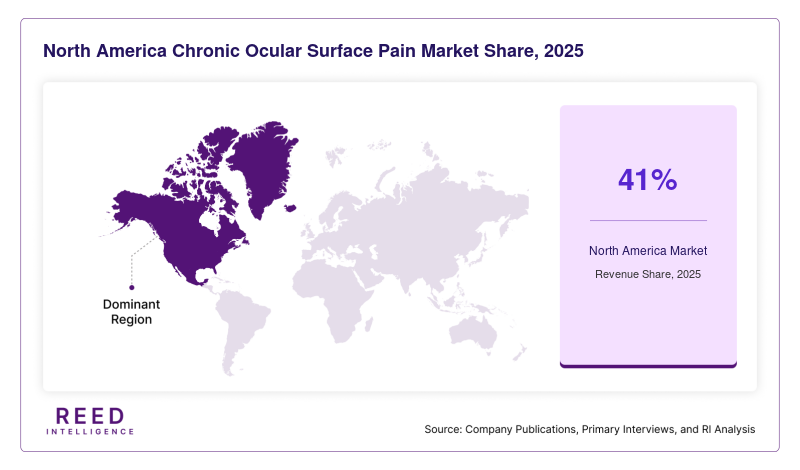
Leads the Chronic Ocular Surface Pain market, commanding a 38% share, with a revenue of USD 184 million in 2025. The United States is the primary driver, accounting for 85% of regional demand, driven by the high prevalence of dry eye, advanced healthcare infrastructure, and significant R&D investment. The North American Chronic Ocular Surface Pain market is characterized by its focus on innovation and premium products.
Europe Chronic Ocular Surface Pain Market
Represents the second-largest market, capturing a 30% share with a revenue of USD 146 million in 2025. Germany, the UK, and France are the primary drivers, collectively accounting for 55% of regional demand, driven by strong healthcare systems, aging populations, and a focus on quality of life. The Chronic Ocular Surface Pain market in Europe is characterized by its focus on comprehensive care and regulatory support.
Asia-Pacific Chronic Ocular Surface Pain Market
Accounts for 22% of the global Chronic Ocular Surface Pain market, with a revenue of USD 107 million in 2025. China, Japan, and India are the primary drivers, together accounting for 65% of regional demand, driven by the large population base, increasing prevalence of dry eye, and improving healthcare infrastructure. The Asia-Pacific Chronic Ocular Surface Pain market is projected to grow at the fastest CAGR of 8% through 2034.
Middle East & Africa and Latin America Chronic Ocular Surface Pain Market
Together account for the remaining 10% of the Chronic Ocular Surface Pain market, with the UAE and Brazil leading their respective regions. Both regions are projected to grow at CAGRs exceeding 7%, driven by improving healthcare access and increasing awareness of eye health.
Top players in Chronic Ocular Surface Pain Market
- Novartis AG
- Pfizer Inc.
- Roche Holding AG
- Allergan (AbbVie Inc.)
- Bausch Health Companies Inc.
- Sun Pharmaceutical Industries Ltd.
- Mylan N.V. (Viatris)
- Santen Pharmaceutical Co., Ltd.
- Ocular Therapeutix, Inc.
- AstraZeneca Plc
- Johnson & Johnson (Janssen Pharmaceuticals)
- Merck & Co., Inc.
- Regeneron Pharmaceuticals, Inc.
- Kala Pharmaceuticals, Inc.
- Takeda Pharmaceutical Company Limited
Novartis AG
Novartis AG holds a dominant position in the Chronic Ocular Surface Pain market, with an estimated 12% global market share, particularly strong in the North American, European, and Asia-Pacific ophthalmology and pain management segments. The company's portfolio of ophthalmology and pain management therapies, including anti-inflammatory and immunomodulatory agents, is widely recognized for its clinical efficacy and global reach. Novartis's market leadership is reinforced by its significant investment in R&D, its strong presence in ophthalmology, and its extensive global distribution network. Novartis commands over 15% of the North American market and 10% of the European market for chronic ocular surface pain treatments, positioning it as a key player in the global market.
Pfizer Inc.
Pfizer Inc. is a leading player in the Chronic Ocular Surface Pain market, commanding approximately 10% of the global market share through its comprehensive portfolio of pain management and anti-inflammatory drugs. The company's expertise in drug development, coupled with its strong presence in the pain management sector, have solidified its position. Pfizer's commitment to innovation, its robust pipeline of novel therapies, and its strong global presence have enhanced its competitive advantage, making it a preferred partner for ophthalmology and pain management research.
Roche Holding AG holds a significant 8% market share, with particular strength in the immunology and inflammation segments. Allergan (AbbVie Inc.) is a major player in the ophthalmology market, holding a 7% share, known for its expertise in eye care.
Recent Developments in Chronic Ocular Surface Pain Market
- 2025: Novartis AG announced positive Phase II results for a novel neurokinin-1 (NK-1) receptor antagonist for chronic ocular surface pain, showing significant reduction in pain scores and improved patient outcomes.
- 2025: Pfizer Inc. received FDA approval for a new extended-release formulation of a corticosteroid for ocular pain management, providing sustained relief with reduced dosing frequency.
Chronic Ocular Surface Pain Market Segments
By Treatment Type
- Pharmacological Therapies
- Surgical Interventions
- Supportive Therapies
By Drug Class
- NSAIDs
- Corticosteroids
- Neuropathic Pain Agents
- Immunomodulators
By Region
- North America
- Europe
- APAC
- Middle East and Africa
- LATAM