Citrus Powder Market Size, Share & Demand Report By Type (Orange Powder, Lemon Powder, Lime Powder, Grapefruit Powder), By Application (Food & Beverages, Nutraceuticals, Cosmetics & Personal Care, Pharmaceuticals), By End-Use (Food Processing Industry, Household, Foodservice, Cosmetics Industry), By Distribution Channel (Online Retail, Supermarkets/Hypermarkets, Specialty Stores, Direct Sales) By Region & Segment Forecasts, 2026–2034
USD 3950
Market Overview
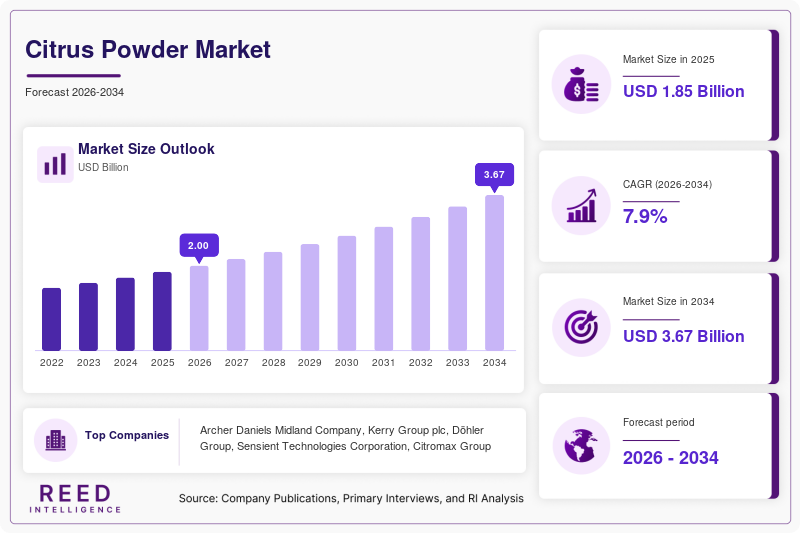
The global Citrus Powder Market size was valued at USD 1.85 billion in 2026 and is projected to reach USD 3.42 billion by 2034, expanding at a CAGR of 7.9% during the forecast period (2026–2034). The market is experiencing consistent growth due to increasing demand for natural flavoring and clean-label ingredients across the food and beverage industry. Citrus powder, derived from fruits such as orange, lemon, lime, and grapefruit, is widely used for its extended shelf life, convenience, and concentrated nutritional profile.
A key global factor supporting market growth is the rising consumer preference for plant-based and minimally processed ingredients. As health-conscious consumption patterns expand, manufacturers are shifting toward natural additives and preservatives, which has strengthened the adoption of citrus powder in bakery, beverages, nutraceuticals, and personal care formulations. Additionally, advancements in spray drying and freeze-drying technologies have enhanced product quality, flavor retention, and solubility, further contributing to market expansion.
Key Highlights
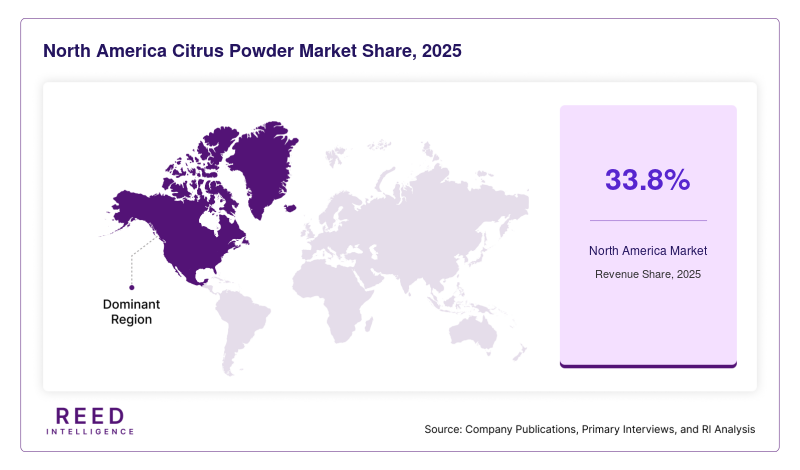
- North America dominated the market with a 33.8% share in 2025.
- Asia Pacific is expected to grow at the fastest CAGR of 9.4% during 2026–2034.
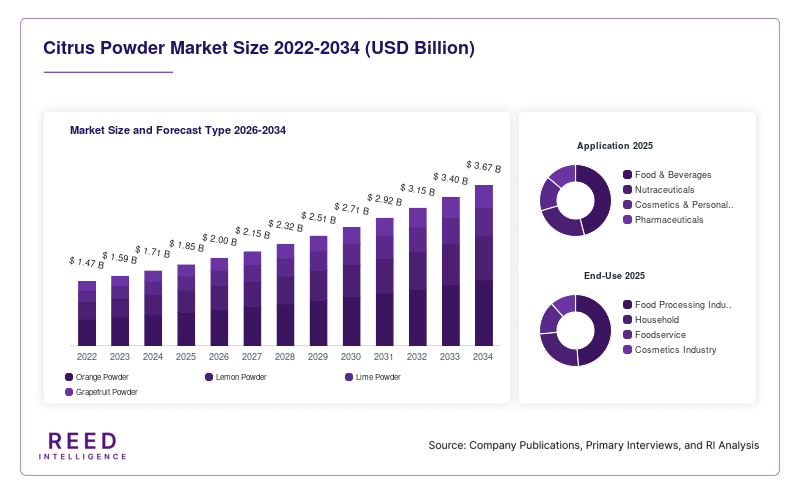
- By type, orange powder accounted for the largest share of 36.2%, while lemon powder is projected to grow at a CAGR of 8.7%.
- By application, food and beverages led with a 48.5% share, whereas nutraceuticals are expected to expand at a CAGR of 9.1%.
- The United States remained the dominant country, with market values of USD 410 million in 2024 and USD 445 million in 2025.
Market Trends
Increasing adoption of clean-label and natural ingredients
The growing demand for clean-label products is significantly shaping the Citrus Powder Market. Consumers are becoming more aware of ingredient transparency and are actively avoiding artificial additives, preservatives, and synthetic flavoring agents. Citrus powder serves as a natural alternative, offering both flavor enhancement and functional benefits such as antioxidant properties and vitamin C content. Food manufacturers are reformulating products to meet regulatory and consumer expectations, especially in developed economies. This shift has led to increased incorporation of citrus powder in ready-to-eat meals, beverages, and bakery products. Additionally, private-label brands are leveraging citrus powder to position products as healthier and more natural, further reinforcing its market penetration across multiple industries.
Expansion of citrus powder applications in nutraceuticals and cosmetics
The diversification of citrus powder applications beyond traditional food uses is another notable trend. Nutraceutical companies are utilizing citrus powder in dietary supplements due to its immune-boosting properties and bioactive compounds such as flavonoids. Similarly, the cosmetics industry is incorporating citrus extracts in skincare formulations for their antioxidant and skin-brightening effects. This cross-industry adoption is driven by consumer demand for multifunctional and natural products. Manufacturers are investing in product innovation, including encapsulated citrus powders and organic variants, to cater to premium segments. The trend is expected to accelerate as research continues to highlight the health and cosmetic benefits of citrus-derived ingredients.
Market Drivers
Rising demand for convenience and shelf-stable ingredients
The increasing need for convenience foods is a major driver for the Citrus Powder Market. Urbanization and busy lifestyles have led consumers to prefer ready-to-use ingredients that reduce preparation time without compromising on quality. Citrus powder offers a long shelf life compared to fresh fruits, making it an ideal choice for food manufacturers and households. Its ease of storage, transportation, and incorporation into various recipes enhances its appeal. Moreover, foodservice providers are adopting citrus powder for consistent flavor delivery in large-scale operations. This growing reliance on shelf-stable ingredients is expected to sustain demand across both developed and emerging markets.
Growth of functional food and beverage industry
The expansion of the functional food and beverage sector is significantly contributing to market growth. Citrus powder is rich in vitamins, minerals, and antioxidants, making it suitable for health-focused products such as fortified drinks, energy bars, and dietary supplements. Consumers are increasingly seeking products that offer health benefits beyond basic nutrition, driving innovation in product formulations. Beverage manufacturers, in particular, are incorporating citrus powder into sports drinks and detox beverages to enhance nutritional value and flavor. This trend is supported by rising health awareness and preventive healthcare practices, positioning citrus powder as a key ingredient in the evolving functional food landscape.
Market Restraint
Fluctuations in raw material supply and pricing
One of the primary restraints affecting the Citrus Powder Market is the volatility in the supply and pricing of raw citrus fruits. Citrus production is highly dependent on climatic conditions, including temperature, rainfall, and susceptibility to diseases such as citrus greening. Any disruption in crop yield can lead to supply shortages and increased raw material costs, which directly impact the production of citrus powder. Additionally, seasonal variations create inconsistencies in availability, making it challenging for manufacturers to maintain stable pricing and supply chains.
This issue has a broader industry impact, particularly for small and medium-sized manufacturers who lack diversified sourcing networks. For example, a decline in orange production in major producing regions can lead to increased costs for orange powder, forcing companies to either absorb the cost or pass it on to consumers. Such fluctuations can reduce competitiveness and limit market expansion. While some companies are investing in contract farming and supply chain optimization, the inherent dependency on agricultural output remains a significant constraint for the market.
Market Opportunities
Growth in organic and premium product segments
The increasing demand for organic and premium food products presents a strong opportunity for the Citrus Powder Market. Consumers are willing to pay higher prices for products that are free from pesticides, chemicals, and artificial additives. Organic citrus powder aligns with these preferences, offering a value-added proposition for health-conscious consumers. Manufacturers are expanding their product portfolios to include certified organic variants, targeting niche markets in North America and Europe. This trend is also supported by regulatory frameworks promoting organic farming and labeling. As awareness continues to grow, the organic segment is expected to witness higher adoption rates, contributing significantly to overall market growth.
Emerging markets and expanding distribution channels
Emerging economies in Asia Pacific, Latin America, and Africa offer untapped growth potential for citrus powder manufacturers. Rising disposable incomes, urbanization, and changing dietary habits are driving demand for processed and functional food products in these regions. Additionally, the expansion of e-commerce and modern retail channels has improved product accessibility, enabling manufacturers to reach a broader consumer base. Companies are leveraging digital platforms to promote citrus powder products and educate consumers about their benefits. Strategic partnerships with local distributors and investments in regional production facilities are further enhancing market penetration. This expansion into emerging markets is expected to create new revenue streams and strengthen global market presence.
Segmental Analysis
By Type
Orange powder dominated the Citrus Powder Market in 2024, accounting for a share of 36.2%. Its widespread use in beverages, bakery products, and confectionery applications contributes to its leading position. Orange powder offers a balanced flavor profile and high vitamin C content, making it suitable for a variety of formulations. Additionally, its availability and cost-effectiveness compared to other citrus variants support its dominance. Manufacturers prefer orange powder due to its versatility and consumer acceptance, particularly in flavored drinks and snacks. The segment also benefits from strong supply chains and established processing technologies.
Lemon powder is the fastest-growing subsegment, projected to expand at a CAGR of 8.7% during the forecast period. Its growth is driven by increasing demand for tangy flavors and its application in detox beverages and health products. Lemon powder is widely used in culinary applications and dietary supplements due to its perceived health benefits. The rising popularity of lemon-based drinks and natural remedies further supports its growth. Manufacturers are focusing on improving product quality and solubility to enhance its application range.
By Application
The food and beverages segment held the largest share of 48.5% in 2024, driven by extensive use of citrus powder as a flavoring and functional ingredient. It is widely used in juices, bakery products, sauces, and ready-to-eat meals. The segment benefits from increasing demand for natural ingredients and clean-label products. Citrus powder enhances taste while providing nutritional benefits, making it a preferred choice for manufacturers. The growing trend of fortified foods and beverages further strengthens its demand in this segment.
The nutraceuticals segment is the fastest-growing, with a CAGR of 9.1%. This growth is driven by increasing consumer focus on health and wellness. Citrus powder is used in dietary supplements, functional drinks, and herbal formulations due to its antioxidant properties. The rising demand for immunity-boosting products has significantly contributed to the expansion of this segment. Manufacturers are investing in research and development to create innovative formulations that incorporate citrus powder as a key ingredient.
By End-Use
The food processing industry dominated the market in 2024, accounting for a significant share due to high demand for natural flavoring agents. Citrus powder is widely used in processed foods to enhance taste and nutritional value. The segment benefits from large-scale production and consistent demand from manufacturers. Additionally, the increasing adoption of citrus powder in packaged foods supports its growth. The focus on product innovation and clean-label formulations further strengthens the segment’s position.
The cosmetics and personal care segment is the fastest-growing, with a projected CAGR of 8.9%. The growth is driven by increasing demand for natural and organic skincare products. Citrus powder is used in formulations for its antioxidant and skin-brightening properties. Consumers are increasingly seeking products with natural ingredients, which has led to higher adoption of citrus-based formulations. The trend toward sustainable and eco-friendly products further supports the growth of this segment.
Regional Analysis
North America
North America held a dominant share of 33.8% in the Citrus Powder Market in 2025 and is projected to grow at a CAGR of 7.2% during the forecast period. The region’s strong market position is supported by high consumer awareness regarding natural and functional ingredients. The presence of established food and beverage manufacturers further drives demand for citrus powder in product formulations. Additionally, the increasing popularity of clean-label products and dietary supplements contributes to steady market growth.
The United States leads the regional market due to its advanced food processing industry and high consumption of convenience foods. A unique growth factor in the country is the strong demand for fortified beverages and health supplements. Manufacturers are increasingly incorporating citrus powder into energy drinks and wellness products, driven by consumer interest in immunity-boosting ingredients.
Europe
Europe accounted for 26.4% of the market share in 2025 and is expected to grow at a CAGR of 7.5%. The region’s growth is driven by stringent regulations on food additives, encouraging the use of natural ingredients such as citrus powder. The demand for organic and sustainable products is particularly strong, influencing product innovation and market expansion.
Germany dominates the European market, supported by its well-developed food processing sector. A unique growth factor is the increasing adoption of citrus powder in organic and vegan product lines. Consumers in Germany are highly conscious of ingredient sourcing, which drives the demand for certified organic citrus powders in various applications.
Asia Pacific
Asia Pacific is the fastest-growing region, with a projected CAGR of 9.4% during 2026–2034 and a market share of 22.1% in 2025. Rapid urbanization, changing dietary habits, and increasing disposable incomes are key factors driving growth. The region also benefits from abundant citrus production, which supports raw material availability.
China leads the regional market due to its large population and expanding food and beverage industry. A unique growth factor is the increasing use of citrus powder in traditional and modern beverage formulations. The growing popularity of instant drinks and herbal teas incorporating citrus flavors further boosts market demand.
Middle East & Africa
The Middle East & Africa region held a market share of 9.3% in 2025 and is expected to grow at a CAGR of 6.8%. The market is gradually expanding due to rising demand for processed food products and increasing awareness of natural ingredients. However, growth is relatively moderate compared to other regions due to limited industrial infrastructure.
South Africa dominates the regional market, driven by its growing food processing sector. A unique growth factor is the increasing demand for shelf-stable ingredients in regions with limited cold storage facilities. Citrus powder offers a practical solution for extending product shelf life, making it a preferred choice among manufacturers.
Latin America
Latin America accounted for 8.4% of the market share in 2025 and is projected to grow at a CAGR of 7.0%. The region benefits from favorable climatic conditions for citrus cultivation, supporting raw material availability. The growing food export industry also contributes to market growth.
Brazil leads the market due to its extensive citrus production. A unique growth factor is the integration of citrus powder in export-oriented processed food products. Manufacturers are leveraging the country’s strong agricultural base to produce high-quality citrus powder for both domestic consumption and international markets.
Competitive Landscape
The Citrus Powder Market is moderately fragmented, with several global and regional players competing based on product quality, pricing, and innovation. Leading companies are focusing on expanding their product portfolios and strengthening distribution networks to gain a competitive edge. The market is characterized by strategic partnerships, mergers, and product launches aimed at enhancing market presence.
A leading player in the market is Archer Daniels Midland Company, which has a strong global presence and extensive product offerings. The company recently introduced a new range of organic citrus powders to cater to the growing demand for clean-label ingredients. Other key players are also investing in advanced processing technologies to improve product quality and shelf life. The competitive landscape is expected to remain dynamic, with continuous innovation and expansion strategies shaping market growth.
Key Players
- Archer Daniels Midland Company
- Kerry Group plc
- Döhler Group
- Sensient Technologies Corporation
- Citromax Group
- LemonConcentrate S.L.
- Florida Food Products LLC
- Paradise Fruits Solutions GmbH
- NutraDry
- BATA Food
- Saipro Biotech Private Limited
- Vinayak Ingredients Pvt Ltd
- Foodchem International Corporation
- Naturex SA
- Kanegrade Ltd
Recent Developments
- In 2025, Kerry Group plc launched a new line of citrus powder blends designed for functional beverages, targeting health-conscious consumers.
- In 2024, Döhler Group expanded its production facility to increase citrus powder output and meet rising global demand.
- In 2025, Sensient Technologies Corporation introduced advanced spray-dried citrus powders with improved flavor retention and solubility.
Citrus Powder Market Segments
Type
- Orange Powder
- Lemon Powder
- Lime Powder
- Grapefruit Powder
Application
- Food & Beverages
- Nutraceuticals
- Cosmetics & Personal Care
- Pharmaceuticals
End-Use
- Food Processing Industry
- Household
- Foodservice
- Cosmetics Industry
Distribution Channel
- Online Retail
- Supermarkets/Hypermarkets
- Specialty Stores
- Direct Sales (B2B)
By Region
- North America
- Europe
- APAC
- Middle East and Africa
- LATAM