Clinching Machine Market Size, Share Demand Report By Type (Hydraulic Clinching Machines, Pneumatic Clinching Machines, Electric Clinching Machines), By Application (Automotive, Electronics, Aerospace, Industrial Equipment), By End-Use Industry (Manufacturing, Aerospace, Electronics, Construction), By Region & Segment Forecasts, 2025–2034
USD 3950
Market Overview
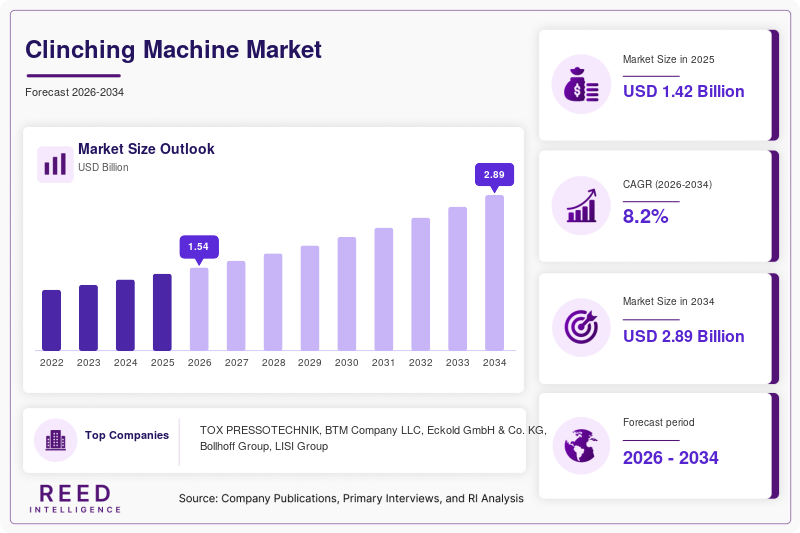
The Clinching Machine Market size is estimated to reach USD 1.42 billion, and it is projected to grow to approximately USD 1.56 billion in 2026. By 2034, the market is forecast to attain a value of USD 3.18 billion, registering a compound annual growth rate (CAGR) of 8.2% during the forecast period (2025–2034). This growth trajectory reflects the increasing integration of clinching processes across automotive, aerospace, and electronics manufacturing sectors.
Clinching machines are widely used for joining sheet metals without additional fasteners or heat, making them a preferred choice in industries focused on sustainability and efficiency. The elimination of consumables such as rivets and adhesives reduces operational costs and enhances production speed. Moreover, clinching ensures strong and reliable joints without damaging coated or pre-painted surfaces, which is critical in modern manufacturing environments.
Key Highlights
- The market size is estimated at USD 1.42 billion in 2025 and is expected to reach USD 1.56 billion in 2026. This steady increase reflects consistent demand from manufacturing industries and ongoing industrial expansion.
- The market is projected to reach USD 3.18 billion by 2034, growing at a CAGR of 8.2% during the forecast period. This growth is supported by technological advancements and increasing adoption across key industries.
- There is a rising demand for lightweight and sustainable joining solutions in modern manufacturing. Clinching technology supports this need by eliminating additional materials and reducing environmental impact.
- Adoption is increasing across automotive, aerospace, and electronics industries due to efficiency and precision. These sectors require reliable and cost-effective joining methods for high-performance applications.
Market Trends
Increasing Integration of Automation and Robotics
The Clinching Machine Market is experiencing a strong trend toward automation and robotic integration. Manufacturers are increasingly adopting automated clinching systems to enhance production efficiency, reduce labor dependency, and improve consistency in joining operations. These systems can be seamlessly integrated into robotic assembly lines, allowing for high-speed and precise operations in industries such as automotive and electronics. Automated clinching machines also enable real-time monitoring and quality control, which helps reduce defects and improve product reliability. As Industry 4.0 adoption grows, the demand for intelligent clinching solutions equipped with sensors and data analytics capabilities is expected to rise further.
Growing Use of Lightweight and Multi-Material Assemblies
Another prominent trend shaping the Clinching Machine Market is the growing use of lightweight and multi-material assemblies. Industries such as automotive and aerospace are increasingly using combinations of aluminum, high-strength steel, and composites to reduce weight and improve performance. Clinching technology is particularly suitable for these applications as it allows joining dissimilar materials without compromising structural integrity. This trend is driving innovation in clinching machine design, with manufacturers developing advanced tooling systems capable of handling complex material combinations. As sustainability and fuel efficiency remain key priorities, the adoption of clinching technology in lightweight construction is expected to expand significantly.
Market Drivers
Rising Demand for Cost-Effective and Sustainable Joining Solutions
One of the primary drivers of the Clinching Machine Market is the increasing demand for cost-effective and sustainable joining solutions. Clinching eliminates the need for additional consumables such as screws, rivets, and adhesives, significantly reducing material costs and waste generation. This makes it an attractive option for manufacturers seeking to optimize production efficiency and minimize environmental impact. Additionally, the process does not require heat, which reduces energy consumption and eliminates the risk of thermal distortion. As industries focus on sustainable manufacturing practices, the adoption of clinching machines is expected to grow steadily across multiple sectors.
Expansion of Automotive and Electronics Manufacturing
The rapid expansion of automotive and electronics manufacturing is another major driver fueling the growth of the Clinching Machine Market. In the automotive sector, clinching is widely used for assembling body panels and structural components, especially in electric vehicles where lightweight construction is essential. Similarly, in the electronics industry, clinching provides a reliable method for joining delicate components without damaging them. The increasing production of consumer electronics and electric vehicles is driving demand for high-precision and efficient joining technologies. As manufacturing volumes continue to rise globally, the need for advanced clinching solutions is expected to increase significantly.
Market Restraint
Limited Applicability for Thick or Hard Materials
A key restraint in the Clinching Machine Market is the limited applicability of clinching technology for thick or extremely hard materials. While clinching is highly effective for thin sheet metals and certain material combinations, it may not provide sufficient joint strength for thicker or high-strength materials without additional reinforcement. This limitation restricts its use in heavy-duty industrial applications where welding or mechanical fastening methods are more suitable.
The impact of this restraint is particularly evident in industries such as heavy machinery and construction equipment manufacturing, where components often require high load-bearing capacity. For example, in structural applications involving thick steel plates, clinching may not meet the required performance standards, leading manufacturers to opt for alternative joining methods. This limitation can slow the adoption of clinching machines in certain sectors and create challenges for market expansion. However, ongoing research and development efforts aimed at improving tooling design and machine capabilities may help address this issue over time.
Market Opportunities
Growth in Electric Vehicle Manufacturing
The rapid growth of electric vehicle (EV) manufacturing presents a significant opportunity for the Clinching Machine Market. EVs require lightweight structures to improve battery efficiency and driving range, leading to increased use of aluminum and mixed-material assemblies. Clinching technology is well-suited for these applications as it enables strong and reliable joints without damaging sensitive materials. Additionally, the absence of heat in the clinching process helps maintain the integrity of battery components and electronic systems. As global EV production continues to rise, the demand for advanced clinching machines is expected to grow substantially.
Advancements in Smart Manufacturing Technologies
Advancements in smart manufacturing technologies offer another promising opportunity for the Clinching Machine Market. The integration of sensors, artificial intelligence, and data analytics into clinching systems is enabling real-time monitoring and predictive maintenance. These features help improve operational efficiency, reduce downtime, and enhance product quality. Manufacturers are increasingly investing in smart factory solutions to remain competitive, which is driving the adoption of intelligent clinching machines. As digital transformation continues to reshape industrial operations, the demand for technologically advanced clinching solutions is expected to expand significantly.
Segmental Analysis
By Type
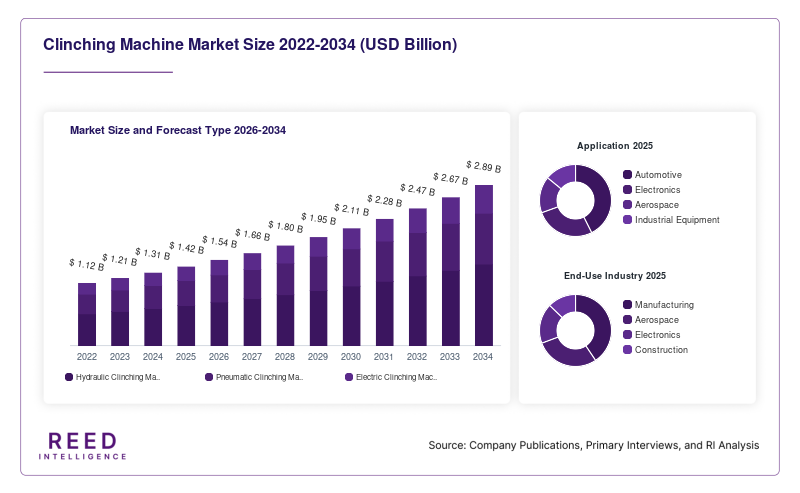
The Type segment of the Clinching Machine Market is dominated by hydraulic clinching machines, which accounted for approximately 58% of the market share in 2024. These machines are widely used due to their ability to deliver high force and consistent performance, making them suitable for heavy-duty applications. Hydraulic systems offer better control and precision, which is essential for achieving strong and reliable joints. Industries such as automotive and aerospace rely heavily on hydraulic clinching machines for assembling structural components. Additionally, the durability and long operational life of these machines contribute to their widespread adoption across various manufacturing sectors.
The fastest-growing subsegment within this category is electric clinching machines, which are expected to register a CAGR of 9.4% during the forecast period. The growth of this segment is driven by the increasing demand for energy-efficient and environmentally friendly solutions. Electric clinching machines consume less energy and offer higher operational efficiency compared to hydraulic systems. They also require less maintenance, which reduces overall operating costs. As manufacturers focus on sustainability and automation, the adoption of electric clinching machines is expected to increase significantly, particularly in industries such as electronics and precision engineering.
By Application
In terms of application, the automotive segment held the largest share of approximately 46% in 2024. Clinching machines are extensively used in automotive manufacturing for joining body panels, structural components, and lightweight materials. The growing demand for fuel-efficient vehicles and electric vehicles is driving the adoption of clinching technology in this sector. Additionally, the ability of clinching to join dissimilar materials without heat makes it ideal for modern automotive applications. The increasing focus on reducing production costs and improving efficiency further supports the dominance of this segment.
The electronics segment is the fastest-growing application, with a projected CAGR of 9.8% during the forecast period. The growth of this segment is attributed to the rising demand for consumer electronics and the need for precision assembly techniques. Clinching machines provide a reliable and clean joining method that does not damage sensitive electronic components. As the electronics industry continues to expand, particularly in emerging markets, the demand for advanced clinching solutions is expected to grow rapidly.
By End-Use Industry
The manufacturing industry segment dominated the Clinching Machine Market with a share of around 52% in 2024. This segment includes various industries such as automotive, aerospace, and industrial equipment manufacturing. The widespread use of clinching machines in these industries is driven by the need for efficient and cost-effective joining solutions. Manufacturers are increasingly adopting clinching technology to improve production efficiency and reduce material waste. The ability to integrate clinching machines into automated production lines further enhances their appeal in the manufacturing sector.
The aerospace industry is the fastest-growing end-use segment, expected to grow at a CAGR of 9.2% during the forecast period. The growth of this segment is driven by the increasing use of lightweight materials and the need for high-precision joining techniques. Clinching machines are well-suited for aerospace applications as they provide strong and reliable joints without compromising material integrity. As the aerospace industry continues to expand, driven by increasing air travel and defense spending, the demand for advanced clinching machines is expected to rise significantly.
Regional Analysis
North America
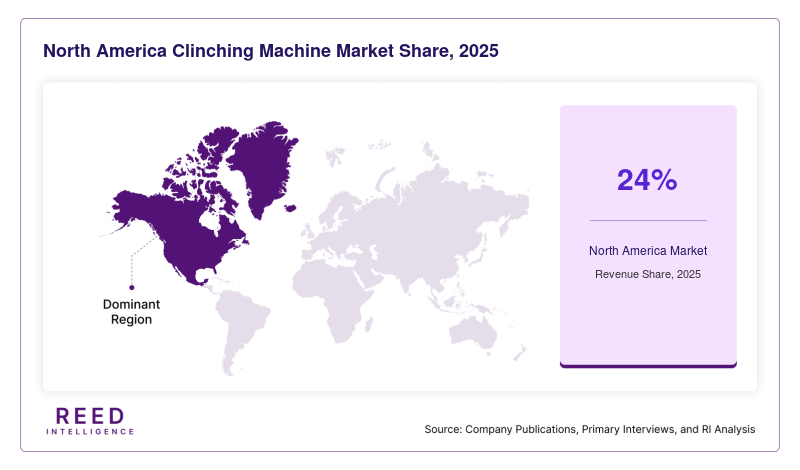
North America accounted for approximately 24% of the Clinching Machine Market share in 2025 and is expected to grow at a CAGR of 7.6% during the forecast period. The region’s growth is driven by strong demand from the automotive and aerospace industries, where precision and reliability are critical. The presence of advanced manufacturing infrastructure and high adoption of automation technologies further supports market expansion.
The United States dominates the North American market due to its well-established automotive manufacturing sector. A key growth factor in the country is the increasing investment in electric vehicle production, which is driving demand for lightweight joining solutions. This trend is encouraging manufacturers to adopt advanced clinching machines for efficient and sustainable assembly processes.
Europe
Europe held around 22% of the market share in 2025 and is projected to grow at a CAGR of 7.8% through 2034. The region is characterized by stringent environmental regulations and a strong focus on sustainable manufacturing practices. These factors are encouraging the adoption of clinching technology as an alternative to traditional joining methods.
Germany leads the European market due to its robust automotive and industrial manufacturing base. A unique growth factor in the region is the emphasis on energy-efficient production processes. Manufacturers are increasingly adopting clinching machines to reduce energy consumption and improve operational efficiency, supporting market growth.
Asia Pacific
Asia Pacific emerged as the largest regional market with a share of 34% in 2025 and is expected to grow at a CAGR of 9.1%. Rapid industrialization, expanding manufacturing activities, and increasing investments in automation are key factors driving market growth in the region.
China dominates the Asia Pacific market, supported by its large-scale manufacturing sector. A significant growth factor is the rising demand for consumer electronics, which requires precision joining solutions. This is boosting the adoption of clinching machines in electronics assembly applications across the country.
Middle East & Africa
The Middle East & Africa region accounted for approximately 10% of the market share in 2025 and is projected to grow at a CAGR of 7.2%. The region’s growth is driven by increasing industrialization and infrastructure development, which are creating demand for efficient manufacturing technologies.
Saudi Arabia is a key contributor to the regional market, with growing investments in industrial diversification. A unique growth factor is the expansion of local manufacturing capabilities under economic diversification initiatives, which is driving the adoption of advanced clinching machines.
Latin America
Latin America held about 10% of the market share in 2025 and is expected to grow at a CAGR of 7.4% during the forecast period. The region is witnessing gradual growth in manufacturing activities, supported by increasing foreign investments and industrial development.
Brazil dominates the Latin American market due to its expanding automotive industry. A key growth factor is the rising demand for cost-effective production methods, which is encouraging manufacturers to adopt clinching technology for efficient and reliable joining operations.
Competitive Landscape
The Clinching Machine Market is moderately fragmented, with several global and regional players competing based on product innovation, technology, and pricing strategies. Leading companies are focusing on developing advanced clinching solutions that offer higher efficiency, precision, and automation capabilities. Strategic partnerships, mergers, and acquisitions are also common as companies aim to expand their market presence and strengthen their product portfolios.
A leading player in the market is TOX PRESSOTECHNIK, known for its advanced clinching technologies and strong global presence. The company has recently introduced new electric clinching systems designed for high-speed automated production lines, enhancing efficiency and reducing energy consumption. Other key players are investing in research and development to introduce innovative products that cater to evolving industry requirements.
Key Players List
- TOX PRESSOTECHNIK
- BTM Company LLC
- Eckold GmbH & Co. KG
- Bollhoff Group
- LISI Group
- Kuka AG
- Atlas Copco AB
- Amada Co., Ltd.
- Trumpf Group
- Schuler Group
- Nitto Seiko Co., Ltd.
- Ficep S.p.A.
- Haco Group
- AGME Automated Assembly Solutions
- BalTec Corporation
Recent Developments
- A major manufacturer launched an advanced electric clinching system with integrated sensors for real-time monitoring and predictive maintenance.
- A global company expanded its production facility to increase the manufacturing capacity of automated clinching machines.
- A leading player introduced a new range of compact clinching machines designed for small-scale and precision applications.
Clinching Machine Market Segments
Type
- Hydraulic Clinching Machines
- Pneumatic Clinching Machines
- Electric Clinching Machines
Application
- Automotive
- Electronics
- Aerospace
- Industrial Equipment
End-Use Industry
- Manufacturing
- Aerospace
- Electronics
- Construction
By Region
- North America
- Europe
- APAC
- Middle East and Africa
- LATAM