Clinical Pharmacology Services Market Size, Share & Demand Report By Service Type (Pharmacodynamics Services, Bioanalytical Services, Biomarker Services, Drug-Drug Interaction Studies), By Therapeutic Area (Cardiovascular Diseases, Neurology, Infectious Diseases, Rare Diseases, Others), By End User (Pharmaceutical Companies, Biotechnology Companies, Academic & Research Institutes, Government Organizations), By Region & Segment Forecasts, 2026–2034
USD 3950
Market Overview
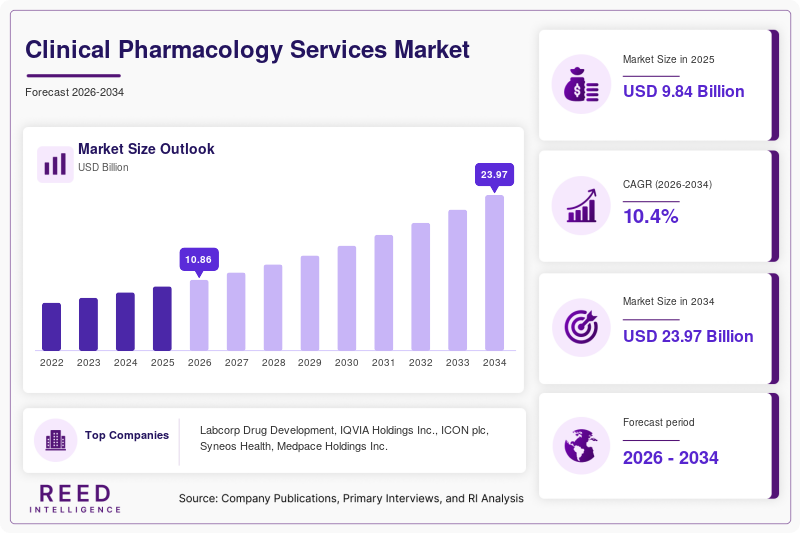
The global Clinical Pharmacology Services Market size was valued at USD 9.84 billion in 2026 and is projected to reach USD 21.67 billion by 2034, expanding at a CAGR of 10.4% during 2026–2034. The market continues to gain momentum as pharmaceutical and biotechnology companies increasingly rely on specialized clinical pharmacology services to accelerate drug development, improve regulatory compliance, and optimize therapeutic outcomes. These services encompass pharmacokinetics, pharmacodynamics, bioanalysis, biomarker testing, drug-drug interaction studies, and early-phase clinical trials that support the development of innovative therapeutics.
One of the major global factors supporting market expansion is the growing pipeline of biologics, cell therapies, gene therapies, and precision medicines. As treatment approaches become more targeted and complex, sponsors require comprehensive pharmacological assessments to establish safety, efficacy, dosage optimization, and patient stratification strategies. The increasing outsourcing trend among pharmaceutical companies is also strengthening demand for contract research organizations (CROs) and specialized clinical pharmacology providers. Organizations are focusing on reducing development timelines while maintaining high-quality scientific and regulatory standards.
Key Highlights
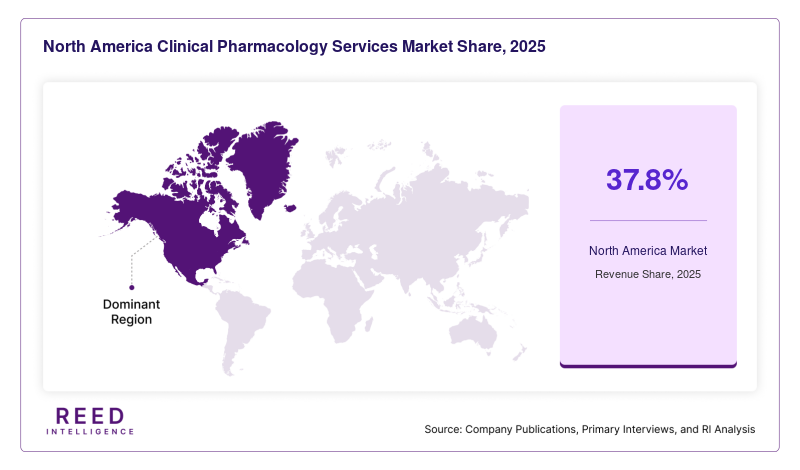
- North America dominated the market with a 37.8% share in 2025.
- while Asia Pacific is expected to grow at the fastest CAGR of 12.1% during 2026–2034.
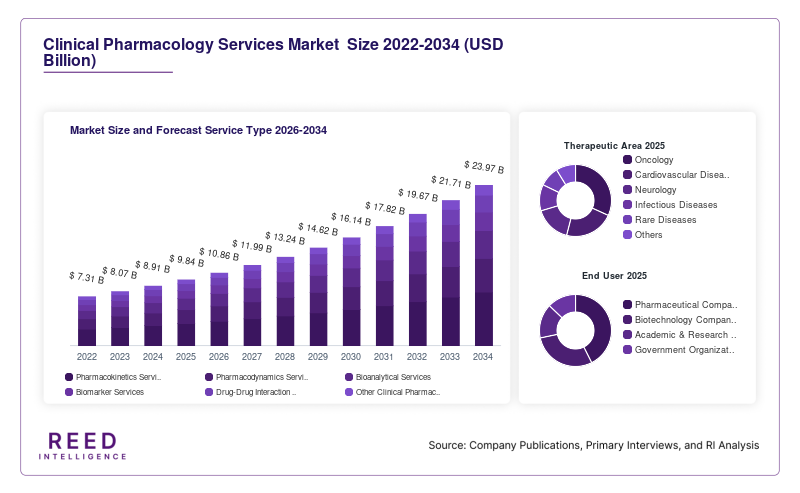
- By service type, pharmacokinetics services accounted for the largest share of 35.4%.
- while biomarker services are projected to grow at a CAGR of 12.8%.
- By therapeutic area, oncology led with a 32.6% share.
- whereas rare diseases are expected to expand at a CAGR of 13.2%.
- By end user, pharmaceutical companies accounted for the largest share of 58.3%.
- while biotechnology companies are projected to grow at a CAGR of 12.5%.
- The United States remained the dominant country, with market values of USD 2.82 billion in 2024 and USD 3.08 billion in 2025.
Market Trends
Growing Integration of Biomarkers and Precision Medicine
The increasing adoption of precision medicine is reshaping the Clinical Pharmacology Services Market. Pharmaceutical and biotechnology companies are incorporating biomarker-driven approaches throughout drug development programs to identify patient populations that are more likely to respond to specific therapies. Clinical pharmacology providers are expanding their capabilities in biomarker validation, companion diagnostics support, and translational medicine studies. This trend is particularly visible in oncology, immunology, and rare disease research, where personalized treatment strategies are becoming standard practice. The growing need to establish exposure-response relationships and optimize dosing regimens is encouraging sponsors to seek specialized clinical pharmacology expertise. As precision medicine initiatives continue to expand globally, demand for advanced pharmacological evaluation services is expected to increase steadily.
Increasing Adoption of Digital Technologies in Clinical Research
Digital transformation is becoming a defining trend across clinical pharmacology operations. Service providers are increasingly utilizing artificial intelligence, machine learning, electronic data capture systems, and advanced analytics platforms to improve study efficiency and data quality. These technologies enable real-time monitoring of clinical studies, support predictive modeling, and enhance pharmacokinetic and pharmacodynamic assessments. Digital tools also help sponsors manage large datasets generated from complex clinical trials while improving regulatory documentation processes. The integration of decentralized trial components and remote patient monitoring technologies is further expanding opportunities for service providers. As pharmaceutical companies pursue faster and more cost-effective development pathways, technology-enabled clinical pharmacology services are expected to gain significant market traction.
Market Drivers
Expansion of Pharmaceutical and Biotechnology Research Pipelines
The expanding volume of drug candidates entering clinical development is a major driver of the Clinical Pharmacology Services Market. Pharmaceutical and biotechnology companies are investing heavily in innovative therapies targeting cancer, autoimmune disorders, infectious diseases, neurological conditions, and rare diseases. Each development program requires extensive pharmacological evaluation to determine safety, efficacy, metabolism, and dosage parameters. Clinical pharmacology studies play a critical role in early-stage decision-making and regulatory submissions. As research pipelines become increasingly diverse and complex, sponsors are relying more heavily on specialized service providers to access scientific expertise, advanced technologies, and scalable infrastructure. This trend is creating sustained demand for pharmacokinetic, pharmacodynamic, and bioanalytical services across global markets.
Rising Outsourcing Activities Among Drug Developers
Outsourcing continues to be a key growth catalyst for the market. Pharmaceutical organizations are increasingly partnering with contract research organizations and specialized clinical pharmacology service providers to reduce operational costs and accelerate development timelines. Outsourcing allows sponsors to access experienced scientific teams, advanced laboratory facilities, and regulatory expertise without making substantial capital investments. The growing complexity of clinical trials has further increased the value of external partnerships. Service providers offer integrated solutions covering study design, bioanalysis, data management, and regulatory support. As companies seek greater flexibility and efficiency in research operations, outsourcing is expected to remain a central component of drug development strategies, supporting long-term market expansion.
Market Restraint
Complex Regulatory Requirements and Study Costs
Stringent regulatory requirements represent a significant challenge for participants in the Clinical Pharmacology Services Market. Clinical pharmacology studies must comply with evolving guidelines related to patient safety, data integrity, bioanalytical validation, and reporting standards. Regulatory agencies often require extensive documentation and additional studies to support approval decisions, which can increase development costs and prolong timelines. Small and mid-sized biotechnology companies may face resource constraints when conducting complex pharmacological assessments. Furthermore, highly specialized studies involving biologics, gene therapies, and personalized medicines often require advanced laboratory technologies and expert personnel, increasing operational expenditures. Delays resulting from protocol modifications, recruitment challenges, or regulatory reviews can also affect project profitability for service providers. These factors may limit market penetration in cost-sensitive regions and create barriers for smaller organizations seeking to expand service offerings.
Market Opportunities
Growth of Clinical Research Activities in Emerging Economies
Emerging economies present significant opportunities for market participants. Countries across Asia Pacific, Latin America, and parts of the Middle East are investing in healthcare infrastructure, research facilities, and regulatory modernization initiatives. These developments are attracting multinational pharmaceutical companies seeking cost-efficient environments for clinical development activities. Clinical pharmacology service providers can benefit from expanding patient populations, growing therapeutic research programs, and increasing government support for innovation. Local partnerships and regional expansion strategies are enabling organizations to establish stronger market positions. As clinical trial activity continues to shift toward emerging markets, demand for pharmacological expertise and related services is expected to increase substantially throughout the forecast period.
Increasing Development of Advanced Therapeutic Modalities
The growing focus on advanced therapeutic modalities offers another attractive opportunity for the Clinical Pharmacology Services Market. Gene therapies, cell therapies, RNA-based treatments, and next-generation biologics require highly specialized pharmacological evaluation methods that differ from traditional drug development approaches. Service providers capable of supporting these innovative therapies through customized study designs, biomarker analysis, and advanced bioanalytical testing can capture new revenue streams. The complexity of these therapies often necessitates extensive collaboration between sponsors and specialized research organizations. As regulatory approvals for advanced therapeutics continue to increase, service providers with expertise in these emerging areas are likely to experience strong demand and long-term growth prospects.
Segmental Analysis
By Service Type
Pharmacokinetics services represented the dominant subsegment within the service type category, accounting for approximately 35.4% of the market share in 2024. These services are essential for evaluating drug absorption, distribution, metabolism, and excretion characteristics during development programs. Pharmaceutical companies rely heavily on pharmacokinetic assessments to establish optimal dosing strategies and identify potential safety concerns. The growing complexity of therapeutic candidates, including biologics and targeted therapies, has increased the importance of detailed pharmacokinetic analysis. Service providers continue investing in advanced analytical technologies and modeling capabilities to support increasingly sophisticated study requirements. Strong demand from oncology, immunology, and infectious disease research programs has further reinforced the leading position of this subsegment.
Biomarker services are anticipated to emerge as the fastest-growing subsegment, expanding at a CAGR of 12.8% during 2026–2034. The growth is primarily driven by the rising adoption of precision medicine and personalized treatment approaches. Biomarkers help identify responsive patient populations, improve clinical trial efficiency, and support regulatory decision-making processes. Pharmaceutical sponsors are increasingly integrating biomarker strategies into development programs to enhance therapeutic outcomes and reduce development risks. Advancements in molecular diagnostics, genomic testing, and proteomics are enabling more comprehensive biomarker analysis. As targeted therapies continue to gain market acceptance, demand for specialized biomarker services is expected to increase significantly across multiple therapeutic areas.
By Therapeutic Area
Oncology constituted the largest therapeutic area segment, accounting for approximately 32.6% of the market share in 2024. The continued expansion of cancer research programs has generated substantial demand for clinical pharmacology services. Oncology drug development often requires extensive pharmacokinetic, pharmacodynamic, and biomarker evaluations to support regulatory approvals and optimize patient outcomes. Pharmaceutical and biotechnology companies are investing heavily in immunotherapies, targeted therapies, and combination treatment approaches. The growing incidence of cancer worldwide further supports research activity and clinical trial volume. Service providers with specialized oncology expertise are increasingly involved in complex studies designed to assess efficacy, safety, and personalized treatment strategies.
Rare diseases are projected to be the fastest-growing therapeutic area, registering a CAGR of 13.2% during the forecast period. Increasing regulatory incentives, growing awareness, and advancements in genetic research are encouraging pharmaceutical companies to develop therapies for underserved patient populations. Clinical pharmacology studies play a critical role in establishing dosing strategies and evaluating treatment responses for rare disease therapies. The emergence of gene therapies and precision medicine approaches has further accelerated research activity in this area. As investment in orphan drug development continues to rise, specialized pharmacological evaluation services are expected to experience sustained demand.
By End User
Pharmaceutical companies held the largest share within the end-user segment, accounting for approximately 58.3% of the market in 2024. These organizations conduct extensive clinical pharmacology studies throughout the drug development lifecycle to support regulatory submissions and commercialization strategies. Large pharmaceutical manufacturers frequently outsource specialized services to improve efficiency and access advanced scientific expertise. The increasing number of innovative therapeutics entering development pipelines continues to strengthen demand from this customer group. Service providers benefit from long-term partnerships and recurring project opportunities associated with diverse therapeutic programs. The need for comprehensive pharmacological data remains a critical component of successful drug development efforts.
Biotechnology companies are expected to represent the fastest-growing end-user subsegment, expanding at a CAGR of 12.5% during 2026–2034. Many biotechnology firms focus on novel therapeutic modalities that require highly specialized pharmacological assessments and advanced analytical methodologies. These companies often operate with lean internal resources and depend on external service providers for critical development activities. Increased venture capital funding, growing innovation in cell and gene therapies, and expanding biologics research are supporting demand from biotechnology organizations. As emerging biotech firms continue advancing promising therapeutic candidates through clinical development, the need for outsourced clinical pharmacology expertise is expected to grow substantially.
Regional Analysis
North America
North America accounted for approximately 37.8% of the global Clinical Pharmacology Services Market in 2025 and is expected to maintain a strong position throughout the forecast period. The region is projected to expand at a CAGR of 9.6% between 2026 and 2034. High pharmaceutical research expenditure, strong clinical trial infrastructure, and widespread adoption of advanced bioanalytical technologies support market growth. The presence of numerous contract research organizations and established pharmaceutical manufacturers continues to create favorable conditions for service providers.
The United States remains the dominant country in the region due to its extensive drug development ecosystem and substantial investment in innovative therapeutics. A unique growth factor is the increasing number of biologics and specialty drug programs entering clinical development. These therapies require sophisticated pharmacokinetic and pharmacodynamic assessments, generating strong demand for specialized clinical pharmacology services across academic institutions, biotechnology firms, and pharmaceutical companies.
Europe
Europe represented approximately 28.6% of the global market in 2025 and is anticipated to register a CAGR of 9.2% during the forecast period. The region benefits from a well-established regulatory environment, advanced healthcare systems, and strong collaboration between research institutions and industry participants. Increasing investments in personalized medicine and rare disease research are supporting demand for specialized pharmacological studies. Contract research organizations continue expanding their service portfolios to address evolving client requirements.
Germany remains the leading country within Europe due to its extensive pharmaceutical manufacturing base and research capabilities. A unique growth factor is the country's strong emphasis on translational medicine and academic-industry partnerships. These collaborations facilitate early-stage drug development and create demand for comprehensive clinical pharmacology services that support innovative therapeutic programs and regulatory submissions.
Asia Pacific
Asia Pacific held approximately 22.4% of the global market in 2025 and is forecast to record the fastest CAGR of 12.1% through 2034. Rapid expansion of pharmaceutical manufacturing, growing clinical trial activity, and increasing healthcare investments are contributing to market growth. Several countries are enhancing regulatory frameworks and research infrastructure to attract international sponsors. Cost advantages and large patient populations further strengthen the region's attractiveness for outsourced clinical research activities.
China is the dominant country in Asia Pacific and continues to expand its role in global drug development. A unique growth factor is the government's ongoing support for biotechnology innovation and pharmaceutical modernization. Investments in research parks, advanced laboratory facilities, and talent development programs are encouraging domestic and international companies to conduct pharmacological studies within the country.
Middle East & Africa
The Middle East & Africa accounted for approximately 5.1% of the global market in 2025 and is expected to grow at a CAGR of 8.7% during the forecast period. Although the market remains relatively small, increasing healthcare expenditure and gradual improvements in research infrastructure are supporting growth. Governments and healthcare organizations are investing in clinical research capabilities to diversify healthcare systems and encourage innovation within the pharmaceutical sector.
Saudi Arabia leads the regional market due to its expanding healthcare investments and strategic focus on life sciences development. A unique growth factor is the implementation of national healthcare transformation programs that emphasize research and innovation. These initiatives are creating opportunities for clinical pharmacology service providers to participate in local and regional drug development projects.
Latin America
Latin America captured approximately 6.1% of the global Clinical Pharmacology Services Market in 2025 and is projected to expand at a CAGR of 9.1% through 2034. The region is experiencing growing clinical trial activity driven by expanding healthcare access and increasing pharmaceutical investments. Regulatory improvements and efforts to streamline clinical research processes are attracting international sponsors seeking diversified study locations and broader patient recruitment opportunities.
Brazil remains the dominant country in the region due to its large population, established healthcare network, and expanding pharmaceutical industry. A unique growth factor is the increasing participation of domestic biotechnology companies in innovative drug development programs. This trend is generating demand for specialized clinical pharmacology services that support local research initiatives and global regulatory requirements.
Competitive Landscape
The Clinical Pharmacology Services Market is characterized by the presence of global contract research organizations, specialized bioanalytical laboratories, and integrated clinical development service providers. Competition is primarily based on scientific expertise, regulatory capabilities, service breadth, turnaround times, and geographic reach. Companies are investing in advanced bioanalytical technologies, digital platforms, and strategic acquisitions to strengthen market positions.
Labcorp Drug Development remains a leading participant due to its broad service portfolio, global laboratory network, and extensive experience in clinical pharmacology studies. The company recently expanded its biomarker and translational medicine capabilities to support growing demand for precision medicine programs. Other major participants continue focusing on capacity expansion, technology integration, and strategic partnerships with pharmaceutical and biotechnology sponsors. Increasing demand for specialized services related to biologics, gene therapies, and personalized medicine is encouraging providers to enhance technical capabilities and diversify service offerings. Market participants are also expanding operations in emerging economies to capitalize on growing clinical research activity and outsourcing opportunities.
Key Players
- Labcorp Drug Development
- IQVIA Holdings Inc.
- ICON plc
- Syneos Health
- Medpace Holdings Inc.
- Charles River Laboratories
- SGS SA
- Parexel International
- Worldwide Clinical Trials
- Evotec SE
- Frontage Laboratories
- WuXi AppTec
- Pharmaron Beijing Co., Ltd.
- Altasciences
Recent Developments
- Labcorp Drug Development expanded its clinical pharmacology laboratory network to enhance biomarker and bioanalytical testing capacity for global pharmaceutical clients.
- IQVIA introduced advanced artificial intelligence-driven analytics tools designed to improve pharmacokinetic modeling and accelerate early-stage clinical decision-making.
- Charles River Laboratories strengthened its clinical pharmacology portfolio through investments in translational medicine capabilities supporting biologics and cell therapy development.
- WuXi AppTec expanded integrated clinical research services in Asia to address growing demand from biotechnology companies developing innovative therapeutic candidates.
- Parexel enhanced decentralized clinical trial support solutions, enabling more efficient patient monitoring and data collection for pharmacology studies.
Clinical Pharmacology Services Market Segments
Service Type
- Pharmacokinetics Services
- Pharmacodynamics Services
- Bioanalytical Services
- Biomarker Services
- Drug-Drug Interaction Studies
- Other Clinical Pharmacology Services
Therapeutic Area
- Oncology
- Cardiovascular Diseases
- Neurology
- Infectious Diseases
- Rare Diseases
- Others
End User
- Pharmaceutical Companies
- Biotechnology Companies
- Academic & Research Institutes
- Government Organizations
By Region
- North America
- Europe
- APAC
- Middle East and Africa
- LATAM