Commercial Milkshake Machine Market Size, Share Demand Report By Equipment Type (Single-Spindle Machines, Multi-Spindle Machines), By Application (Quick-Service Restaurants, Cafés & Beverage Outlets, Other Foodservice Establishments), By End-Use (Commercial Foodservice, Institutional Use), By Distribution Channel (Online Retail, Specialty Equipment Stores, Direct Sales, Distributors & Wholesalers), By Region & Segment Forecasts, 2026–2034
USD 3950
Market Overview
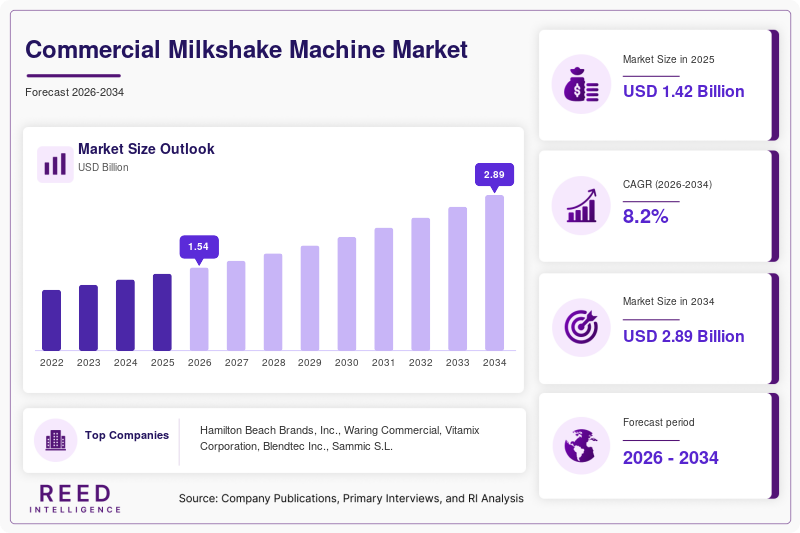
The Commercial Milkshake Machine Market was valued at approximately USD 1.42 billion in 2026 and is projected to reach USD 2.68 billion by 2034, expanding at a CAGR of 8.2% during 2026–2034. The market demonstrates steady growth driven by the expanding global foodservice industry, particularly quick-service restaurants (QSRs), cafés, and dessert chains that increasingly incorporate milk-based beverages into their menus.
A key global factor supporting market growth is the rising demand for premium beverage experiences. Consumers are shifting toward customized, indulgent, and visually appealing drinks, which has encouraged foodservice providers to invest in high-performance milkshake machines capable of delivering consistency, speed, and product quality. Additionally, the adoption of automated and energy-efficient machines has enhanced operational efficiency, making these appliances essential in high-volume commercial environments.
Key Highlights
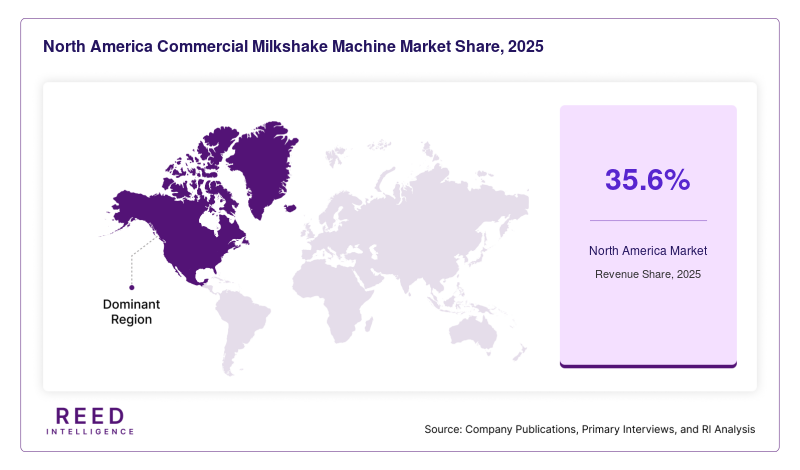
- North America dominated the market with a 35.6% share in 2025.
- Asia Pacific is expected to grow at the fastest CAGR of 10.8% during 2026–2034.
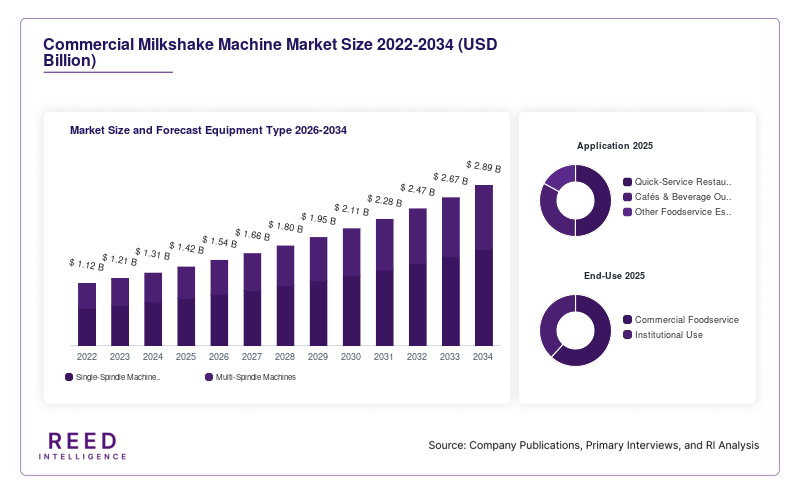
- By equipment type, single-spindle machines accounted for the largest share of 41.2%.
- while multi-spindle machines are projected to grow at a CAGR of 9.6%.
- By application, quick-service restaurants led with a 46.8% share, whereas cafés and specialty beverage outlets are expected to expand at a CAGR of 9.9%.
- The United States remained the dominant country, with market values of USD 520 million in 2024 and USD 565 million in 2025.
Market Trends
Integration of Smart and Programmable Features in Milkshake Machines
A notable trend shaping the Commercial Milkshake Machine Market is the integration of smart and programmable technologies into equipment design. Manufacturers are increasingly offering machines equipped with digital interfaces, preset blending programs, and IoT-enabled monitoring systems. These features allow operators to standardize product quality while reducing manual intervention. In high-volume environments such as QSR chains, programmable machines help ensure consistent texture and flavor across multiple locations. Additionally, remote monitoring capabilities enable predictive maintenance and performance tracking, reducing downtime and operational costs. This trend aligns with the broader digital transformation of the foodservice industry and supports efficient workflow management.
Rising Demand for Compact and Energy-Efficient Equipment
Another key trend is the growing demand for compact and energy-efficient milkshake machines. Foodservice operators, especially in urban areas, often face space constraints and high energy costs. As a result, manufacturers are focusing on designing machines that occupy less counter space while maintaining high output capacity. Energy-efficient motors, low-noise operation, and improved insulation technologies are being incorporated to meet sustainability goals. This trend is particularly evident in regions with stringent energy regulations and rising electricity costs. Compact and efficient machines not only reduce operating expenses but also appeal to environmentally conscious businesses seeking to improve their sustainability profiles.
Market Drivers
Expansion of Quick-Service Restaurants and Beverage Chains
The rapid expansion of quick-service restaurants and beverage chains globally is a major driver for the Commercial Milkshake Machine Market. QSR brands are continuously expanding their menus to include milkshakes and blended beverages as high-margin offerings. These establishments require reliable and efficient equipment capable of handling high customer volumes during peak hours. As franchises expand into emerging markets, the demand for standardized equipment increases, further boosting market growth. Additionally, global chains often prefer technologically advanced machines that can deliver uniform results across outlets, which supports consistent brand experience and customer satisfaction.
Increasing Consumer Preference for Premium and Customized Beverages
Changing consumer preferences toward premium and customizable beverages are also driving the market. Consumers are increasingly seeking unique flavors, textures, and presentation styles, encouraging foodservice providers to offer a wider variety of milkshake options. This trend has led to increased investment in advanced milkshake machines that support multiple mixing speeds, ingredient blending, and customization features. The growing popularity of health-conscious options, such as protein shakes and dairy-free alternatives, further enhances equipment demand. As businesses strive to meet diverse consumer expectations, the need for versatile and high-performance milkshake machines continues to grow.
Market Restraint
High Initial Investment and Maintenance Costs
One of the primary restraints affecting the Commercial Milkshake Machine Market is the high initial investment and ongoing maintenance costs associated with advanced equipment. Commercial-grade milkshake machines, particularly those with multi-spindle configurations and smart features, often require significant capital expenditure. Small and medium-sized foodservice operators may find it challenging to allocate budgets for such equipment, especially in price-sensitive markets. Additionally, regular maintenance, replacement of parts, and servicing costs add to the overall operational expenses.
The impact of this restraint is particularly evident in emerging economies, where smaller businesses dominate the foodservice landscape. These operators may opt for low-cost or manual alternatives, limiting the adoption of advanced machines. Furthermore, the availability of refurbished equipment in secondary markets can reduce demand for new products. For example, independent cafés may choose second-hand machines to minimize costs, thereby affecting revenue growth for manufacturers. While technological advancements offer long-term efficiency benefits, the upfront cost barrier continues to hinder widespread adoption, especially among smaller enterprises.
Market Opportunities
Growth in Emerging Markets and Urban Food Culture
Emerging markets present significant growth opportunities for the Commercial Milkshake Machine Market. Rapid urbanization, increasing disposable incomes, and the growing influence of Western food culture have led to a surge in demand for milk-based beverages. Countries in Asia Pacific, Latin America, and the Middle East are witnessing a rise in café culture and international food chains, which drives equipment demand. Local entrepreneurs are also entering the beverage segment, creating opportunities for manufacturers to expand their presence. As infrastructure improves and consumer spending rises, the adoption of commercial milkshake machines is expected to accelerate.
Product Innovation and Multi-Functionality
Another major opportunity lies in product innovation and the development of multi-functional machines. Manufacturers are increasingly focusing on designing equipment that can handle a variety of tasks, including blending smoothies, protein shakes, and frozen desserts. This versatility appeals to foodservice operators looking to maximize return on investment. Innovations such as touchless operation, improved hygiene features, and faster blending technologies further enhance product appeal. Additionally, the integration of sustainable materials and energy-saving components aligns with global environmental trends, creating new avenues for growth. Companies that invest in innovation and adapt to changing consumer needs are likely to gain a competitive advantage.
Segmental Analysis
By Equipment Type
Single-spindle milkshake machines dominated the market with a 41.2% share in 2024. These machines are widely used in small to medium-sized foodservice establishments due to their affordability, ease of use, and compact design. Single-spindle machines are suitable for low to moderate demand environments, making them ideal for independent cafés and small restaurants. Their lower maintenance requirements and energy consumption further enhance their appeal. Additionally, these machines offer sufficient performance for basic milkshake preparation, which meets the needs of many operators without requiring high investment.
Multi-spindle milkshake machines are expected to be the fastest-growing subsegment, with a CAGR of 9.6% during the forecast period. These machines are designed for high-volume operations and can prepare multiple servings simultaneously, making them suitable for QSR chains and large foodservice establishments. The growth of this segment is driven by increasing demand for efficiency and speed in busy environments. Multi-spindle machines also support menu diversification, allowing operators to prepare different flavors simultaneously. As foodservice businesses continue to expand, the demand for high-capacity equipment is expected to rise significantly.
By Application
Quick-service restaurants accounted for the largest share of 46.8% in 2024. These establishments rely heavily on efficient and reliable equipment to meet high customer demand. Milkshakes are a popular menu item in QSRs, often offered as part of meal combos or promotional deals. The need for consistent product quality and fast service drives the adoption of commercial milkshake machines in this segment. Additionally, the expansion of global QSR chains contributes to sustained demand for standardized equipment.
Cafés and specialty beverage outlets are projected to grow at the fastest CAGR of 9.9% during the forecast period. These establishments focus on offering unique and customized beverages, which requires versatile and advanced equipment. The growth of café culture, particularly in urban areas, is a key factor driving this segment. Consumers are increasingly seeking premium experiences, encouraging cafés to invest in high-quality machines. The ability to offer diverse menu options, including dairy-free and health-focused beverages, further supports segment growth.
By End-Use
Commercial foodservice establishments dominated the market with a 63.5% share in 2024. This segment includes restaurants, hotels, and catering services that require reliable equipment for daily operations. The high demand for milk-based beverages in these establishments drives the adoption of milkshake machines. Additionally, the need for consistent quality and efficient service supports the use of advanced equipment. The growth of the hospitality industry further contributes to the expansion of this segment.
Institutional users, including educational institutions and corporate cafeterias, are expected to grow at a CAGR of 8.7% during the forecast period. The increasing focus on providing diverse food options in institutional settings is driving demand for milkshake machines. These establishments are adopting modern equipment to enhance foodservice quality and meet consumer expectations. The growing trend of on-site dining facilities in corporate offices also supports segment growth. As institutions continue to improve their foodservice offerings, the demand for commercial milkshake machines is expected to increase.
Regional Analysis
North America
North America accounted for a 35.6% share of the Commercial Milkshake Machine Market in 2025 and is expected to grow at a CAGR of 7.6% during the forecast period. The region’s growth is driven by the well-established foodservice industry and the widespread presence of quick-service restaurant chains. High consumer demand for premium beverages and frequent product innovation by manufacturers further support market expansion. Technological adoption is also high, with businesses investing in advanced and automated machines to improve efficiency and maintain consistency in product quality.
The United States dominates the regional market due to its extensive network of QSRs and café chains. A unique growth factor in the country is the strong culture of menu innovation, where restaurants frequently introduce new milkshake flavors and limited-time offerings. This trend encourages continuous equipment upgrades and replacements. Additionally, the presence of leading manufacturers and strong distribution networks contributes to sustained market growth in the region.
Europe
Europe held a 27.4% market share in 2025 and is projected to expand at a CAGR of 7.9% through 2034. The region benefits from a mature foodservice sector and increasing demand for artisanal and premium beverages. Consumers in Europe are showing growing interest in customized and high-quality milkshakes, which drives the adoption of advanced equipment. Sustainability and energy efficiency are also key considerations influencing purchasing decisions among foodservice operators.
Germany leads the European market due to its strong hospitality industry and focus on technological innovation. A unique growth factor in the country is the emphasis on energy-efficient appliances, driven by stringent environmental regulations. This has encouraged manufacturers to develop machines that comply with energy standards, thereby boosting adoption. The increasing popularity of café culture and dessert-focused outlets further supports market growth.
Asia Pacific
Asia Pacific is expected to grow at the fastest CAGR of 10.8% from 2026 to 2034, with a 22.1% share in 2025. The region’s growth is fueled by rapid urbanization, rising disposable incomes, and the expansion of international food chains. Increasing exposure to Western food trends has led to higher demand for milk-based beverages. Additionally, the growing number of shopping malls and food courts creates opportunities for equipment manufacturers.
China dominates the Asia Pacific market due to its large population and expanding foodservice industry. A unique growth factor in the country is the rapid adoption of digital ordering and smart kitchen equipment. This has encouraged restaurants to invest in technologically advanced milkshake machines that integrate with digital systems. The rise of local beverage brands and café chains further accelerates market growth in the region.
Middle East & Africa
The Middle East & Africa region held a 7.5% market share in 2025 and is expected to grow at a CAGR of 8.5% during the forecast period. The market is driven by the expanding hospitality sector and increasing tourism activities. Countries in the Middle East are witnessing significant investments in restaurants and entertainment venues, which boosts demand for commercial kitchen equipment, including milkshake machines.
The United Arab Emirates leads the regional market due to its thriving tourism and hospitality industry. A unique growth factor in the country is the high demand for premium and luxury dining experiences. Restaurants and cafés often invest in high-end equipment to enhance customer experience, which supports market growth. Additionally, the presence of international food chains contributes to the adoption of advanced milkshake machines.
Latin America
Latin America accounted for a 7.4% share of the market in 2025 and is projected to grow at a CAGR of 8.1% through 2034. The region’s growth is supported by the increasing popularity of Western-style beverages and the expansion of foodservice outlets. Rising disposable incomes and changing consumer preferences are encouraging the adoption of milkshake machines in commercial settings.
Brazil dominates the Latin American market due to its large population and growing urban food culture. A unique growth factor in the country is the increasing number of local café chains and dessert outlets. These businesses are investing in modern equipment to enhance efficiency and attract customers. The growing influence of international brands also contributes to market expansion in the region.
Competitive Landscape
The Commercial Milkshake Machine Market is moderately fragmented, with several global and regional players competing based on product innovation, pricing, and distribution networks. Key companies focus on developing energy-efficient and technologically advanced machines to strengthen their market position. Strategic partnerships, product launches, and geographic expansion are common strategies adopted by market participants.
One of the leading players in the market is Hamilton Beach Brands, Inc., known for its wide range of commercial kitchen equipment. The company recently introduced a new line of programmable milkshake machines designed for high-volume operations, enhancing efficiency and consistency. Other major players are also investing in research and development to introduce innovative products with improved performance and durability. The competitive landscape is expected to remain dynamic, with companies focusing on differentiation and customer-centric solutions to gain market share.
Key Players List
- Hamilton Beach Brands, Inc.
- Waring Commercial
- Vitamix Corporation
- Blendtec Inc.
- Sammic S.L.
- Sirman S.p.A.
- Ceado Srl
- Santos Group
- Robot Coupe
- Electrolux Professional
- Zumex Group
- Omega Products
- Breville Group Limited
- Kuvings
- Weston Brands
Recent Developments
- In 2025, Hamilton Beach launched a high-capacity programmable milkshake machine with enhanced durability for commercial kitchens.
- In 2024, Vitamix introduced a new energy-efficient blending system designed for multi-functional beverage preparation.
- In 2025, Waring Commercial expanded its product portfolio with compact milkshake machines targeting small foodservice operators.
Commercial Milkshake Machine Market Segments
Equipment Type
- Single-Spindle Machines
- Multi-Spindle Machines
Application
- Quick-Service Restaurants
- Cafés & Beverage Outlets
- Other Foodservice Establishments
End-Use
- Commercial Foodservice
- Institutional Use
Distribution Channel
- Online Retail
- Specialty Equipment Stores
- Direct Sales
- Distributors & Wholesalers
By Region
- North America
- Europe
- APAC
- Middle East and Africa
- LATAM