Commercial Wine Dispenser Market Size, Share Demand Report By Type (Countertop Dispensers, Freestanding Dispensers, Integrated Smart Dispensers), By Application (Restaurants, Wine Bars, Hotels, Others), By End-Use (Hospitality, Corporate & Institutional, Retail) By Region & Segment Forecasts, 2026–2034
USD 3950
Market Overview
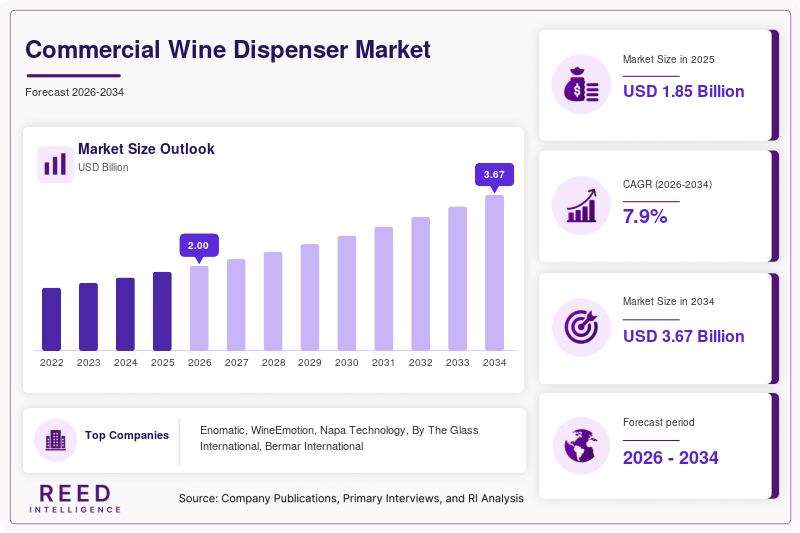
The Commercial Wine Dispenser Market was valued at approximately USD 1.85 billion in 2026 and is projected to reach USD 3.42 billion by 2034, expanding at a compound annual growth rate (CAGR) of 7.9% during the forecast period (2026–2034). The market is experiencing steady growth due to the rising adoption of premium wine-serving technologies across hospitality and foodservice establishments. Commercial wine dispensers are increasingly used to maintain wine quality, reduce waste, and enhance customer experience in bars, restaurants, hotels, and wine lounges.
A key global factor supporting market growth is the expanding culture of wine consumption in urban centers. Consumers are seeking curated wine experiences, which has encouraged establishments to invest in automated dispensing systems. These systems offer portion control, temperature consistency, and preservation technology, enabling businesses to serve a wider range of wines without spoilage concerns. Additionally, advancements in nitrogen-based preservation and smart dispensing technologies have improved operational efficiency, further supporting adoption.
Key Highlights
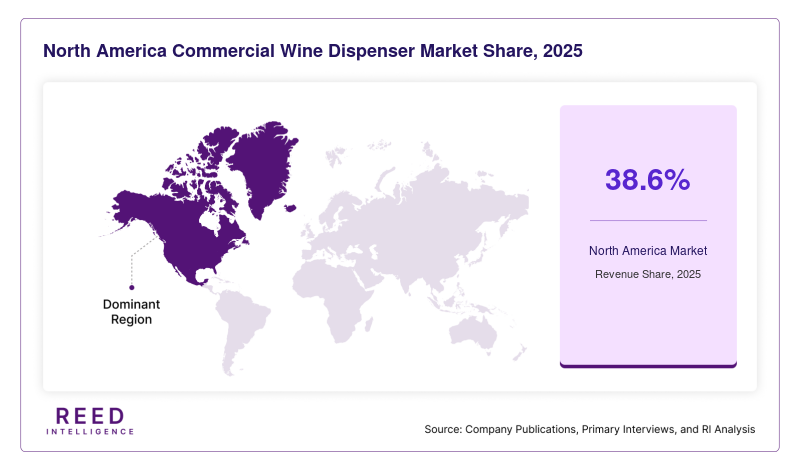
- North America dominated the market with a 38.6% share in 2025.
- Asia Pacific is projected to be the fastest-growing region with a CAGR of 9.4%.
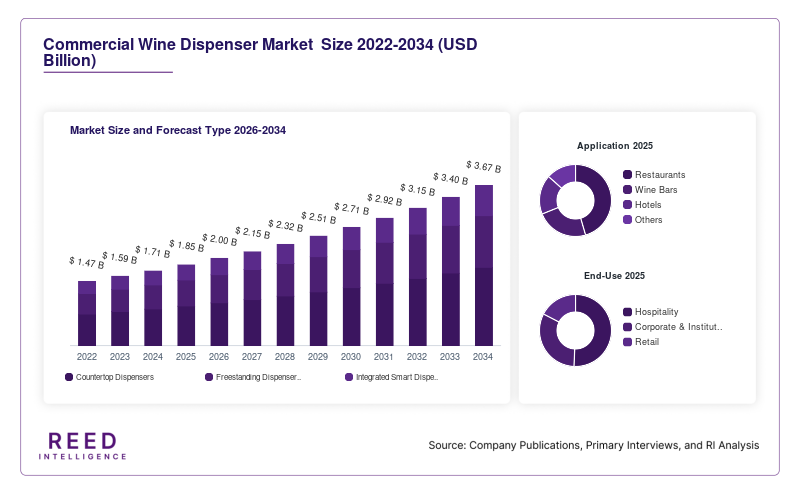
- By type, countertop dispensers held the leading share of 42.3%, while integrated smart dispensers are expected to grow fastest at a CAGR of 10.1%.
- By application, restaurants led with 45.8% share, whereas wine bars are the fastest-growing segment with a CAGR of 9.7%.
- The United States remained the dominant country, with market values of USD 620 million in 2024 and USD 665 million in 2025.
Market Trends
Integration of Smart and IoT-Based Dispensing Systems
The Commercial Wine Dispenser Market is witnessing a transition toward smart, connected systems equipped with IoT capabilities. These dispensers enable real-time monitoring of inventory, temperature control, and dispensing volumes, allowing operators to optimize service efficiency and reduce operational losses. Cloud-based dashboards provide data analytics on customer preferences and consumption patterns, helping businesses refine their offerings. This trend is particularly prominent in premium hospitality venues where customer experience is a key differentiator. Additionally, touchless dispensing features and mobile app integration are becoming more common, aligning with hygiene-conscious consumer behavior. The adoption of such technologies is expected to accelerate as businesses increasingly prioritize automation and data-driven decision-making.
Growing Demand for Wine-by-the-Glass Programs
Wine-by-the-glass programs are gaining traction across restaurants and wine bars, driving demand for commercial wine dispensers. These systems allow establishments to offer a diverse wine selection without the risk of spoilage, which is a common concern with traditional bottle service. Consumers are increasingly interested in sampling different wines in smaller portions, leading to higher engagement and increased per-customer spending. This trend is particularly evident in urban markets where experiential dining is on the rise. As a result, wine dispensers are being positioned not only as operational tools but also as marketing assets that enhance the overall ambiance and customer experience.
Market Drivers
Rising Demand for Premium Dining Experiences
The increasing consumer preference for premium dining experiences is a significant driver of the Commercial Wine Dispenser Market. Customers are seeking curated and personalized experiences, especially in upscale restaurants and wine lounges. Wine dispensers allow establishments to offer a broader selection of wines while maintaining quality and freshness. This enhances customer satisfaction and encourages repeat visits. Furthermore, the ability to serve precise portions reduces wastage and improves profitability for operators. As disposable incomes rise and urbanization continues, the demand for premium dining experiences is expected to grow, further boosting market expansion.
Operational Efficiency and Cost Optimization
Commercial wine dispensers contribute to improved operational efficiency by minimizing wine wastage and reducing labor requirements. Traditional wine service often leads to spoilage due to improper storage or delayed consumption. Dispensers equipped with preservation systems extend the shelf life of opened bottles, ensuring optimal usage. Additionally, automated dispensing reduces the need for manual intervention, allowing staff to focus on customer service. This is particularly beneficial for high-volume establishments where efficiency is critical. The cost-saving benefits associated with reduced waste and labor optimization are encouraging widespread adoption of these systems.
Market Restraint
High Initial Investment and Maintenance Costs
The high upfront cost associated with commercial wine dispensers remains a key restraint for market growth. These systems often require significant capital investment, particularly for advanced models equipped with smart features and multi-bottle capacity. Small and medium-sized establishments may find it challenging to justify the initial expenditure, especially in price-sensitive markets. In addition to the purchase cost, ongoing maintenance and servicing expenses can further increase the total cost of ownership.
The impact of this restraint is particularly evident in emerging economies where adoption rates are relatively lower. For example, independent restaurants and small wine bars may prefer traditional serving methods due to budget constraints. Furthermore, the need for technical expertise to operate and maintain these systems can pose additional challenges. While leasing options and financing models are emerging, the high cost barrier continues to limit widespread adoption, particularly among smaller operators.
Market Opportunities
Expansion in Emerging Hospitality Markets
Emerging markets present significant growth opportunities for the Commercial Wine Dispenser Market. Rapid urbanization, increasing disposable incomes, and the expansion of the hospitality sector are driving demand for advanced beverage dispensing solutions. Countries in Asia Pacific and Latin America are witnessing a rise in premium restaurants and wine-focused establishments, creating a favorable environment for market growth. Additionally, international tourism is contributing to the adoption of modern hospitality technologies. As awareness of wine preservation and quality control increases, businesses in these regions are likely to invest in commercial wine dispensers.
Customization and Branding Capabilities
Customization and branding opportunities offered by commercial wine dispensers are creating new avenues for market growth. Manufacturers are developing systems that can be tailored to match the aesthetic and functional requirements of different establishments. Customizable interfaces, branding elements, and interactive displays enhance the visual appeal and customer engagement. This is particularly valuable for wine bars and luxury hotels that aim to create a distinctive brand identity. The ability to integrate branding with technology-driven solutions is expected to drive adoption among premium establishments.
Segmental Analysis
By Type
Countertop wine dispensers dominated the Commercial Wine Dispenser Market in 2024, accounting for approximately 42.3% of the total market share. These systems are widely preferred due to their compact design, ease of installation, and cost-effectiveness. Countertop dispensers are suitable for small to medium-sized establishments, including cafes, bars, and boutique restaurants. Their flexibility allows businesses to integrate them into existing setups without significant infrastructure changes. Additionally, these dispensers often come with basic preservation technologies, making them an attractive option for operators seeking affordable solutions.
Integrated smart dispensers are expected to be the fastest-growing subsegment, with a projected CAGR of 10.1% during the forecast period. These systems offer advanced features such as IoT connectivity, automated temperature control, and real-time inventory tracking. The growing demand for data-driven operations and enhanced customer experience is driving the adoption of smart dispensers. High-end restaurants and luxury hotels are increasingly investing in these systems to differentiate their offerings and improve operational efficiency.
By Application
Restaurants held the largest share of the Commercial Wine Dispenser Market in 2024, accounting for 45.8% of the total revenue. The high volume of wine consumption in restaurants and the need for efficient service are key factors driving this segment. Wine dispensers enable restaurants to offer a diverse selection of wines by the glass while maintaining quality and reducing waste. This enhances customer satisfaction and increases revenue per customer.
Wine bars are the fastest-growing application segment, with a CAGR of 9.7%. The increasing popularity of wine-centric establishments is driving demand for advanced dispensing systems. Wine bars rely heavily on offering a wide variety of wines, making dispensers an essential tool for maintaining freshness and consistency. Additionally, the interactive nature of wine dispensers enhances customer engagement, making them a valuable asset for these establishments.
By End-Use
The hospitality sector dominated the Commercial Wine Dispenser Market in 2024, accounting for a significant share of the total market. Hotels, resorts, and restaurants are the primary end-users of wine dispensers, driven by the need to enhance service quality and operational efficiency. These establishments benefit from reduced wastage, improved inventory management, and consistent wine quality. The growing emphasis on customer experience is further driving adoption in this segment.
The corporate and institutional segment is expected to be the fastest-growing end-use category, with a notable CAGR during the forecast period. Corporate offices, event venues, and private clubs are increasingly adopting wine dispensers to enhance their service offerings. The ability to provide premium beverage experiences in a controlled and efficient manner is driving demand in this segment. Additionally, the growing trend of corporate events and social gatherings is contributing to the expansion of this market.
Regional Analysis
North America
North America accounted for the largest share of the Commercial Wine Dispenser Market in 2025, contributing approximately 38.6% of the global revenue. The region is projected to grow at a CAGR of 7.5% during the forecast period. The presence of a well-established hospitality industry and high consumer awareness regarding wine quality are key factors driving market growth. Additionally, the widespread adoption of advanced technologies in foodservice operations supports the integration of commercial wine dispensers.
The United States dominates the North American market due to its strong wine culture and large number of premium dining establishments. A unique growth factor in this region is the increasing popularity of self-service wine dispensing systems in upscale venues. These systems enhance customer interaction and allow patrons to explore a variety of wines, contributing to higher sales and improved customer satisfaction.
Europe
Europe holds a significant share of the Commercial Wine Dispenser Market, accounting for 29.4% in 2025, with a projected CAGR of 7.2%. The region's deep-rooted wine culture and high consumption levels make it a key market for wine dispensing solutions. Countries such as France, Italy, and Spain are major contributors to regional growth. The demand for preserving wine quality and reducing waste is driving the adoption of advanced dispensing systems.
France leads the European market, supported by its extensive wine production and consumption. A unique growth factor in this region is the integration of wine dispensers in wineries and tasting rooms. These systems allow visitors to sample multiple wines efficiently, enhancing the overall experience and boosting sales for producers.
Asia Pacific
Asia Pacific is the fastest-growing region in the Commercial Wine Dispenser Market, with a CAGR of 9.4% and a 2025 market share of 18.7%. The region is experiencing rapid growth due to increasing urbanization and changing consumer preferences. The expansion of the hospitality sector and rising disposable incomes are key drivers of market growth. Additionally, the growing popularity of wine among younger consumers is contributing to increased demand.
China is the dominant country in the Asia Pacific region, driven by its expanding middle class and growing interest in wine consumption. A unique growth factor is the increasing presence of international hotel chains and fine dining restaurants, which are adopting advanced wine dispensing technologies to meet global standards and enhance customer experience.
Middle East & Africa
The Middle East & Africa region accounted for 7.1% of the market share in 2025 and is expected to grow at a CAGR of 6.8%. The region's hospitality sector is expanding, particularly in urban centers and tourist destinations. The adoption of commercial wine dispensers is gradually increasing as establishments seek to improve service quality and operational efficiency.
The United Arab Emirates is the leading market in this region, driven by its thriving tourism industry. A unique growth factor is the increasing number of luxury hotels and fine dining establishments that are incorporating advanced beverage dispensing systems to cater to international clientele and enhance service standards.
Latin America
Latin America held a market share of 6.2% in 2025 and is projected to grow at a CAGR of 7.0%. The region is witnessing steady growth due to the expansion of the hospitality industry and increasing wine consumption. Countries such as Brazil and Argentina are key contributors to regional growth.
Argentina dominates the Latin American market, supported by its strong wine production industry. A unique growth factor is the integration of wine dispensers in local wineries and tourism-focused establishments. These systems enable efficient wine tasting experiences, attracting both domestic and international visitors.
Competitive Landscape
The Commercial Wine Dispenser Market is moderately fragmented, with several established players competing on product innovation, pricing, and distribution networks. Leading companies are focusing on integrating advanced technologies such as IoT and smart controls to enhance their product offerings. Strategic partnerships with hospitality chains and distributors are also a key focus area.
Enomatic is recognized as a leading player in the market, known for its extensive product portfolio and strong global presence. The company has recently introduced advanced dispensing systems with enhanced preservation technology and user-friendly interfaces. Other key players are also investing in research and development to improve product efficiency and expand their market reach. The competitive landscape is characterized by continuous innovation and a focus on meeting the evolving needs of the hospitality industry.
Key Players
- Enomatic
- WineEmotion
- Napa Technology
- By The Glass International
- Bermar International
- EuroCave Professional
- WineKeeper
- Vinotemp
- Wine Dispense Systems
- Wineidea
- Atonometrics
- Cellar Mate
- WineStation
- Wine Fit
- Le Verre de Vin
Recent Developments
- In 2025, Enomatic launched a next-generation smart wine dispenser with AI-based inventory tracking and predictive maintenance features.
- In 2024, WineEmotion expanded its distribution network in Asia Pacific to strengthen its regional presence.
- In 2025, Napa Technology introduced a modular wine dispensing system designed for high-capacity commercial applications.
Commercial Wine Dispenser Market Segments
Type
- Countertop Dispensers
- Freestanding Dispensers
- Integrated Smart Dispensers
Application
- Restaurants
- Wine Bars
- Hotels
- Others
End-Use
- Hospitality
- Corporate & Institutional
- Retail
By Region
- North America
- Europe
- APAC
- Middle East and Africa
- LATAM