Complement 3 Glomerulopathy Treatment Market Size, Share, Demand Report By Drug Type (C3 Inhibitors, C5 Inhibitors, Monoclonal Antibodies, Gene Therapy-Based Treatments), By Route of Administration (Intravenous, Subcutaneous, Oral), By End User (Hospitals, Specialty Clinics, Research Institutes), By Distribution Channel (Hospital Pharmacies, Retail Pharmacies) By Region & Segment Forecasts, 2026–2034
USD 3950
Market Overview
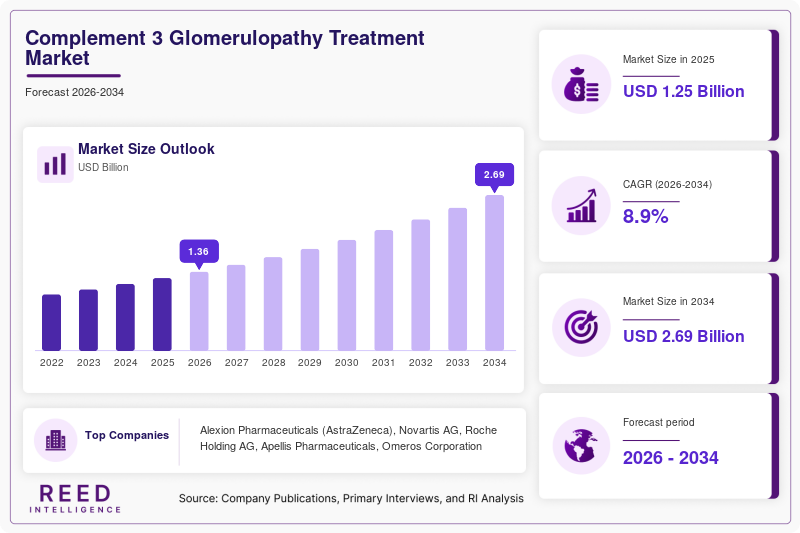
The Complement 3 Glomerulopathy Treatment Market size was valued at approximately USD 1.25 billion in 2026 and is projected to reach nearly USD 2.48 billion by 2034, expanding at a CAGR of 8.9% during 2026–2034. Growth in the Complement 3 Glomerulopathy Treatment Market is strongly supported by increasing diagnosis of rare complement-mediated kidney disorders and rising adoption of targeted biologic therapies. Expanding awareness among nephrologists and improved genetic testing capabilities have significantly contributed to earlier disease identification, thereby strengthening treatment demand.
A key global factor driving the Complement 3 Glomerulopathy Treatment Market is the rapid shift toward precision medicine in nephrology, enabling more targeted intervention at the molecular level of complement dysregulation. Pharmaceutical companies are increasingly focusing on complement inhibition pathways, particularly C3 and C5 targeting mechanisms, to improve patient outcomes in chronic kidney disorders.
Key Highlights:
- North America held ~38% share in 2025
- Asia Pacific is expected to grow at ~10.2% CAGR during 2026–2034
- C3 inhibitors dominated with ~42% share in 2025
- Gene therapy-based treatments are projected to grow at ~12.1% CAGR
- United States market size was USD 420 million in 2024 and USD 465 million in 2025
Market Trends
Expansion of complement-targeted biologics
The Complement 3 Glomerulopathy Treatment Market is witnessing increasing development of biologics targeting specific components of the complement cascade. Pharmaceutical companies are focusing on next-generation C3 inhibitors to reduce renal inflammation and slow disease progression. This trend is further supported by expanding clinical trial activity and improved therapeutic response rates.
Rising regulatory support for rare kidney disease therapies
The Complement 3 Glomerulopathy Treatment Market is benefiting from strong regulatory incentives for orphan drug development. Fast-track approvals, market exclusivity benefits, and tax incentives are encouraging biotechnology companies to invest in rare nephrology conditions. This is accelerating pipeline development and increasing treatment availability globally.
Market Drivers
Increasing prevalence of complement-mediated kidney disorders
Rising detection rates of C3 glomerulopathy due to improved diagnostic tools are significantly supporting the Complement 3 Glomerulopathy Treatment Market. Enhanced biopsy techniques and biomarker-based screening are enabling earlier diagnosis, increasing the number of patients receiving targeted therapy.
Advancements in complement system research and drug development
Scientific progress in understanding the complement cascade has accelerated drug discovery in the Complement 3 Glomerulopathy Treatment Market. Identification of genetic mutations linked to C3 dysregulation has enabled development of highly specific monoclonal antibodies and small-molecule inhibitors, improving treatment precision.
Market Restraint
High cost of advanced biologic therapies and limited reimbursement
High treatment costs associated with long-term biologic therapies remain a major restraint in the Complement 3 Glomerulopathy Treatment Market. Limited reimbursement coverage in emerging economies restricts patient access, reducing adoption rates despite increasing clinical demand.
Market Opportunities
Growth of gene-based therapeutic approaches
Gene therapy is emerging as a transformative opportunity in the Complement 3 Glomerulopathy Treatment Market. Technologies such as CRISPR and RNA-based therapies are being explored to address genetic mutations responsible for complement dysregulation, potentially enabling long-term disease control.
Expansion of rare disease infrastructure in emerging markets
Developing healthcare systems in Asia Pacific and Latin America are creating strong opportunities for the Complement 3 Glomerulopathy Treatment Market. Government initiatives supporting rare disease diagnosis and treatment are improving patient identification rates and expanding access to advanced therapies.
Segmental Analysis
By Drug Type
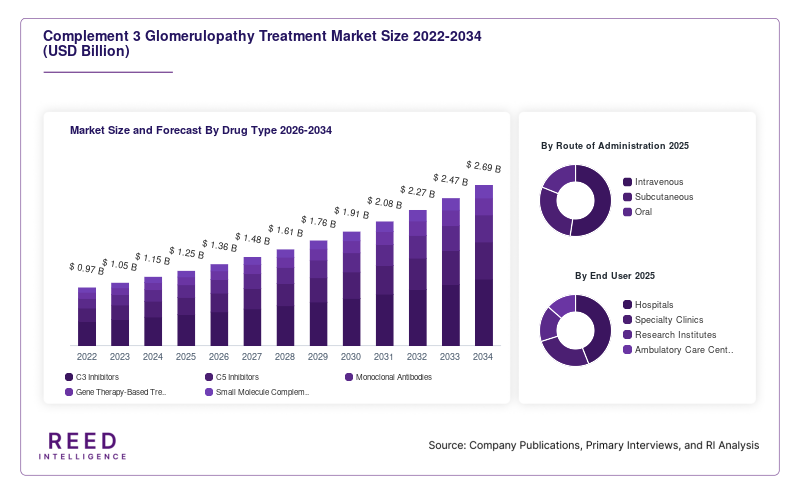
C3 inhibitors dominated the Complement 3 Glomerulopathy Treatment Market with approximately 42% share in 2025 due to their direct mechanism of blocking complement activation at the C3 level. These therapies are widely used in managing disease progression and reducing renal inflammation, making them a preferred treatment option in clinical settings. Their strong efficacy profile supports their leading market position.
Gene therapy-based treatments are projected to grow at a CAGR of 12.1% during 2026–2034 in the Complement 3 Glomerulopathy Treatment Market. Growth is driven by advancements in genetic engineering and increasing research into correcting complement dysregulation at the DNA level. These therapies offer potential long-term disease modification, making them a key focus of future innovation.
By Route of Administration
Intravenous therapies held the dominant share of 55% in 2025 in the Complement 3 Glomerulopathy Treatment Market due to the high use of biologics requiring controlled hospital-based administration. This ensures accurate dosing and monitoring of treatment response.
Oral therapies are expected to grow at a CAGR of 9.6% during 2026–2034 due to rising patient preference for non-invasive treatment options and advancements in small-molecule drug development.
By End User
Hospitals accounted for 48% share in 2025 in the Complement 3 Glomerulopathy Treatment Market due to their role in diagnosis and administration of advanced biologics. Specialty nephrology departments support complex treatment management.
Specialty clinics are expected to grow at a CAGR of 9.8% due to increasing outpatient care and improved access to rare disease specialists.
By Distribution Channel
Hospital pharmacies held 51% share in 2025 in the Complement 3 Glomerulopathy Treatment Market due to centralized drug administration systems.
Online pharmacies are expected to grow at a CAGR of 11.3% due to digital healthcare expansion and improved drug accessibility.
Regional Analysis
North America
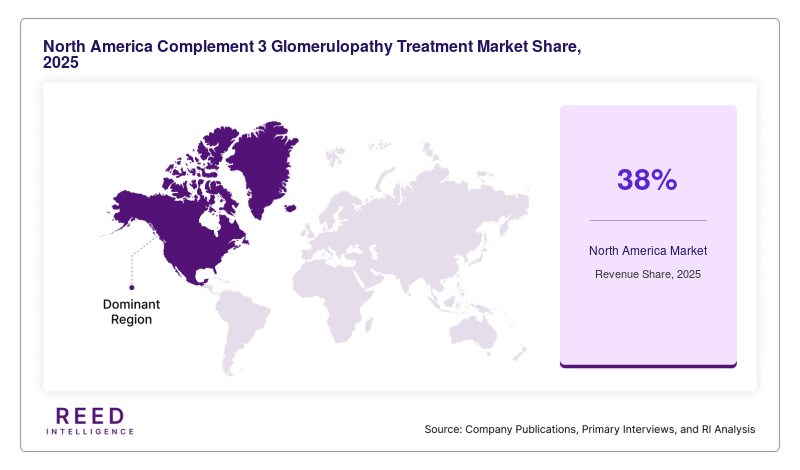
North America accounted for approximately 38% share of the Complement 3 Glomerulopathy Treatment Market in 2025 and is projected to grow at a CAGR of 8.5% during 2026–2034. The region benefits from advanced healthcare infrastructure, strong reimbursement systems, and early adoption of biologic therapies. The United States leads the region due to high clinical trial activity and strong presence of major pharmaceutical companies focused on complement inhibition therapies. Increasing collaboration between biotech firms and academic research institutions continues to accelerate drug development and commercialization.
Europe
Europe held nearly 27% share of the Complement 3 Glomerulopathy Treatment Market in 2025 and is expected to expand at a CAGR of 8.2% during 2026–2034. Growth is supported by strong orphan drug regulations and increasing awareness of rare kidney diseases. Germany leads the region due to advanced nephrology care infrastructure and strong clinical research networks. Rising investment in precision medicine and improved diagnostic accessibility are supporting earlier disease detection and treatment adoption across Europe.
Asia Pacific
Asia Pacific accounted for around 22% share of the Complement 3 Glomerulopathy Treatment Market in 2025 and is projected to grow at the fastest CAGR of 10.2% during 2026–2034. Rapid healthcare infrastructure development, increasing healthcare expenditure, and expanding diagnostic capabilities are driving market growth. China leads the region due to strong biopharmaceutical development and rising participation in global clinical trials. Improved awareness among clinicians and growing access to specialized treatments are further strengthening market expansion.
Middle East & Africa
Middle East & Africa held approximately 7% share of the Complement 3 Glomerulopathy Treatment Market in 2025 and is projected to grow at a CAGR of 7.9% during 2026–2034. Growth is driven by gradual improvements in healthcare systems and increasing focus on rare disease diagnosis. Saudi Arabia dominates the region due to government-led healthcare modernization programs and investments in advanced diagnostic infrastructure. Expansion of specialty hospitals is improving treatment accessibility.
Latin America
Latin America captured nearly 6% share of the Complement 3 Glomerulopathy Treatment Market in 2025 and is expected to grow at a CAGR of 8.1% during 2026–2034. Brazil leads the region due to expanding pharmaceutical distribution networks and increasing clinical research participation. Rising healthcare investments and improved access to specialty drugs are supporting growth across nephrology treatment segments.
Competitive Landscape
The Complement 3 Glomerulopathy Treatment Market is moderately consolidated with strong participation from global pharmaceutical and biotechnology companies. Key players include Alexion Pharmaceuticals (AstraZeneca), Novartis AG, Roche Holding AG, Apellis Pharmaceuticals, and Omeros Corporation. These companies are actively investing in complement pathway inhibitors and expanding rare disease portfolios. Alexion Pharmaceuticals maintains a leading position due to its strong complement inhibitor pipeline and continued innovation in nephrology therapeutics. Strategic collaborations, clinical trial expansion, and orphan drug development remain central competitive strategies in the market.
Key Players List
- Alexion Pharmaceuticals (AstraZeneca)
- Novartis AG
- Roche Holding AG
- Apellis Pharmaceuticals
- Omeros Corporation
- Sanofi S.A.
- Pfizer Inc.
- Amgen Inc.
- Regeneron Pharmaceuticals
- GSK plc
- BioCryst Pharmaceuticals
- Travere Therapeutics
- Sobi (Swedish Orphan Biovitrum)
- Vertex Pharmaceuticals
- Ionis Pharmaceuticals
Recent Developments
- In 2025, Apellis Pharmaceuticals expanded its C3 inhibitor pipeline with additional Phase III clinical trials targeting broader renal indications.
- Alexion Pharmaceuticals announced advancements in long-acting complement inhibitors designed to reduce dosing frequency.
- Roche strengthened its nephrology research division through collaboration with academic institutions focused on rare kidney disorders.
- Travere Therapeutics initiated new biomarker-driven studies to improve early diagnosis accuracy in complement-mediated diseases.
- Novartis expanded its rare disease portfolio through strategic licensing agreements in complement pathway therapeutics.
Complement 3 Glomerulopathy Treatment Market Segments
By Drug Type
- C3 Inhibitors
- C5 Inhibitors
- Monoclonal Antibodies
- Gene Therapy-Based Treatments
- Small Molecule Complement Inhibitors
By Route of Administration
- Intravenous
- Subcutaneous
- Oral
By End User
- Hospitals
- Specialty Clinics
- Research Institutes
- Ambulatory Care Centers
By Distribution Channel
- Hospital Pharmacies
- Retail Pharmacies
- Online Pharmacies
- Specialty Pharmacies
By Region
- North America
- Europe
- APAC
- Middle East and Africa
- LATAM